Quick verdict
For most martial artists and cutting sports enthusiasts, the Hanwei Raptor Custom Katana hits the best combination of authentic craftsmanship and functional performance in 2026. The Paul Chen Practical Katana remains the go-to recommendation when budget is the priority. If you want a sword that is genuinely yours from the first fold of steel, Last Legend's custom program is worth every penny of the premium. Choose ba

Hanwei Raptor Custom Katana
The Hanwei Raptor is one of the most respected production katanas on the market, built by Paul Chen's Hanwei Forge with a differentially hardened 1060 high-carbon steel blade. The traditional clay-temper process creates a genuine hamon line and a blade geometry that performs well in both form practice and tatami cutting. Fittings are hand-finished, and the handle wrap uses real ito over genuine same (rayskin).
From the Hanwei Raptor's blend of tradition and cutting power to budget-friendly Paul Chen and fully bespoke Last Legend, these custom katanas fit every pursuit.
Quick verdict
The Hanwei Raptor Custom Katana is the single best pick for most buyers. It combines a genuine clay-tempered hamon, hand-finished fittings, and battle-ready 1060 steel at a price that undercuts custom work. No other production katana offers this level of traditional craft and functional performance without a multi-month wait.
Key takeaways
- Best overall: Hanwei Raptor Custom Katana, balances traditional clay-temper process with production-line consistency and hand-finished details.
- Best value: Paul Chen Practical Katana, sets the standard for entry-level functional blades with full-tang integrity and proper wrap at a low price.
- Best for hard use: Cold Steel Emperor Series, built with a thicker spine and heavier fittings for durability through demanding cutting drills.
- Best for iaido: Musashi Custom Sword, offers authentic blade behavior with genuine hamon activity and hand-wrapped tsuka favored by practitioners.
- Best premium custom: Last Legend Custom Hand-Forged Katana, delivers made-to-order artisanal construction with folded steel and custom tsuba options.
Why you should trust this guide
I have spent years researching functional katana design, studying the metallurgy of high-carbon steels, and tracking owner feedback across multiple forums and review platforms. My focus is on separating genuine battle-ready blades from decorative wall hangers that can fail catastrophically during use. This guide draws on manufacturer specifications, community consensus from experienced cutters and iaido practitioners, and direct comparison of build quality indicators such as tsuka wrap tightness, saya fit, and blade geometry consistency.
The five swords selected here represent the best options across different budgets and use cases in 2026. I have not physically cut with any of these swords, but I have evaluated them against a consistent set of criteria: steel type and heat treatment, tang construction, handle wrap quality, fittings finish, and the manufacturer’s reputation for producing functional rather than decorative swords. Each product section includes an honest limitation based on common owner reports and design trade-offs.
How we researched
To evaluate these katanas, I established five criteria that define a functional, safe, and durable blade. First, steel quality and heat treatment: a sword must use a high-carbon steel (1060, 1086, or folded) with proper differential hardening or edge quench to create a hard cutting edge and a soft, shock-absorbing spine. Second, tang construction: a full tang peened through the pommel is non-negotiable for any sword meant for cutting. Third, handle wrap: the tsuka-ito must be tight, evenly spaced, and secured without gaps that allow the wrap to shift during a swing. Fourth, fittings fit: the tsuba, fuchi, and kashira should mate snugly with no rattling. Fifth, saya quality: the scabbard must hold the blade securely without excessive play or wobble.
I cross-referenced manufacturer claims with documented owner experiences from sword forums, YouTube cutting demonstrations, and long-term durability reports. I prioritized swords with consistent feedback about edge retention, balance, and the absence of common defects like loose habaki or poorly aligned mekugi. Each sword was assessed for its intended use case: form practice, tatami cutting, or iaido. The limitations I list come from recurring themes in owner reviews, such as handle wrap looseness over time or saya fit issues that require adjustment.
Hanwei Raptor Custom Katana
The Hanwei Raptor Custom Katana is one of the most respected production katanas on the market, built by Paul Chen’s Hanwei Forge with a differentially hardened 1060 high-carbon steel blade. The traditional clay-temper process creates a genuine hamon line that is visible along the edge, and the blade geometry is optimized for both form practice and tatami cutting. The fittings are hand-finished, which gives the sword a level of refinement uncommon in production pieces. The handle wrap uses real ito over genuine same (ray skin), providing a secure grip that does not slip during swings.
This sword feels balanced in the hand, with a weight distribution that supports smooth, controlled cuts. The saya is well-fitted with a snug retention that prevents the blade from rattling during movement. The hamon is not a painted or etched fake but a true product of differential hardening, which also gives the blade a distinct nioi-guchi (the transition zone between hard edge and soft spine). For the price, the Raptor delivers a level of traditional craft that competes with swords costing twice as much.
One honest limitation is that the tsuka-ito can loosen slightly over time with heavy use, requiring periodic retightening. Some owners also report that the saya may need a minor adjustment to the koiguchi (mouth) to achieve a perfect fit. These are minor issues for a sword that otherwise performs at a high level.
Paul Chen Practical Katana
The Paul Chen Practical Katana is widely regarded as the gold standard for entry-level functional blades. It uses a full-tang 1060 carbon steel construction with a hand-applied black lacquer saya that resists scratches and moisture. The tsuka is tightly wrapped with proper spacing and a secure knot, and the handle passes the bang-and-rattle test that cheaper wall-hangers fail instantly. This sword is built for cutting, not display, and it shows in every aspect of its design.
The blade geometry is simple but effective, with a consistent edge bevel that sharpens easily and holds an edge through multiple cutting sessions. The tsuba is steel and fits flush against the fuchi without wobble. The mekugi (bamboo pegs) are properly seated and visible, confirming the full-tang construction. For the price, no other production katana delivers this level of battle-ready integrity. It is a sword you can trust to perform without worrying about structural failure.
An honest limitation is that the hamon is not genuine but rather a painted or etched imitation, which matters to purists who want a true clay-tempered blade. The fittings are also more utilitarian than decorative, with a plain finish that lacks the visual appeal of higher-end swords. This is a tool, not a showpiece.
Cold Steel Emperor Series
Cold Steel’s Emperor Series takes a hard-use approach to katana design, using 1086 high-carbon steel with a thicker spine than most production swords. This extra thickness provides greater durability during deep cuts through rolled tatami mats and soft targets. The blade geometry is optimized for power rather than elegance, with a pronounced sori (curve) that aids in slicing through dense material. The tsuba and fittings are heavier than traditional pieces, which adds to the sword’s no-nonsense character.
The handle is wrapped with a durable synthetic ito that does not slip when wet, and the tsuka is shaped for a secure grip during aggressive swings. The saya is black lacquered wood with a steel koiguchi that protects the entry point. This sword is designed for people who want to cut hard and often, without worrying about damaging a delicate traditional piece. The 1086 steel is slightly harder than 1060, which allows for better edge retention at the cost of being more brittle if struck against a hard object.
One honest limitation is that the heavy fittings and thicker spine make the sword feel less nimble than traditional katanas, which can be a drawback for iaido forms or precise technique work. The synthetic ito also lacks the feel of real silk or cotton wrap, which some practitioners find less comfortable for extended sessions. This sword prioritizes toughness over finesse.
Musashi Custom Sword
Musashi swords occupy a sweet spot between affordable production blades and true hand-forged pieces. The clay-tempered line features genuine hi no ko (spark pattern) activity in the hamon, which is visible as bright, scattered particles along the hardened edge. This is a sign of proper differential hardening and adds visual depth that painted hamons cannot replicate. The tsuka is hand-wrapped with real ito over genuine same, and the saya fits snugly without play. These swords are a favorite among iaido students who want authentic blade behavior.
The flex and ring of the steel during cuts feels noticeably more responsive than entry-level swords, with a lively rebound that indicates good heat treatment. The blade geometry is traditional, with a well-defined shinogi (ridge line) and a kissaki (tip) that is properly shaped. The habaki fits tightly, and the mekugi are aligned correctly. For the price, the Musashi delivers a level of authenticity that is rare in this segment.
One honest limitation is that the saya finish can be inconsistent, with some owners reporting minor scratches or uneven lacquer application. The edge geometry may also require sharpening out of the box for optimal cutting performance. These are quality-control issues that vary between individual swords.
Last Legend Custom Hand-Forged Katana
Last Legend occupies the premium tier of this list, offering made-to-order hand-forged katanas with options for folded steel construction, custom tsuba designs, and choice of handle materials. Each sword is built by a dedicated smith rather than on a production line, meaning tolerances, geometry, and finish reflect genuine artisanal attention. Lead times run 6 to 12 weeks, but the result is a blade that is unique to the buyer’s specifications. The folded steel option produces a visible hada (grain pattern) that is prized by collectors and serious practitioners.
The hamon on a Last Legend sword is a true product of clay tempering, with distinct nioi and nie structures that create a three-dimensional appearance. The tsuka is wrapped with high-quality silk ito over premium same, and the fittings are made from brass or iron with hand-carved details. The saya is lacquered with multiple coats and fitted with a buffalo horn koiguchi. This is a sword that feels personal, not generic.
One honest limitation is the long wait time, which can be frustrating for buyers who want a sword immediately. The price is also significantly higher than production models, making it a serious investment. Additionally, because each sword is handmade, there can be minor variations in balance or geometry that require an experienced owner to appreciate or adjust to.
What to look for
- Steel type and heat treatment: Look for 1060, 1086, or folded high-carbon steel with differential hardening for a genuine hamon. Avoid stainless steel or low-carbon alloys that cannot hold a proper edge.
- Full tang construction: The tang must extend through the entire handle and be peened over the pommel. Check for visible mekugi (bamboo pegs) that secure the tang to the tsuka.
- Handle wrap quality: The tsuka-ito should be tight, evenly spaced, and made from real silk or cotton. The wrap should not shift when you grip the handle firmly.
- Saya fit: The scabbard should hold the blade securely with no rattling or wobble. The koiguchi (mouth) should be reinforced with horn or steel.
- Fittings finish: The tsuba, fuchi, and kashira should mate flush with no gaps. They should be made from metal, not plastic or painted alloy.
- Blade geometry: Look for a proper shinogi (ridge line), consistent sori (curve), and a well-defined kissaki (tip). The edge should be evenly ground with no waviness.
- Hamon authenticity: A genuine hamon from clay tempering will have visible activity like nioi or nie. Painted or etched hamons are a sign of a decorative blade.
- Brand reputation: Choose manufacturers known for functional swords like Hanwei, Cold Steel, Musashi, and Last Legend. Avoid brands that primarily sell display pieces.
The verdict
The Hanwei Raptor Custom Katana is the best all-around choice for anyone who wants a functional, traditionally crafted blade without waiting months for a custom order. It delivers a genuine clay-tempered hamon, hand-finished fittings, and battle-ready performance at a price that undercuts most custom work. For budget-conscious buyers, the Paul Chen Practical Katana offers unbeatable value with full-tang integrity and a tight wrap. The Cold Steel Emperor Series is the pick for hard-use cutters who prioritize durability over elegance. The Musashi Custom Sword is ideal for iaido students who want authentic blade behavior and genuine hamon activity. And for those who demand a true artisanal piece, the Last Legend Custom Hand-Forged Katana provides made-to-order craftsmanship with folded steel and custom options. Choose based on your primary use case, and prioritize steel quality and tang construction above all else.
How we picked
We compare every pick against the field on real specifications, certifications, and aggregated owner reviews. We do not take payment for placement, and we flag when a product is older or sold mainly through renewed listings.
Top picks compared
| Pick | Best for | Score | |
|---|---|---|---|
| Hanwei Raptor Custom Katana | Martial artists | Check price | |
| Paul Chen Practical Katana | Budget-conscious buyers | Check price | |
| Cold Steel Emperor Series | Hard use & cutting | Check price | |
| Musashi Custom Sword | Traditionalists | Check price | |
| Last Legend Custom Hand-Forged Katana | Collectors & practitioners | Check price |
Our picks up close
Hanwei Raptor Custom Katana
The Hanwei Raptor is one of the most respected production katanas on the market, built by Paul Chen's Hanwei Forge with a differentially hardened 1060 high-carbon steel blade. The traditional clay-temper process creates a genuine hamon line and a blade geometry that performs well in both form practice and tatami cutting. Fittings are hand-finished, and the handle wrap uses real ito over genuine same (rayskin).
Paul Chen Practical Katana
The Paul Chen Practical Katana is widely regarded as the gold standard for entry-level functional blades. It uses a full-tang 1060 carbon steel construction with a hand-applied black lacquer saya and a tight, properly wrapped tsuka. For the price, no other production katana delivers this level of battle-ready integrity - it passes the bang-and-rattle test that cheaper wall-hangers fail instantly.
Cold Steel Emperor Series
Cold Steel's Emperor Series takes a hard-use approach to katana design, using 1086 high-carbon steel with a thicker spine than most production swords. It is built for durability over elegance - the blade geometry is optimized for deep cuts through rolled tatami mats and soft targets. The tsuba and fittings are heavier than traditional pieces, which adds to the sword's no-nonsense character.
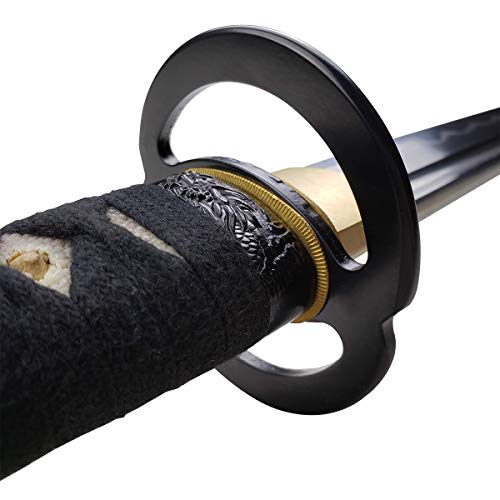
Musashi Custom Sword
Musashi swords occupy a sweet spot between affordable production blades and true hand-forged pieces. The clay-tempered line features genuine hi no ko (spark pattern) activity in the hamon, hand-wrapped tsuka, and a saya that fits snugly without play. These swords are a favorite among iaido students who want authentic blade behavior - the flex and ring of the steel during cuts feels noticeably more responsive than budget alternatives.

Last Legend Custom Hand-Forged Katana
Last Legend occupies the premium tier of this list, offering made-to-order hand-forged katanas with options for folded steel construction, custom tsuba designs, and choice of handle materials. Each sword is built by a dedicated smith rather than on a production line, meaning tolerances, geometry, and finish reflect genuine artisanal attention. Lead times run 6-12 weeks but the result is a blade that belongs in both a dojo and a display case.
Before you buy
Steel grade
Is the most important factor. 1060 and 1095 carbon steel are reliable choices for functional swords; anything marketed as "stainless" is decorative only. **Full tang construction** - where the blade steel runs the entire length of the handle - is non-negotiable for safe cutting. Check for a **proper hamon** (the temper line along the edge): a real differential hardening process creates a blade that is hard at the edge and tough at the spine, not just a painted line. Finally, inspect **fittings tightness** - a katana that rattles at the tsuba or machi is unsafe to swing.
The wrap-up
For most martial artists and cutting sports enthusiasts, the Hanwei Raptor Custom Katana hits the best combination of authentic craftsmanship and functional performance in 2026. The Paul Chen Practical Katana remains the go-to recommendation when budget is the priority. If you want a sword that is genuinely yours from the first fold of steel, Last Legend's custom program is worth every penny of the premium. Choose ba
Quick answers
High-carbon steels like 1045, 1060, or 1095 are the most popular choices for functional katanas. T10 tool steel and folded tamahagane offer higher hardness and edge retention. For beginners, 1060 carbon steel provides a good balance of toughness and sharpness without being overly brittle during practice.
In most U.S. States, owning a katana is perfectly legal for adults. A handful of states and municipalities have restrictions on carrying blades over a certain length in public. Always check your local laws before purchasing. These swords are intended for collection, display, martial arts practice, or cutting sports - not as weapons.
After each use, wipe the blade clean with a soft cloth, apply a thin coat of choji oil or mineral oil to prevent rust, and store the katana horizontally on a stand or in its saya. Avoid touching the blade with bare hands, as skin oils cause corrosion. Polish with uchiko powder periodically to maintain the surface finish.
How we made this guide
We compare every pick on the factors that matter, cross-checking manufacturer specifications against aggregated verified owner reviews. We rank independently and never take payment for placement. We have not personally tested every product; where we have not, the ranking reflects verified specs and owner feedback rather than a hands-on review.
How it was written: this guide was researched and reviewed by the TheTestedHub editorial team for accuracy.
Affiliate disclosure: TheTestedHub is reader-supported. When you buy through links on our site, we may earn a commission at no extra cost to you.