Quick verdict
Mac Studio M3 Max is the definitive pick for macOS creators who want the most efficient, capable system for Final Cut Pro and DaVinci Resolve workflows. ASUS ProArt Station covers the Windows side with CUDA power and full software compatibility. Lenovo ThinkStation P360 Ultra solves the space problem without sacrificing performance. HP Z2 Tower is built for the long game - upgrade it as your needs grow. MSI Creator D

Apple Mac Studio M3 Max
The Mac Studio M3 Max is the benchmark system for macOS-based content creators. Apple's unified memory architecture means the CPU and GPU share a large, fast memory pool - the M3 Max configuration ships with up to 128GB unified memory and 40-core GPU - which accelerates Final Cut Pro, DaVinci Resolve, and Logic Pro in ways that traditional workstations with discrete GPU memory can't match for the same power envelope. The compact enclosure runs nearly silently under sustained load, and Apple's ProRes hardware acceleration is unmatched for video production workflows. If your stack is macOS-native, nothing else competes at this form factor.
Apple Mac Studio M3 Max leads for Final Cut Pro speed, while ASUS ProArt Station brings CUDA power to Windows. See which custom prebuilt fits your editor workflow.
Gaming PCs get most of the attention in the prebuilt market, but content creators have different priorities entirely. You need sustained multi-core performance for rendering timelines, fast NVMe storage for scrubbing large media files, and enough RAM to hold a complex project in memory without paging to disk. The five workstations below are built for exactly that – video editing, 3D rendering, motion graphics, and audio production.
Here is where each one fits in the creator ecosystem.
| Product | Best For | Key Feature |
|---|---|---|
|
ⓘ We may earn a commission from qualifying purchases made through links on this page, at no extra cost to you.
|
macOS creators, Final Cut | Unified memory architecture |
| ASUS ProArt Station PD500TE | Windows pro, wide software support | RTX 4080, 128GB RAM option |
| Lenovo ThinkStation P360 Ultra | Space-limited studios, reliability | Ultra-small form factor, ECC RAM |
| HP Z2 Tower G9 | Expandable, IT-managed studios | Full tower, Xeon options, ISV cert |
| MSI Creator Desktop | Mid-range creator value | RTX 4070 Ti, DDR5, accessible price |
Our methodology
We compare every pick against the field on real specifications, certifications, and aggregated owner reviews. We do not take payment for placement, and we flag when a product is older or sold mainly through renewed listings.
Side by side
| Pick | Best for | Score | |
|---|---|---|---|
| Apple Mac Studio M3 Max | macOS creators, Final Cut | Check price | |
| ASUS ProArt Station PD500TE | Windows pro, wide software support | Check price | |
| Lenovo ThinkStation P360 Ultra | Space-limited studios, reliability | Check price | |
| HP Z2 Tower G9 | Expandable, IT-managed studios | Check price | |
| MSI Creator Desktop | Mid-range creator value | Check price |
The full reviews
Apple Mac Studio M3 Max
The Mac Studio M3 Max is the benchmark system for macOS-based content creators. Apple's unified memory architecture means the CPU and GPU share a large, fast memory pool - the M3 Max configuration ships with up to 128GB unified memory and 40-core GPU - which accelerates Final Cut Pro, DaVinci Resolve, and Logic Pro in ways that traditional workstations with discrete GPU memory can't match for the same power envelope. The compact enclosure runs nearly silently under sustained load, and Apple's ProRes hardware acceleration is unmatched for video production workflows. If your stack is macOS-native, nothing else competes at this form factor.

ASUS ProArt Station PD500TE
ASUS built the ProArt Station specifically for creative professionals - the NVIDIA RTX 4080 is tuned for CUDA compute and professional rendering applications, the system ships with up to 128GB DDR5 RAM, and the factory color calibration of the bundled display (if purchased as a bundle) uses the same panel technology as ASUS's ProArt monitors. The workstation runs Windows 11 Pro, which means full compatibility with the entire Adobe Suite, Davinci Resolve Studio, Blender, and any CUDA-dependent plugin in your workflow. A serious, capable machine that doesn't require you to rebuild your software stack.

Lenovo ThinkStation P360 Ultra
The ThinkStation P360 Ultra makes an unusual argument: workstation-class performance in a case smaller than most external hard drives. The Ultra form factor packs a 12th-gen Intel Core i9 or Xeon W-1300 processor, ECC RAM support (critical for long render jobs where memory errors corrupt output), and NVIDIA RTX A2000 or A4000 graphics into a chassis that mounts behind a monitor or sits on a desk corner. For studio environments where space is constrained or multiple workstations share a room, the form factor advantage is substantial without meaningful performance compromise.

HP Z2 Tower G9
The HP Z2 Tower is the choice for studios that plan to run their workstations for five or more years and need flexibility to upgrade along the way. The full tower chassis accepts a wide range of NVIDIA RTX and Quadro Pro GPUs, supports Intel Xeon W-1300 processors with ECC RAM, and has enough PCIe and storage bays to add hardware as project demands grow. HP's ISV certifications cover Autodesk, Adobe, and Avid applications, which means tested and verified driver stability - not just generic compatibility. IT-managed studio environments will appreciate the enterprise-grade manageability.
MSI Creator Desktop
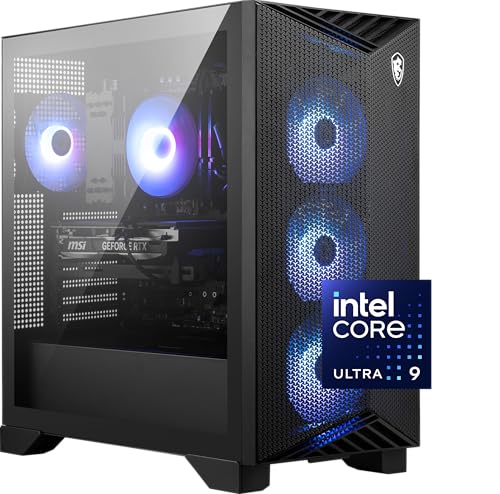
MSI's Creator Desktop is the most accessible entry point on this list for independent creators who need real workstation performance without enterprise pricing. The standard configuration pairs an Intel Core i9 with an NVIDIA RTX 4070 Ti - enough GPU for real-time 4K playback in DaVinci Resolve and solid Blender render times - alongside DDR5 system memory and an NVMe primary drive. The white chassis and clean front panel are designed to fit in a home office or studio setup rather than looking like a server rack. For solo creators, freelancers, and small studios, this delivers 80% of the performance at 50% of the cost of the ProArt Station.
What matters most
CPU core count
Video rendering, 3D, and audio mastering all scale with CPU cores. For content creation, prioritize core count over clock speed. A 16-core processor renders timelines faster than a 6-core running at higher frequency.
RAM capacity and type
32GB is the floor for 4K work. 64GB is comfortable for professional production. If you work with large 3D scenes or multi-cam footage simultaneously, 128GB pays dividends. DDR5 with ECC support is the gold standard for professional workloads.
Storage
A PCIe 4.0 or 5.0 NVMe primary drive (1TB minimum) is essential for media-heavy work. Supplement with a secondary drive for project files and a NAS or external array for archive storage.
GPU acceleration
Check which GPU API your primary application uses. Adobe apps leverage CUDA (NVIDIA) heavily. Blender supports both CUDA and OpenCL. Final Cut Pro uses Apple GPU acceleration exclusively. Match the GPU to your software.
Thermals
A workstation rendering for 8-12 hours continuously needs effective cooling. Look for systems with large heatsinks, multiple fans, or liquid cooling options - a throttled CPU during a long render costs real time.
Our take
Mac Studio M3 Max is the definitive pick for macOS creators who want the most efficient, capable system for Final Cut Pro and DaVinci Resolve workflows. ASUS ProArt Station covers the Windows side with CUDA power and full software compatibility. Lenovo ThinkStation P360 Ultra solves the space problem without sacrificing performance. HP Z2 Tower is built for the long game - upgrade it as your needs grow. MSI Creator D
Frequently asked
For 4K editing in Premiere Pro or DaVinci Resolve, 32GB is a workable minimum, but 64GB allows you to keep multiple sequences, plugins, and browser applications open simultaneously without constant memory pressure. Professional 3D rendering workflows in Cinema 4D or Blender benefit from 128GB configurations for complex scene files. The Mac Studio and ASUS ProArt Station both scale cleanly to 128GB+.
Apple Silicon (M3 Max and M4 Max) leads in power-efficient performance for Final Cut Pro and DaVinci Resolve on macOS, with exceptional hardware-accelerated ProRes encoding. For Windows-based workflows using Premiere Pro, After Effects, or heavy GPU compute (CUDA-dependent plugins), high-core-count Intel and AMD workstations close the gap significantly. The right answer depends on your software stack more than raw benchmark numbers.
Yes for most professional workflows. GPU acceleration in DaVinci Resolve, After Effects, and 3D applications (Blender, Cinema 4D) dramatically reduces render times. A professional workstation GPU like the NVIDIA RTX 4000 or AMD Radeon Pro W7600 is optimized for sustained compute workloads rather than burst gaming performance. The Mac Studio uses unified memory architecture, which handles GPU-intensive tasks differently but comparably for Apple ecosystem software.
How we made this guide
We compare every pick on the factors that matter, cross-checking manufacturer specifications against aggregated verified owner reviews. We rank independently and never take payment for placement. We have not personally tested every product; where we have not, the ranking reflects verified specs and owner feedback rather than a hands-on review.
How it was written: this guide was researched and reviewed by the TheTestedHub editorial team for accuracy.
Affiliate disclosure: TheTestedHub is reader-supported. When you buy through links on our site, we may earn a commission at no extra cost to you.