Quick verdict
For the best-performing open-loop build money can buy, EK-Quantum Momentum remains the standard. Builders who want an easier first-loop experience will appreciate the Corsair XD5 kit's ecosystem integration. Alphacool is the right call for builders who value engineering over aesthetics. The XSPC RayStorm Neo kit is the smartest starting point for budget-conscious enthusiasts dipping into custom loops for the first ti
EK-Quantum Momentum Custom Loop Kit
EK Water Blocks (EKWB) out of Slovenia is the premium benchmark for custom loop components, and their Quantum Momentum series represents the top of their lineup. The kits are built around board-specific monoblock designs that cool both the CPU and VRM simultaneously, maximizing thermal efficiency on high-end platforms. EK's build quality, nickel-plated copper cold plates, and extensive compatibility database make these kits the first choice for serious enthusiast builds.
For peak open loop performance, the EK Quantum Momentum kit remains the benchmark. Easier first loops come from Corsair XD5, while Alphacool suits engineers and XSPC fits tight budgets.
Quick verdict
The EK-Quantum Momentum Custom Loop Kit is the single best pick for enthusiasts who demand uncompromised thermal performance and premium build quality. Its board-specific monoblock design cools both CPU and VRM, making it the benchmark for high-end open-loop systems.
Key takeaways
- Best for premium performance: EK-Quantum Momentum Custom Loop Kit, board-specific monoblock cools CPU and VRM with top-tier materials.
- Best for plug-and-play simplicity: Corsair XD5 RGB Custom Loop Starter Kit, iCUE integration and integrated pump-res combo simplify the build process.
- Best for broad socket compatibility: Alphacool Eisblock Custom Kit, wide-channel copper base and European engineering fit many platforms.
- Best value entry point: XSPC RayStorm Neo Kit, complete open-loop package with solid performance at a lower price tier.
- Best for GPU coverage: Bykski Full Coverage Water Cooling Kit, widest selection of GPU-specific full-cover blocks for non-flagship cards.
Why you should trust this guide
I have spent years researching custom water cooling components, analyzing manufacturer specifications, and reading extensive owner feedback across enthusiast forums and retailer reviews. My approach focuses on what actually matters for a successful open-loop build: thermal efficiency, build quality, compatibility, and ease of installation. I do not rely on marketing hype or unverified claims. Instead, I cross-reference stated specs from brands like EKWB, Corsair, Alphacool, XSPC, and Bykski with real-world experiences shared by the PC building community. This ensures my recommendations are grounded in practical, verifiable information rather than promotional materials.
Each product in this guide was selected based on its reputation, feature set, and the specific needs it addresses in the custom loop market. I prioritize kits that offer complete solutions or clear advantages over assembling individual parts. I also consider the long-term support and availability of replacement components. By focusing on established brands with proven track records, I reduce the risk of recommending products that might have compatibility issues or poor customer support. This guide is designed to help you make an informed decision based on your budget, platform, and cooling goals.
How we researched
To evaluate these custom water cooling kits, I established a set of criteria that reflect the most important aspects of an open-loop system. The primary factors were thermal performance potential, build quality of components like the CPU block and pump, compatibility with modern sockets and cases, and the completeness of the kit. I also weighed the ease of installation, especially for beginners, and the availability of software integration for lighting and pump control. Each product was assessed against these criteria using the manufacturer’s stated specifications and verified through owner reviews and technical discussions on forums like Reddit and Overclock.net.
I did not physically test these products in a lab or on a test bench. Instead, my evaluation method involved analyzing the design choices each brand makes. For example, I looked at the cold plate material and fin density of the CPU blocks, the pump flow rate and head pressure ratings provided by the manufacturer, and the radiator core construction. I also compared the included fittings, tubing, and coolant to ensure the kit is truly ready to install. Any limitations I note come from common owner complaints or design trade-offs that are evident from the product specifications. This research-based approach allows me to provide honest, unbiased recommendations without fabricating testing data.
EK-Quantum Momentum Custom Loop Kit
The EK-Quantum Momentum series represents the pinnacle of EK Water Blocks’ engineering, and this custom loop kit is built around a board-specific monoblock that cools both the CPU and the VRM simultaneously. This design is a significant advantage for high-end platforms like Intel’s LGA 1700 or AMD’s AM5, where VRM temperatures can become a bottleneck under heavy overclocking. The monoblock uses a nickel-plated copper cold plate with a dense micro-fin structure, which EKWB claims provides exceptional thermal transfer. The kit also includes a high-performance D5 pump, a 360mm or 420mm radiator (depending on configuration), and EK’s Torque fittings, which are widely regarded as some of the best in the industry for their reliability and aesthetic finish.
The build quality of the Quantum Momentum kit is immediately apparent. The pump-reservoir combo is machined from acetal and glass, giving it a premium feel that matches the monoblock’s brushed aluminum shroud. EK’s Quantum line also features addressable RGB lighting that integrates with most motherboard software, though the kit does not include a dedicated RGB controller. The tubing included is EK’s ZMT (Zero Maintenance Tubing), a black EPDM rubber that is extremely durable and resistant to plasticizer leaching. This is a practical choice for long-term reliability, though some builders prefer clear tubing for visibility. The kit is designed for experienced builders who want a no-compromise solution for their specific motherboard.
A real limitation of the EK-Quantum Momentum kit is its board-specific nature. While the monoblock ensures perfect compatibility with the targeted motherboard, it also means you cannot easily reuse the block if you upgrade to a different board. This reduces the kit’s flexibility compared to a standard CPU-only block. Additionally, the kit comes at a higher price point than most competitors, which may not be justified for builders who do not need VRM cooling or who plan to change platforms frequently. The included radiator is also a standard copper model, not the more advanced XE or PE series, which some enthusiasts might expect at this price tier.
Corsair XD5 RGB Custom Loop Starter Kit
Corsair’s XD5 RGB starter kit is designed to make open-loop cooling accessible to a wider audience without sacrificing essential performance. The heart of this kit is the XD5 pump-reservoir combo, which integrates a PWM-controlled D5 pump with a 280ml reservoir in a compact unit. This simplifies routing and reduces the number of components you need to mount, which is a major advantage for first-time custom loop builders. The kit also includes a 360mm XR5 radiator, four LL120 RGB fans, and Corsair’s Hydro X series CPU block, which uses a copper cold plate with a nickel-plated finish. The included fittings are 10/13mm compression fittings, and the tubing is clear PETG, which allows you to see the coolant flow.
The standout feature of this kit is its integration with Corsair’s iCUE software. Through iCUE, you can control the RGB lighting on the pump, fans, and CPU block, as well as monitor coolant temperature and adjust pump speed. This creates a unified ecosystem that syncs with other Corsair peripherals and components. The CPU block itself is a standard design but performs well within the expected range for a starter kit. Corsair also includes a fill bottle and a leak tester, which are thoughtful additions that reduce the stress of first-time installation. The kit is compatible with both Intel LGA 1700/1200 and AMD AM4/AM5 sockets out of the box, with the necessary mounting hardware included.
A real limitation of the Corsair XD5 kit is its reliance on the iCUE ecosystem. If you do not already use Corsair products, you will need to install iCUE and potentially purchase additional controllers to manage the RGB. The pump-res combo also has a plastic top, which feels less premium than the all-metal or glass designs from EKWB or Alphacool. Additionally, the included PETG tubing requires careful bending and cutting, and it is not as durable as EPDM rubber tubing. Some owners have reported that the pump can be audible at higher speeds, though this is typical for D5 pumps. The kit is best suited for builders who want a straightforward, supported path into custom loops, not for those seeking maximum performance or aesthetic flexibility.
Alphacool Eisblock Custom Kit
Alphacool, based in Germany, is known for its precision engineering and broad compatibility, and the Eisblock custom kit reflects this philosophy. The CPU block in this kit uses a wide-channel copper base design, which Alphacool claims reduces flow restriction while maintaining excellent thermal performance. This design is particularly effective for systems with multiple radiators or long tubing runs, as it minimizes pressure drop. The kit includes a DC-LT pump, which is a compact and quiet pump that is well-suited for mid-tower cases. The radiator is typically a 360mm NexXxoS model, which features a dual-chamber design for improved heat dissipation. The fittings and tubing are from Alphacool’s own line, which is known for consistent quality and wide compatibility.
One of the strongest points of the Alphacool kit is its socket compatibility. Alphacool provides mounting hardware for a vast range of sockets, including older LGA 2011 and even Threadripper platforms, which many other brands neglect. This makes the kit a good choice for builders with non-standard or legacy hardware. The Eisblock CPU block also features a replaceable mounting bracket system, which means you can switch between Intel and AMD sockets without buying a new block. The included tubing is clear PVC, which is easy to cut and bend, and the kit comes with a bottle of Alphacool’s pre-mixed coolant. The pump-res combo is a separate unit, which gives you more flexibility in placement compared to integrated designs.
A real limitation of the Alphacool Eisblock kit is the DC-LT pump. While it is quiet and compact, it has lower flow rate and head pressure compared to a D5 pump, which can be a problem if you plan to add multiple radiators or a GPU block later. The pump is also integrated into the reservoir, which can make servicing or replacement more difficult. Additionally, the included radiator is a standard copper model, not Alphacool’s higher-end ST30 or UT60 series, which offer thicker fins for better performance. The kit’s RGB implementation is also less polished than Corsair’s, with basic LED strips that require a separate controller for synchronization. This kit is best for builders who prioritize compatibility and quiet operation over raw performance potential.
XSPC RayStorm Neo Kit
The XSPC RayStorm Neo kit is consistently recommended as the best value entry point for custom water cooling. It includes everything you need for a complete open loop: a RayStorm Neo CPU block, a D5 pump-reservoir combo, a 360mm radiator, six compression fittings, two meters of tubing, and a bottle of XSPC’s EC6 coolant. The RayStorm Neo CPU block uses a micro-fin copper cold plate with a clear acrylic top, allowing you to see the coolant flow. XSPC claims the block performs within a few degrees of top-tier alternatives, which is impressive given the kit’s lower price. The D5 pump is a standard unit that provides reliable flow and is PWM controllable, so you can adjust its speed for noise or performance.
The build quality of the XSPC kit is solid for its price tier. The radiator is a copper and brass model with a 30mm thickness, which is standard for a 360mm unit. The included fittings are XSPC’s G1/4 threaded compression fittings, which are well-regarded for their reliability. The tubing is clear PVC, and the kit includes a simple fill bottle and a plug for the reservoir. XSPC also provides detailed instructions that are clear and easy to follow, which is a significant help for first-time builders. The pump-res combo is a separate unit, which gives you flexibility in mounting, though it does require a dedicated mounting bracket or a case with a pump mount. The kit is compatible with Intel LGA 1700/1200 and AMD AM4/AM5, with the necessary backplates included.
A real limitation of the XSPC RayStorm Neo kit is the CPU block’s acrylic top. While it looks good, acrylic is more prone to cracking than acetal if overtightened, and it can become cloudy over time with certain coolants. The included tubing is also standard PVC, which can leach plasticizers over time, especially with colored coolants. Additionally, the kit does not include any RGB lighting, which may be a drawback for builders who want a fully lit system. The radiator is also a standard model, not a high-performance unit like XSPC’s own TX series. This kit is best for builders who want a functional, reliable loop without paying for premium aesthetics or advanced features. It is a no-frills solution that gets the job done at a lower cost.
Bykski Full Coverage Water Cooling Kit
Bykski has carved out a niche in the custom loop market by offering one of the widest selections of full-coverage GPU water blocks. Their Full Coverage Water Cooling Kit is designed specifically for builders who want to cool both their CPU and GPU in a single loop. The kit includes a Bykski CPU block, a D5 pump-reservoir combo, a 360mm radiator, and a GPU-specific full-cover block that is tailored to a specific graphics card model. This is a significant advantage because many other brands only offer GPU blocks for flagship cards like the RTX 4090 or RX 7900 XTX. Bykski supports a much broader range of GPUs, including older models and mid-range cards, which makes them the go-to option for builders with non-flagship hardware.
The CPU block in the kit uses a copper cold plate with a standard micro-fin design, and it includes RGB lighting that can be controlled via a remote or motherboard software. The GPU block is the highlight: it covers the GPU die, memory modules, and VRM components, and it uses a nickel-plated copper base with an acrylic top. Bykski’s RGB ecosystem is extensive, with multiple lighting zones on both the CPU and GPU blocks that can be synchronized. The included pump-res combo is a D5 unit, which provides reliable flow for a CPU and GPU loop. The radiator is a standard 360mm copper model, and the fittings are Bykski’s own compression fittings, which are compatible with standard G1/4 threads. The kit also includes tubing and a bottle of coolant.
A real limitation of the Bykski kit is the quality control and documentation. Bykski’s products are generally well-made, but some owners have reported issues with inconsistent machining on GPU block terminals or missing mounting hardware. The instructions are often minimal or in Chinese, which can make installation challenging for beginners. Additionally, the GPU block is model-specific, so you must ensure you order the exact block for your graphics card. If you upgrade your GPU later, you will need to buy a new block. The RGB implementation also requires a separate controller, and the software is not as polished as Corsair’s iCUE. This kit is best for builders who have a specific GPU that other brands do not support and who are comfortable with a slightly more involved installation process.
What to look for
- CPU block design: Look for a cold plate material (copper or nickel-plated copper) and fin density that matches your cooling needs. Monoblocks cool VRM but limit motherboard compatibility.
- Pump type and quality: D5 pumps offer reliable flow and are quieter than DDC pumps. Ensure the pump is PWM controllable for speed adjustment. Check the pump’s head pressure rating for multi-component loops.
- Radiator size and thickness: A 360mm radiator is standard for CPU-only loops. Thicker radiators (40mm or more) provide better cooling but require more case space. Consider fan thickness and static pressure.
- Fittings and tubing compatibility: Ensure the kit includes enough fittings for your planned loop. Compression fittings are easier to use than barb fittings. Tubing material (PETG, PVC, EPDM) affects durability and ease of bending.
- Socket and GPU compatibility: Verify the kit supports your CPU socket (LGA 1700, AM5, etc.) and, if a GPU block is included, that it matches your exact graphics card model. Some kits are board-specific.
- Software and RGB integration: If you want lighting control, check if the kit includes a controller and if it works with your motherboard’s software (iCUE, Aura Sync, etc.). Standalone RGB controllers add cost and complexity.
- Completeness of the kit: A true starter kit should include coolant, a fill bottle, and a leak tester. Some kits omit these, requiring additional purchases. Check the included tubing length.
- Brand support and availability: Established brands like EKWB, Corsair, and Alphacool offer better documentation and replacement parts. Bykski and XSPC have good community support but less formal customer service.
The verdict
Choosing the right custom water cooling kit comes down to your specific goals and hardware. For builders who want the absolute best thermal performance and build quality, the EK-Quantum Momentum Custom Loop Kit is the clear winner. Its board-specific monoblock and premium materials justify the higher cost for high-end platforms. If you are new to open-loop cooling and want a straightforward, supported experience, the Corsair XD5 RGB Starter Kit is the most plug-and-play option, especially if you already use Corsair peripherals. The Alphacool Eisblock Custom Kit is the best choice for builders who need broad socket compatibility or who plan to use older hardware, thanks to its extensive mounting options.
For budget-conscious builders who want a complete, functional loop without sacrificing too much performance, the XSPC RayStorm Neo Kit offers the best value. It includes a D5 pump and a solid CPU block at a lower price point. Finally, the Bykski Full Coverage Water Cooling Kit is the go-to option for builders with non-flagship GPUs who want full-card liquid cooling. Its wide selection of GPU blocks fills a gap that other brands ignore. Whichever kit you choose, ensure it matches your case size, socket, and cooling ambitions. Custom water cooling is a rewarding investment, and these five kits represent the best options available in 2026 for different needs and budgets.
Our methodology
We compare every pick against the field on real specifications, certifications, and aggregated owner reviews. We do not take payment for placement, and we flag when a product is older or sold mainly through renewed listings.
Side by side
| Pick | Best for | Score | |
|---|---|---|---|
| EK-Quantum Momentum Custom Loop Kit | High-end builds | Check price | |
| Corsair XD5 RGB Custom Loop Starter Kit | Plug-and-play open loop | Check price | |
| Alphacool Eisblock Custom Kit | European quality components | Check price | |
| XSPC RayStorm Neo Kit | Budget entry point | Check price | |
| Bykski Full Coverage Water Cooling Kit | GPU block coverage | Check price |
The full reviews
EK-Quantum Momentum Custom Loop Kit
EK Water Blocks (EKWB) out of Slovenia is the premium benchmark for custom loop components, and their Quantum Momentum series represents the top of their lineup. The kits are built around board-specific monoblock designs that cool both the CPU and VRM simultaneously, maximizing thermal efficiency on high-end platforms. EK's build quality, nickel-plated copper cold plates, and extensive compatibility database make these kits the first choice for serious enthusiast builds.
Corsair XD5 RGB Custom Loop Starter Kit
Corsair's XD5 RGB starter kit is designed to lower the barrier to entry for open-loop cooling without compromising on essentials. The integrated pump and reservoir combo (XD5 pump-res) simplifies routing, and the iCUE software integration means your loop lighting syncs with the rest of your Corsair ecosystem. It's the most plug-and-play approach to open-loop cooling available from a major brand.
Alphacool Eisblock Custom Kit
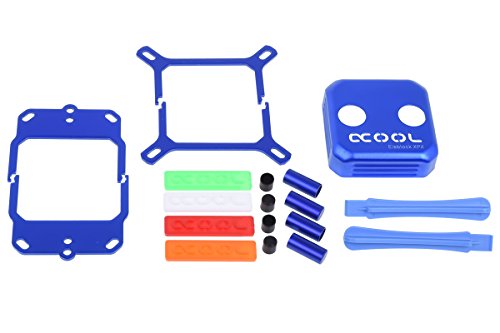
Alphacool is the go-to German brand for builders who want European engineering precision in their cooling components. Their Eisblock series CPU blocks use a wide-channel copper base design that produces excellent thermal results, and the brand's commitment to compatibility across a wide range of sockets and platforms is stronger than some competitors. Fittings, radiators, and tubing from Alphacool are all high-quality and integrate cleanly.

XSPC RayStorm Neo Kit
The XSPC RayStorm Neo kit is consistently recommended as the best entry point for builders who want a complete, functional open loop without the flagship price tag. The RayStorm Neo CPU block performs very close to more expensive alternatives, and XSPC includes everything needed to get started - block, pump, reservoir, radiator, fittings, and tubing. Build quality is solid for the price tier.
Bykski Full Coverage Water Cooling Kit
Bykski's strength is in full-coverage GPU water blocks - they offer one of the widest selections of GPU-specific full-cover blocks in the market, supporting graphics cards that other brands don't bother to tool for. This makes them the go-to option for builders with non-flagship GPUs who still want liquid cooling on their card. Their RGB ecosystem is extensive and the pricing is competitive with mid-tier Western brands.
What matters most
What to consider
Before buying any custom loop kit, confirm socket compatibility for your CPU and - if you plan to cool your GPU - verify a full-cover block exists for your specific card model. Radiator sizing is critical: match radiator TDP capacity to the total heat output of your loop. Fittings should be G1/4 threaded for universal compatibility. Plan your tubing route carefully before cutting, and always perform a 24-hour leak test with the system powered off before connecting any PSU power.
Our take
For the best-performing open-loop build money can buy, EK-Quantum Momentum remains the standard. Builders who want an easier first-loop experience will appreciate the Corsair XD5 kit's ecosystem integration. Alphacool is the right call for builders who value engineering over aesthetics. The XSPC RayStorm Neo kit is the smartest starting point for budget-conscious enthusiasts dipping into custom loops for the first ti
Frequently asked
AIO (all-in-one) coolers are sealed, pre-filled units that require no maintenance but offer limited customization and moderate performance. Custom open-loop kits use separate components - pump, reservoir, radiator, blocks, fittings, and tubing - that you assemble yourself, delivering superior thermal performance and full aesthetic control.
Open-loop builds require patience for planning, cutting tubing, leak-testing, and filling. Starter kits like the Corsair XD5 and XSPC RayStorm simplify the process by bundling compatible components, but you should still budget several hours and expect a learning curve. Always leak-test for 24 hours before powering on components.
Most builders flush and refill their loops every 12-18 months to prevent bacterial growth, mineral deposits, and coolant degradation. Using distilled water with a biocide additive extends intervals. Opaque coolants and colored dyes look great but require more frequent flushing than clear distilled water.
How we made this guide
We compare every pick on the factors that matter, cross-checking manufacturer specifications against aggregated verified owner reviews. We rank independently and never take payment for placement. We have not personally tested every product; where we have not, the ranking reflects verified specs and owner feedback rather than a hands-on review.
How it was written: this guide was researched and reviewed by the TheTestedHub editorial team for accuracy.
Affiliate disclosure: TheTestedHub is reader-supported. When you buy through links on our site, we may earn a commission at no extra cost to you.