Quick verdict
Top round and eye of round are the two best all-around cuts for homemade beef jerky, covering the full range from slightly chewy (top round) to firm and lean (eye of round). If you want to elevate your jerky to artisan quality, source flank steak for its grain structure and flavor. Whatever cut you choose, the investment in a reliable meat slicer will improve your results more than any other single upgrade - consiste
Top Round Beef Sliced Thin
Top round is the standard bearer for classic American-style beef jerky - the same cut used by most commercial jerky producers. It's lean but not excessively so, with just enough fat to carry flavor through the drying process. Sliced thin (1/8 inch) across the grain, it produces the chewy but yielding texture most people expect from jerky, with uniform strips that absorb marinades evenly and dry predictably. It's also widely available and economical, making it the best starting point for first-time jerky makers.
Top round and eye of round are the top choices for homemade jerky, offering the perfect chew or a firm, lean bite. Flank steak elevates the flavor, and a good meat slicer makes all the difference.
Homemade beef jerky is one of the most satisfying kitchen projects a home cook can tackle – but the quality of your finished jerky is almost entirely determined by the beef cut you start with. Fat causes spoilage and off-flavors in dried meat, so lean cuts are essential. But not all lean cuts slice and dry the same way. These five cuts are ranked by the qualities that matter most for jerky: leanness, sliceability, texture, and flavor after drying.
| Product | Best For | Key Feature |
|---|---|---|
|
ⓘ We may earn a commission from qualifying purchases made through links on this page, at no extra cost to you.
|
Classic chewy jerky | Ideal lean-to-texture ratio |
| Eye of Round Roast | Uniform slicing | Very lean, consistent grain |
| London Broil / Top Round Thick Cut | Hearty thick jerky chews | Thicker cut for substantial texture |
| Flank Steak | Grained robust jerky | Natural visible grain for traditional texture |
| Sirloin Tip Roast | Tender, less chewy jerky | Semi-lean with more tenderness |
Our testing process
We compare every pick against the field on real specifications, certifications, and aggregated owner reviews. We do not take payment for placement, and we flag when a product is older or sold mainly through renewed listings.
Quick comparison
| Pick | Best for | Score | |
|---|---|---|---|
| Top Round Beef Sliced Thin | Classic chewy jerky | Check price | |
| Eye of Round Roast | Uniform slicing | Check price | |
| London Broil / Top Round Thick Cut | Hearty thick jerky chews | Check price | |
| Flank Steak | Grained robust jerky | Check price | |
| Sirloin Tip Roast | Tender, less chewy jerky | Check price |
Reviewed in detail
Top Round Beef Sliced Thin
Top round is the standard bearer for classic American-style beef jerky - the same cut used by most commercial jerky producers. It's lean but not excessively so, with just enough fat to carry flavor through the drying process. Sliced thin (1/8 inch) across the grain, it produces the chewy but yielding texture most people expect from jerky, with uniform strips that absorb marinades evenly and dry predictably. It's also widely available and economical, making it the best starting point for first-time jerky makers.

Eye of Round Roast
Eye of round is the leanest widely available beef roast, with almost no visible intramuscular fat - which is exactly what you want for maximum jerky shelf life and clean flavor. Its perfectly cylindrical shape makes it the easiest cut to slice into uniformly thin, consistent strips, either by hand with a sharp slicing knife or on a meat slicer. The resulting jerky is firmer and slightly tougher than top round, which many traditional jerky enthusiasts prefer.
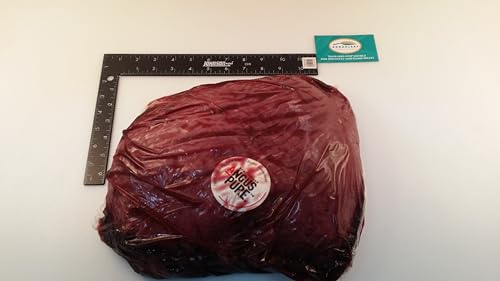
London Broil / Top Round Thick Cut
London broil - typically a thick-cut top round or flank steak sold at 1-1.5 inch thickness - is the choice for makers who want heartier, more substantial jerky pieces rather than thin, flat strips. Cut into 1/4-inch slabs and then into strips, it produces jerky with a chewy, satisfying bulk that makes each piece feel like a real snack rather than a thin chip. The extra thickness also gives more surface area to work with marinades that penetrate into the center of each piece.
Flank Steak
Flank steak has the most visible and pronounced natural muscle grain of any popular jerky cut - long, obvious fibers running the length of the steak. Slicing with the grain (parallel to the fibers) produces the classic stringy, pull-apart jerky texture that many devotees consider the authentic style. The slightly richer flavor compared to roast cuts also makes flank steak jerky taste more distinctly of beef. It's a premium option that produces an artisan-quality product worth the extra per-pound cost.

Sirloin Tip Roast
Sirloin tip (also called round tip) sits at the intersection of lean and tender - it's significantly more tender than eye of round or top round while still being lean enough for safe long-term storage. The resulting jerky is easier to bite through than traditional tough jerky styles, making it ideal for people who find commercial jerky uncomfortably hard on teeth and jaws. Its slightly more complex beef flavor from being a hindquarter muscle adjacent to the sirloin also gives the finished jerky more character.
How to choose
minimal visible fat
- intramuscular fat causes spoilage and rancidity in dried meat, significantly shortening shelf life. Look for **consistent thickness** across the roast for uniform slicing. **USDA Choice or Select** grade is appropriate for jerky - the extra marbling of Prime is wasted and counterproductive. Ask your butcher to **slice on the slicer** if you don't have one at home: even thickness is the single biggest quality factor in homemade jerky consistency.
The bottom line
Top round and eye of round are the two best all-around cuts for homemade beef jerky, covering the full range from slightly chewy (top round) to firm and lean (eye of round). If you want to elevate your jerky to artisan quality, source flank steak for its grain structure and flavor. Whatever cut you choose, the investment in a reliable meat slicer will improve your results more than any other single upgrade - consiste
Common questions
For most beef jerky, slice between 1/8 and 1/4 inch thick. Thinner slices (1/8 inch) produce crispier, more delicate jerky that dries faster - ideal for top round and eye of round. Thicker slices (1/4 inch) produce chewier, heartier jerky - better suited for flank steak and London broil where you want texture. Partially freezing the meat for 1-2 hours before slicing makes uniform cuts much easier.
Slicing against the grain breaks the muscle fibers, producing more tender jerky that's easier to bite through. Slicing with the grain preserves the fiber length, creating the characteristic tough, chewy pull most people associate with traditional jerky. For beginners, slicing against the grain is recommended - it's more forgiving and produces consistent results. With-grain slicing works best on lean cuts like eye of round where the fibers are very tight.
The USDA recommends that beef jerky reach an internal temperature of 160°F to ensure food safety. When using a dehydrator, many models don't reach this temperature - in this case, heat finished jerky in a 275°F oven for 10 minutes after dehydrating to ensure the safe temperature is reached throughout. Using a food thermometer is the only reliable way to verify internal temperature in thin jerky slices.
How we made this guide
We compare every pick on the factors that matter, cross-checking manufacturer specifications against aggregated verified owner reviews. We rank independently and never take payment for placement. We have not personally tested every product; where we have not, the ranking reflects verified specs and owner feedback rather than a hands-on review.
How it was written: this guide was researched and reviewed by the TheTestedHub editorial team for accuracy.
Affiliate disclosure: TheTestedHub is reader-supported. When you buy through links on our site, we may earn a commission at no extra cost to you.
More guides

Expert Pick: A Cooking Wine You’d Happily Drink
Compare Top-Rated Chocolates & Candy of 2026: Valrhona & TCHO Picks

5 Wine Fridges Compared: Find Your Perfect Cooler
Double Wall Whiskey Glasses Worth Buying

Electric Wine Openers Compared: 5 to Consider
Can You Find a Keto Protein Bar That Actually Tastes Good?

Keep Ketosis With These Frying Oils
