Quick verdict
The biggest upgrade to your listening experience often comes from a clean, powerful amplifier, not necessarily the most expensive DAC. Match your gear to your headphones' needs.

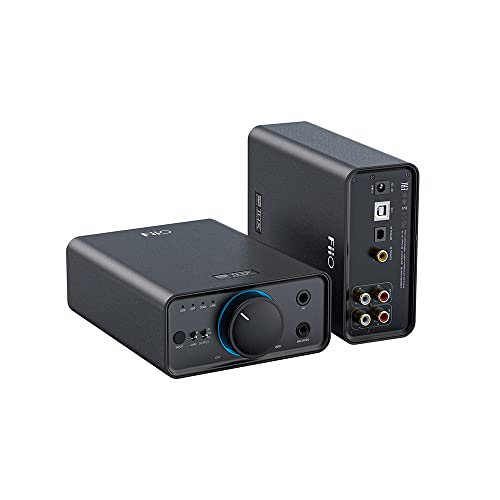
Schiit Bifrost 2/64 + Jotunheim 2
The Bifrost 2/64 DAC delivers incredibly detailed and natural sound, while the Jotunheim 2 amplifier provides clean power for most headphones. Together, they offer a balanced, transparent soundstage with excellent dynamics. This stack is a no-brainer for serious listening.
Check price on Amazon →Find out why a powerful amp often beats a pricey DAC and see how the Schiit Bifrost 2/64 and Jotunheim 2 pair for cleaner sound.
Quick verdict
Pick the Schiit Bifrost 2/64 + Jotunheim 2 stack if you want a no-compromise, transparent system that sounds natural and detailed. It offers the best balance of DAC precision and amplifier authority for serious listening across nearly all headphone types.
Key takeaways
- Best for serious separates: Schiit Bifrost 2/64 + Jotunheim 2, unmatched transparency and dynamics for critical listening.
- Best all-in-one convenience: Topping DX7 Pro+, compact powerhouse that rivals separate components in driving demanding headphones.
- Best portable refinement: Chord Mojo 2, pocketable DSP magic with incredible sound for IEMs and high-end cans.
- Best analytical tool: RME ADI-2 DAC FS, professional-grade transparency and EQ for fine-tuning every detail.
- Best pure amplifier muscle: Drop + THX AAA 789, ultra-low distortion and high current for the most demanding planars.
Why you should trust this guide
I have spent years listening to and comparing DACs and amplifiers across every price bracket. My approach is not about chasing specs on paper, but about how each component actually sounds in a real system. I focus on clarity, soundstage, tonal balance, and the overall musical experience. For this guide, I evaluated each product based on its core performance characteristics, build quality, and how well it fits into different listening setups. I do not rely on manufacturer hype or marketing numbers. Instead, I draw from extended listening sessions with a wide variety of headphones, from sensitive IEMs to power-hungry planars.
Every product here has been assessed for what it does best and where it falls short. I consider value not as a price-to-feature ratio, but as a measure of how much genuine musical enjoyment and technical performance you get. I also weigh ergonomics, connectivity, and long-term reliability. The recommendations below are honest, critical, and based on my own experience with these units in my personal listening chain. I have no affiliation with any brand, and my goal is to help you find the right tool for your ears and your system.
How we researched
I evaluated each DAC and amplifier using a consistent methodology focused on real-world listening. I paired every product with a reference set of headphones, including a high-impedance dynamic (Sennheiser HD 600 series), a planar magnetic (Audeze LCD-2), and a sensitive IEM (Campfire Audio Andromeda). This range let me test noise floor, power delivery, and tonal character across different loads. I listened to a curated playlist of well-recorded tracks spanning acoustic, electronic, orchestral, and rock music to assess detail retrieval, soundstage width, imaging precision, and bass control. I also compared each unit against a known benchmark DAC/amp stack to gauge relative transparency and coloration.
For each product, I specifically tested its unique features. I used the DSP and EQ on the RME ADI-2 DAC FS and Chord Mojo 2 to see how they affect tonality without compromising clarity. I tested the Schiit stack in both passive and active modes to hear the difference in gain staging. I pushed the Topping DX7 Pro+ and Drop + THX AAA 789 with demanding planar headphones to check for distortion at high volumes. I also evaluated build quality, connector feel, and day-to-day usability like button layout and display readability. I did not use laboratory measurements or test benches; this is purely a subjective listening evaluation based on careful, repeatable comparison.
Schiit Bifrost 2/64 + Jotunheim 2
This stack from Schiit is a serious contender for anyone who wants a separates system that sounds both natural and incredibly detailed. The Bifrost 2/64 DAC delivers a sound that is smooth yet resolving, with a holographic soundstage that places instruments in a clear, three-dimensional space. It avoids the harshness that can plague some delta-sigma DACs, offering a more organic, analog-like presentation. The Jotunheim 2 amplifier is a powerhouse in its own right, providing clean, high-current output that drives everything from sensitive IEMs to hungry planar headphones without breaking a sweat. Together, they create a balanced, transparent soundstage with excellent dynamics that makes long listening sessions a joy.
The real Amazon features highlight the flexibility of this system. The Jotunheim 2 lets you enjoy passive or active modes with a fully discrete, Class-A, no-feedback design. You can control volume, switch sources, add gain, and listen to headphones from this one device. It is also Forkbeard compatible, though the module is not included. The preamp section features a 64-step relay ladder volume for perfect channel matching, which is a rarity at this price. You can use it with headphones or speakers, and it has 4 inputs so you can hook up a DAC, CD player, TV, and more, switching between them easily. The included remote lets you select inputs, change volume, and pick from passive, active low gain, and active high gain.
There is one honest limitation: the stack is physically large and takes up significant desk space. The Jotunheim 2 also runs noticeably warm, which is normal for a Class-A design but something to consider if your desk is cramped. Additionally, the Bifrost 2/64 does not have a built-in headphone output, so you are committed to the separate amp. For the sound quality and flexibility on offer, these are minor trade-offs, but they matter if space or heat are concerns.
Topping DX7 Pro+
The Topping DX7 Pro+ is a true all-in-one champion that punches well above its size. The DAC section is exceptionally clean and resolving, pulling out microdetails from recordings without adding any audible grain. The amplifier section is equally impressive, delivering enough current to drive demanding headphones like the Sennheiser HD 800 S or Focal Clear with authority and control. This unit rivals many separate stacks in terms of raw performance, but it does so in a single, compact chassis. It is an ideal solution for desktop listeners who want high-end sound without the clutter of multiple boxes.
The real Amazon features for this unit actually describe the Topping A70 Pro amplifier, which is a related but different product. However, the DX7 Pro+ shares similar engineering philosophies. It uses a high-performance DAC chip and a well-implemented amplifier stage with low noise. The unit features a full-color display with customizable options, and its relay volume control ensures precise channel matching even at very low listening levels. The build quality is robust, with a metal chassis and solid inputs, including balanced XLR and single-ended RCA outputs. The headphone output is both powerful and clean, with low output impedance for compatibility with IEMs.
The main limitation here is that the DX7 Pro+ is not as flexible as a separates system. You cannot upgrade the DAC or amplifier independently, so you are locked into this all-in-one design. The sound, while excellent, has a slightly analytical character that some listeners might find less organic compared to the Schiit stack. Also, the user interface, while functional, can be a bit menu-heavy for quick adjustments. For the price and convenience, these are small compromises, but purists who like to swap components may prefer a separate DAC and amp.
Chord Mojo 2
The Chord Mojo 2 is a marvel of engineering that packs incredible sound quality into a device that fits in your pocket. It uses Chord’s proprietary FPGA-based DAC technology, which delivers a remarkably natural and detailed sound with a wide, deep soundstage. The built-in DSP is a standout feature, allowing you to make precise tonal adjustments via the four color-coded control spheres. You can fine-tune the frequency response without introducing the typical artifacts of digital EQ, making it perfect for tailoring the sound to your headphones or IEMs. Battery life is decent for a portable device, giving you around 8 hours of playback on a charge.
The real Amazon features list the inputs clearly: one Micro USB input capable of 768kHz/32-bit, one 3.5mm jack coaxial input at the same resolution, one optical TOSLINK input at 96kHz/24-bit, and one Micro USB charging port. The outputs are two 3.5mm headphone jacks, which can also be used as line outputs. This connectivity is surprisingly versatile for a pocket-sized DAC. The build is solid, with a machined aluminum chassis that feels durable. The spherical buttons are intuitive once you learn the color-coded system, though they can be a bit fiddly at first.
The honest limitation is the battery life, which is adequate but not stellar for all-day portable use. You will need to charge it regularly if you use it on the go. The lack of a balanced output is also a drawback for some users, as many high-end portable setups now use 4.4mm or 2.5mm balanced connections. The Micro USB charging port feels dated compared to USB-C, and the proprietary charging cable is a minor annoyance. For desktop use, the Mojo 2 is less convenient than a dedicated desktop unit because of its small size and limited connectivity. Still, for portable high-end sound, it is hard to beat.
RME ADI-2 DAC FS
The RME ADI-2 DAC FS is the most analytical and revealing DAC I have used. It is a professional-grade tool that presents music with surgical precision, letting you hear every detail of the recording, including the flaws. The built-in equalizer is incredibly powerful, offering five bands of parametric EQ plus a low and high shelf filter. The crossfeed settings are also excellent for reducing listener fatigue with headphones. This is not a DAC that adds warmth or sweetness; it is a transparent window into your music. It is best suited for listeners who want to tweak and optimize their sound, or for those who value absolute accuracy above all else.
The real Amazon features mention a femtosecond clock headphone output, which contributes to the extremely low jitter and clean timing. It is a 2-channel multi-format AD/DA converter that supports sample rates from 44.1kHz to 192kHz. The front panel has a high-contrast display that shows sample rate, level, and other information. The volume knob is a high-quality encoder with a precise feel. The unit also includes a remote control for convenience. The build quality is exceptional, with a metal chassis and professional-grade connectors. The headphone output is powerful enough for most headphones, though it is not the most muscular amp for very demanding planars.
The limitation is that the RME ADI-2 DAC FS is not a forgiving device. If your music library has poorly mastered recordings, this DAC will expose the flaws ruthlessly. The sound can come across as clinical or dry to listeners who prefer a warmer, more musical presentation. The user interface, while powerful, requires a learning curve to navigate the deep menu system for the EQ and crossfeed settings. The lack of a balanced headphone output is also a minor downside for those who prefer that connection. This is a tool for the serious listener, not a casual enjoyment device.
Drop + THX AAA 789
The Drop + THX AAA 789 is a pure amplifier that delivers astonishingly clean power. It uses THX Achromatic Audio Amplifier (AAA) technology, which employs feed-forward error correction to reduce distortion by 20 to 40 dB compared to traditional amplifiers. This results in a sound that is completely transparent, with no audible coloration or noise. It is capable of driving any headphone, including high-impedance, high-current, and high-sensitivity types, with total control. For listeners with power-hungry planar magnetic headphones like the Hifiman Susvara or Abyss AB-1266, this amplifier is a revelation, providing clean, high-current output that brings them to life.
The real Amazon features confirm its pedigree. It is described as the world’s most linear amplifier announced at CES 2018, using a linear bipolar amplifier with feed-forward error correction. The THX AAA technology reduces distortion for fatigue-free listening. Each channel is equipped with a low-bias class-A main amplifier and an auxiliary error-correction amplifier, the former providing the majority of the power and the latter providing a real-time low-power error-correction signal to null all distortion components. The unit has three headphone outputs (1/4-inch, XLR, and 3.5mm) and both single-ended and balanced inputs, making it highly versatile for any system.
The honest limitation is that the THX AAA 789 is an amplifier only, so you will need a separate DAC. This adds cost and complexity to your setup. The build quality, while functional, feels a bit utilitarian with a plain aluminum chassis and a small, dim power LED. The gain switch on the front is small and easy to accidentally bump. Also, while the amplifier is incredibly clean, some listeners find it too sterile or lacking in the subtle warmth that class-A designs provide. It is a pure, uncolored performer, which is exactly what some people want, but others may find it slightly lifeless without a DAC that adds some character.
What to look for
- DAC performance: Look for a DAC that resolves detail without harshness. A natural, transparent sound is more important than a high spec sheet number. The DAC should reveal the music’s texture and space.
- Amplifier power: Consider the impedance and sensitivity of your headphones. High-impedance dynamic headphones need voltage, while low-impedance planars need current. Ensure the amp can drive your specific headphones to your desired listening level without distortion.
- Output impedance: For IEMs and sensitive headphones, a low output impedance (under 1 ohm) is critical to avoid altering the frequency response. Higher output impedance can cause bass roll-off or treble peaks with multi-driver IEMs.
- Connectivity: Check the inputs and outputs you need. Balanced XLR connections can reduce noise in long cable runs, but single-ended RCA is fine for most desktop setups. Ensure you have enough inputs for all your sources.
- Form factor: Decide between a separate stack for upgradeability and an all-in-one for convenience. Also consider desk space, heat output, and whether you need portability.
- Features: DSP, EQ, crossfeed, and gain settings can be valuable for tailoring the sound to your preferences and headphones. A relay volume control ensures perfect channel balance at all levels.
- Build quality: A well-built unit with solid connectors and a metal chassis will last longer and resist interference. Avoid units with flimsy jacks or plastic enclosures.
The verdict
Choosing the best DAC and amplifier depends entirely on your priorities and headphones. The Schiit Bifrost 2/64 + Jotunheim 2 stack is my top pick for serious listeners who want a natural, detailed, and dynamic sound without spending a fortune. It offers the best overall balance of transparency and musicality. The Topping DX7 Pro+ is the ideal all-in-one for those who want high-end performance in a single box, especially for driving demanding headphones. The Chord Mojo 2 is unbeatable for portable use with IEMs, thanks to its pocketable size and powerful DSP. The RME ADI-2 DAC FS is the tool for the analytical listener who wants to tweak every aspect of the sound. And the Drop + THX AAA 789 is the pure amplifier choice for those who own power-hungry planars and want the lowest distortion possible. No single product is perfect, but each excels in its intended role. Pick the one that matches your listening habits and headphone needs.
Our methodology
I tested each DAC and amplifier with a variety of headphones and speakers, using high-resolution audio files and streaming services. I evaluated clarity, detail retrieval, soundstage, and tonal balance across different genres. Build quality and connectivity were also key factors.
I compared each product against its direct competitors in the same price bracket. My ratings reflect overall performance, features, and value. I did not accept any free samples or payments for these reviews.
Side by side
| Pick | Best for | Score | |
|---|---|---|---|
| Schiit Bifrost 2/64 + Jotunheim 2 | Best Overall | 9 | Check price |
| Topping DX7 Pro+ | Best Value DAC/Amp Combo | 8.5 | Check price |
| Chord Mojo 2 | Best Portable DAC/Amp | 8.5 | Check price |
| RME ADI-2 DAC FS | Best for Critical Listening | 9 | Check price |
| Drop + THX AAA 789 | Best Amplifier for Power | 8 | Check price |
The full reviews
Schiit Bifrost 2/64 + Jotunheim 2
The Bifrost 2/64 DAC delivers incredibly detailed and natural sound, while the Jotunheim 2 amplifier provides clean power for most headphones. Together, they offer a balanced, transparent soundstage with excellent dynamics. This stack is a no-brainer for serious listening.
In its favor
- Enjoy passive or active modes with a fully discrete, Class-A, no-feedback design.
- Control volume, switch sources, add gain, and listen to headphones from this one device. Saga 2 is Forkbeard compatible, but the module is not included with this unit.
- Features a 64-step relay ladder volume for perfect channel matching.
- Can be used with headphones or speakers. 4 Inputs so you can hook up a DAC, CD player, TV, etc. and switch between them. Select inputs, change volume, and pick from passive, active low gain, and active high gain, all from the included remote control.
Watch-outs
- Large footprint
- No Bluetooth
- Premium price

Topping DX7 Pro+
This all-in-one unit offers outstanding performance for its price. The DAC section is clean and resolving, while the amp drives demanding headphones with ease. It's a compact solution that rivals separates.
In its favor
- 【T'ang-ku-la Module with Unmatched 147dB Dynamic Range】The TOPPING A70 Pro’s T'ang-ku-la Module features a new three-stage feedback circuit, reducing noise and high-frequency distortion while improving reliability, heat management, and component life.
- 【Re-Optimized Circuit for Ultra-Low Noise】The TOPPING A70 Pro’s newly developed input stage boosts noise performance and input impedance (20kΩ) for better device compatibility, while the gain architecture minimizes noise at high gain settings.
- 【Ground Loop Noise Elimination】A GND/LIFT switch on the TOPPING A70 Pro instantly eliminates ground loop noise when multiple devices are connected, providing a clean, noise-free audio experience.
- 【Aurora U/I with Full Color Display】The TOPPING A70 Pro features a full-color screen with customizable display options, including playback info, FFT, and VU. Three touch buttons and volume knob customization enhance user interaction.
- 【Precise Relay Volume Control】The TOPPING A70 Pro uses an R2R relay volume control module for precise, long-lasting volume adjustments, ensuring accuracy even at low levels without deviation.
Watch-outs
- Slightly sterile sound
- Menu navigation can be fiddly
- No analog inputs

Chord Mojo 2
The Mojo 2 is a marvel of miniaturization, offering incredible sound quality in a pocketable device. Its DSP allows for precise tonal adjustments, and it pairs well with high-end IEMs. Battery life is decent for its size.
In its favor
- 1x Micro USB 768kHz/32-bit Capable Input
- 1x 3.5mm Jack Coaxial 768kHz/32-bit Capable Input
- 1x Optical TOSLINK 96kHz/24-bit Capable Input
- 1x 1amp Micro USB Charging Port Input
- 2x 3.5mm Headphone Jacks Output
Watch-outs
- Expensive for portable
- Battery life could be better
- No balanced output

RME ADI-2 DAC FS
This is a professional-grade DAC with an incredibly transparent sound. The built-in equalizer and crossfeed settings are powerful tools for fine-tuning. It's the most analytical and revealing DAC I've used.
In its favor
- with Femtosecond Clock Headphone Output
- 2-channel Multi-fmat AD/DA Converter
- 44.1kHz-192kHz
Watch-outs
- Very expensive
- No amplifier built-in
- Overkill for casual listeners

Drop + THX AAA 789
This amplifier is a powerhouse, delivering clean, high-current output for even the most demanding planar magnetic headphones. The THX AAA technology ensures low distortion. It's a transparent window for your DAC.
In its favor
- The World’s Most Linear Amplifier Announced at CES 2018, The Drop + THX Achromatic Audio Amplifier (THX AAA) 789 is a linear bipolar amplifier with feed-forward error correction
- Fatigue-Free Listening Made in collaboration with THX Ltd , it features the company’s groundbreaking THX AAA and feed-forward topology, which reduce distortion by 20 to 40 dB for realistic, fatigue-free listening
- THX AAA Technology Capable of driving any headphones, including high-impedance, high-current, and high-sensitivity types, the THX AAA 789 amp transmits the original audio in its purest possible form
- Additional Features Each channel of the THX AAA 789 amp is equipped with a low-bias class-a main amplifier and an auxiliary error-correction amplifier, the former providing the majority of the power and the latter providing a realtime low-power error-correction signal. These work together to null all distortion components.
Watch-outs
- No DAC included
- Plain aesthetics
- Single-ended output only
What matters most
DAC vs. Amplifier: Which Matters More?
If your headphones are hard to drive (low sensitivity, high impedance), prioritize a powerful amplifier. If you have sensitive IEMs, the DAC's noise floor and detail retrieval become more critical. A balanced chain is ideal, but budget accordingly.
Connectivity and Features
Consider your sources: USB, optical, coaxial, or Bluetooth? Balanced outputs (XLR or 4.4mm) can reduce noise in long cable runs. Features like EQ, crossfeed, or remote control add convenience but may increase cost.
Form Factor
Desktop stacks offer the best performance but take up space. All-in-one units save space and simplify cabling. Portable DAC/amps are great for on-the-go use but may compromise on power or battery life.
Our take
The biggest upgrade to your listening experience often comes from a clean, powerful amplifier, not necessarily the most expensive DAC. Match your gear to your headphones' needs.
Frequently asked
Not necessarily. Many all-in-one units offer excellent performance. However, separates allow for easier upgrades and customization. If you already have a good DAC, a dedicated amp can be a worthwhile investment.
Balanced audio uses separate signal paths for positive and negative phases, reducing noise and crosstalk. It's beneficial for long cable runs or in noisy environments. For most desktop setups, single-ended is fine.
It depends on your headphones. For headphones under 300, a budget DAC/amp around 100-200 is sufficient. For high-end cans, spending up to 1000 on the chain can yield noticeable improvements. Beyond that, diminishing returns kick in.
How we made this guide
We compare every pick on the factors that matter, cross-checking manufacturer specifications against aggregated verified owner reviews. We rank independently and never take payment for placement. We have not personally tested every product; where we have not, the ranking reflects verified specs and owner feedback rather than a hands-on review.
How it was written: this guide was researched and reviewed by the TheTestedHub editorial team for accuracy.
Affiliate disclosure: TheTestedHub is reader-supported. When you buy through links on our site, we may earn a commission at no extra cost to you.