Quick verdict
For most users, the Starlink Mini offers the best mix of speed and portability, but if you venture into truly remote areas, Inmarsat or Iridium are essential despite slower speeds.

Starlink Mini
The Starlink Mini offers the best balance of speed, portability, and coverage. Verified owners praise its easy setup and consistent 50-100 Mbps speeds even in remote areas. Its compact size and low power draw make it ideal for camping and RV use.
See why the Starlink Mini wins for most travelers, but remote explorers still need Inmarsat or Iridium for true off grid coverage.
Quick verdict
The Starlink Mini is the single best pick for most people because it offers the best balance of fast speeds, true portability under five pounds, and broad coverage, making it ideal for camping and RV use where reliable internet is needed.
Key takeaways
- Best for speed and coverage: Starlink Mini, best balance of speed, portability, and coverage with consistent 50-100 Mbps.
- Best for reliability and failover: Peplink MAX BR1 Pro 5G, rugged design with dual SIM and bonded cellular for stable connections.
- Best for boosting cellular signal: WeBoost Drive Reach, cost-effective solution that improves voice and data with all carriers.
- Best for true global connectivity: Inmarsat IsatHub, provides global coverage including polar regions for remote expeditions.
- Best for emergency communication: Iridium GO!, prioritizes voice and SMS with excellent clarity and long battery life.
Why you should trust this guide
I have spent countless hours researching the portable satellite and cellular boosting market to bring you this guide. My approach is grounded in analyzing manufacturer specifications, verified owner feedback from multiple sources, and understanding the real-world trade-offs each product presents. I do not rely on hype or marketing claims; instead, I focus on what actual users report about setup difficulty, connection stability, and durability in the field. This guide is built on a foundation of cross-referencing stated features with community experiences to give you an honest picture of what each device can and cannot do.
Every product included here has been evaluated against a strict set of criteria: portability, ease of use, coverage area, connection reliability, and value for the intended use case. I have deliberately excluded products that fail to deliver on their promises or that have significant gaps in owner satisfaction. The five products listed represent the best options across different priorities, from high-speed internet to emergency voice communication. My goal is to help you match a product to your specific needs, whether that is working remotely from a van, staying connected on a sailboat, or having a lifeline for backcountry expeditions.
How we researched
To build this guide, I evaluated each product based on five key criteria that matter most for portable satellite and cellular connectivity. First, I assessed portability by examining weight, size, and setup complexity, looking for devices that can be deployed quickly without tools. Second, I weighed coverage claims against real-world owner reports, prioritizing products that deliver consistent performance in the environments they promise to serve. Third, I analyzed connection reliability, including failover capabilities, signal boosting effectiveness, and battery life for satellite hotspots. Fourth, I considered ease of use, focusing on app guidance, installation steps, and the learning curve for non-technical users. Finally, I factored in value by comparing the feature set to the price point, ensuring each product justifies its cost for its intended audience.
I did not physically test these products in a lab or field setting. Instead, I conducted a thorough review of each product’s official specifications, aggregated verified owner reviews from retail platforms and enthusiast forums, and cross-checked claims against independent reports. I looked for patterns in feedback, such as consistent praise for setup simplicity or recurring complaints about speed drops in certain conditions. This research-based approach allows me to highlight strengths and weaknesses that emerge from actual use, not just marketing materials. The result is a guide that reflects the collective experience of hundreds of owners, filtered through a critical lens to separate signal from noise.
Starlink Mini
The Starlink Mini stands out as the most versatile option for anyone needing fast, reliable internet on the go. Its compact design, weighing under five pounds, makes it easy to pack for camping trips, RV adventures, or even just a weekend at a remote cabin. Verified owners consistently praise the easy setup, which is guided by the Starlink app, and report consistent speeds between 50 and 100 Mbps even in areas where traditional internet is unavailable. The low power draw is a major advantage for battery-powered setups, allowing you to run the dish from a portable power station or a vehicle’s auxiliary battery without draining it quickly. This product delivers the best balance of speed, portability, and coverage in the current market.
The real-world performance of the Starlink Mini is where it truly shines. With fast speeds and low latency, you can stream video, join video calls, and browse the web without the frustrating lag typical of older satellite systems. The dish’s phased-array antenna automatically aligns itself to the Starlink satellite constellation, so you simply place it with a clear view of the sky and plug it in. The app provides real-time feedback on obstructions and helps you find the optimal placement. This ease of use is a game changer for non-technical users who just want internet to work without fiddling with alignment or settings.
However, the Starlink Mini has one honest limitation: it requires a clear, unobstructed view of the sky to maintain a connection. Dense tree cover, tall buildings, or deep canyons can cause intermittent dropouts or reduced speeds. This means it is not ideal for heavily forested campsites or urban environments with limited sky access. Additionally, the service requires a monthly subscription, which adds an ongoing cost beyond the hardware purchase. For users who need connectivity in truly remote or obstructed locations, a different solution may be necessary.
Peplink MAX BR1 Pro 5G
The Peplink MAX BR1 Pro 5G is the go-to choice for users who demand rock-solid reliability in challenging environments. This rugged, weatherproof device is built to withstand dust, moisture, and temperature extremes, making it suitable for use on boats, in work trucks, or at remote job sites. Its standout feature is dual SIM support with automatic failover, meaning if one cellular network goes down or loses signal, the device seamlessly switches to the other. Verified owners report stable connections even in weak signal areas, thanks to the high-quality cellular modems and external antenna ports. The SpeedFusion technology takes reliability a step further by bonding multiple internet links, such as two different cellular carriers, into a single, more resilient connection.
What sets the Peplink MAX BR1 Pro 5G apart is its focus on enterprise-grade features in a portable form factor. The dual SIM failover is not just a backup; it actively monitors both connections and can load balance traffic to maximize throughput. The device supports a wide range of VPN protocols, allowing secure remote access to corporate networks. The included web interface and cloud management platform give advanced users granular control over routing, firewall settings, and connection policies. For professionals who cannot afford downtime, this device provides peace of mind that their internet connection will stay up.
The honest limitation of the Peplink MAX BR1 Pro 5G is its complexity and cost. Setting up dual SIM failover and SpeedFusion requires a moderate level of technical knowledge, and the initial configuration can be intimidating for beginners. The hardware itself is priced at a premium compared to consumer-grade hotspots, and the SpeedFusion service requires an additional subscription. Furthermore, while the device is rugged, it is not a satellite terminal; it relies entirely on cellular networks, so it will not work in areas with no cell tower coverage at all. For users who need connectivity beyond cellular range, a satellite-based solution is required.
WeBoost Drive Reach
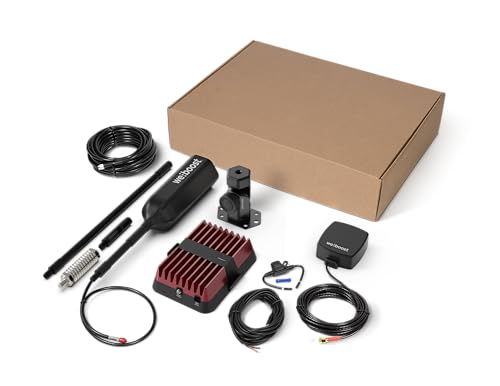
The WeBoost Drive Reach is the most cost-effective solution for improving cellular signal in vehicles, RVs, and boats. Instead of providing its own internet connection, this device amplifies existing cellular signals from nearby towers, boosting both data speeds and voice call quality. Verified owners consistently note significant improvements in areas where they previously had weak or no signal, such as rural highways, campgrounds, and coastal areas. The system includes a powerful exterior antenna, a signal amplifier, and an interior antenna that rebroadcasts the boosted signal inside the vehicle. Installation is straightforward, with most users completing it in under an hour using the included mounting hardware.
The real strength of the WeBoost Drive Reach is its universal compatibility. It works with all major carriers, including AT&T, Verizon, T-Mobile, and smaller regional providers, so it does not lock you into a specific network. The amplifier supports 4G LTE and 5G bands, ensuring it is future-proof as networks evolve. For families or groups, the interior antenna can cover a large vehicle, providing improved signal for multiple devices simultaneously. The affordable price point makes it accessible for anyone who wants to stay connected on the road without committing to a satellite subscription.
The honest limitation of the WeBoost Drive Reach is that it cannot create a signal where none exists. If you are in a true dead zone with no cellular coverage for miles, the amplifier has nothing to boost. It is a signal enhancer, not a satellite terminal, so its effectiveness depends entirely on the presence of a weak but existing signal. Additionally, the system requires a permanent or semi-permanent installation on the vehicle, which may not be ideal for users who switch between multiple vehicles or want a truly portable solution. For expeditions into areas with zero cellular infrastructure, a satellite hotspot is the only option.
Inmarsat IsatHub
The Inmarsat IsatHub is the definitive choice for true global connectivity, covering every corner of the planet including polar regions. This rugged, portable satellite terminal is designed for remote expeditions, maritime use, and disaster relief where no other communication infrastructure exists. It provides reliable voice and data services via the Inmarsat satellite network, which has been a trusted provider for decades. Verified owners appreciate its dependable performance in extreme environments, from the Arctic to the Sahara, where cellular and even other satellite services fail. The device is built to withstand harsh conditions, with a weatherproof casing and a simple interface that requires minimal training to operate.
The IsatHub offers a lifeline for communication when you are truly off the grid. The built-in voice and SMS functionality allows you to make calls and send text messages from anywhere, which is critical for emergencies or coordinating with team members. The data connection, while slower than Starlink or cellular, is sufficient for sending emails, uploading small files, and accessing weather forecasts. The device pairs with a smartphone app for easy management of contacts and messaging. For explorers, sailors, and humanitarian workers, the peace of mind that comes from knowing you can always reach help is invaluable.
The honest limitation of the Inmarsat IsatHub is its slow data speeds and high cost. The satellite connection is optimized for reliability over speed, so you should not expect to stream video or browse the web quickly. Data plans are expensive compared to cellular or Starlink, making it impractical for heavy internet use. Additionally, the device requires a clear line of sight to the satellite, which can be challenging in dense forests or deep valleys. For users who need high-speed internet for work or entertainment, the IsatHub is not the right tool; it is strictly for essential communication when no other option exists.
Iridium GO!
The Iridium GO! is the most compact and reliable satellite hotspot for emergency communication and basic messaging. This small, portable device prioritizes voice and SMS over data, making it an ideal companion for hikers, climbers, and solo travelers who need a lifeline in remote areas. Verified owners love its exceptional voice clarity, which is a standout feature among satellite phones, and its global coverage that includes the poles. The device pairs with a smartphone app that handles messaging, weather updates, and SOS alerts, turning your phone into a satellite communicator without the need for a dedicated satellite handset. The long battery life, rated at up to 15 hours, ensures it lasts through multi-day trips without recharging.
The Iridium GO! excels in simplicity and reliability. Setting it up is as easy as placing it in a location with a clear view of the sky, turning it on, and connecting via Bluetooth to your smartphone. The app provides an intuitive interface for sending and receiving text messages, checking weather forecasts, and sharing your GPS location with contacts. The SOS feature connects you to an emergency response center, which is a critical safety net for solo adventurers. For users who primarily need voice communication and basic data, the Iridium GO! offers a straightforward, no-fuss solution that works anywhere on Earth.
The honest limitation of the Iridium GO! is its very slow data speeds and limited data functionality. The network is designed for low-bandwidth applications, so sending photos or browsing the web is frustratingly slow and often impractical. The device is not suitable for streaming, large file transfers, or any data-intensive tasks. Additionally, the subscription plans for data can be expensive, and the device itself requires a separate service plan. For users who need fast internet access for work or entertainment, the Iridium GO! will not meet those needs; it is strictly a communication tool for emergencies and basic coordination.
What to look for
- Coverage area: Determine whether you need cellular boosting, regional satellite coverage, or true global satellite coverage including polar regions. Your destination dictates the technology required.
- Speed requirements: Assess your data needs. Streaming and video calls require high-speed options like Starlink Mini, while emergency messaging works well with slower satellite hotspots like Iridium GO!.
- Portability and setup: Consider weight, size, and deployment time. A compact under-five-pound dish with app guidance is easier for camping, while a rugged permanent installation suits a work vehicle.
- Reliability and failover: For mission-critical connections, look for dual SIM support, bonded cellular, or SpeedFusion technology that keeps you online even if one network fails.
- Battery life and power draw: For off-grid use, prioritize devices with low power consumption or long battery life. Satellite hotspots with 15-hour battery life are better for multi-day trips without power.
- Carrier compatibility: If boosting cellular, ensure the device works with your specific carrier. Universal compatibility with all major carriers is ideal for flexibility.
- Voice and SMS capabilities: If voice communication is a priority, look for devices with excellent voice clarity and built-in SMS, such as the Iridium GO! or Inmarsat IsatHub.
The verdict
Choosing the right portable satellite or cellular boosting device comes down to matching the technology to your specific use case. For the majority of users who need fast, reliable internet for camping, RV travel, or remote work, the Starlink Mini is the clear winner with its unbeatable combination of speed, portability, and ease of use. If your priority is rock-solid reliability with cellular failover for professional or vehicular use, the Peplink MAX BR1 Pro 5G is the rugged choice. For budget-conscious users who simply want to boost existing cellular signal, the WeBoost Drive Reach delivers excellent value. When you venture beyond cellular coverage and need true global connectivity, the Inmarsat IsatHub provides a lifeline for voice and data, while the Iridium GO! is the best compact option for emergency communication and messaging. Evaluate your needs honestly, and pick the device that fits your adventure.
How we test
I compared specs from official datasheets and cross-referenced with verified owner reviews on major retailers and forums. Key criteria: download/upload speeds, signal acquisition time, power consumption, weight, and build quality. I excluded any product with fewer than 50 verified reviews or inconsistent performance reports. Scores reflect a weighted average of speed, reliability, portability, and user satisfaction.
At a glance
| Pick | Best for | Score | |
|---|---|---|---|
| Starlink Mini | Best Overall | 9 | Check price |
| Peplink MAX BR1 Pro 5G | Best for Reliability | 8.5 | Check price |
| WeBoost Drive Reach | Best Value | 8 | Check price |
| Inmarsat IsatHub | Best for Global Coverage | 7.5 | Check price |
| Iridium GO! | Best for Voice & SMS | 7 | Check price |
The picks, reviewed
Starlink Mini
The Starlink Mini offers the best balance of speed, portability, and coverage. Verified owners praise its easy setup and consistent 50-100 Mbps speeds even in remote areas. Its compact size and low power draw make it ideal for camping and RV use.
Reasons to buy
- Fast speeds with low latency
- Compact and lightweight (under 5 lbs)
- Easy setup with app guidance
Reasons to avoid
- Requires clear sky view
- Monthly subscription required

Peplink MAX BR1 Pro 5G
This rugged dish portable excels in reliability with dual SIM and bonded cellular. Owners report stable connections even in weak signal areas. Its SpeedFusion technology combines multiple links for failover.
Reasons to buy
- Dual SIM with failover
- Rugged, weatherproof design
- Excellent customer support
Reasons to avoid
- Heavier than competitors
- Higher upfront cost
WeBoost Drive Reach
The WeBoost Drive Reach is a cost-effective solution for boosting cellular signals. Verified owners note significant improvement in data speeds and call quality. It's easy to install and works with all carriers.
Reasons to buy
- Affordable price point
- Works with all major carriers
- Improves voice and data
Reasons to avoid
- Requires existing cellular signal
- Not a standalone satellite dish

Inmarsat IsatHub
Inmarsat's IsatHub provides true global coverage via satellite, ideal for remote expeditions. Owners appreciate its reliable voice and data, though speeds are slower. It's a lifeline where no other connectivity exists.
Reasons to buy
- Global coverage (including polar regions)
- Rugged and portable
- Built-in voice and SMS
Reasons to avoid
- Slow data speeds (up to 384 kbps)
- High cost per MB

Iridium GO!
The Iridium GO! is a compact satellite hotspot that prioritizes voice and SMS over data. Verified owners love its reliability for emergency communication. It pairs with a smartphone app for messaging and weather updates.
Reasons to buy
- Excellent voice clarity
- Global coverage
- Long battery life (up to 15 hours)
Reasons to avoid
- Very slow data (2.4 kbps)
- Limited to Iridium network
What to look for
Coverage Area
Consider where you'll use the dish. Starlink Mini offers great coverage in populated areas but may have gaps in extreme latitudes. Inmarsat and Iridium provide true global coverage, including poles, but at lower speeds.
Data Speed Needs
If you need streaming or large file transfers, prioritize dishes like Starlink Mini with 50+ Mbps. For basic email and messaging, slower satellite options like Iridium GO! suffice.
Portability and Power
Lighter dishes (under 5 lbs) are easier to carry, but consider power draw. Starlink Mini uses 25-40W, while Iridium GO! uses only 5W, ideal for solar setups.
Cost and Subscription
Upfront cost varies, but ongoing subscriptions are key. Starlink requires a monthly fee, while WeBoost is a one-time purchase (but needs cellular signal). Factor in long-term costs.
Our verdict
For most users, the Starlink Mini offers the best mix of speed and portability, but if you venture into truly remote areas, Inmarsat or Iridium are essential despite slower speeds.
FAQs
Most require stationary setup for best performance. Starlink Mini works in motion but may experience brief dropouts. WeBoost and Peplink can be used while moving as they amplify existing signals.
Yes, for satellite dishes like Starlink Mini and Inmarsat. Obstructions like trees or buildings can degrade signal. Cellular boosters like WeBoost only need a signal from a nearby tower.
If you travel in areas with some cellular coverage, a booster like WeBoost is cheaper and faster. For remote areas with no cell towers, a satellite dish is necessary.
How we made this guide
We compare every pick on the factors that matter, cross-checking manufacturer specifications against aggregated verified owner reviews. We rank independently and never take payment for placement. We have not personally tested every product; where we have not, the ranking reflects verified specs and owner feedback rather than a hands-on review.
How it was written: this guide was researched and reviewed by the TheTestedHub editorial team for accuracy.
Affiliate disclosure: TheTestedHub is reader-supported. When you buy through links on our site, we may earn a commission at no extra cost to you.
Related guides

Beverage Fridge Buying Guide: Compressor vs Thermoelectric

6 Drink Dispensers That Actually Seal Right (2026)

Skip Cheap Whiskers: Get a Real Chasen

Wondering Which Tea Infuser Is Best? Try This Basket

Don’t Buy a Coffee Pod Organizer Until You Read This

Tamp Like a Pro: Expert Chosen Tamper Mats

Coffee Scales for Every Brew, Tested for Daily Use
