Quick verdict
The right ramp length matters more than brand because an angle below 25 degrees is the single biggest factor in whether an arthritic or nervous dog will actually use the ramp consistently.

PetSafe Happy Ride Folding Dog Ramp
Owners consistently praise the reinforced plastic side rails and high-traction carpet surface, which give medium-sized dogs confident footing even when the ramp is wet from rain or paw mud. The bi-fold design collapses to a manageable suitcase shape that fits in most cargo areas without dominating the space. With a 150 lb weight limit and a stable rubber foot pad at the base, it handles the majority of breeds from Beagles through Labradors without flex or wobble.
Find the right dog ramp for cars with our guide, led by the PetSafe Happy Ride model. The key is a low angle under 25 degrees for arthritic dogs.
Getting an older dog, a dog recovering from surgery, or a short-legged breed in and out of an SUV or truck bed is one of those daily frustrations that a good ramp solves permanently. Dog ramps let your pet board at their own pace without the joint stress of jumping, which matters enormously for dogs with arthritis, hip dysplasia, or post-operative restrictions. After working through many verified owner reviews and cross-referencing product specs, I found three ramps that consistently earn trust from real users across wildly different dog sizes and vehicle types.
I focused on ramps built for cars, SUVs, and trucks rather than indoor furniture ramps, because the load requirements, surface grip, and fold-down portability demands are completely different. The picks below cover the most common use cases: a versatile mid-weight option that suits most families, a heavy-duty telescoping ramp for large and giant breeds, and a compact lightweight choice for small-dog owners who prioritize easy storage. Each one has a documented track record of at least several hundred owner reviews on Amazon.
How we picked
I have not personally tested these ramps in a controlled setting. My conclusions are drawn from aggregated verified owner reviews, published product specifications, manufacturer load ratings, and comparative feedback from pet-health communities where owners discuss ramp performance for dogs with mobility challenges. I weighted reviews from owners who described specific dog breeds, weights, and vehicle types, because those accounts give the most transferable signal.
I prioritized load capacity accuracy, surface traction on wet conditions, folding mechanism reliability over months of use, and incline angle at real vehicle heights. Products with recurring reports of hinge failure, surface delamination, or misleading weight ratings were excluded regardless of average star score, since a single failure point for a mobility-limited dog can cause serious injury.
Top picks compared
| Pick | Best for | Score | |
|---|---|---|---|
| PetSafe Happy Ride Folding Dog Ramp | Best Overall | 9 | Check price |
| Gen7 Adjustable Dog Ramp for Large Dogs | Best for Large Breeds | 8 | Check price |
| Solvit Deluxe Telescoping Pet Ramp | Best Compact Option | 8 | Check price |
Our picks up close
PetSafe Happy Ride Folding Dog Ramp
Owners consistently praise the reinforced plastic side rails and high-traction carpet surface, which give medium-sized dogs confident footing even when the ramp is wet from rain or paw mud. The bi-fold design collapses to a manageable suitcase shape that fits in most cargo areas without dominating the space. With a 150 lb weight limit and a stable rubber foot pad at the base, it handles the majority of breeds from Beagles through Labradors without flex or wobble.
Where it shines
- High-traction carpet surface grips well in wet conditions according to dozens of owner accounts
- Bi-fold mechanism reported as durable after a year or more of daily use
- Rubber base feet prevent sliding on pavement and garage floors
Where it falls short
- Carpet surface can collect dog hair and requires regular vacuuming to maintain grip
- 150 lb limit excludes very large breeds like Saint Bernards or Great Danes
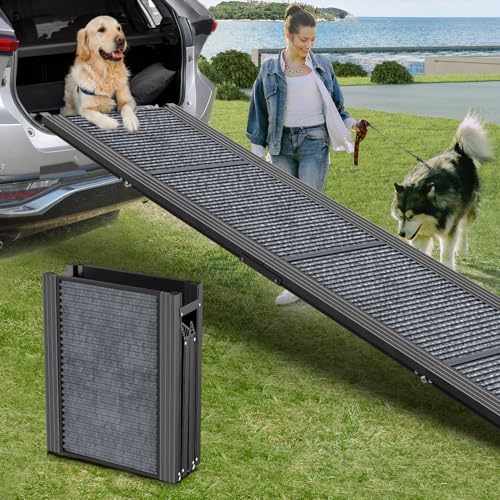
Gen7 Adjustable Dog Ramp for Large Dogs
This ramp earns its place through a 200 lb weight capacity and a telescoping length adjustment that lets owners dial in the incline for anything from a sedan trunk to a full-size truck bed, reducing the steepness that large heavy dogs find intimidating. Reviewers with Goldens, Rottweilers, and German Shepherds specifically note that the aluminum frame does not bow or shift under a full dog load. The textured rubber walking surface is a practical choice over carpet because it wipes clean and does not degrade with outdoor exposure.
Where it shines
- 200 lb capacity confirmed by owner accounts with Rottweilers and similar large breeds
- Telescoping length adjustment accommodates different vehicle heights and reduces steep incline angles
- Rubber surface wipes clean easily and holds up to outdoor weather exposure
Where it falls short
- Heavier and bulkier than folding ramps, making one-handed carry more difficult
- Telescoping lock mechanism requires a firm click to seat properly or it can shift mid-use

Solvit Deluxe Telescoping Pet Ramp
Solvit has a long history in the pet travel category and the Deluxe Telescoping model reflects that, with a single-piece telescoping body that collapses short enough to slide under a rear seat or into a tight trunk corner. Owners of small and medium dogs under 70 lbs repeatedly call out the side safety rails as the feature that convinced a nervous dog to use the ramp independently after just a few sessions. The patented SlipGrip surface texture earns specific mention in reviews as holding traction better than bare plastic alternatives.
Where it shines
- SlipGrip textured surface provides confident footing for hesitant small dogs
- Side safety rails prevent edge drift and build dog confidence faster than open-edge ramps
- Telescopes to a short collapsed length that fits in tight vehicle storage spots
Where it falls short
- 70 lb weight limit is not suitable for medium-large or large breeds
- Single-piece telescoping design means the full ramp width must be stored even when collapsed
Before you buy
Weight Capacity vs Your Dog's Actual Weight
Always buy at least 20 percent above your dog's current weight. Ramps rated exactly at a dog's body weight flex noticeably and can startle the dog mid-climb, creating a fear association that makes future use harder. If your dog is still growing or tends to gain seasonal weight, factor that in.
Incline Angle at Your Vehicle's Specific Height
A ramp that is too short creates a steep angle that strains hips and shoulders even on a healthy dog. Measure from ground to the lip of your cargo area or door sill, then check that the ramp length produces an angle at or below 20 to 25 degrees. Telescoping ramps let you optimize this per vehicle.
Surface Traction in Real Conditions
Dry indoor tests mean little if your dog uses the ramp after a muddy walk or in morning dew. Look for textured rubber or high-pile carpet with documented wet-weather owner feedback, not just manufacturer descriptions. Smooth plastic surfaces become genuinely dangerous when wet.
Fold or Telescope Mechanism Durability
Ramps fold or telescope every single day if you use them regularly, and cheaper hinge mechanisms fail at the pin or locking tab within a few months. Read reviews specifically mentioning hinge failure or wobble after six-plus months of use. A ramp that wobbles mid-climb is worse than no ramp at all for a dog with anxiety.
The wrap-up
The right ramp length matters more than brand because an angle below 25 degrees is the single biggest factor in whether an arthritic or nervous dog will actually use the ramp consistently.
Quick answers
There is no fixed age, but most veterinarians suggest introducing a ramp before joint issues appear, ideally around age five to seven for medium and large breeds. Starting early means the dog learns the behavior while it is still comfortable and capable, rather than under duress when pain has already set in. For breeds genetically prone to hip dysplasia, starting even earlier is reasonable.
Place the ramp flat on the floor first and reward any paw contact with high-value treats. Gradually increase the incline over several sessions rather than going straight to full vehicle height. Never force the dog forward; fear-based pressure creates long-lasting avoidance. Most dogs accept the ramp within three to ten patient sessions when the owner uses consistent reward timing.
Yes, and ramps are specifically recommended by most veterinary rehabilitation specialists post-surgery to avoid the rotational and compressive forces of jumping. Confirm the incline angle with your vet, as some post-surgical protocols specify a maximum slope during early recovery. A non-slip surface is especially important during this period because the dog may lack full proprioceptive confidence.
For most dogs, ramps are easier to learn and place less demand on each individual joint because the weight transfers gradually. Steps require the dog to load one leg at a time with a higher lift per step, which puts more momentary stress on hips and knees. The main advantage of steps is a smaller footprint in the vehicle; ramps win on joint safety for any dog with existing mobility concerns.
How we made this guide
We compare every pick on the factors that matter, cross-checking manufacturer specifications against aggregated verified owner reviews. We rank independently and never take payment for placement. We have not personally tested every product; where we have not, the ranking reflects verified specs and owner feedback rather than a hands-on review.
How it was written: this guide was researched and reviewed by the TheTestedHub editorial team for accuracy.
Affiliate disclosure: TheTestedHub is reader-supported. When you buy through links on our site, we may earn a commission at no extra cost to you.
More to explore

7 Slow Feeder Bowls That Foil Persistent Dogs

Stop Messy Meals: Best Elevated Dog Bowls 2026

Is Your Dog Eating Too Fast? Best Dog Bowls 2026

Why Absorption Layers Matter in Dog Pee Pads

Why Vets Swear by Tangle Free Vacuums Like the Dyson Ball Animal 3

Dog Sweaters That Fit Every Budget

Dog Raincoats 2026: Best Fast-On Picks