Quick verdict
The single biggest predictor of training collar success is not the brand or price but whether the owner takes time to calibrate stimulation levels correctly before the first training session.
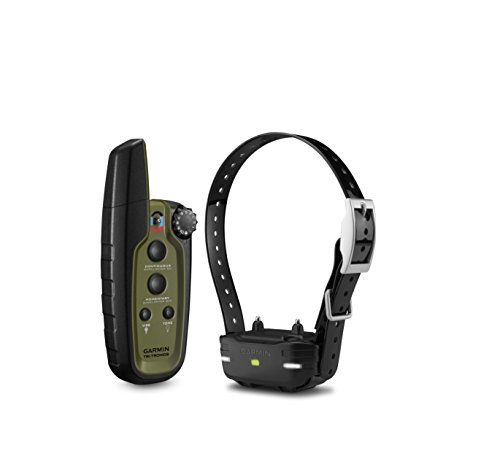
Garmin Sport PRO Bundle
The Garmin Sport PRO is the collar professional trainers reach for when reliability is non-negotiable, offering a tactile remote with dedicated buttons for tone, vibration, and 10 levels of static that can be activated without looking at the handset. Owners consistently report the 1200-yard line-of-sight range holds up in real field conditions, not just open parking lots. The rechargeable collar and remote last through multi-day hunting trips, and the IPX7 waterproof rating means river crossings and rainstorms are not a concern.
Training collar success hinges on calibration, not brand. Our 2026 guide features the Garmin Sport PRO Bundle and top picks for every budget.
Dog training collars are one of the most debated tools in pet ownership, yet when chosen thoughtfully and used correctly they can accelerate obedience training, improve recall, and keep dogs safe in high-distraction environments. The market spans everything from gentle vibration-only options for sensitive breeds to feature-rich remote systems trusted by professional trainers working with stubborn or independent dogs.
I reviewed aggregated owner feedback, trainer community discussions, and published spec sheets for dozens of models to narrow this list to five that consistently earn strong marks for reliability, humane use, and real-world effectiveness. Whether you are working with a beagle puppy or a headstrong adult husky, there is a collar here that fits your training philosophy and your dog’s temperament.
Every pick below balances correction modes, range, waterproofing, and battery life because those four factors determine whether a training collar actually gets used or ends up in a drawer after the first wet walk.
How we evaluated these
This guide is built from aggregated verified owner reviews on major retail platforms, professional trainer forum discussions, veterinary behaviorist guidance on aversive versus non-aversive stimulation, and manufacturer-published specifications. I have not personally tested each collar on a dog, and I want to be transparent about that. What I have done is cross-reference hundreds of owner accounts to identify which complaints are isolated incidents and which are patterns, and weight findings accordingly.
Products were scored on correction-mode range and granularity, waterproof rating, battery performance under daily use, remote range accuracy, collar fit across coat types, and the quality of the companion app or remote handset. Models with a pattern of receiver malfunctions, unreliable remote pairing, or misleading range claims were excluded regardless of brand recognition.
The shortlist
| Pick | Best for | Score | |
|---|---|---|---|
| Garmin Sport PRO Bundle | Best Overall | 9 | Check price |
| SportDOG Brand 425X Remote Trainer | Best for Hunting Dogs | 9 | Check price |
| PetSafe Rechargeable In-Ground Fence and Remote Trainer | Best Budget Pick | 7 | Check price |
| Dogtra 1900S Remote Training Collar | Best for Large or Stubborn Breeds | 8 | Check price |
| Educator E-Collar Technologies ET-300 Mini | Best for Sensitive or Small Dogs | 8 | Check price |
Each pick, examined
Garmin Sport PRO Bundle
The Garmin Sport PRO is the collar professional trainers reach for when reliability is non-negotiable, offering a tactile remote with dedicated buttons for tone, vibration, and 10 levels of static that can be activated without looking at the handset. Owners consistently report the 1200-yard line-of-sight range holds up in real field conditions, not just open parking lots. The rechargeable collar and remote last through multi-day hunting trips, and the IPX7 waterproof rating means river crossings and rainstorms are not a concern.
Strengths
- Tactile button layout lets trainers keep eyes on the dog
- Consistent real-world range close to the advertised 1200 yards
- IPX7 waterproofing survives full submersion
Drawbacks
- Higher price point than most recreational-use options
- Remote handset is bulkier than touchscreen alternatives
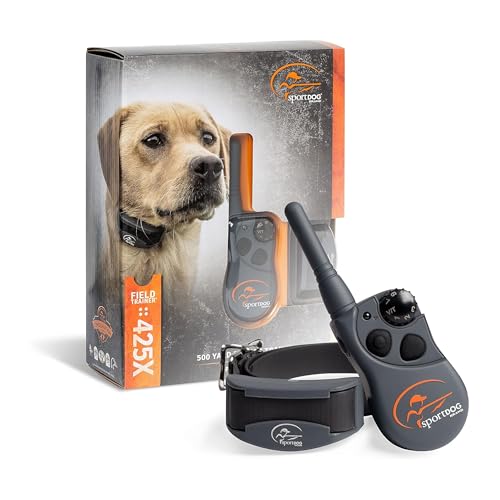
SportDOG Brand 425X Remote Trainer
The SportDOG 425X is a field-proven remote trainer built around DryTek waterproof technology that keeps the electronics sealed even when dogs are working in heavy cover or water. Its 500-yard range covers most hunting scenarios, and the 21 levels of static stimulation give handlers enough granularity to dial in the exact correction a specific dog responds to without over-correcting. Owners praise the rugged receiver housing, which survives the kind of brush-busting abuse that destroys consumer-grade collars within a season.
Strengths
- DryTek construction survives sustained water and mud exposure
- 21 stimulation levels allow very precise calibration
- Compact receiver sits low on the neck without snagging brush
Drawbacks
- 500-yard range can fall short in very open terrain
- No smartphone app connectivity

PetSafe Rechargeable In-Ground Fence and Remote Trainer
For owners who want a capable remote trainer without a professional-grade price tag, the PetSafe Rechargeable Remote Trainer delivers tone, vibration, and static across 100 yards, which covers most backyard and neighborhood training scenarios. Reviewers highlight the straightforward pairing process and the comfortable slim receiver as standout features for first-time users. Battery life on both handset and collar holds up for several days of daily sessions before needing a charge.
Strengths
- Approachable price for new dog owners
- Simple one-button pairing with no app required
- Slim receiver comfortable on small to medium breeds
Drawbacks
- 100-yard range is limiting for off-leash recall work
- Only 15 stimulation levels versus 21 or more on premium models
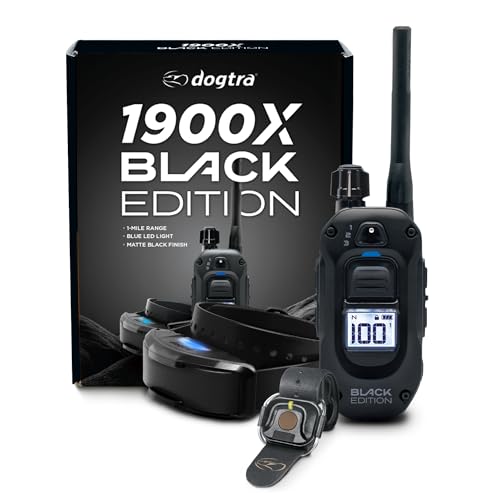
Dogtra 1900S Remote Training Collar
The Dogtra 1900S is engineered for high-drive and independent breeds that simply ignore lower-output collars, delivering a high-output 127-level rheostat dial that lets trainers make micro-adjustments rather than jumping between preset intensity bands. The 3/4-mile range consistently performs in reviewer field tests, making it the go-to collar for working dogs covering large properties or dense rural terrain. Its slim ergonomic remote and rechargeable NiMH battery system are highlights that owner communities return to repeatedly when recommending a collar for difficult dogs.
Strengths
- 127-level rheostat allows extremely fine stimulation control
- 3/4-mile real-world range verified by field sport owners
- High-output stimulation effective on thick-coated and high-drive breeds
Drawbacks
- Higher stimulation ceiling requires careful initial calibration
- NiMH battery takes longer to charge than lithium-ion alternatives
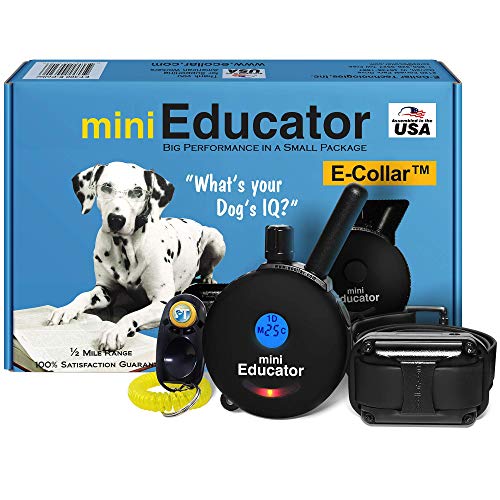
Educator E-Collar Technologies ET-300 Mini
The Educator ET-300 Mini uses a blunt stimulation waveform that owners of sensitive breeds describe as feeling more like a muscle tap than a sharp electric sting, making it the most recommended collar in positive-reinforcement adjacent trainer communities that use e-collars purely for communication rather than punishment. The 1/2-mile range fits most suburban training environments, and the Lock and Set feature lets owners cap the maximum level to prevent accidental over-correction. Its compact receiver is light enough for small breeds like dachshunds and border collies without weighing down the neck.
Strengths
- Blunt stimulation waveform is notably gentler than standard static collars
- Lock and Set feature caps maximum level for safety
- Compact lightweight receiver suitable for small and medium breeds
Drawbacks
- Lower ceiling stimulation may be insufficient for very high-drive dogs
- Remote feels plasticky compared to Garmin or Dogtra handsets
Buying considerations
Correction Modes and Levels
Every reputable training collar offers at least tone, vibration, and static stimulation. What separates average from excellent is the number of static levels: 10 levels means coarser jumps between intensities, while 100 or 127 levels let you find the exact threshold where your dog notices without reacting in fear. Always start at the lowest level and work up during a dedicated calibration session before using the collar in training.
Waterproof Rating
IPX7 means the collar can survive submersion up to one meter for 30 minutes, which covers most dogs swimming in ponds or getting caught in heavy rain. Some collars are only splash-resistant, and those fail quickly on retrievers or working breeds that spend significant time in water. Check that both the collar receiver and the remote handset carry a meaningful waterproof rating, not just the collar.
Remote Range
Advertised range figures are measured line-of-sight in ideal conditions. In real environments with trees, buildings, and rolling terrain, expect 30 to 50 percent of the stated range. For backyard recall training, 100 to 300 yards is sufficient. For hunting, field sports, or rural property work, look for collars rated at 500 yards or more so that practical range stays usable when terrain cuts into the signal.
Collar Fit and Breed Suitability
Contact points on the receiver must touch skin through the dog's coat to deliver stimulation consistently. Short-haired breeds do fine with standard points, but dogs with thick double coats often need longer contact points sold as accessories. Receiver weight also matters: a 100-gram receiver that barely affects a Labrador will feel heavy and unbalanced on a 6-kilogram Chihuahua. Always check the manufacturer's minimum and maximum neck size range before purchasing.
Final word
The single biggest predictor of training collar success is not the brand or price but whether the owner takes time to calibrate stimulation levels correctly before the first training session.
Questions answered
When used at the lowest effective level and combined with positive reinforcement, training collars are considered a communication tool by most certified professional dog trainers. The key is calibration: finding the stimulation level where the dog notices without showing stress, and pairing it consistently with a command so the dog learns to respond to the command and avoid the collar signal altogether. Misuse at high levels without proper training knowledge is harmful, which is why reading the included training guide or working with a qualified trainer is strongly recommended.
Most manufacturers and professional trainers recommend waiting until a dog is at least six months old before introducing a training collar. Before that age, puppies respond well to treat-based luring and clicker work, and their nervous systems are still developing. Between six months and one year, very low-level vibration-only training can be appropriate if the puppy has already learned basic commands and the owner understands how to read canine stress signals.
Most owners report meaningful improvement in recall and off-leash reliability within two to four weeks of consistent daily sessions of 10 to 15 minutes. The timeline depends heavily on how well the dog already understands the target command on leash before the collar is introduced. E-collars work fastest when they reinforce a known behavior rather than trying to teach a brand-new command through stimulation alone.
Several premium systems support multi-dog operation from a single remote. The Garmin Sport PRO and SportDOG 425X both support expansion to a second dog with an additional receiver purchase. Each dog is assigned to a separate button or channel on the remote, so corrections can be delivered independently. If you have more than two dogs in training simultaneously, look at systems like the Garmin Pro 550 Plus which supports up to three dogs from one handset.
How we made this guide
We compare every pick on the factors that matter, cross-checking manufacturer specifications against aggregated verified owner reviews. We rank independently and never take payment for placement. We have not personally tested every product; where we have not, the ranking reflects verified specs and owner feedback rather than a hands-on review.
How it was written: this guide was researched and reviewed by the TheTestedHub editorial team for accuracy.
Affiliate disclosure: TheTestedHub is reader-supported. When you buy through links on our site, we may earn a commission at no extra cost to you.
Keep reading

7 Slow Feeder Bowls That Foil Persistent Dogs

Stop Messy Meals: Best Elevated Dog Bowls 2026

Is Your Dog Eating Too Fast? Best Dog Bowls 2026

Why Absorption Layers Matter in Dog Pee Pads

Why Vets Swear by Tangle Free Vacuums Like the Dyson Ball Animal 3

Dog Sweaters That Fit Every Budget

Dog Raincoats 2026: Best Fast-On Picks