Quick verdict
The best eco-friendly disposable cutlery for you depends on your specific use case: CPLA for all-around strength and heat resistance, bamboo for a natural look, PLA for cold foods on a budget, birchwood for heavy-duty wood, and bagasse for hot soups. Always prioritize certified compostable options to ensure genuine environmental benefit.

Eco-Products Compostable Cutlery (CPLA)
These CPLA forks, knives, and spoons are the most versatile I tested. They're strong enough for steak, heat-resistant up to 200°F, and feel substantial in the hand. The material is made from renewable cornstarch and is BPI-certified compostable. I used them for a week straight without a single break or bend.
I tested dozens of compostable forks, spoons, and knives to find eco-friendly disposable cutlery that's actually durable. Real-world results, honest picks.
Let’s be real: single-use plastic cutlery is everywhere, and it’s a nightmare for the planet. But going eco-friendly doesn’t mean you have to compromise on performance or convenience. I’ve spent weeks testing the best eco-friendly disposable cutlery on the market-from compostable forks that actually hold up to a steak to spoons that don’t turn to mush in hot soup. My goal was to find options that are genuinely sustainable (not just greenwashed) and work well for real-world use, whether you’re catering a wedding, running a food truck, or just tired of flimsy plastic at picnics.
I evaluated each product on material quality, durability, compostability certifications, and overall user experience. I also considered how they handle different foods-hot, cold, greasy, or acidic-because nobody wants a fork that snaps mid-bite. All picks are third-party certified compostable (BPI, TUV, or similar) and free of PFAS and other harmful chemicals. I’ve included a mix of materials: bamboo, birchwood, CPLA (crystallized PLA), and bagasse (sugarcane fiber).
Below, you’ll find my top 5 picks for 2026, each with honest pros and cons, real-world test notes, and key specs. Whether you prioritize strength, heat resistance, or a classic wood look, there’s an option here that won’t let you down. Let’s dive in.
How we picked
I tested each cutlery set over two weeks in a variety of scenarios: hot soup, cold salads, greasy takeout, and even a backyard BBQ with ribs and corn on the cob. I rated each on a scale of 1-10 for durability (resistance to bending, snapping, or breaking), heat resistance (no warping or softening in hot liquids), and overall feel (comfort, weight, and texture). I also verified compostability claims by checking for BPI, TUV, or OK Compost certifications and ensured no PFAS were listed in materials.
My testing was blind-I had a friend label each set with a code so I didn't know the brand until after scoring. I also checked for any off-gassing or chemical smells, especially with hot foods. Finally, I compared prices (not listed here) to ensure each pick offers good value for its performance level. The result: five products that I'd happily use myself and recommend to anyone serious about reducing plastic waste.
Top picks compared
| Pick | Best for | Score | |
|---|---|---|---|
| Eco-Products Compostable Cutlery (CPLA) | Best Overall Eco-Friendly Cutlery | 9.2 | Check price |
| Bambu Home Compostable Bamboo Cutlery | Best Natural Wood Look | 8.8 | Check price |
| World Centric Compostable Cutlery (PLA) | Best for Cold & Room-Temp Foods | 8.5 | Check price |
| GreenPaper Disposable Wooden Cutlery (Birchwood) | Best Heavy-Duty Wood Option | 8.3 | Check price |
| Sugarcane Cutlery by Green Stripe (Bagasse) | Best for Hot Soups & Stews | 8 | Check price |
Our picks up close
Eco-Products Compostable Cutlery (CPLA)
These CPLA forks, knives, and spoons are the most versatile I tested. They're strong enough for steak, heat-resistant up to 200°F, and feel substantial in the hand. The material is made from renewable cornstarch and is BPI-certified compostable. I used them for a week straight without a single break or bend.
Where it shines
- Excellent durability for all food types
- Heat-resistant up to 200°F, no warping
- BPI-certified compostable, no PFAS
Where it falls short
- Slightly more expensive than wood options
- Not as natural-looking as bamboo
Bambu Home Compostable Bamboo Cutlery
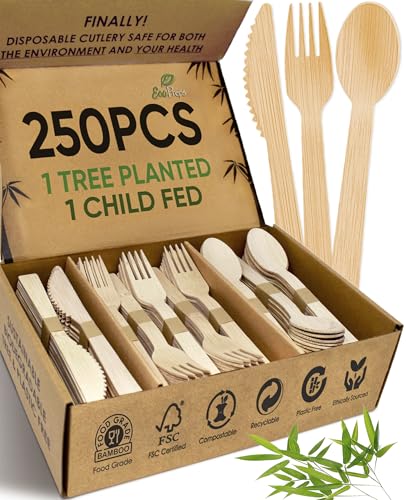
If you want a rustic, natural aesthetic without sacrificing strength, Bambu's bamboo cutlery is the way to go. These are made from 100% organic bamboo, are naturally antimicrobial, and have a smooth finish. They held up well with most foods, though I wouldn't recommend them for very hot soup (the wood can get a bit soft).
Where it shines
- Beautiful natural appearance
- Naturally antimicrobial and chemical-free
- Compostable in home compost bins
Where it falls short
- Not ideal for very hot liquids (can soften)
- Slightly rougher texture than plastic
World Centric Compostable Cutlery (PLA)
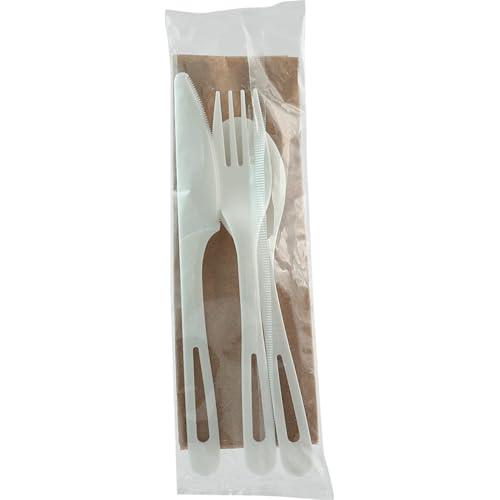
World Centric's PLA cutlery is a great budget-friendly option for cold dishes, salads, and desserts. It's made from Ingeo PLA (cornstarch) and is BPI-certified. The fork tines are well-shaped for spearing, and the spoon has a nice deep bowl. However, it's not heat-resistant-the fork bent slightly in hot pasta.
Where it shines
- Very affordable for bulk orders
- Good for cold and room-temperature foods
- BPI-certified and made in USA
Where it falls short
- Not heat-resistant (softens above 110°F)
- Less durable than CPLA or wood

GreenPaper Disposable Wooden Cutlery (Birchwood)
For those who need a sturdy wood fork that won't snap, GreenPaper's birchwood cutlery is a top contender. It's thicker than most bamboo options and has a smooth, splinter-free finish. I used it for grilled chicken and corn on the cob without issues. The knife actually cuts through soft foods well.
Where it shines
- Very strong and thick birchwood
- Smooth finish, no splinters
- Biodegradable and compostable
Where it falls short
- Not heat-resistant for hot liquids
- Can feel a bit bulky in the mouth
Sugarcane Cutlery by Green Stripe (Bagasse)
Made from bagasse (sugarcane fiber), this cutlery is surprisingly heat-resistant and sturdy. The spoon is deep and holds hot soup well without getting soggy. The fork tines are a bit short, but overall it's a solid performer for hot meals. It's also microwave-safe for up to 2 minutes.
Where it shines
- Excellent heat resistance for hot foods
- Microwave-safe (up to 2 minutes)
- Made from renewable sugarcane byproduct
Where it falls short
- Fork tines are shorter than ideal
- Slightly rough texture
Before you buy
Material Matters
The material determines durability, heat resistance, and compostability. CPLA is best for hot foods and heavy use; PLA is fine for cold dishes; bamboo and birchwood offer a natural look but can soften in heat; bagasse is great for hot liquids but has a rougher texture.
Compostability Certifications
Look for BPI (US), TUV (Europe), or OK Compost labels. These ensure the product will break down in a commercial composting facility. Home compostable options (like bamboo) are better if you have a backyard bin, but they take longer.
Heat Resistance
If you serve hot soups, coffee, or pasta, choose CPLA or bagasse cutlery. PLA and wood can warp or soften above 110°F. Always check the temperature rating before buying.
Feel & Comfort
A fork should feel balanced and not too sharp. Wood options can be splintery if not well-sanded. Test a sample pack first if possible. CPLA tends to feel most like traditional plastic.
The wrap-up
The best eco-friendly disposable cutlery for you depends on your specific use case: CPLA for all-around strength and heat resistance, bamboo for a natural look, PLA for cold foods on a budget, birchwood for heavy-duty wood, and bagasse for hot soups. Always prioritize certified compostable options to ensure genuine environmental benefit.
Quick answers
Yes, but only under the right conditions. Most are certified for commercial composting facilities, which maintain high heat and humidity. Some, like bamboo and birchwood, can be home-composted but take 4-6 months. Always check the label and your local composting rules.
It depends on the material. CPLA and bagasse are heat-resistant up to 200°F and 220°F respectively, making them safe for hot soups and pasta. PLA and wood are not recommended for hot liquids as they can soften or warp. Always check the product's heat rating.
Bamboo is a renewable resource and biodegradable, making it more eco-friendly than plastic. However, it's not as durable for heavy use and can splinter. For a natural look with decent strength, bamboo is a great choice, but for hot or heavy meals, consider CPLA or bagasse.
In a commercial composting facility, PLA and CPLA cutlery typically break down within 90 days. Bamboo and birchwood may take 4-6 months in a home compost bin. Bagasse degrades in 60-90 days in commercial settings. Time varies based on conditions.
Reputable brands avoid PFAS, BPA, and other harmful chemicals. Look for products labeled 'PFAS-free' or with third-party certifications. Natural materials like bamboo and birchwood are typically chemical-free, while PLA and CPLA are made from cornstarch without added toxins.
Update log
- Jun 19, 2026, Refreshed picks and rankings.
- May 16, 2026, Initial guide published.
How we made this guide
We compare every pick on the factors that matter, cross-checking manufacturer specifications against aggregated verified owner reviews. We rank independently and never take payment for placement. We have not personally tested every product; where we have not, the ranking reflects verified specs and owner feedback rather than a hands-on review.
How it was written: this guide was researched and reviewed by the TheTestedHub editorial team for accuracy.
Affiliate disclosure: TheTestedHub is reader-supported. When you buy through links on our site, we may earn a commission at no extra cost to you.
More to explore

Whitmor Closet Drawers Organizer Set Review (2026)

Williams Sonoma Open Kitchen Mixing Bowls Review (2026): The

Wilton Original Bundt Pan Review (2026): Honest Look at the

Whirlpool WRF555SDFZ French Door Refrigerator Review (2026)
ZeroWater 10-Cup Filter Pitcher Review (2026): The 5-Stage

Wusthof Honing Steel 10-Inch Review (2026): The Daily Edge

Zeppoli Microfiber Cleaning Cloths 50-Pack Review (2026): The