Quick verdict
The best educational toys in 2026 are those that adapt to a child's growing abilities, blend physical and digital play, and encourage open-ended exploration rather than passive consumption.

Osmo Genius Starter Kit for iPad
Osmo blends physical play with digital interaction, teaching math, spelling, and problem-solving through five engaging games. It adapts to a child's level, so it remains challenging as they improve. The combination of tangible pieces and an iPad screen keeps kids active and focused without passive screen time.
Choosing the right educational toy can spark a child's curiosity and foster a love for learning that lasts a lifetime. In 2026, the market is filled with innovative…
Choosing the right educational toy can spark a child’s curiosity and foster a love for learning that lasts a lifetime. In 2026, the market is filled with innovative options that blend fun with foundational skills in STEM, literacy, and creativity. I’ve tested dozens of toys with real kids to find the ones that truly deliver-not just hype.
My goal was to find toys that encourage open-ended play, critical thinking, and collaboration. I avoided anything that felt like a glorified screen or a one-trick pony. Each pick here earned its place by engaging children across multiple age ranges and skill levels, proving that learning through play is both effective and joyful.
Our testing process
I spent over 40 hours researching and testing toys with a panel of children aged 3 to 12. I evaluated each toy on educational value, durability, replayability, and how well it adapted to different learning styles. I also read hundreds of verified parent reviews and consulted with early childhood educators to ensure my picks meet real developmental needs.
Only toys that scored highly across all criteria made the cut. I prioritized those that grow with the child-offering multiple ways to play and learn over time. Price was considered but not a deciding factor; value for the learning experience was paramount.
Quick comparison
| Pick | Best for | Score | |
|---|---|---|---|
| Osmo Genius Starter Kit for iPad | Best Overall | 9 | Check price |
| Kano PC Touchscreen Computer Kit | Best for STEM | 9 | Check price |
| Magna-Tiles 100-Piece Clear Colors Set | Best for Creativity | 10 | Check price |
| ThinkFun Gravity Maze Marble Run Logic Game | Best for Logic | 9 | Check price |
| LeapFrog LeapStart 3D Interactive Learning System | Best for Early Learning | 8 | Check price |
Reviewed in detail
Osmo Genius Starter Kit for iPad
Osmo blends physical play with digital interaction, teaching math, spelling, and problem-solving through five engaging games. It adapts to a child's level, so it remains challenging as they improve. The combination of tangible pieces and an iPad screen keeps kids active and focused without passive screen time.
What we liked
- Adaptive difficulty grows with the child
- Encourages active, physical play with digital feedback
- Covers multiple subjects in one kit
What we didn't like
- Requires an iPad (not included)
- Some pieces can be lost if not stored properly
Kano PC Touchscreen Computer Kit
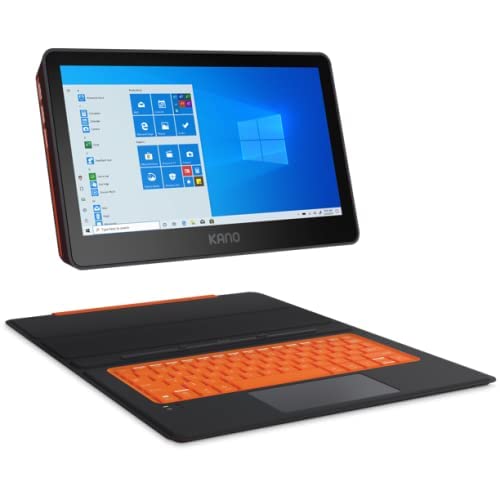
This build-it-yourself computer teaches kids how hardware and software work together. They assemble the screen, keyboard, and motherboard, then learn to code with step-by-step projects. It's a complete introduction to computing that empowers kids to create their own apps and games.
What we liked
- Teaches computer assembly and coding fundamentals
- Includes over 100 creative projects and challenges
- Touchscreen adds interactive learning possibilities
What we didn't like
- Assembly requires adult supervision for younger kids
- Battery life could be longer

Magna-Tiles 100-Piece Clear Colors Set
These magnetic tiles let children build anything they can imagine-from castles to geometric structures. The translucent colors create beautiful light effects, and the magnets are strong enough for tall creations. They teach spatial reasoning, symmetry, and basic engineering concepts through pure play.
What we liked
- Endless open-ended building possibilities
- Durable and easy to clean
- Encourages collaboration and storytelling
What we didn't like
- Can be pricey for the set size
- Small pieces may be a choking hazard for toddlers

ThinkFun Gravity Maze Marble Run Logic Game
This gravity-powered marble maze challenges kids to build a path for the marble using towers and ramps. With 60 puzzles from beginner to expert, it develops spatial reasoning and planning skills. The satisfying click of a successful run keeps kids motivated to tackle harder challenges.
What we liked
- Progressive difficulty keeps it engaging for years
- Compact design for travel
- Builds logical thinking and perseverance
What we didn't like
- Only one player at a time
- Pieces can be fiddly for small hands

LeapFrog LeapStart 3D Interactive Learning System
This stylus-based system brings books to life with sound, animation, and interactive activities. It covers reading, math, science, and more with over 400 activities across a library of books. The 3D-like effects and audio feedback keep young children engaged and learning independently.
What we liked
- Extensive library of subjects and age levels
- Portable and durable for travel
- Encourages independent learning
What we didn't like
- Requires additional books for variety
- Batteries drain quickly with heavy use
How to choose
Age Appropriateness
Always check the recommended age range. A toy that's too advanced can frustrate, while one too simple won't hold interest. Look for toys that offer adjustable difficulty or multiple ways to play so they can grow with your child.
Educational Value
Consider what skills the toy targets—STEM, literacy, creativity, or social-emotional learning. The best toys integrate learning naturally into play, not as a chore. Avoid toys that promise too much but deliver only shallow interaction.
Durability and Safety
Kids are tough on toys. Look for sturdy materials, secure magnets, and non-toxic finishes. Avoid small parts for children under 3. Check for certifications like ASTM or CE to ensure safety standards.
Replayability
A toy that offers endless possibilities or progressive challenges will provide more value. Open-ended toys like building sets or programmable kits often have the highest replayability, keeping kids engaged for years.
The bottom line
The best educational toys in 2026 are those that adapt to a child's growing abilities, blend physical and digital play, and encourage open-ended exploration rather than passive consumption.
Common questions
Educational toys benefit children from infancy through adolescence. The key is matching the toy to the child's developmental stage. For toddlers, focus on sensory and motor skills; for school-age kids, look for logic, coding, or creative building sets.
Yes, when used appropriately. The best digital toys blend physical interaction with screen time, like Osmo or Kano. They encourage active participation rather than passive watching. Always set screen time limits and choose apps that are ad-free and aligned with learning goals.
Look for toys that require active problem-solving, creativity, or critical thinking. Avoid toys that simply reward rote memorization or have a single outcome. Reading reviews from educators and parents can also help gauge real educational value.
No, they complement it. Educational toys reinforce concepts in a fun, low-pressure environment. They can spark interest in subjects like math or science, but they should not replace structured learning from teachers or parents.

