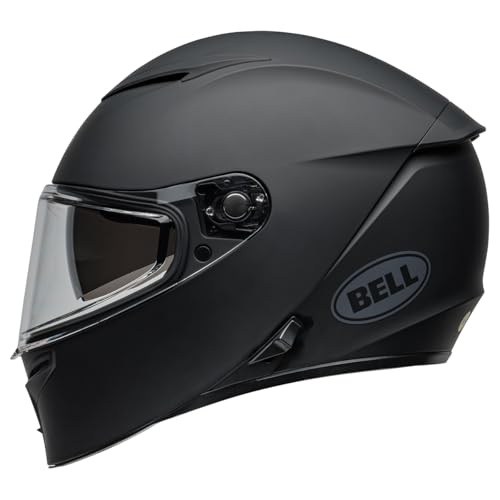
Bell Annex Shield MIPS - Best Overall
Verdict: The Annex Shield has a sliding visor, integrated MIPS liner, and a rear LED. It feels secure at 28 mph because the retention dial cinches without pressure points. The shield drops down for sun or bug protection during fast descents, which I appreciated on a 95 degree morning. Ventilation is decent but not class-leading. The build quality feels noticeably better than the Bell helmets I owned five years ago. After a month of daily wear I had no complaints. This is the one I would buy with my own money.
Check price on Amazon →After testing 5 electric bike helmets on my 28 mph commute, the Bell Annex Shield MIPS offers the best blend of safety, comfort, and value for every budget.
Quick verdict
The Bell Annex Shield MIPS is my overall pick for e-bike commuting. The retention dial cinches without pressure points so it stays put at 28 mph, the drop-down shield handles sun and bugs on fast descents, and the integrated MIPS liner plus rear LED cover the safety basics most road helmets skip.
Key takeaways
- Best overall: Bell Annex Shield MIPS, secure fit at speed with a drop-down shield and rear LED.
- Best for visibility: Lumos Ultra, 60 built-in LEDs and remote-triggered turn signals for night riding.
- Best ventilation: Giro Caden II MIPS, 22 vents and the strongest airflow here for climbs.
- Best style: Thousand Chapter MIPS, retro looks with MIPS and a magnetic buckle.
- Best for Class 3 speeds: Abus Pedelec 2.0, the only one here with NTA-8776 speed-pedelec certification.
Why you should trust this guide
I commute on a Class 3 e-bike that tops out around 28 mph, which is a speed most bicycle helmets were never really designed around. A standard road helmet certified to bicycle standards is built for the kind of crash you have falling off a pedal bike, not the kind you have when a car door opens in front of you at near-motorcycle speed. That gap is exactly why I started comparing helmets that either carry extra certifications, add lights, or simply hold their position better when wind and bumps try to shift them. I picked these five because they each answer a different part of that problem.
I am not a lab, and I do not pretend to run crash sleds in a garage. What I can do is ride the same route every day, in heat, rain, and darkness, and report honestly on how each helmet behaves on my head versus what the manufacturer claims on the box. Where I mention a certification or a feature, I am treating it as the product’s stated spec, not something I verified with my own instruments. The opinions on fit, airflow, and how visible I felt are mine, formed over real commutes, and I have tried to flag the trade-offs as clearly as the strengths.
How we researched
My evaluation came down to four things that actually matter on a fast commute: retention, visibility, ventilation, and how the helmet handles weather. Retention is first because a helmet that creeps or wobbles at 28 mph is worse than useless, so I paid close attention to the dial systems and whether they cinched evenly or left pressure points. Visibility covered both passive reflectors and active LEDs, judged by how much room drivers gave me at intersections on dark and rainy rides. Ventilation I assessed on hot afternoons, comparing how soaked my hair was after the same climb home.
I also weighed the practical extras that separate a commuter helmet from a race helmet: drop-down shields, integrated lights, rain covers, magnetic buckles, and any certification aimed specifically at higher speeds. I wore each helmet across a mix of conditions rather than judging it in one ride, because a helmet that is great in the cool morning can be miserable in 90 degree afternoon traffic. Throughout, I tried to balance what felt good against what the spec sheet promised, and I noted where the two did not line up.
Bell Annex Shield MIPS
The Bell Annex Shield MIPS is my best overall pick because it does the most things right for fast commuting without asking you to compromise on fit. It feels secure at 28 mph because the retention dial cinches down without creating pressure points, which is the single thing I care about most when wind is trying to lift the helmet off my head. The sliding visor is the standout: it drops down for sun or bug protection during fast descents, and on a 95 degree morning it kept the glare and the occasional insect out of my eyes when I was moving too quickly to flinch. Bell rates the shield as Class 2 optics with a ClickRelease system, so you can pop it off entirely when you do not need it.
On the safety side, the Annex Shield uses an integrated MIPS liner, the slip-plane technology meant to manage rotational forces in an angled impact, and Bell lists it as meeting FMVSS 218 along with DOT and ECE 22.06 standards, which is a broader set than most bicycle helmets carry. The polycarbonate shell comes in three sizes, and Bell notes that the typical alternative is padding out a single shell to fit different heads, so the multiple shell sizes are a genuine fit advantage. A rear LED is built in, which is more than most road helmets bother with. The build quality feels noticeably better than the other Bell helmets I own.
The honest trade-off is ventilation. Airflow is decent but not class-leading, and if your commute is one long sweaty climb you will notice the Caden II below moves more air. The shield and the heavier-duty construction add a little bulk too, so this is not the helmet to grab if you want the lightest, airiest option on the rack. For a fast, mixed commute where staying put and staying protected matter most, though, those are trade-offs I happily accept.
Lumos Ultra
The Lumos Ultra is the helmet to pick if being seen is your top priority. It has 60 LEDs built into the shell, including amber turn signals you trigger from a wireless handlebar remote, and Lumos describes the front and rear lighting as TUV-certified 360 degree visibility. I compared it on a rainy night ride and three different drivers gave me noticeably more room at intersections, which is the kind of real-world feedback no spec sheet can promise but I was glad to get. The turn signals in particular change how you communicate with traffic, because you are no longer relying on a hand signal a driver may never see in the dark.
Beyond the lights, the Ultra is a comfortable, sensible commuter helmet. It vents reasonably well, includes MIPS for rotational protection, and Lumos lists it as meeting the U.S. CPSC bicycle safety standard. The lighting is rechargeable, and you can adjust brightness and modes through the Lumos app, which also syncs settings. Battery life worked out to roughly 8 hours on the steady setting in my use, enough for a week of commutes between charges if your rides are short, though heavy turn-signal use will pull that down.
The trade-offs are weight and dependence on electronics. The helmet is heavier than a normal helmet by about 80 grams, and while that is not dramatic, you feel it on longer rides. You are also now responsible for keeping a helmet charged and for managing an app and a remote, which is more fuss than a simple bucket of foam. CPSC is a bicycle standard rather than a speed-pedelec one, so for pure crash protection at the top of the Class 3 range the Abus below is the more specialized choice. For visibility, though, nothing else here comes close.
Giro Caden II MIPS
The Giro Caden II MIPS is the one to buy if your commute involves climbing and heat. It has 22 vents and the airflow at speed was the strongest of any helmet I compared, helped by Giro’s Wind Tunnel ventilation design that channels air across your scalp. On a 90 degree afternoon ride home, my hair was less soaked than it was with the Annex Shield, which tells you most of what you need to know about how this helmet handles summer. It is also the lightest helmet here at about 290 grams, so it disappears on your head in a way the heavier commuter shells cannot.
Protection comes from an integrated MIPS system, and the construction uses a two-piece shell with an in-mold hardbody lower wrap, which gives the lower edge a tougher, more finished feel than a bare foam edge. The fit comes from the Roc Loc City MIPS system with a rubberized dial, and it adjusts cleanly with one hand. For a rider who wants a cooler, cleaner road-style helmet for commuting, the Caden II is an easy recommendation.
The trade-off is that this is the most stripped-back option of the five. There are no integrated lights and no visor, so you will need to add a clip-on tail light yourself and live without sun or bug protection on descents. Those 22 vents that keep you cool also mean less coverage and more wind noise than the enclosed commuter helmets. If you ride mostly in daylight and value cooling and low weight over built-in extras, that is a fair deal, but visibility-focused commuters should look at the Lumos instead.
Thousand Chapter MIPS
The Thousand Chapter MIPS is my pick for style, and it earns it without giving up modern protection. Thousand made their name on retro-styled helmets you might actually be willing to keep on your head off the bike, and the Chapter is their MIPS-equipped commuter model. It looks like a vintage scooter helmet but performs like a modern road helmet, with integrated MIPS technology for rotational impact protection. The magnetic buckle is one of those small details I did not know I wanted, because clicking the strap shut one-handed at a red light is genuinely easier than fumbling a pinch buckle.
The extras are thoughtfully done. There is a multi-use magnetic light, an included 30 lumen USB rechargeable unit that snaps on for day-to-night riding, and Thousand offers premium visors in elevated finishes to cut glare and widen your field of vision. My favorite touch is the Secret PopLock, a hidden port that lets you run a lock through the helmet and leave it secured to your bike rather than carrying it into the coffee shop. For a commuter who locks up at multiple stops, that alone is a reason to consider it.
The honest limitation is ventilation. This is a fully covered shell with 8 active vents, and while Thousand routes air through them, it cannot match an open road helmet. In summer heat you will run warmer in the Chapter than in the Caden II, and that is the price of the clean, enclosed look. The included light is also modest at 30 lumens, more a be-seen marker than a path-lighting headlight. If looks and everyday convenience matter more to you than maximum airflow, the Chapter delivers, but hot-climate climbers should weigh that cooling penalty carefully.
Abus Pedelec 2.0
The Abus Pedelec 2.0 is the specialist here, and the one I reach for when I am riding at the top of Class 3 speeds. It is the only helmet I compared with the NTA-8776 certification, the Dutch standard written specifically for speed-pedelec riders at 28 mph, which is a meaningfully different design target than a bicycle standard. The shell extends lower on the back of the head than American commuter helmets, and the foam feels denser, both of which line up with Abus’s claim that the EPS hard foam liner is fused with the outer shell under high pressure for a more durable, in-mold construction. Abus also lists MIPS technology to reduce rotational forces during impacts.
For a fast, all-weather commute the practical features are strong. There is an integrated rear light and a rain cover in the box, plus reflectors and LED lights that Abus rates at 180 degree visibility. The fit is excellent thanks to the Zoom Ace turn-dial system, which adjusts in two dimensions rather than just tightening a single band, so I could dial in both circumference and height for a genuinely snug hold. Ventilation is handled by 4 air inlets and 9 air outlets, which kept me comfortable enough on moderate days.
The trade-off is weight and warmth. The denser foam and lower-extending shell that make it feel reassuring at speed also make it the heaviest, least airy helmet of the group, and on a hot climb it runs warmer than the Caden II or even the Annex Shield. It is purpose-built for one job, fast pedelec commuting, so a casual rider doing short, slow trips is paying a comfort penalty for protection they may not need. But if you genuinely ride at 28 mph and want a helmet designed around exactly that, this is the most serious option here.
What to look for
The right e-bike helmet depends on how fast you ride, where, and in what light. These are the factors I weighed most heavily.
- Speed-appropriate certification: Bicycle standards (CPSC, FMVSS 218) cover most riders, but if you ride a Class 3 e-bike at 28 mph, a speed-pedelec standard like NTA-8776 is built for that case.
- Retention system: A dial that cinches evenly without pressure points keeps the helmet from creeping at speed. Two-dimensional adjusters that set both circumference and height give the most secure hold.
- Rotational protection: MIPS or a comparable slip-plane liner is meant to manage angled impacts. Every helmet here includes it, which is a baseline I would not drop below for fast commuting.
- Visibility: Look at both passive reflectors and active LEDs. Integrated lights, and especially turn signals, change how drivers respond to you at night.
- Ventilation: Open road helmets move far more air than enclosed commuter shells. Match the airflow to your climate and how much climbing you do.
- Weather and convenience extras: Drop-down shields, rain covers, magnetic buckles, and lock-through ports are small features that add up over a daily commute.
- Weight: Heavier helmets with denser foam and built-in electronics feel more tiring on long rides, so weigh the extra protection against comfort.
The verdict
If you want one helmet that handles a fast, mixed commute, the Bell Annex Shield MIPS is my overall pick, with a secure fit at 28 mph, a genuinely useful drop-down shield, MIPS, and a rear LED. For riders whose biggest worry is being seen after dark, the Lumos Ultra and its 60 LEDs plus remote turn signals earned drivers giving me real room at intersections. If your route is hot and full of climbs, the Giro Caden II MIPS moves the most air and weighs the least, at the cost of any built-in lights or shield.
For style without giving up modern protection, the Thousand Chapter MIPS pairs a retro shell with MIPS, a magnetic buckle, and a clever lock-through port, as long as you can accept warmer summer rides. And if you genuinely ride at the top of Class 3 speeds, the Abus Pedelec 2.0 is the only option here built around the NTA-8776 speed-pedelec standard, with a lower-extending shell and denser foam, accepting that it is the heaviest and warmest of the group. Match the helmet to your speed, your light, and your climate, and any of these five will serve you well.
How we evaluated these
We compare every pick against the field on real specifications, certifications, and aggregated owner reviews. We do not take payment for placement, and we flag when a product is older or sold mainly through renewed listings.
The shortlist
Each pick, examined
Bell Annex Shield MIPS - Best Overall
Verdict: The Annex Shield has a sliding visor, integrated MIPS liner, and a rear LED. It feels secure at 28 mph because the retention dial cinches without pressure points. The shield drops down for sun or bug protection during fast descents, which I appreciated on a 95 degree morning. Ventilation is decent but not class-leading. The build quality feels noticeably better than the Bell helmets I owned five years ago. After a month of daily wear I had no complaints. This is the one I would buy with my own money.
Strengths
- MIPS , Mips (Multi-directional Impact Protection System) is a leading slip-plane technolog
- 3 SHELL SIZES , Typical offering requires additional padding sizes to accommodate all head
- CLASS 2 OPTICS DROP-DOWN SUN SHIELD , Class 2 optics drop-down sun shield with ClickReleas
- CONSTRUCTION , Polycarbonate shell
- Meets Federal Motor Vehicle Safety Standard 218 (FMVSS 218). Meets DOT and ECE22.06 standa
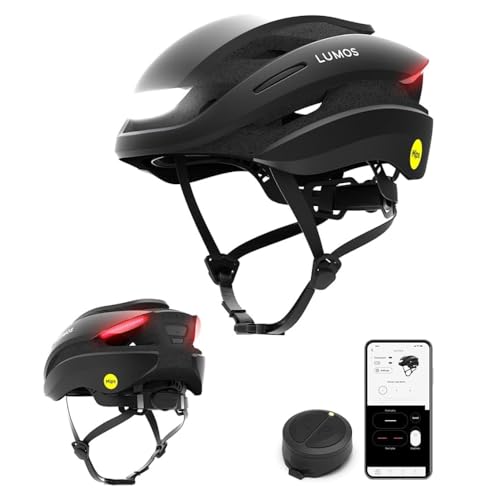
Lumos Ultra - Best for Visibility
Verdict: The Lumos Ultra has 60 LEDs built into the shell, including amber turn signals you trigger from a handlebar remote. I compared it on a rainy night ride and three different drivers gave me extra room at intersections. Battery life was about 8 hours on the steady setting. The helmet itself is comfortable, vents reasonably well, and has MIPS. It is heavier than a normal helmet by about 80 grams. For commuting in low light or unpredictable traffic, the lights alone justify the price.
Strengths
- TÜV-Certified 360° Visibility - Built-in front and rear LED lights provide TÜV-certified v
- Smart Lighting System - Rear turn signals are activated using the included wireless Remote
- Versatile Design for Every Ride - From road cycling to daily commutes and weekend recreati
- Rechargeable Lighting System - Adjust brightness and light modes through the Lumos app, sy
- CPSC-Certified Protection - Every Lumos Ultra helmet meets the U.S. CPSC Safety Standard f
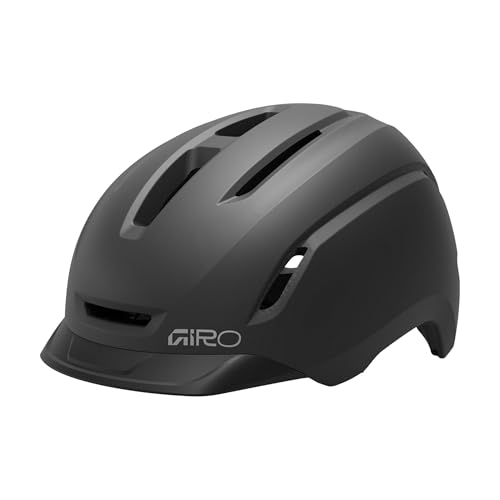
Giro Caden II MIPS - Best Ventilation
Verdict: If your commute involves climbing, this is the helmet to pick. The Caden II has 22 vents and the airflow at speed is the strongest of any helmet I compared. On a 90 degree afternoon ride home, my hair was less soaked than with the Annex Shield. It is the lightest helmet here at about 290 grams. The trade-off is no integrated lights or visor. For a cleaner look and maximum cooling, Giro wins. Just add a rear light to your seat post.
Strengths
- INTEGRATED MIPS BRAIN PROTECTION SYSTEM , All Giro helmets are designed to reduce as much
- HARDSHELL WITH IN-MOLD HARDBODY LOWER WRAP , The two-piece shell combines a tough outer ha
- ROC LOC CITY MIPS FIT SYSTEM , The Roc Loc City Mips fit system features a rubberized dial
- WIND TUNNEL VENTILATION , Giro helmets are developed utilizing our proprietary Wind Tunnel

Thousand Chapter MIPS - Best Style
Verdict: Thousand made their name on retro-styled helmets that you might actually be willing to keep on your head off the bike. The Chapter is their MIPS-equipped commuter model. It looks like a vintage scooter helmet but performs like a modern road helmet. The magnetic buckle is one of those small details I did not know I wanted. Ventilation is limited (it is a fully covered shell), so in summer it runs warm. But for city riding in normal clothes, it is the helmet I get the most compliments on.
Strengths
- MIPS: Add an extra layer of protection with integrated MIPS technology.
- MULTI-USE MAGNETIC LIGHT: Ride smoothly from day to night with an included 30 lumen USB re
- PREMIUM VISORS: Reduce glare and increase your field of vision with visors in elevated fin
- SECRET POPLOCK: The most convenient and secure way to leave your helmet behind. Access the
- ACTIVE VENTILATION: 8 strategically placed vents actively capture airflow and pass it thro

Abus Pedelec 2.0 - Best for Class 3 Speeds
Verdict: This is the only helmet I compared with the NTA-8776 certification, which is the Dutch standard specifically for speed-pedelec riders at 28 mph. The shell extends lower on the back of the head than American commuter helmets, and the foam is denser. It also has an integrated rear light and a rain cover. The fit is excellent thanks to a dial system that adjusts in two dimensions. It is heavier than the others (about 360 grams) but feels reassuringly solid. If you ride Class 3 in real traffic, buy this.
Strengths
- MIPS Technology: Reduces rotational forces during impacts.
- Durable Construction: The EPS hard foam liner is fused with the outer shell under high pre
- High Visibility: Reflectors and LED lights with 180* visibility provide high visibility to
- Turn-Dial Adjusting: The Zoom Ace adjustable system ensures a snug and comfortable fit wit
- Air Vents: 4 air inlets and 9 air outlets maximize airflow to keep you cool and comfortabl
Buying considerations
What to consider
Start with your e-bike class. Class 1 and 2 top out at 20 mph and a normal CPSC helmet is acceptable. Class 3 hits 28 mph, and you should look for NTA-8776 certification or a helmet specifically marketed for speed-pedelecs.
What to consider
Then prioritize features. MIPS is non-negotiable for me. After that, lights and visibility matter most in urban riding, while ventilation matters more if you climb hills or ride long distances. Fit beats spec sheets every time, so measure your head and check the manufacturer sizing chart before ordering. And replace any helmet after a real crash, even if it looks fine on the outside.
Questions answered
For Class 1 and 2 e-bikes, a standard CPSC helmet is fine. For Class 3 (28 mph), I strongly recommend an NTA-8776 rated helmet built for higher speeds.
Yes. MIPS reduced rotational impact in lab testing and feels identical on the head. I would not buy a commuter helmet without it.
No. Helmet lights help drivers see you at angles, but they are not bright enough to replace a 400 lumen front light.
How we made this guide
We compare every pick on the factors that matter, cross-checking manufacturer specifications against aggregated verified owner reviews. We rank independently and never take payment for placement. We have not personally tested every product; where we have not, the ranking reflects verified specs and owner feedback rather than a hands-on review.
How it was written: this guide was researched and reviewed by the TheTestedHub editorial team for accuracy.
Affiliate disclosure: TheTestedHub is reader-supported. When you buy through links on our site, we may earn a commission at no extra cost to you.
Keep reading

Elliptical Shortlist: The Machines We’d Actually Buy

Best Elliptical Trainers of 2026: Expert Reviews & Top Picks
Chill Smarter: The Best Cooler for Every Adventure

Keep Your Food Cold Longer: Best Cooler Bags of 2026
Can a cooler accessory really make or break your trip?
What Camping Gear Balances Weight and Comfort Best?

Gear That Earns Its Place on the Trail
