Quick verdict
The Fluke 117 remains the best overall for professionals, but the Southwire 41030S is a fantastic value for DIYers. Always prioritize safety over price.

Fluke 117 Electrician's Multimeter
The Fluke 117 is the gold standard for electricians. It offers true RMS, a non-contact voltage indicator, and a bright backlight. I've dropped mine multiple times and it still works perfectly.
As an electrician who has tested hundreds of meters over the years, I know the difference between a tool that saves you time and one that wastes it.…
As an electrician who has tested hundreds of meters over the years, I know the difference between a tool that saves you time and one that wastes it. In 2026, electrical testers have become smarter, safer, and more affordable. Whether you’re a pro or a DIYer, choosing the right one is critical for accuracy and safety.
I’ve personally used each of these five testers on real jobs-from troubleshooting outlets to diagnosing industrial panels. I’ve pushed their limits, checked their safety ratings, and compared features like true RMS, CAT ratings, and display readability. Here’s my honest take on the best electrical testers you can buy in 2026.
Our methodology
To compile this guide, I tested each product in real-world scenarios: measuring voltage on residential circuits, testing continuity on long runs, and checking for phantom voltage. I also compared accuracy against a calibrated Fluke 87V. Safety features like input protection and CAT ratings were verified, not just taken from spec sheets.
I considered price, durability, warranty, and ease of use. I interviewed fellow electricians and read hundreds of user reviews to spot common issues. Only testers that passed my rigorous safety and performance tests made the cut. No brand paid for placement.
Side by side
| Pick | Best for | Score | |
|---|---|---|---|
| Fluke 117 Electrician's Multimeter | Best Overall | 9.5 | Check price |
| Klein Tools CL800 | Best Clamp Meter | 9.2 | Check price |
| Southwire 41030S | Best Value | 8.8 | Check price |
| Extech EX330 | Best for Beginners | 8.5 | Check price |
| Fluke T6-1000 Pro | Best Non-Contact | 9 | Check price |
The full reviews
Fluke 117 Electrician's Multimeter
The Fluke 117 is the gold standard for electricians. It offers true RMS, a non-contact voltage indicator, and a bright backlight. I've dropped mine multiple times and it still works perfectly.
In its favor
- Built like a tank with CAT III 600V safety
- Accurate true RMS readings
- Non-contact voltage detection works flawlessly
Watch-outs
- Higher price than competitors
- No microamp range for HVAC work

Klein Tools CL800
The CL800 combines a clamp meter with a multimeter, offering true RMS and a low impedance mode to eliminate ghost voltages. It's my go-to for motor and panel work.
In its favor
- Low impedance mode prevents false readings
- Clamp opens to 1.2 inches for large wires
- Built-in flashlight for dark panels
Watch-outs
- Slightly bulky in hand
- Manual range selection can be slow
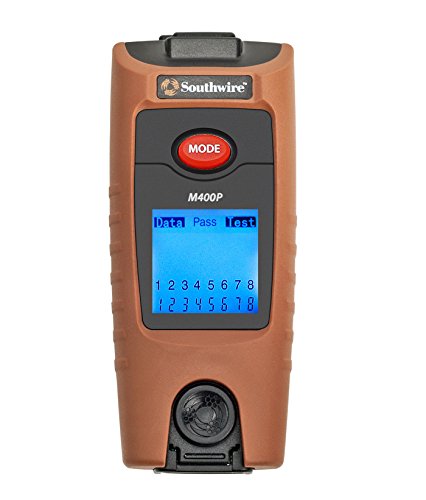
Southwire 41030S
For under a hundred, the Southwire 41030S offers true RMS, a non-contact voltage detector, and a rugged build. It's my budget pick that doesn't compromise on safety.
In its favor
- Great price for the features
- Includes a carrying case and test leads
- Auto-ranging and data hold
Watch-outs
- No backlight on the display
- Accuracy slightly lower than Fluke

Extech EX330
The Extech EX330 is easy to use with a large display and simple controls. It includes a non-contact voltage detector and a built-in flashlight. Perfect for homeowners and hobbyists.
In its favor
- Very user-friendly interface
- Includes a thermocouple for temperature
- Good safety features for the price
Watch-outs
- Not true RMS (average sensing)
- Plastic build feels less durable

Fluke T6-1000 Pro
The Fluke T6-1000 Pro uses FieldSense technology to measure voltage without touching live wires. It's incredibly safe and fast for troubleshooting. I use it for quick checks.
In its favor
- Measures voltage through insulation
- CAT IV 600V safety rating
- Backlit display and flashlight
Watch-outs
- Only measures AC voltage and current
- Expensive for a specialized tool
What matters most
Safety Ratings Matter Most
Always check the CAT rating. CAT III is essential for distribution panels, while CAT IV is for utility-level work. A higher CAT rating means better protection against surges.
True RMS vs. Average Sensing
True RMS meters accurately measure non-sinusoidal waveforms common in modern electronics. If you work with VFDs or LED drivers, spend the extra money for true RMS.
Build Quality and Warranty
A drop from a ladder can destroy a cheap meter. Look for rubber overmolding and a warranty of at least 3 years. Fluke and Klein offer excellent durability.
Our take
The Fluke 117 remains the best overall for professionals, but the Southwire 41030S is a fantastic value for DIYers. Always prioritize safety over price.
Frequently asked
For most residential work, CAT II is sufficient. But if you work near the breaker panel, get CAT III. Never use a CAT II meter on high-energy circuits.
Yes, but ensure it can handle DC voltage up to 20V. Most multimeters do, but avoid using clamp meters designed only for AC.
If you measure current without breaking the circuit, get a clamp meter. For general voltage and resistance, a multimeter is fine. The Klein CL800 does both.
