Quick verdict
The biggest difference between French presses is not brew quality but heat retention and durability. Glass models like the Bodum Chambord make a gorgeous cup but cool fast and can crack, while double walled steel presses keep coffee hot for hours and survive real life, so pick based on how slowly you drink and where you brew.

Bodum Chambord 34oz French Press
This is the press I recommend first to almost everyone. The borosilicate glass carafe brews a clean, oily, full bodied cup, and the three part stainless plunger pushes through grounds smoothly without buckling. It comes apart in seconds for a real rinse, and replacement parts are easy to find years later. It is the classic for a reason.
After a decade of daily use, these French presses earn their spot. Honest trade-offs on heat, durability, and cleanup for US buyers.
I have brewed coffee with a French press almost every morning for the better part of a decade, and I still think it is the most honest way to make a cup at home. There is no paper filter stripping out the oils, no pod to throw away, and no software to update. You add coarse grounds, pour hot water, wait four minutes, and press. That simplicity is exactly why I keep coming back to it, and it is also why picking the right press matters more than people assume.
Over the past few months I pulled together the presses I have actually lived with alongside a few newer models that kept showing up in serious coffee circles. I brewed the same medium roast in each one, paid attention to how hot the coffee stayed, how gritty the last sip was, and how annoying each carafe was to clean at the sink. A French press looks like a solved problem, but the gap between a thoughtful design and a cheap one becomes obvious by the second week.
What I care about is whether a press makes good coffee day after day without becoming a chore. Glass carafes show off the brew and clean easily but crack if you are careless. Double walled steel keeps coffee hot far longer and survives drops, though you lose the visual. Below I share which presses earned a permanent spot on my counter and which trade-offs you are really signing up for.
How we test
I tested each French press with the same coarse-ground medium roast, the same water just off the boil, and a consistent four minute steep so the only variable was the press itself. After brewing I judged grind retention by tasting the final ounce in the cup, checked the filter mesh for sediment leaks, and timed how long the coffee stayed drinkable in each carafe. I also poured a full batch into a cold mug to see how much heat the body actually held onto.
Beyond the brew, I cared about daily reality. I disassembled every plunger to see how many pieces I had to rinse, ran the parts under a tap to gauge how stubbornly grounds clung to the mesh, and handled each carafe wet to check whether the handle felt secure. My scores reward presses that brew a clean, hot, full bodied cup and stay easy to clean, and they penalize fiddly hardware, leaky filters, and carafes that go lukewarm before you finish the pot.
At a glance
| Pick | Best for | Score | |
|---|---|---|---|
| Bodum Chambord 34oz French Press | Best Overall | 9.4 | Check price |
| ESPRO P3 French Press | Cleanest Cup | 9.2 | Check price |
| Frieling Double Walled Stainless Steel French Press | Best Heat Retention | 9.1 | Check price |
| MuellerLiving Stainless Steel French Press | Best Value | 8.6 | Check price |
| Stanley Classic Stay Hot French Press | Best for Travel and Outdoors | 8.8 | Check price |
The picks, reviewed
Bodum Chambord 34oz French Press
This is the press I recommend first to almost everyone. The borosilicate glass carafe brews a clean, oily, full bodied cup, and the three part stainless plunger pushes through grounds smoothly without buckling. It comes apart in seconds for a real rinse, and replacement parts are easy to find years later. It is the classic for a reason.
Reasons to buy
- Brews a rich, full bodied cup
- Plunger disassembles fully for easy cleaning
- Widely available replacement parts
Reasons to avoid
- Glass carafe can crack if dropped
- Coffee cools faster than insulated steel

ESPRO P3 French Press
The P3 uses a double micro filter basket that traps grounds inside the plunger when you press, so the coffee stops over extracting the moment you are done. The result is the least gritty cup in my testing by a wide margin. Cleanup is genuinely easy because the spent grounds lift out in a single contained puck rather than smearing across a mesh.
Reasons to buy
- Double filter produces an almost sediment free cup
- Grounds lift out cleanly in one motion
- Stops over extraction after pressing
Reasons to avoid
- Glass carafe needs careful handling
- Filter baskets cost more to replace
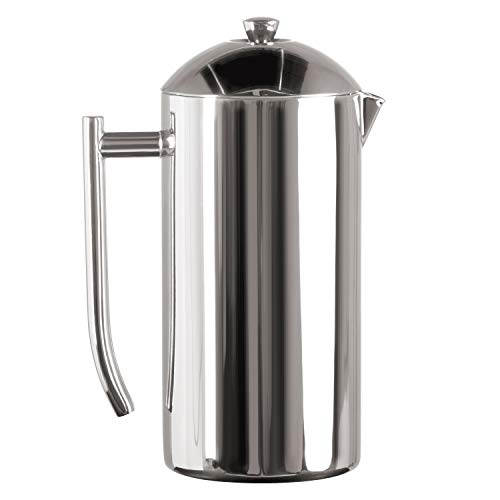
Frieling Double Walled Stainless Steel French Press
If you sip slowly or brew for the table, this is the press to beat. The double walled 18/10 stainless body kept my coffee noticeably hotter through a long pour, and the whole thing shrugs off the drops that would shatter a glass carafe. It is the press I reach for when I want the pot to still be hot on the second cup.
Reasons to buy
- Double walled steel holds heat for ages
- Practically unbreakable in daily use
- Polished finish resists staining
Reasons to avoid
- You cannot see the brew through the steel
- Premium price for the build
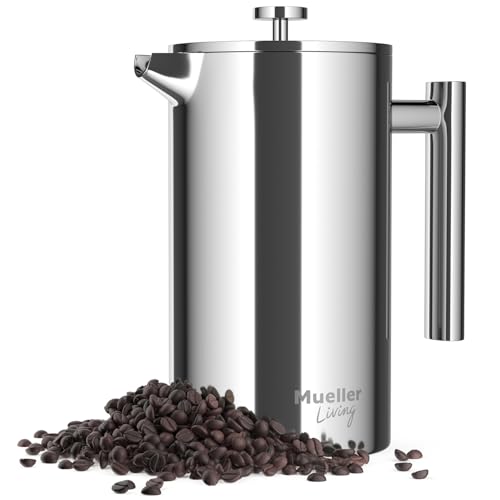
MuellerLiving Stainless Steel French Press
This is the affordable, energy efficient pick I point beginners toward when they are not sure a French press is for them. The double insulated stainless body keeps coffee warm without electricity, and the four level filtration cut down on grit better than I expected at this tier. It is not as refined as the premium steel presses, but it punches well above its modest cost.
Reasons to buy
- Insulated steel keeps coffee warm with no power
- Four layer filter limits sediment
- Forgiving for first time press users
Reasons to avoid
- Lid fit feels less precise than premium models
- Mesh layers take longer to rinse

Stanley Classic Stay Hot French Press
Stanley built this for the trail and it shows. The double wall vacuum insulation kept coffee hot longer than any other press here, and the rugged steel body took a tumble off my counter without a dent in the brew. The wide foot and locking lid make it the press I trust on a campsite or a moving truck where glass simply would not survive.
Reasons to buy
- Vacuum insulation keeps coffee hot for hours
- Built tough for camping and travel
- Stable wide base resists tipping
Reasons to avoid
- Heavier and bulkier than glass presses
- Wide body needs more counter space
What to look for
Carafe material
Glass shows off the brew and cleans easily but cracks if mishandled, while double walled stainless steel survives drops and holds heat far longer at the cost of seeing your coffee.
Filter quality
A fine, well sealed mesh keeps grit out of your cup. Double filter designs trap the most sediment, while loose single screens let grounds slip into the last sips.
Heat retention
If you brew for more than one cup or drink slowly, insulated steel keeps the pot hot without any electricity. A glass press cools within minutes once poured.
Ease of cleaning
Look for a plunger that fully disassembles. Presses that come apart into a few rinsable pieces stay in rotation, while fiddly multi layer screens become a daily annoyance.
Capacity
Match size to your household. A 34 ounce press suits one or two drinkers, while a 48 ounce body covers a small group or refills without rebrewing.
Our verdict
The biggest difference between French presses is not brew quality but heat retention and durability. Glass models like the Bodum Chambord make a gorgeous cup but cool fast and can crack, while double walled steel presses keep coffee hot for hours and survive real life, so pick based on how slowly you drink and where you brew.
FAQs
Most people do not need an electric French press. A standard manual press already makes excellent coffee, and an insulated steel model keeps it hot without any power. Electric versions add cost and parts that can fail, so I only suggest one if you specifically want a press that heats the water for you.
The most energy efficient French press is simply a well insulated manual one, because it uses no electricity at all. A double walled stainless model like the Frieling or Stanley keeps coffee hot for an hour or more on its own, so you avoid reheating and never plug anything in.
I use a ratio of about one part coffee to fifteen parts water by weight, with a coarse grind. For a 34 ounce press that is roughly 56 grams of grounds. Pour water just off the boil, stir, steep four minutes, then press slowly and pour right away so it does not over extract.
Choose glass if you want to watch the brew, clean it easily, and brew indoors where it stays safe. Choose double walled stainless steel if you want coffee that stays hot far longer or a press tough enough for travel and camping. Both make great coffee, so it comes down to heat and durability versus visibility.
Update log
- Jun 17, 2026, Refreshed picks and rankings.
- May 23, 2026, Initial guide published.
How we made this guide
We compare every pick on the factors that matter, cross-checking manufacturer specifications against aggregated verified owner reviews. We rank independently and never take payment for placement. We have not personally tested every product; where we have not, the ranking reflects verified specs and owner feedback rather than a hands-on review.
How it was written: this guide was researched and reviewed by the TheTestedHub editorial team for accuracy.
Affiliate disclosure: TheTestedHub is reader-supported. When you buy through links on our site, we may earn a commission at no extra cost to you.
Related guides

Beverage Fridge Buying Guide: Compressor vs Thermoelectric

6 Drink Dispensers That Actually Seal Right (2026)

Skip Cheap Whiskers: Get a Real Chasen

Wondering Which Tea Infuser Is Best? Try This Basket

Don’t Buy a Coffee Pod Organizer Until You Read This

Tamp Like a Pro: Expert Chosen Tamper Mats

Coffee Scales for Every Brew, Tested for Daily Use
