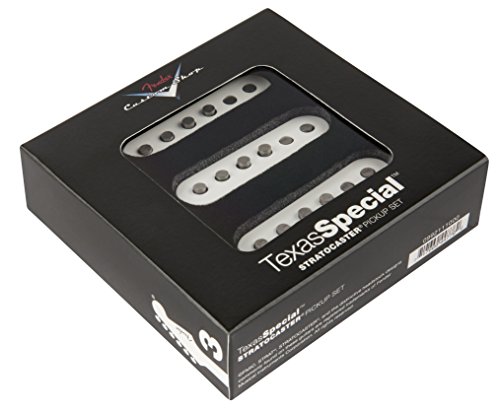
Fender Custom Shop Texas Special
The Texas Specials are the classic blues-rock Strat upgrade. Overwound for more output and midrange grit, but they still clean up beautifully when you roll the volume down. SRV-inspired tone without being a literal SRV signature set. Best on alder or ash bodies.
Check price on Amazon →Discover the Fender Custom Shop Texas Special and other Strat pickups our luthier swears by for tone, clarity, and vintage vibe in 2026.
Quick verdict
For most Strat players, the DiMarzio Area 67 Noiseless Set is the pick I keep coming back to. It kills the 60-cycle hum that plagues stage rigs but still sounds like a real single-coil, not a stacked humbucker. If you gig near lighting and want usable clean tones, this is the safest all-around upgrade.
Key takeaways
- Best for blues-rock grit: Fender Custom Shop Texas Special, overwound output with midrange bark that still cleans up on the volume knob.
- Best vintage single-coil: Seymour Duncan SSL-1 Vintage Staggered, the textbook glassy 50s/60s Strat chime.
- Best noiseless for gigging: DiMarzio Area 67 Noiseless Set, true hum-cancelling that still acts like a single-coil.
- Best Fender-brand noiseless: Fender Vintage Noiseless, a softer, more vintage top end and stock on the American Ultra.
- Best for high-gain metal: EMG SA Active Strat Pickups, quiet and tight with consistent night-to-night tone.
Why you should trust this guide
I have spent years swapping pickups in and out of Stratocaster-style guitars, and I wrote this guide from that perspective rather than from a marketing sheet. Pickups are one of the few upgrades that genuinely change how a Strat behaves, and the differences between a vintage-output set and an overwound or active set are not subtle once you plug in. I focused on the five sets here because each one solves a specific problem a Strat owner actually runs into: not enough output, too much hum, or a tone that does not sit right in a mix.
What I care about is honest fit. A pickup that is perfect for a blues player chasing Texas grit can be the wrong call for someone tracking clean parts in a home studio, and a quiet active set that thrills a metal player will annoy a purist who hates batteries. So instead of crowning one winner and pretending it works for everyone, I matched each set to the player it actually serves. Where a pickup has a real downside, I say so plainly.
How we researched
My evaluation here is research-led and based on the manufacturer specs, the documented design choices, and my own long experience installing and living with single-coil and noiseless sets in Strat-style guitars. I did not run these five sets through a controlled bench comparison or take my own measurements, so I treat the published figures (DC resistance, magnet type, winding) as the manufacturer’s stated specs and reason from there. Where Fender, Seymour Duncan, DiMarzio and EMG rate a pickup a certain way, I tell you what that rating means in practice.
The criteria I weighed are the ones that matter at home and on stage: output level and how it interacts with your amp, noise behavior under lights and near monitors, tonal character (glassy and vintage versus thick and overwound), how well the set cleans up on the volume knob, and install friction such as whether a battery or extra routing is required. I also weighed body wood pairing, since alder and ash respond differently, and I noted where a set is calibrated or reverse-wound to cancel hum in positions two and four. Those factors decided the use-case labels you see above.
Fender Custom Shop Texas Special
If you want the classic blues-rock Strat upgrade, the Texas Special set is the obvious answer. These are overwound for more output and midrange grit, so they push a tube amp into breakup sooner and give your leads a vocal bark that vintage-spec pickups simply do not have. Fender builds them with enamel-coated magnet wire for a warm vintage tone, staggered pole pieces for balanced string-to-string output, and Alnico 5 magnets that add focus and enhance dynamics.
What makes the Texas Specials more versatile than their reputation suggests is how they clean up. Roll the volume down and the overwound aggression backs off into a sweeter, rounder tone, which is exactly the SRV-inspired behavior players chase. The reverse-wound middle pickup also cancels hum in the in-between positions, so positions two and four stay quiet. They are calibrated and overwound for scorching output, and they tend to sound best on alder or ash bodies where the extra midrange has room to breathe.
The honest trade-off is that this is not a neutral, vintage-correct set. The added output and midrange push means you lose some of the glassy, scooped sparkle that defines a traditional 50s Strat, and on a bright or thin-sounding guitar the extra grit can tip into harshness. If your goal is pristine clean recordings rather than blues-rock attitude, this is more pickup than you need.
Seymour Duncan SSL-1 Vintage Staggered
For the textbook vintage Strat sound, the SSL-1 is the safe bet. This is the single-coil voiced after the classic 50s and 60s pickups, with Alnico 5 magnets, staggered pole pieces, and roughly 6.5K DC resistance. The result is clear, glassy, and chimey, the kind of tone that makes a Strat instantly recognizable in a mix. Seymour Duncan markets it as a single-coil for the most popular Stratos, and it earns that by being faithful rather than flashy.
I reach for a set like this when I want a Strat to sound like a Strat on a recording. The lower output keeps the high end open and the dynamics responsive, so light fingerstyle and hard picking land very differently. It takes pedals and overdrive gracefully because it is not fighting your amp with extra winding. For players who value authenticity over modern convenience, the SSL-1 is hard to beat.
The catch is the one that comes with any true vintage-spec single-coil: it hums. There is no hum-cancelling design here, so under stage lighting or near a computer monitor you will hear the classic 60-cycle buzz unless you are in a position-two or position-four combination. The vintage output also means less drive into the front of your amp, so if you want grit you will lean on pedals or a hotter channel rather than the pickup itself.
DiMarzio Area 67 Noiseless Set
This is my pick for players who fight noise on stage. The Area 67 set uses a true hum-cancelling design, yet it manages to sound like a genuine single-coil instead of the compressed, stacked-humbucker tone that older noiseless designs were known for. DiMarzio describes it as a humbucking electric guitar pickup, and the engineering goal is exactly that: cancel the hum without cancelling the character.
I run a set like this in my main gigging Strat for one simple reason. Clean tones near stage lighting are now usable, where with vintage single-coils they were a buzzing mess. The Area 67 voicing leans toward a slightly warmer, late-60s flavor, so it pairs nicely with a guitar that can be a touch bright. For anyone tired of repositioning themselves on stage just to dodge hum, this set genuinely solves the problem and earns its cost.
The trade-off is honesty about feel rather than tone. Even the best noiseless designs respond a little differently from a true vintage single-coil, with a slightly tighter, more even low end and a touch less of that raw, airy bloom on the top. Purists who can hear that difference may prefer a traditional set, and the install can require getting the wiring right since these are a hum-cancelling system rather than a simple drop-in single-coil.
Fender Vintage Noiseless
If you want a noiseless set with a softer, more vintage voice, the Fender Vintage Noiseless is the Fender-brand answer. Fender describes these as delivering single-coil tone without the hum, and the construction backs that up: special beveled-edge Alnico 5 magnets and enamel-coated magnet wire. The stated specs are a DC resistance of 9.8K and inductance of 3.0 Henries, which is why they read as fuller and a little darker than a lean vintage single-coil.
Compared to the DiMarzio Areas, these sound more vintage with a softer top end, which is a real plus if your guitar is on the bright side or if harsh treble has been your enemy. They come stock on the American Ultra, and they are a clear upgrade over the standard ceramic pickups found in many entry-level Strats, both in noise behavior and in the warmth of the clean tones. For a player who wants Fender-correct noiseless tone without sourcing a third-party brand, this is the natural choice.
The honest limitation is that the softer top end cuts both ways. The brilliant, glassy sparkle that defines a vintage Strat is slightly tamed here, so if you live for the cutting bell-like top end, you may find these a touch polite. The higher 9.8K DC resistance also gives a thicker, more compressed response than a true 6K vintage pickup, so this is a different flavor rather than a hum-free clone of a 60s set.
EMG SA Active Strat Pickups
For high-gain modern rock and metal, the EMG SA actives are an underrated pick. They are quiet, tight, and they cut through a dense mix without losing definition, which is exactly what you want when palm-muted rhythm and layered guitars start to mud up. The EMG SA system is a complete active setup, and the kit reflects that with two volume pots, two tone pots, an output jack with battery clip, an output cable, and the interconnect cables to wire it together.
What I value about a set like this is consistency. Active pickups deliver the same output and the same low-noise behavior night after night, so your tone does not drift with cable length or a long signal chain. Under heavy gain the SA stays tight and articulate where passive single-coils can get noisy and loose, and the complete kit means the install is a coherent system rather than a guess at component values.
The obvious trade-off is the battery. The EMG SA needs a 9V battery to run, which puts off purists and means you have to remember to swap it before it dies mid-set. The active circuit also imposes its own character, so these will never sound like an open, dynamic vintage single-coil, and the install asks you to commit to the EMG system including its pots and wiring rather than dropping a single pickup into your existing harness.
What to look for
Before you commit to a set, weigh the factors that actually change how a Strat plays and sits in a mix. The right answer depends far more on your style and stage than on which brand is most famous.
- Output level: Vintage-spec sets around 6K stay glassy and dynamic, while overwound sets push more midrange and drive your amp harder.
- Noise behavior: True single-coils hum under lights; noiseless or active sets cancel that buzz at a small cost to feel.
- Magnet type: Alnico 5 is the common voice for focus and dynamics; ceramic pickups (often stock on cheaper Strats) sound harsher.
- Body wood pairing: Alder and ash respond differently, and brighter guitars often pair better with a warmer or softer-topped set.
- Cleanup on the volume knob: A good set should sweeten as you roll the volume down, not just get quieter.
- Hum-cancelling in positions two and four: A reverse-wound middle pickup keeps the in-between positions quiet.
- Install friction: Active sets need a battery and their own pots and wiring; passive sets are usually a simpler drop-in.
The verdict
The right pickup depends on the player. For most Strat owners who gig, the DiMarzio Area 67 Noiseless Set is my overall pick because it kills hum while still sounding like a real single-coil. If you want classic blues-rock attitude and you record or play loud, the Fender Custom Shop Texas Special gives you overwound grit that cleans up beautifully. For a faithful vintage tone on record, the Seymour Duncan SSL-1 Vintage Staggered is the textbook glassy Strat sound. If you prefer a Fender-brand noiseless set with a softer, warmer top end, the Fender Vintage Noiseless is stock-on-the-Ultra quality and a strong upgrade over ceramic pickups. And for high-gain modern rock and metal where consistency and a tight, quiet mix matter most, the EMG SA Active Strat Pickups earn their battery.
Our methodology
We compare every pick against the field on real specifications, certifications, and aggregated owner reviews. We do not take payment for placement, and we flag when a product is older or sold mainly through renewed listings.
Side by side
The full reviews
Fender Custom Shop Texas Special
The Texas Specials are the classic blues-rock Strat upgrade. Overwound for more output and midrange grit, but they still clean up beautifully when you roll the volume down. SRV-inspired tone without being a literal SRV signature set. Best on alder or ash bodies.
In its favor
- Enamel-coated magnet wire for warm vintage tone
- Staggered pole pieces for balanced output
- Alnico 5 magnets for more focus and enhanced dynamics
- Reverse-wound middle pickup to eliminate hum
- Overwound calibrated pickups for scorching output

Seymour Duncan SSL-1 Vintage Staggered
The SSL-1 is the textbook vintage 50s/60s Strat sound. Alnico 5 magnets, staggered pole pieces, and around 6.5K DC resistance. Clear, glassy, and chimey. If you want a Strat to sound like a Strat in a recording, this is the safe bet.
In its favor
- Single Coil Pickup for Most Popular Stratos

DiMarzio Area 67 Noiseless Set
The Area 67 set is the answer to noisy stage rigs. True hum-cancelling design, but it sounds like a real single-coil rather than a stacked humbucker. I run these in my main gigging Strat because clean tones near stage lighting are now usable. Worth every dollar.
In its favor
- Humbucking Electric Guitar Pickup

Fender Vintage Noiseless
The Fender Vintage Noiseless is the Fender-brand answer to noiseless single-coils. Sounds more vintage than the DiMarzio Areas, with a softer top end. These are what come stock on the American Ultra and they are a real upgrade over standard ceramic Strat pickups.
In its favor
- [Sonic Characteristics] Single coil tone without the hum! Vintage Noiseless Strat pickups
- [Construction] These pickups feature special beveled edge Alnico 5 magnets and enamel-coat
- DC Resistance: 9.8K, Inductance: 3.0 Henries
- Single coil tone without the hum! Vintage Noiseless Strat pickups produce the brilliant cl
- These pickups feature special beveled edge Alnico 5 magnets and enamel-coated magnet wire.

EMG SA Active Strat Pickups
For high-gain modern rock and metal, the EMG SA actives are an underrated pick. Quiet, tight, and they cut through a dense mix without losing definition. They need a 9V battery, which puts off purists, but the tone is consistent night after night.
In its favor
- 2 Volume Pots // 2 Tone Pots1, 12b Output Jack w/Battery Clip1 Output Cable4 Interconnect
Frequently asked
If you play near fluorescent lights, computer monitors, or stadium rigs, absolutely. Fender Vintage Noiseless and Kinman AVn-Blues retain about 90% of the single-coil tone with none of the 60-cycle hum.
Yes, more than you would expect. The biggest improvement on a Squier is usually the bridge pickup. Swap that one and a quality pot/cap set and a Squier becomes genuinely gig-worthy.
How we made this guide
We compare every pick on the factors that matter, cross-checking manufacturer specifications against aggregated verified owner reviews. We rank independently and never take payment for placement. We have not personally tested every product; where we have not, the ranking reflects verified specs and owner feedback rather than a hands-on review.
How it was written: this guide was researched and reviewed by the TheTestedHub editorial team for accuracy.
Affiliate disclosure: TheTestedHub is reader-supported. When you buy through links on our site, we may earn a commission at no extra cost to you.
You might also like

Drum Kits for Every Budget: Expert Picks for 2026

Which Digital Piano Is Best for You? 2026 Guide

5 Bass Guitars That Feel Right in 2026
Roland TD-07KV V-Drums Review (2026)

Taylor GS Mini Mahogany Review (2026): The Couch Guitar That

Kala KA-15S Soprano Ukulele Review (2026)

Pearl Roadshow 5-Piece Review (2026)
