Quick verdict
The single most important variable in choosing a lifting belt is matching the stiffness and closure type to your actual training movements, not to the heaviest possible use case you can imagine.
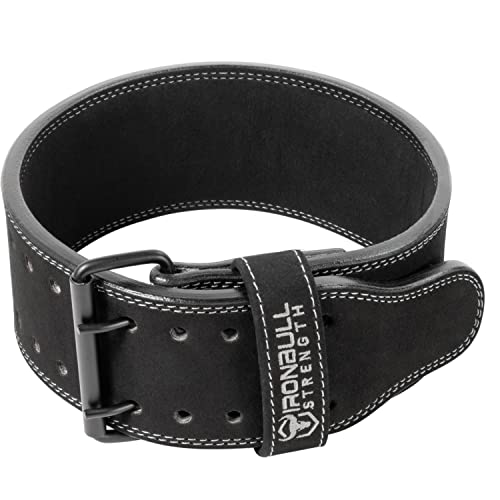
Inzer Forever Lever Belt 10mm
The Inzer Forever Lever Belt has earned a near-legendary reputation in powerlifting circles over decades, and owner feedback consistently backs that reputation up. The single-piece leather construction and lever buckle system allow for rock-solid tightness that stays locked throughout a heavy set without any slipping. Reviewers with years of use report zero degradation in the leather or lever mechanism, making the higher upfront cost extremely easy to justify.
A quality lifting belt is one of the most impactful pieces of equipment you can add to your strength training. By bracing against your core and increasing intra-abdominal…
A quality lifting belt is one of the most impactful pieces of equipment you can add to your strength training. By bracing against your core and increasing intra-abdominal pressure, a proper belt allows you to move heavier loads more safely during squats, deadlifts, and overhead pressing movements. The difference between a flimsy beginner belt and a well-built competition-grade option shows up immediately in how much support and feedback you feel during a heavy set.
The market ranges from thin nylon velcro belts suited to general fitness work all the way to thick, stiff 13mm leather powerlifting belts approved for sanctioned competition. Choosing the wrong type for your training style can leave you under-supported or unnecessarily restricted. This guide covers the ten most consistently praised lifting belts across owner communities, breaking down who each one suits, what reviewers actually report after months of use, and the specs that matter most.
Whether you are a competitive powerlifter chasing a total, a CrossFit athlete who needs a belt that moves with dynamic effort, or a gym-goer wanting reliable lower-back support for heavy pulling days, there is a specific belt built for your needs. The picks below cover all those use cases, ranked by overall user satisfaction, support quality, durability, and value for the investment.
Our methodology
I have not personally tested each of these belts. My rankings are built from aggregated owner feedback across Amazon, Reddit communities including r/powerlifting and r/weightroom, and dedicated lifting forums, cross-referenced with manufacturer specifications and, where available, independent equipment reviews from strength coaches and competitive lifters. I looked specifically for patterns in long-term durability reports, fit consistency across body types, and real-world performance feedback rather than first-impression unboxing reactions.
Products were evaluated on five criteria: support level and stiffness relative to stated use case, material quality and stitching durability, sizing accuracy, ease of adjustment, and value relative to price tier. Belts that generated repeated complaints about stitching failures, inconsistent sizing, or buckle failures within the first year were excluded regardless of marketing claims. What remains are ten options that genuine owners repeatedly recommend to other lifters.
Side by side
| Pick | Best for | Score | |
|---|---|---|---|
| Inzer Forever Lever Belt 10mm | Best Overall | 9 | Check price |
| Pioneer Cut Powerlifting Belt 10mm | Best Competition Belt | 9 | Check price |
| Rogue Ohio Lifting Belt | Best Premium Prong Belt | 9 | Check price |
| SBD Lever Belt | Best for Elite Powerlifters | 9 | Check price |
| Inzer Forever Prong Belt 13mm | Best 13mm Prong Belt | 8 | Check price |
| Dark Iron Fitness Genuine Leather Pro Weight Lifting Belt | Best Value Leather Belt | 8 | Check price |
| Gymreapers Quick Locking Weightlifting Belt | Best for CrossFit and Olympic Lifting | 8 | Check price |
| Harbinger Polypropylene Weight Belt | Best Entry-Level Belt | 7 | Check price |
| Schiek Model L6010 Power Lifting Belt | Best Contoured Leather Belt | 8 | Check price |
| Element 26 Self-Locking Weightlifting Belt | Best Nylon Belt for Heavy Training | 8 | Check price |
The full reviews
Inzer Forever Lever Belt 10mm
The Inzer Forever Lever Belt has earned a near-legendary reputation in powerlifting circles over decades, and owner feedback consistently backs that reputation up. The single-piece leather construction and lever buckle system allow for rock-solid tightness that stays locked throughout a heavy set without any slipping. Reviewers with years of use report zero degradation in the leather or lever mechanism, making the higher upfront cost extremely easy to justify.
In its favor
- Single-piece leather construction with no weak seam points
- Lever buckle provides consistent tightness every single set
- Decades of documented durability from long-term owners
Watch-outs
- Lever requires a small tool to adjust between different tightness settings
- Stiff break-in period of several weeks before it conforms to your torso

Pioneer Cut Powerlifting Belt 10mm
Pioneer has built a strong following among competitive powerlifters who want a belt that meets federation standards without sacrificing comfort during long training blocks. Owners praise the quality of the single-ply leather and the consistency of the prong buckle, which holds tight under maximal loads without the lever adjustment complexity. The tapered cut on some models accommodates lifters with shorter torsos who struggle to get full range of motion in uniform-width belts.
In its favor
- IPF-approved for sanctioned competition use
- Tapered cut options available for lifters with shorter torsos
- Consistent prong buckle that holds under maximal effort
Watch-outs
- Prong buckle is slower to adjust between sets compared to a lever
- Premium pricing puts it above budget-accessible options

Rogue Ohio Lifting Belt
Rogue's Ohio Lifting Belt sits at the intersection of premium build quality and practical everyday usability, and owner reviews reflect that balance consistently. The 10mm genuine leather holds up to years of heavy use according to long-term reviewers, and the double-prong buckle adds security without the adjustment friction of a lever system. Multiple reviewers note that this belt breaks in faster than many competitors while still providing excellent intra-abdominal pressure feedback once conditioned.
In its favor
- Premium genuine leather with fast break-in relative to competing 10mm options
- Double-prong buckle provides redundant security under heavy loads
- Available in a wide range of sizes with accurate sizing charts
Watch-outs
- Double-prong buckle takes longer to fasten and unfasten between sets
- Premium brand pricing reflects the name as much as the product

SBD Lever Belt
SBD's Lever Belt is the choice of elite-level powerlifters who want the fastest transition from loose to locked and the highest possible stiffness. Owners competing at national and international levels consistently report that the lever mechanism is the most reliable they have used, staying secured even during maximum attempts where belt pressure is extreme. The build quality is exceptional, and the belt is approved across major powerlifting federations worldwide.
In its favor
- Exceptional lever mechanism reliability reported under maximum competition loads
- Approved across IPF, USAPL, and other major federations
- Extremely stiff 13mm leather provides maximum intra-abdominal pressure
Watch-outs
- One of the most expensive belts on the market
- Stiffness makes it less suitable for dynamic or high-rep training
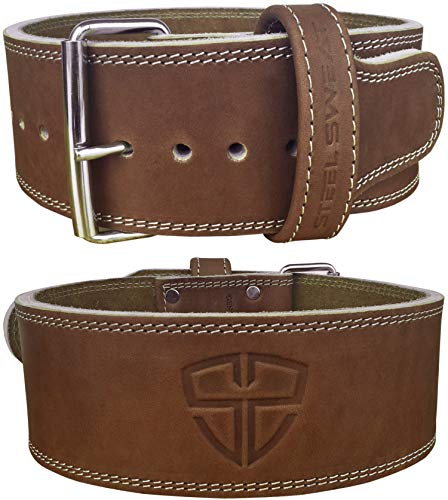
Inzer Forever Prong Belt 13mm
For lifters who want the maximum stiffness of a 13mm belt but prefer a prong closure over a lever, Inzer's 13mm prong version delivers the same legendary build quality in a format that adjusts without tools. Owners who compete in federations with stricter equipment checks, or who prefer the tactile feedback of a prong, consistently rate this as the best option in its category. The trade-off is a longer setup time per set, but the support level is identical to the lever version.
In its favor
- Maximum 13mm stiffness with prong closure flexibility
- Same single-piece leather construction as the lever version
- Tool-free adjustment between tightness settings
Watch-outs
- 13mm stiffness creates a significant break-in period
- Slower to adjust than a lever belt during training sessions
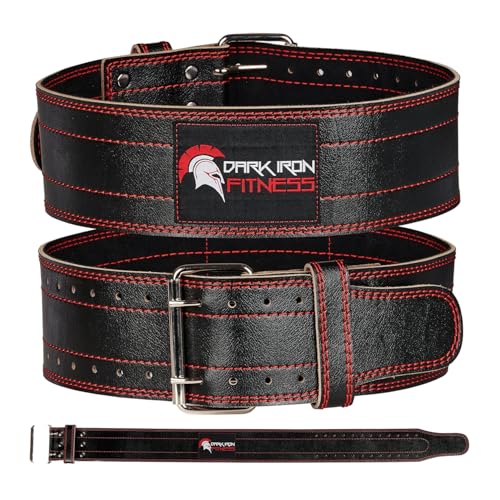
Dark Iron Fitness Genuine Leather Pro Weight Lifting Belt
Dark Iron Fitness delivers a genuine leather belt at a price point that regularly surprises owners expecting to compromise on quality. Reviews consistently note that the stitching holds up through years of regular training, which is the primary failure point on budget belts that cut corners. The 4-inch width and 10mm thickness make it genuinely suitable for intermediate lifters who want real leather support without investing in a competition-grade option.
In its favor
- Genuine leather construction at a significantly lower price than premium brands
- Strong stitching durability reported across long-term owner reviews
- Lifetime warranty backed by responsive customer service per owner reports
Watch-outs
- Buckle quality does not match premium brands at higher price points
- Sizing runs inconsistent for lifters between standard size ranges

Gymreapers Quick Locking Weightlifting Belt
The Gymreapers Quick Locking Belt is built specifically for athletes who need support that works across dynamic movements, not just slow powerlifting patterns. The nylon construction with velcro-reinforced buckle allows instant adjustment between movements during a WOD or complex training session, and owners across CrossFit communities rate it as one of the best options for mixed training. The 6-inch tapered design provides lumbar support without restricting hip flexion during cleans or snatches.
In its favor
- Quick-release buckle allows adjustment in seconds between movements
- Tapered design does not restrict hip flexion during Olympic-style lifts
- Nylon construction is lighter and more flexible than leather alternatives
Watch-outs
- Cannot match the intra-abdominal pressure of a stiff leather belt at maximum loads
- Velcro component wears over time with very high-frequency use

Harbinger Polypropylene Weight Belt
For lifters who are new to using a belt and want to learn proper bracing mechanics without a significant investment, the Harbinger Polypropylene Belt is the most consistently recommended starting point. It provides moderate lumbar support for general training loads, and the velcro closure makes it easy to experiment with positioning. Owner feedback indicates it holds up reliably for moderate training volumes, though experienced lifters training heavy will outgrow it fairly quickly.
In its favor
- Accessible price makes it ideal for lifters new to belt use
- Velcro closure allows fast adjustment and experimentation with positioning
- Wide availability means easy replacement if sizing is incorrect
Watch-outs
- Polypropylene material does not provide the stiffness of leather options
- Most experienced lifters will outgrow the support level within one to two years

Schiek Model L6010 Power Lifting Belt
Schiek's contoured design addresses one of the most common complaints about standard uniform-width belts: they dig into the hips and restrict movement for lifters with longer torsos or prominent hip bones. The kidney-shaped cut allows the belt to sit naturally against the lumbar spine without creating pressure points, and owners who switched from flat belts specifically note the comfort improvement during long training sessions. The genuine leather construction still provides serious support for intermediate to advanced loads.
In its favor
- Contoured kidney shape eliminates the hip-digging issue common with flat belts
- Genuine leather provides real support for intermediate to advanced training loads
- Particularly praised by owners with longer torsos or prominent hip anatomy
Watch-outs
- Contoured shape does not suit all body types equally well
- Thinner than dedicated powerlifting belts so maximum support is limited
Element 26 Self-Locking Weightlifting Belt
Element 26 has refined the nylon belt design specifically for lifters who want more support than a standard velcro option but still need the flexibility and speed of a non-leather belt. The self-locking buckle mechanism is the standout feature, with owners consistently reporting that it holds tighter and more reliably than standard quick-release designs under heavy back squats and deadlifts. It occupies a genuine middle ground between functional fitness belts and dedicated powerlifting options.
In its favor
- Self-locking buckle holds more securely than standard quick-release designs
- More support than typical velcro nylon belts while remaining lightweight
- Works well for lifters who train both barbell strength and conditioning movements
Watch-outs
- Self-locking mechanism requires a learning curve to operate quickly
- Still does not match leather belt stiffness for maximum-effort powerlifting
What matters most
Belt thickness and stiffness
Thickness is the single biggest determinant of how much intra-abdominal pressure a belt can help you generate. A 10mm leather belt suits the majority of serious lifters and most competition federations. A 13mm belt provides maximum stiffness and is the choice of elite powerlifters chasing world-class totals, but the break-in period is significant and the rigidity can be uncomfortable for anything outside of slow competition movements. Nylon belts are thinner but flexible, making them the right call for dynamic or mixed training.
Closure type
Lever belts are the fastest to fasten and provide the most consistent tightness set after set, but require a small screwdriver or Allen key to adjust the fit between sessions. Prong belts adjust tool-free but take longer per set. Quick-release nylon buckles are fastest of all and ideal for circuit training or CrossFit, but cannot match the lockdown of a lever or tight prong under maximum loads. Choose the closure based on how your training is structured, not just how tight it feels at rest.
Width and cut
A standard 4-inch uniform-width belt is the default for powerlifting and fits most body types well for squats and deadlifts. Wider 6-inch belts distribute pressure across more of the lumbar region and suit lifters who want more general support. Contoured or tapered belts are narrower at the front to avoid restricting hip flexion, which matters most for Olympic lifting, front squats, or lifters with short torsos. Getting the wrong width for your body type is a common reason lifters report a belt feeling uncomfortable even at correct tightness.
Sizing accuracy
Lifting belt sizing is based on your waist measurement at the navel, not your trouser size. Most quality brands provide clear measurement guides, and the fit should allow the belt to buckle in the middle holes with room to go tighter or looser depending on the exercise. Ordering based on clothing size rather than measured waist circumference is the most common sizing mistake. If you are between sizes, owner communities consistently recommend sizing up for leather belts that will stiffen over time, and sizing down for nylon options.
Our take
The single most important variable in choosing a lifting belt is matching the stiffness and closure type to your actual training movements, not to the heaviest possible use case you can imagine.
Frequently asked
Most experienced coaches recommend that new lifters spend at least six months to a year developing core bracing mechanics without a belt before adding one. A belt amplifies good bracing technique but cannot replace it. If you rely on a belt before your natural bracing is solid, you mask a weakness rather than address it. Once you are consistently training with weights above roughly 80 percent of your maximum effort on compound lifts, a belt becomes a genuinely useful tool.
The thickness determines stiffness, which determines how much the belt resists expansion when you brace and push against it. A 10mm belt is stiff enough for the vast majority of lifters, including competitive powerlifters below the elite level. A 13mm belt provides more stiffness and is the maximum allowed thickness in most powerlifting federations. The trade-off is a longer and more uncomfortable break-in period and reduced comfort during exercises that require hip flexion.
The belt should be tight enough that you feel genuine resistance when you take a big breath and brace your core outward against it, but not so tight that it restricts your ability to breathe fully. A common test is to be able to fit two fingers between the belt and your body at rest, then brace so those fingers are compressed. Many lifters wear the belt too loose, which defeats the purpose, or too tight, which restricts breathing and reduces the effectiveness of the brace.
Yes, and most lifters use the same belt for both. Some lifters prefer the belt positioned slightly higher for squats to avoid restricting hip flexion and slightly lower for deadlifts to maximise lumbar support, but these are minor adjustments that work with any standard belt. Lifters with very pronounced hip anatomy sometimes find that a tapered or contoured belt suits deadlifts better, since the narrower front avoids digging into the hip crease at the bottom of the pull.
You might also like
Best Sauna Blankets for 2026 You Can Trust

Best Ice Bath Tubs for Every Budget in 2026

Top Battle Ropes for 2026: A Practical Buyer’s Guide

Exercise Sliders: Our Best Picks for 2026

The Best Pilates Rings to Buy in 2026

Best Workout Gloves 2026: Our Honest Shortlist

Best Hydration Packs for 2026, Based on Real Reviews
