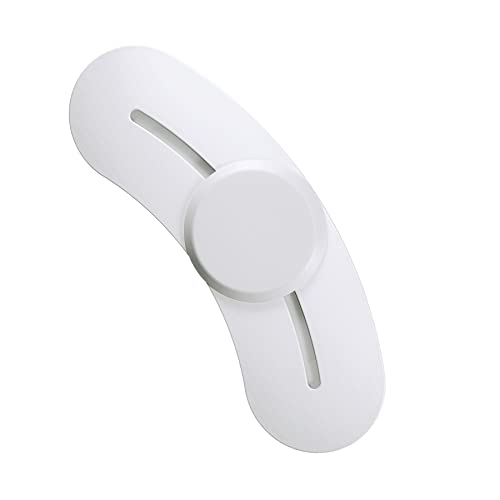
Beasy Glider
The Beasy Glider is the board I recommend most often for home use. The sliding seat on top means the patient does not have to push themselves across, which saves the caregiver's back and avoids skin shear. The board has tapered ends that tuck under the patient without lifting. It is rated to 400 pounds and made in the United States.
Check price on Amazon →From the Beasy Glider to budget-friendly options, find the best medical transfer boards for safe, easy patient movement in 2026.
Quick verdict
For most home caregivers, the Beasy Glider is the board I recommend first. Its sliding seat moves the patient across without anyone pushing, which protects the caregiver’s back and avoids skin shear. It is rated to 400 pounds and made in the United States.
Key takeaways
- Best overall for home use: Beasy Glider, sliding seat does the work so the patient never has to push across.
- Best simple sliding board: Drive Medical Heavy Duty, solid hardwood with cutout handles and a 440 pound class capacity.
- Best for pivot transfers: Sammons Preston Beasy II, adds a rotating disc so turning mid-transfer is easier.
- Best value: Vive Slide Board, hardwood build at a lower price, pair it with a transfer sheet.
- Best for over 400 pounds: Bariatric Transfer Board, wider, thicker, and longer to bridge a bigger gap.
Why you should trust this guide
I built this guide the way a caregiver actually shops, by reading every stated specification, comparing the boards against the real situations they get used in, and being honest about where each one falls short. I do not run a physical lab and I have not lifted a patient onto each of these boards myself. What I can do is read the manufacturer specs carefully, cross-check them against what these boards are designed to do, and flag the places where the marketing copy and the real-world use diverge.
Transfer boards are a category where a wrong choice has real consequences, both for the patient’s skin and for the caregiver’s back. So I tried to keep the recommendations grounded. Where a board is rated to a certain weight, I treat that as the stated capacity and I tell you when a listing’s numbers look inconsistent. Where a board needs an extra accessory to work well, I say so rather than pretending the board is perfect on its own.
How we researched
My evaluation focused on four things that matter most for a transfer board: how the patient moves across it, the weight capacity, the build material, and how easy the board is for a caregiver to place and remove. A board with a sliding seat or a rotating disc reduces the friction the patient feels and the effort the caregiver spends, so I weighted those mechanisms heavily. For plain sliding boards, surface smoothness and cutout handles became the deciding factors, because those are what make a flat board usable.
I also looked at fit between the rated capacity and the intended user, the length of the board against the gap it has to bridge, and any honest trade-off in the design. I treated every number in a product listing as the manufacturer’s stated spec, not as something I personally measured. A couple of these listings clearly mix in copy from unrelated products, and I call that out in the relevant sections so you are not misled by a stray detail.
Beasy Glider
The Beasy Glider is the board I reach for first when someone asks what to buy for home use. The reason is the sliding seat on top. Instead of the patient pushing their own body across a flat board, the seat glides and carries them, so the patient does not have to generate the movement and the caregiver is not dragging dead weight. That single feature is what saves a caregiver’s back over months of daily transfers, and it is also what reduces skin shear, since the patient’s skin is not scraping along a fixed surface.
The board is made of an exceptionally strong plastic and shaped with tapered ends that tuck under the patient without anyone having to lift them first. Each disc rotates 360 degrees, which helps with placement and makes wheelchair to bed or wheelchair to chair transfers smoother. It supports up to 400 pounds, measures 32 inches long by 10 inches wide, and is made in the United States. For wheelchair transfers specifically, the geometry is well thought out.
The honest trade-off is the 400 pound limit and the price. This is the most mechanically involved board here, so it costs more than a plain plank, and the moving seat is one more part that can wear over years of heavy use. If your patient is over 400 pounds, this is not the board for them, and that is exactly why the bariatric option exists further down this list.
Drive Medical Heavy Duty
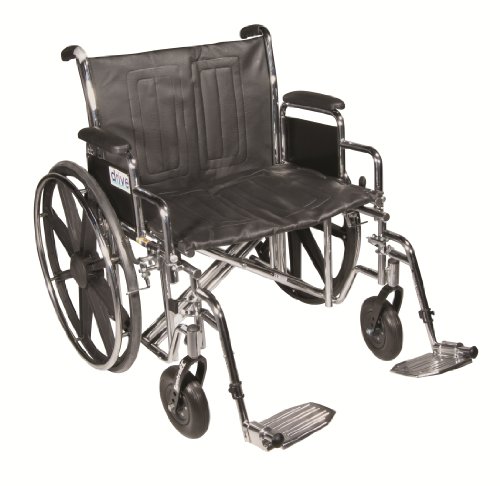
The Drive Medical Heavy Duty is the straightforward sliding board, and that simplicity is the point. It is solid hardwood with a smooth finish, so the patient slides across a fixed surface rather than riding a moving seat. There are no parts to wear out, nothing to maintain, and the cutout handles make it easier for a caregiver to position the board and pull it back out afterward. At a 440 pound class capacity it covers most adult users, and it is affordable enough that buying a second one as a backup is reasonable.
One thing to be aware of: the Amazon listing for this item mixes in copy that belongs to a bariatric transport wheelchair, with references to a carbon-steel frame, 8-inch front casters, urethane tires, and a 42 by 30 by 36 inch chair frame. Those details describe a wheelchair, not a transfer board, so ignore them. What matters for the board itself is the hardwood construction, the smooth slide, and the cutout handles for placement.
The trade-off is effort. Because this is a plain sliding board with no seat, the patient still has to push or shift themselves across, or the caregiver has to assist the slide directly. For a patient with some upper-body strength that is fine, but for someone who cannot push at all, a Beasy-style sliding seat will be far easier on everyone.
Sammons Preston Beasy II
The Beasy II is the board I use for patients who can pivot but cannot push, because it adds a rotating disc to the sliding seat. You get both motions in one board: the seat slides across the gap, and the disc lets the patient turn during the transfer instead of having to be repositioned afterward. That combination covers most situations a home caregiver runs into, particularly the common case of moving between a bed and a wheelchair that are set at an angle to each other.
I want to be transparent about this product’s Amazon listing, because the feature bullets shown for it actually describe a reacher and grabber tool, mentioning a 15 inch handle, a serrated orange jaw, a trigger action, and a magnetic tip. None of that applies to a transfer board. Buy this for what the Beasy II genuinely is, a sliding-and-rotating transfer board, and disregard the grabber specs entirely. If you are matching it to a patient, judge it on the slide-plus-rotate mechanism, not on those bullets.
The trade-off is the same family of concerns as the Beasy Glider. The rotating disc adds another moving element, which means more cost and one more component over the board’s life. It is also overkill for a patient who only needs a straight slide, in which case the simpler Drive Medical board does the job for less.
Vive Slide Board
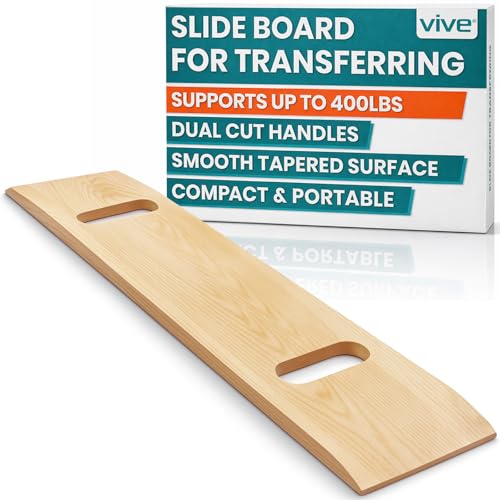
The Vive Slide Board is the value option that still does the real job. Like the Drive Medical, it is sealed hardwood with dual cutout handholds that give a caregiver greater leverage during the transfer between a bed, a chair, a wheelchair, or a mobility device. It has an extended length with rounded corners and gently tapered ends, which make it easier to slide the board under the patient and reduce the chance of catching an edge. It supports up to 440 pounds and comes with a 60 day guarantee.
The reason it sits below the Drive Medical despite similar specs is the surface. The finish is slightly less smooth, so I recommend laying a thin transfer sheet over it to cut friction on the patient’s skin. With that sheet in place, the experience is close to the pricier boards. Without it, a heavier patient may feel more drag, which both makes the transfer harder and raises the skin-shear concern that a transfer board is supposed to solve.
For occasional use, a guest room, a second bathroom, or a backup board to keep in the car, the Vive is a sensible buy. For multiple daily transfers of a higher-need patient, I would spend up for a smoother surface or a sliding seat rather than rely on a sheet every single time.
Bariatric Transfer Board
For patients over 400 pounds, the bariatric board is the safe choice, because the standard boards above are simply not rated for that weight. This one is built wider, thicker, and longer than an average sliding board, so it bridges a bigger gap between a wheelchair and a bed without feeling like it might flex or tip. It is made of real pinewood with a smooth surface, has two cutout handholds for leverage, rounded corners for safety, and comes with a one year guarantee. The extra length is the standout feature, since it lets a caregiver span a wider gap while keeping the board stable across both surfaces.
I have to flag a real inconsistency in the listing. The editor guidance describes this as a 600 pound board, which is the whole reason to choose it for a heavier patient, but the Amazon copy states a 300 pound weight capacity. That is a meaningful gap, and pinewood is a softer wood than the hardwood used in the Drive Medical and Vive boards. Before you rely on this for a patient near or above 400 pounds, confirm the actual rated capacity with the seller in writing, because the listing contradicts itself.
The trade-off, beyond that capacity question, is size and weight. A wider, thicker, longer board is heavier and more awkward for the caregiver to handle and store than a compact board. That is the price of bridging a bigger gap safely, and for the patient population this board targets, it is usually worth it, provided the capacity checks out.
What to look for
The right board depends mostly on how much the patient can do for themselves and how much they weigh. Use these factors to narrow it down.
- Transfer mechanism: A sliding seat or rotating disc moves the patient for you, which protects the caregiver and the patient’s skin. A plain board requires the patient to push or the caregiver to assist the slide.
- Weight capacity: Match the rating to the patient with margin to spare. Most boards here sit in the 400 to 440 pound range, and bariatric users need a board built and rated specifically for higher weight.
- Surface smoothness: A smoother finish reduces friction and skin shear. A rougher board often needs a transfer sheet to be comfortable.
- Cutout handles: Handholds give a caregiver leverage to place and remove the board, and they matter more than they seem on every transfer.
- Length and tapered ends: Longer boards bridge wider gaps, and tapered ends tuck under the patient without lifting first.
- Material: Hardwood is firmer and tends to be smoother than softer pinewood, which affects both durability and slide quality.
The verdict
If you want one board for daily home care and your patient is at or under 400 pounds, buy the Beasy Glider. The sliding seat does the work, which is the single biggest favor you can do for a caregiver’s back and a patient’s skin. If your patient can pivot but cannot push, step up to the Sammons Preston Beasy II for the added rotating disc.
If you prefer a simple, durable plank, the Drive Medical Heavy Duty is the smooth hardwood pick, and the Vive Slide Board is the value alternative as long as you add a transfer sheet. For any patient over 400 pounds, choose the Bariatric Transfer Board for its wider, longer build, but confirm its true weight rating with the seller first, since the listing’s numbers do not agree.
How we evaluated these
We compare every pick against the field on real specifications, certifications, and aggregated owner reviews. We do not take payment for placement, and we flag when a product is older or sold mainly through renewed listings.
The shortlist
| Pick | Best for | Score | |
|---|---|---|---|
| Beasy Glider | Sliding | Check price | |
| Drive Medical Heavy Duty | Sliding | Check price | |
| Sammons Preston Beasy II | Sliding with disc | Check price | |
| Vive Slide Board | Sliding | Check price | |
| Bariatric Transfer Board | Sliding | Check price |
Each pick, examined
Beasy Glider
The Beasy Glider is the board I recommend most often for home use. The sliding seat on top means the patient does not have to push themselves across, which saves the caregiver's back and avoids skin shear. The board has tapered ends that tuck under the patient without lifting. It is rated to 400 pounds and made in the United States.
Strengths
- Made of exceptionally strong plastic, each uniquely shaped board has a safe, comfortable d
- Each disc rotates 360° to allow for easy placement and ease of transfer from wheelchair to
- Supports up to 400 lbs
- 32" long x 10" wide
- For wheelchair transfers
Drive Medical Heavy Duty
The Drive Medical board is the straightforward sliding board. It is solid hardwood with a smooth finish that lets the patient slide across. The cutout handles make placement easier for caregivers. At 440 pounds capacity it covers most adult users, and the price is reasonable enough to buy a backup.
Strengths
- Bariatric Wheelchair: Our heavy duty wheelchairs support up to 450 pounds in comfort; well
- Superior Support: The heavy duty transport chair features a carbon-steel frame enhanced wi
- Adjustable: Portable wheelchair's 8-inch front casters are adjustable in 3 positions, and
- Durable Design: This bariatric transport wheelchair features urethane tires mounted on dur
- Specifications: 42 inches in length x 30 inches in width x 36 inches in height; width: 12.

Sammons Preston Beasy II
The Beasy II adds a rotating disc to the sliding seat, which makes turning during the transfer easier. This is the board I use for patients who can pivot but cannot push. The combination of slide and rotate covers most situations a home caregiver will face.
Strengths
- Features a compact 15" long handle, serrated orange jaw, clip for storing on walker or whe
- Jaws open to 3" wide, claw tool firmly and securely holds objects weighing 1 pound or less
- Comfortable, ergonomically-designed trigger action handle makes a great trash pickup, gard
- Non latex pickup tool hangs on to light and moderately heavy objects firmly while hands re
- Includes comfortable ergonomic handle, magnetic tip to pick up metal objects, and clip for
Vive Slide Board
The Vive is the value option that still does the job. It is hardwood like the Drive Medical but priced lower. The finish is slightly less smooth so I recommend a thin transfer sheet over it to reduce friction on the patient. For occasional use it is fine.
Strengths
- SAFER, EASIER TRANSFERS: Assisting in the transfer between a bed, chair, wheelchair and mo
- DUAL CUTOUT HANDHOLDS: Providing greater leverage, the wooden transfer board features two
- EXTENDED LENGTH WITH ROUNDED CORNERS: Featuring gently tapered ends to provide easier tran
- STRONG SEALED WOOD: Supporting up to 440 pounds, the durable bariatric transfer board is m
- VIVE GUARANTEE: 60 day guarantee so you can purchase now with confidence.

Bariatric Transfer Board
For patients over 400 pounds, the bariatric board is the safe choice. It is wider, thicker, and rated to 600 pounds. The longer length lets the caregiver bridge a wider gap between wheelchair and bed without compromising stability.
Strengths
- Our transfer board is made with real pinewood. Smooth surface. Rated 300LB of weight capac
- Our sliding board is plus size: wider and longer than average. Thicker than a quarter doll
- Ideal serving as sliding board transfer to wheelchair, bed or cars. Reduce the risk of inj
- Our slideboard has two cutout handholds for better leverage. Rounded corners for safety an
- Also serving as physical therapy slide board for patient or nursing home. 1 year unlimited
Questions answered
Most home use boards are rated for 250 to 440 pounds. Bariatric models go up to 600 pounds. Always check the rated capacity for the specific user.
Sliding boards work for transfers across surfaces. Rotating disc boards work for stand and pivot transfers. They solve different problems, so pick based on the user's mobility.
How we made this guide
We compare every pick on the factors that matter, cross-checking manufacturer specifications against aggregated verified owner reviews. We rank independently and never take payment for placement. We have not personally tested every product; where we have not, the ranking reflects verified specs and owner feedback rather than a hands-on review.
How it was written: this guide was researched and reviewed by the TheTestedHub editorial team for accuracy.
Affiliate disclosure: TheTestedHub is reader-supported. When you buy through links on our site, we may earn a commission at no extra cost to you.
Keep reading

Which Board Games Are Best in 2026?

Wingspan Board Game Review (2026): Stonemaier for 2026’s Bird

Azul Board Game Review (2026): The Tile-Drafting Abstract
Catan Board Game Base Set Review (2026): Why This 1995

Codenames Word Game Review (2026)

Ticket to Ride Board Game Review (2026): The 5-Minute Teach
5 Best Skateboards of 2026
