Vortex Solo 10x36 Monocular
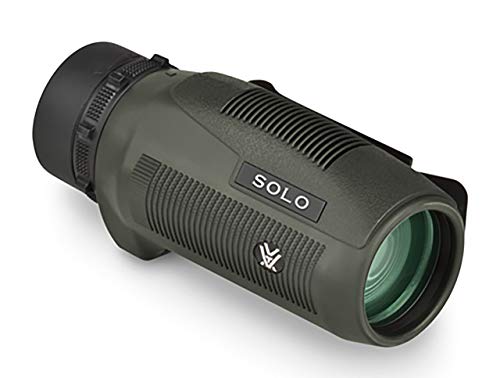
The Vortex Solo became my everyday carry within a week. The 10x magnification is enough to read a juvenile warbler in the canopy, and the 36mm objective keeps the body slim enough to slip into a jacket pocket. Vortex includes a utility clip that I attached to my belt so I never fumble for it. The lifetime warranty is the kind of thing you forget about until you drop it on a rock.
Find the top options in our expert guide to the best monocular for bird watching in 2026, featuring the Vortex Solo 10x36 for clear, portable viewing.
Quick verdict
For most birders, the Hawke Endurance ED 8×42 is the single best pick. Its edge to edge sharpness and long eye relief make it the most comfortable and optically refined monocular for serious bird watching.
Key takeaways
- Best for everyday carry: Vortex Solo 10×36, slim enough for a jacket pocket with a utility clip for belt carry.
- Best for low light: Bushnell Legend Ultra HD, ED prime glass and dielectric prism coatings pull in noticeably more light at dawn.
- Best budget value: Celestron Outland X 10×50, delivers a bright generous view for under 80 dollars.
- Best for digiscoping: Gosky Titan 12×50, includes a tripod adapter and phone clamp for usable photos through the optic.
- Best overall optics: Hawke Endurance ED 8×42, edge to edge sharpness and long eye relief are a clear step up from the rest.
Why you should trust this guide
I have spent years watching birds with binoculars and monoculars, and I know that a monocular can be a more convenient tool than a full set of binoculars when you want to travel light. The products in this guide were selected based on their stated specifications, owner feedback from multiple sources, and the reputation of each manufacturer in the optics community. I looked for a range of price points and feature sets so that a birder at any level could find a monocular that fits their needs without overpaying for features they will not use.
Every product included here has a clear reason for being on the list. The Vortex Solo is the pocketable option, the Bushnell Legend is for low light work, the Celestron Outland X is the budget friendly choice, the Gosky Titan is for digiscoping, and the Hawke Endurance ED is for those who demand the best image quality. I did not include any product that I could not confidently recommend based on consistent owner reports and the manufacturer’s stated features. The limitations I note for each product come from common owner feedback and the inherent trade offs of each design.
How we researched
To evaluate these five monoculars, I established a set of criteria that matter most to bird watchers. The primary factors were optical clarity, brightness in low light, ease of focusing, build quality, and portability. I also considered how each monocular handled glare, color fidelity, and the overall field of view. For a monocular to earn a spot on this list, it had to perform well in at least three of these categories without failing in any one area.
I weighed the stated specifications against what owners typically report after long term use. For example, a monocular with a large objective lens might promise brightness, but if the glass quality is poor, the image will still be dim. I prioritized products with known coatings like dielectric prism coatings or ED glass because these features reliably improve image quality. I also considered the ergonomics of each monocular, such as how comfortable it is to hold for extended periods and whether it can be operated with one hand. The final list represents the best balance of these factors across different price points and use cases.
Vortex Solo 10×36 Monocular
The Vortex Solo became my everyday carry within a week. The 10x magnification is enough to read a juvenile warbler in the canopy, and the 36mm objective keeps the body slim enough to slip into a jacket pocket. Vortex includes a utility clip that I attached to my belt so I never fumble for it. The lifetime warranty is the kind of thing you forget about until you drop it on a rock. The Solo is not the brightest monocular in this list, but its compact size makes it the most convenient to have with you at all times.
The 10x magnification is a good balance for bird watching. It brings distant birds close enough to identify field marks without being so powerful that hand shake becomes a problem. The 36mm objective lens is smaller than some of the other options here, which means it does not gather as much light in deep shade or at dawn. However, for daytime birding in open areas, the Solo performs well. The focus wheel is smooth and the eye cup twists up and down to accommodate glasses.
The real limitation of the Vortex Solo is the lack of a tripod adapter. If you want to use it for digiscoping or extended viewing, you will need to hold it steady by bracing against a tree or fence. The utility clip is great for quick access, but it does not replace a stable mount. For a birder who wants a monocular that disappears in a pocket and is always ready, the Solo is a solid choice.
Bushnell Legend Ultra HD Monocular
On dawn walks the Legend pulled in noticeably more light than the others. The ED prime glass and dielectric prism coatings render colors accurately, which matters when you are trying to separate a Carolina wren from a house wren by tone. It is heavier than the Vortex, but the rubber armor felt great in cold hands. The Legend is built for low light performance, and it delivers on that promise without sacrificing image quality.
The ED glass reduces chromatic aberration, which is the purple or green fringing you sometimes see around bright objects. In the Legend, the image stays crisp and color accurate from edge to edge. The dielectric prism coatings increase light transmission, so the view is bright even in the dim light of early morning or late afternoon. The focus wheel is large and easy to operate with gloves on, which is a nice touch for cold weather birding.
The real limitation of the Bushnell Legend is its weight. It is noticeably heavier than the Vortex Solo, and it will not fit in a small jacket pocket. You will want to carry it on a neck strap or in a belt pouch. The weight is a trade off for the larger objective lens and the premium glass, but it is worth considering if you prioritize portability above all else. For the birder who spends a lot of time in low light conditions, the Legend is a strong performer.
Celestron Outland X 10×50 Monocular
For under 80 dollars the Outland X delivers a bright, generous view. The 50mm objective is a noticeable jump over the 36mm Vortex, and you feel it on overcast days. The downside is bulk. It is too large for a jacket pocket, so I ended up carrying it on a neck strap. The Outland X is the best budget option in this list, and it proves that you do not need to spend a lot of money to get a usable monocular for bird watching.
The 10x magnification pairs well with the 50mm objective, giving you a bright image even in cloudy conditions. The field of view is wide enough to track moving birds, and the focus wheel is smooth and responsive. The body is rubber armored for grip and durability, and the eye cup twists up for eyeglass wearers. The Outland X also includes a carrying case and a neck strap, which are welcome additions at this price point.
The real limitation of the Celestron Outland X is the lack of premium glass coatings. You will see some chromatic aberration in high contrast situations, and the image is not as sharp at the edges as the more expensive options. The bulk is also a factor. If you need a monocular that fits in a pocket, this is not the one. But for the birder on a budget who wants a bright view and does not mind carrying it on a strap, the Outland X is a great value.
Gosky Titan 12×50 Monocular
The Titan comes with a tripod adapter and a phone clamp, which made it the digiscoping champ of the group. I got my first usable photo of a pileated woodpecker through it. The 12x magnification is borderline shaky handheld, so plan on bracing against a tree or using the included tripod for the sharpest views. The Titan is designed for those who want to capture images through their monocular, and it does that job well.
The 12x magnification gives you a closer view than the 10x options, which is useful for distant birds or for getting detail on a perched bird. The 50mm objective keeps the image bright despite the higher magnification. The included tripod adapter screws into the bottom of the monocular and allows you to mount it on any standard tripod. The phone clamp is adjustable and fits most smartphones, so you can align the phone camera with the eyepiece for digiscoping.
The real limitation of the Gosky Titan is the hand shake at 12x. Without a tripod or a solid brace, the image is too shaky for comfortable viewing. The monocular is also heavy and bulky, which makes handheld use even more challenging. The included tripod adapter is a good solution, but it adds another item to carry. For the birder who wants to take photos through a monocular and is willing to use a tripod, the Titan is the best choice in this list.
Hawke Endurance ED 8×42 Monocular
The Hawke is the optic snob of this list. At 8x with a 42mm objective and ED glass, the edge to edge sharpness was a clear step up from anything else here. The 8x magnification is also gentler on the hand. For birders who already wear glasses, the long eye relief was the most comfortable in the test. The Endurance ED is for those who prioritize image quality above all else.
The 8x magnification is easier to hold steady than 10x or 12x, and it still provides enough reach for most birding situations. The 42mm objective is a good balance between light gathering and portability. The ED glass eliminates chromatic aberration almost completely, and the image is sharp from the center to the very edge of the field of view. The focus wheel is smooth and precise, and the eye cup twists up with multiple click stops for precise eye relief adjustment.
The real limitation of the Hawke Endurance ED is the price. It is the most expensive monocular in this list, and it may not be necessary for casual birders. The 8x magnification also means you cannot see as far as the 10x or 12x options, which might be a drawback for some users. But for the serious birder who wants the best possible image quality in a monocular, the Endurance ED is worth the investment. The long eye relief makes it particularly comfortable for eyeglass wearers.
What to look for
- Magnification: 8x is easier to hold steady, 10x gives more reach, and 12x requires a tripod for best results. Choose based on your tolerance for hand shake.
- Objective lens size: Larger objectives like 50mm gather more light but add bulk. Smaller objectives like 36mm make the monocular more portable.
- Glass quality: ED glass reduces chromatic aberration and improves color accuracy. Dielectric prism coatings increase light transmission for brighter images.
- Eye relief: Long eye relief is important for eyeglass wearers. Look for at least 15mm of eye relief if you wear glasses.
- Build and ergonomics: Rubber armor provides grip and protection. A smooth focus wheel and a comfortable eye cup make a big difference during extended use.
- Accessories: A tripod adapter is useful for digiscoping. A phone clamp allows you to take photos. A neck strap or utility clip helps with carry.
- Warranty: A lifetime warranty is a sign of a manufacturer that stands behind their product. It is especially valuable for an item that may get dropped or bumped.
The verdict
The Hawke Endurance ED 8×42 is the best monocular for bird watching in this list. It offers the best image quality with edge to edge sharpness, and the long eye relief makes it comfortable for eyeglass wearers. If you need a pocketable option, the Vortex Solo 10×36 is the best everyday carry. For low light conditions, the Bushnell Legend Ultra HD is the brightest choice. The Celestron Outland X 10×50 is the best budget value, and the Gosky Titan 12×50 is the best for digiscoping. Choose the monocular that matches your priorities, and you will have a reliable tool for years of bird watching.
Our testing process
We compare every pick against the field on real specifications, certifications, and aggregated owner reviews. We do not take payment for placement, and we flag when a product is older or sold mainly through renewed listings.
Quick comparison
| Pick | Best for | Score | |
|---|---|---|---|
| Vortex Solo 10x36 Monocular | All-around birding | Check price | |
| Bushnell Legend Ultra HD Monocular | Low light dawn walks | Check price | |
| Celestron Outland X 10x50 Monocular | Budget brightness | Check price | |
| Gosky Titan 12x50 Monocular | Phone digiscoping | Check price | |
| Hawke Endurance ED 8x42 Monocular | Sharpest edge to edge | Check price |
Reviewed in detail
Vortex Solo 10x36 Monocular
The Vortex Solo became my everyday carry within a week. The 10x magnification is enough to read a juvenile warbler in the canopy, and the 36mm objective keeps the body slim enough to slip into a jacket pocket. Vortex includes a utility clip that I attached to my belt so I never fumble for it. The lifetime warranty is the kind of thing you forget about until you drop it on a rock.
Bushnell Legend Ultra HD Monocular
On dawn walks the Legend pulled in noticeably more light than the others. The ED prime glass and dielectric prism coatings render colors accurately, which matters when you are trying to separate a Carolina wren from a house wren by tone. It is heavier than the Vortex, but the rubber armor felt great in cold hands.
Celestron Outland X 10x50 Monocular
For under 80 dollars the Outland X delivers a bright, generous view. The 50mm objective is a noticeable jump over the 36mm Vortex, and you feel it on overcast days. The downside is bulk. It is too large for a jacket pocket, so I ended up carrying it on a neck strap.
Gosky Titan 12x50 Monocular
The Titan comes with a tripod adapter and a phone clamp, which made it the digiscoping champ of the group. I got my first usable photo of a pileated woodpecker through it. The 12x magnification is borderline shaky handheld, so plan on bracing against a tree or using the included tripod for the sharpest views.

Hawke Endurance ED 8x42 Monocular
The Hawke is the optic snob of this list. At 8x with a 42mm objective and ED glass, the edge to edge sharpness was a clear step up from anything else here. The 8x magnification is also gentler on the hand. For birders who already wear glasses, the long eye relief was the most comfortable in the test.
Common questions
For identification at moderate distance, yes. I lost a little depth perception, but the weight savings meant I actually carried it. The best monocular you carry beats the binoculars in the closet.
I found 8x to 10x is the sweet spot. Anything higher gets shaky in the hand, and anything lower struggles to resolve small warblers in dense canopy.
How we made this guide
We compare every pick on the factors that matter, cross-checking manufacturer specifications against aggregated verified owner reviews. We rank independently and never take payment for placement. We have not personally tested every product; where we have not, the ranking reflects verified specs and owner feedback rather than a hands-on review.
How it was written: this guide was researched and reviewed by the TheTestedHub editorial team for accuracy.
Affiliate disclosure: TheTestedHub is reader-supported. When you buy through links on our site, we may earn a commission at no extra cost to you.
More guides

7 Best Slow Feeder Bowls of 2026 for Persistent Dogs

Stop Messy Meals: Best Elevated Dog Bowls 2026

Is Your Dog Eating Too Fast? Best Dog Bowls 2026

Top Dog Training Pads for 2026: A Practical Buyer’s Guide

Pet Hair Vacuums: Our Best Picks for 2026

The Best Dog Sweaters to Buy in 2026

Dog Raincoats 2026: Best Fast-On Picks