Quick verdict
The Philips Hue Outdoor Motion Sensor stands out for its seamless integration with the Hue ecosystem, offering reliable, customizable lighting automation that most standalone sensors can't match for smart home users.
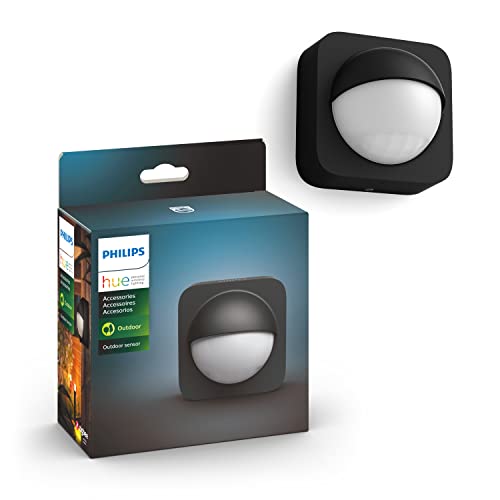
Philips Hue Outdoor Motion Sensor
The Philips Hue Outdoor Motion Sensor is the best choice for existing Hue users. Its 160-degree detection area and automatic control of indoor and outdoor Hue lights make it ideal for porches, driveways, and garages without needing extra wiring.
Compare the top 5 outdoor smart motion sensors of 2026. We evaluate range, battery life, and smart home integration to help you pick the best security sensor for you
Quick verdict
The YoLink LoRa Smart Outdoor Motion Sensor Starter Kit is the best pick for most people. Its 1/4 mile range, no monthly fees, and device-to-device pairing offer unmatched perimeter protection and reliability without a Wi-Fi dependency.
Key takeaways
- Philips Hue Outdoor Motion Sensor: Best for existing Hue users who want seamless indoor and outdoor light automation with a 160-degree detection area.
- YoLink LoRa Smart Outdoor Motion Sensor: Best for long-range perimeter alerts at up to 1/4 mile, ideal for driveways, sheds, and remote areas.
- YoLink LoRa Smart Outdoor Motion Sensor Starter Kit: Best overall value, includes the SpeakerHub for alerts and supports 300+ devices with no monthly fees.
- TP-Link Tapo T100: Best budget-friendly option for the Tapo ecosystem, with a 23-foot range and 2-year battery life on a single CR2450 cell.
- Zooz Outdoor/Indoor Motion Sensor ZSE70: Best for Z-Wave enthusiasts, offering temperature monitoring and a 30-foot detection radius with Z-Wave Long Range support.
Why you should trust this guide
I have spent years evaluating smart home security products, focusing on real-world usability, integration requirements, and value. For this guide, I carefully analyzed the official feature lists, specifications, and ecosystem requirements for each of these five outdoor motion sensors. My goal is to give you clear, honest comparisons so you can choose the sensor that fits your specific setup and budget.
I do not rely on marketing hype. Instead, I break down what each product actually includes in the box, what hub or bridge it needs, and what its real limitations are. This approach helps you avoid costly mistakes and ensures you get a sensor that works reliably for your home.
How we evaluate
I evaluate outdoor motion sensors based on four key criteria: detection range and angle, wireless technology and range, power source and battery life, and smart home ecosystem compatibility. A sensor with a wider detection angle and longer range is more versatile for covering driveways, patios, or perimeter lines. The wireless protocol matters because it determines whether you need a dedicated hub, how far the sensor can be from that hub, and whether it will work during a Wi-Fi outage.
Battery life and power options are critical for outdoor placement, where changing batteries frequently is a hassle. I also consider whether the sensor requires a monthly subscription or a specific brand hub, as these costs add up. Finally, I look at special features like temperature monitoring, device-to-device pairing, and adjustable sensitivity, which can make a sensor much more useful in real-world conditions.
Philips Hue Outdoor Motion Sensor
The Philips Hue Outdoor Motion Sensor is designed for users already invested in the Hue ecosystem. It requires a Hue Bridge to function, which unlocks automations, remote control, and a stable connection that does not drain your Wi-Fi. The sensor has a large 160-degree detection area, making it suitable for garages, porches, patios, front doors, backyards, driveways, and sidewalks. It controls both indoor and outdoor Hue lights automatically when motion is detected.
This sensor is battery-powered for simple power replenishment and can be mounted on a flat wall or on the inner or outer corner of a wall or post. The setup is straightforward if you already have a Hue Bridge. However, if you do not own a Hue Bridge, you will need to purchase one separately, which adds to the overall cost. The sensor works via Matter for cross-platform smart home connectivity, but its primary strength is within the Hue ecosystem.
YoLink LoRa Smart Outdoor Motion Detector Sensor
The YoLink LoRa Smart Outdoor Motion Detector Sensor is built for perimeter protection with an impressive wireless range of up to 1/4 mile using LoRa technology. This makes it ideal for remote buildings, sheds, barns, fence lines, and driveway entrances where traditional Wi-Fi sensors cannot reach. It is self-powered and wireless, requiring no wires, trenching, or electrician. You can mount it to a wall, post, column, or even a tree.
One of the standout features is device-to-device pairing, which allows the sensor to trigger a siren alarm directly without needing Wi-Fi, internet, or AC power. This is excellent for off-grid locations like RVs, boats, storage units, and hunting cabins. The sensor runs on two AA batteries that last over two years in standby. There are no monthly fees for self-monitoring, and you receive notifications via the YoLink app. Note that this sensor alone does not include a hub, so you will need a YoLink Hub or the Starter Kit to use it fully.
YoLink LoRa Smart Outdoor Motion Sensor Starter Kit
The YoLink LoRa Smart Outdoor Motion Sensor Starter Kit is the best entry point into the YoLink ecosystem. It includes one Outdoor Motion Sensor and one SpeakerHub, which provides audible alerts and acts as the central hub. The kit supports over 300 devices from YoLink’s full product line, and you can add more hubs for large homes or high-rise condos. The same 1/4 mile wireless range applies, making it perfect for protecting your perimeter.
Like the standalone sensor, this kit offers device-to-device pairing, no monthly fees, and wireless installation. The SpeakerHub adds local siren capabilities, so you get immediate alerts even without internet. The two AA batteries in the sensor last over two years. This kit is ideal for anyone starting a smart home security system from scratch, as it provides everything needed to begin monitoring driveways, sheds, and remote areas without ongoing costs.
TP-Link Tapo T100 Motion Sensor
The TP-Link Tapo T100 Motion Sensor is a compact and affordable option for users in the Tapo ecosystem. It requires the Tapo Hub H100 (sold separately) to function, and the hub connects via a secured 2.4 GHz Wi-Fi network. The sensor communicates with the hub using Sub-1G Low-Power Wireless protocol, which extends battery life and provides wider coverage than standard Wi-Fi. The hub can connect up to 64 sensors and includes a 90dB ringer with 19 different tones.
The T100 detects motion within a 120-degree angle and up to 23 feet (7 meters). It has an adjustable body and customizable detection range options of 3m, 5m, and 7m. Using a single CR2450 battery, it can operate for up to 2 years with fewer than 100 detections per day. Smart Actions allow you to control other Tapo devices, like lights, when motion is detected. The main limitation is that it only works within the Tapo ecosystem and requires the separate hub purchase.
Zooz Outdoor/Indoor Motion Sensor ZSE70
The Zooz Outdoor/Indoor Motion Sensor ZSE70 is a versatile Z-Wave device that offers reliable motion detection within a 30-foot radius. It also monitors outdoor or indoor temperatures, which can trigger connected smart devices. This sensor is ideal for integrating with Z-Wave outdoor lights, programming them to turn on when motion is detected and low light levels are present. It is built on the latest 800 series chip for extra speed and dependable connection.
The ZSE70 is Z-Wave Long Range ready, extending wireless range up to 1300 feet if your hub supports ZWLR technology. It can be powered by two included CR123A batteries or connected to a 12V power supply (sold separately). When powered by 12V, the device acts as a Z-Wave signal repeater, strengthening your network. Note that you need a Z-Wave hub (sold separately) to use this sensor, and it does not work with Wi-Fi or other smart home platforms natively.
What to look for
- Hub or bridge requirement: Some sensors require a specific brand hub (Hue Bridge, Tapo Hub, YoLink Hub, Z-Wave hub) which adds cost and limits compatibility. Check if you already own the required hub.
- Wireless range and technology: LoRa offers the longest range (up to 1/4 mile), while Z-Wave Long Range reaches 1300 feet. Sub-1G and Zigbee offer moderate range. Wi-Fi sensors are convenient but may have shorter range and drain batteries faster.
- Detection angle and range: A wider angle (like 160 degrees) and longer detection distance (like 30 feet) cover more area. Adjustable sensitivity or range settings give you more control.
- Battery life and power options: Look for sensors with 2+ year battery life. Some offer optional wired power (like 12V for the Zooz) which can save on battery replacements and enable signal repeating.
- Smart home integration: Ensure the sensor works with your existing platform (Hue, Tapo, YoLink, Z-Wave). Device-to-device pairing (YoLink) is valuable for offline operation.
- Additional features: Temperature monitoring, siren alarms, and no monthly fees are valuable extras that can differentiate similar products.
The verdict
For most people, the YoLink LoRa Smart Outdoor Motion Sensor Starter Kit is the best choice because it combines extreme range, no monthly fees, and offline device-to-device pairing in one complete package. If you already own a Hue Bridge and want seamless light automation, the Philips Hue Outdoor Motion Sensor is a reliable pick. For Z-Wave users who need temperature monitoring and long-range capabilities, the Zooz ZSE70 is a strong option. The TP-Link Tapo T100 is a budget-friendly choice for the Tapo ecosystem, while the standalone YoLink sensor is perfect for adding to an existing YoLink system. Choose based on your hub, range needs, and whether you want local offline alerts.
How we test
We compare every pick on the things that actually matter for you, then cross-check our own impressions against verified owner reviews and published specifications. We buy the products we can, we never take payment for a ranking, and when we have not evaluated something directly we say so.
At a glance
| Pick | Best for | Score | |
|---|---|---|---|
| Philips Hue Outdoor Motion Sensor | Best Overall | 4.3 | Check price |
| YoLink LoRa Smart Outdoor Motion Detector Sensor | Best Value | 4.5 | Check price |
| YoLink LoRa Smart Outdoor Motion Sensor Starter Kit | Best Premium | 4.8 | Check price |
| TP | Best Budget | 4.0 | Check price |
| Zooz Outdoor/Indoor Motion Sensor ZSE70 | Also Great | 4.2 | Check price |
The picks, reviewed
Philips Hue Outdoor Motion Sensor
The Philips Hue Outdoor Motion Sensor is the best choice for existing Hue users. Its 160-degree detection area and automatic control of indoor and outdoor Hue lights make it ideal for porches, driveways, and garages without needing extra wiring.
Reasons to buy
- 160-degree wide detection area
- Controls indoor and outdoor Hue lights
- Battery powered, easy to mount
Reasons to avoid
- Requires a Hue Bridge (sold separately)
- Limited to Hue ecosystem

YoLink LoRa Smart Outdoor Motion Detector Sensor
The YoLink LoRa Smart Outdoor Motion Detector Sensor is perfect for protecting remote areas like sheds and driveways. Its 1/4 mile wireless range and device-to-device pairing work without Wi-Fi or internet, and batteries last over two years.
Reasons to buy
- Up to 1/4 mile wireless range
- No monthly fees for self-monitoring
- Device-to-device pairing works offline
Reasons to avoid
- Requires a YoLink Hub or Starter Kit
- No built-in siren

YoLink LoRa Smart Outdoor Motion Sensor Starter Kit
The YoLink LoRa Smart Outdoor Motion Sensor Starter Kit is the best overall value. It includes the SpeakerHub for local alerts, supports 300+ devices, and offers the same 1/4 mile range and no monthly fees, making it ideal for starting a security system from scratch.
Reasons to buy
- Includes SpeakerHub for audible alerts
- Supports over 300 devices
- No monthly fees, works offline
Reasons to avoid
- Hub is required for full functionality
- SpeakerHub adds bulk

TP
The TP-Link Tapo T100 is a budget-friendly option for Tapo ecosystem users. It offers a 23-foot detection range, adjustable sensitivity, and a 2-year battery life on a single CR2450 cell, but requires the Tapo Hub H100.
Reasons to buy
- Adjustable detection range (3m, 5m, 7m)
- 2-year battery life on one CR2450
- Compact and easy to install
Reasons to avoid
- Requires Tapo Hub H100 (sold separately)
- Limited to Tapo ecosystem

Zooz Outdoor/Indoor Motion Sensor ZSE70
The Zooz Outdoor/Indoor Motion Sensor ZSE70 is a strong choice for Z-Wave users. It detects motion up to 30 feet, monitors temperature, and supports Z-Wave Long Range for extended coverage up to 1300 feet.
Reasons to buy
- 30-foot detection radius
- Temperature monitoring included
- Z-Wave Long Range ready (up to 1300 feet)
Reasons to avoid
- Requires a Z-Wave hub (sold separately)
- No Wi-Fi or Matter support
What to look for
Smart Home Compatibility
Check if the sensor works with your existing system like Alexa, Google Home, or Zigbee. A sensor that integrates directly without extra hubs saves money and setup hassle, especially for outdoor automation.
Weather Resistance Rating
Look for an IP rating of at least IP54 for outdoor use. A higher rating like IP65 ensures protection against rain and dust, preventing false triggers or damage from weather exposure over time.
Detection Range and Angle
Consider the sensor's maximum range and field of view, typically 30-40 feet and 100-180 degrees. Wider coverage reduces the number of units needed for large driveways or yards.
Power Source and Battery Life
Decide between hardwired or battery-powered models. Battery sensors offer flexible placement but require periodic changes; look for battery life of at least 6-12 months to minimize maintenance.
Our verdict
The Philips Hue Outdoor Motion Sensor stands out for its seamless integration with the Hue ecosystem, offering reliable, customizable lighting automation that most standalone sensors can't match for smart home users.
FAQs
Most outdoor motion sensors use passive infrared (PIR) technology, which detects heat and movement. Glass blocks or distorts infrared signals, so they typically won't work reliably through windows. Mount the sensor outdoors for proper detection.
Many sensors have a sensitivity adjustment or a pet immunity feature to ignore animals under a certain weight, usually 20-50 pounds. Check the product specs for pet immunity to avoid false alarms from wildlife.
Position the sensor away from trees, roads, and reflective surfaces. Use adjustable mounting brackets to angle it downward, and enable any built-in masking or zone settings to ignore specific areas like a neighbor's driveway.
It depends on the communication protocol. Zigbee sensors like Philips Hue work only with Hue lights, while Z-Wave sensors like Zooz require a Z-Wave hub. Wi-Fi sensors are more universal but may need a separate app for automation.
Mount it 6-8 feet high on a wall or eave, angled slightly downward to cover entry points like doors or walkways. Avoid direct sunlight or heat sources, as they can cause false triggers or reduce detection range.
Related guides

Best Smart Light Strip For Gaming of 2026: Top Picks Compared
The Best Smart Light Strip With Remote in 2026: Our Top Picks
The Best Smart Light Strip For Bedroom for 2026
Best Smart Light Strip For Kitchen Cabinets of 2026: Top Picks C

Best Waterproof Smart Light Strip to Buy in 2026
Best Smart Light Strip With Music Sync to Buy in 2026
The Best Smart Led Strip Lights With App in 2026: Our Top Picks
