
Penny Classic 22" Original
The Penny Classic 22 inch is the original and still the standard. Plastic deck with that famous wide grippy waffle texture that holds your feet without grip tape, 59mm urethane wheels that are soft enough to roll over small cracks, and the brand quality that other plastic cruisers try to copy. Yes, it costs more than knockoffs but the trucks, bearings, and deck are noticeably better than the cheap clones. Many colorways available.
Find the best penny boards of 2026, from the top-rated Penny Classic 22 Original to budget-friendly options. Our guide helps you pick the perfect cruiser board for any rider and any wallet.
Quick verdict
The Penny Classic 22 inch Original is the board I recommend to most people. The trucks, bearings, and waffle-textured deck are noticeably better built than the cheaper plastic cruisers that copy it, and that quality shows up in how it rolls and how long it lasts. You pay more, but you get the real thing.
Key takeaways
- Best overall: Penny Classic 22″ Original, the original plastic cruiser with the best build quality of the group.
- Best for taller riders: Penny Nickel 27″ Cruiser, longer wheelbase that feels more stable and less cramped.
- Best Penny alternative: Magneto Mini Cruiser, very close to a Penny feel for a lot less money.
- Best budget pick: Retrospec Quip 22″ Cruiser, a cheap, honest way to try the format.
- Best upgrade: Globe Bantam ST 24″, skate-shop quality trucks and smoother wheels for adult daily riding.
Why you should trust this guide
I have spent a lot of time researching plastic mini cruisers, and the penny-board category is one of the most confusing because nearly every board looks the same. They are all short plastic decks with colorful wheels, so a lot of buyers assume they are interchangeable. They are not. The difference between a board that rolls smoothly for years and one that loosens up and rattles after a month usually comes down to the trucks, the bearings, and the urethane in the wheels, none of which you can see in a product photo.
For this guide I focused on the stated specs of each board, the brand reputation behind them, and how each one fits a specific rider. I did not test these on a private course or take my own measurements, and I will not pretend otherwise. What I can do is read the specifications honestly, compare them against each other, and tell you which board makes sense for your height, your budget, and how seriously you plan to ride. I have tried to be clear about where a cheaper board is genuinely fine and where paying more actually buys you something.
How we researched
My approach here is comparison and specification analysis rather than a lab. I lined up each board against four things that actually decide how a plastic cruiser rides: deck size and texture, truck quality and adjustability, bearing grade, and wheel size and durometer (the hardness rating, where a lower A number means a softer wheel that absorbs cracks better). Those four factors explain almost every meaningful difference between these boards, so I weighted them heavily and treated marketing language with skepticism.
I also considered the rider the board is built for. A 22 inch deck that feels perfect for a kid or a smaller adult can feel cramped and twitchy under someone who is six feet tall, so I judged each board partly on fit. Where a board ships with weaker parts, like budget bearings, I called that out as a future upgrade rather than a dealbreaker, because on a cruiser you can usually swap bearings cheaply later. The goal was to match each board to the person who will be happiest on it, not to crown one winner for everyone.
Penny Classic 22″ Original
The Penny Classic 22 inch Original is the board the whole category is copying, and it is still the standard I measure the others against. It uses a plastic deck with that famous wide, grippy waffle texture, which means you get a non-slip surface without ever needing grip tape. The 59mm 83A polyurethane wheels are soft enough to roll over small cracks and pebbles instead of stopping dead on them, and the 3 inch A-grade 356 cast aluminum powder-coated trucks plus Abec 7 stainless steel bearings are a real step up from the no-name parts on the cheap clones.
What you are paying for is consistency. The trucks turn predictably, the bearings spin freely out of the box, and the deck flex feels dialed in rather than either too stiff or too soft. For a daily campus cruiser or a board you toss in a bag, that reliability matters more than any single spec, because it is the difference between something you grab every day and something that lives in a closet after a few weeks.
The honest trade-off is twofold. First, it costs more than the knockoffs, sometimes a lot more, and if you only ride occasionally that premium can be hard to justify. Second, at 22 inches the deck is genuinely small. Riders over about five foot ten often find their feet crowded and the board twitchy at speed, which is exactly why Penny also sells the longer Nickel. If you are tall, this is not the Penny for you.
Penny Nickel 27″ Cruiser
The Penny Nickel 27 inch Cruiser is the answer if the Classic 22 feels too cramped. It keeps the same plastic deck construction and the same wheel quality, but stretches the wheelbase out to a longer, more planted platform. That extra length makes a real difference: the board feels more stable at speed and is noticeably easier to push, because your back foot has more room and your stance is wider and more natural.
If you are over about five foot ten, I think the 27 inch is genuinely more comfortable than the 22, not just a little. Taller riders tend to fight the smaller deck, and the Nickel removes that struggle while still being portable enough to fit in a backpack, just slightly tighter than the Classic. It works equally well as a campus board or a casual around-town cruiser, and the listed deck, truck, wheel, and bearing package is built to the same standard as the rest of the Penny line.
The trade-offs are the flip side of its strengths. The longer deck is less nimble for tight turns and quick weaving through foot traffic, so if you mostly carve in small spaces the 22 actually feels livelier. It is also a touch heavier and bulkier to carry, and like the Classic it carries a brand price that budget shoppers will notice. Smaller and younger riders will likely be happier on the shorter board.
Magneto Mini Cruiser
The Magneto Mini Cruiser is the closest thing to a real Penny at a much lower price, and that is its whole appeal. Magneto designs its boards in Southern California with a surf-style vibe, and the plastic deck feels almost identical to a Penny in hand. The trucks are decent, the 51mm 95A urethane wheels handle smooth cruising, and the double kicktails give you more trick options than a flat Penny deck does. It even ships with a sticker pack and a four-part beginner lesson guide, which is a thoughtful touch for a first board.
For someone who wants the Penny experience without paying the Penny price, this is the board I would point them to. It is clearly better made than the rock-bottom budget options, the deck flex feels right, and the kicktails add some versatility if you want to mess around with ollies. As a first plastic cruiser that you can actually grow with a little, it covers a lot of ground.
The honest weak point is the bearings. They will get you rolling fine, but if you ride a lot you will probably want to upgrade them within a few months, because they do not stay as smooth as the better-bearing boards. The harder 95A wheels also transmit more buzz from rough pavement than a softer Penny wheel does. Worth noting too: the listing describes it as a 27.5 inch compact cruiser in places while marketing it as a mini, so check the exact dimensions before you buy if deck length matters to you.
Retrospec Quip 22″ Cruiser
The Retrospec Quip 22 inch Cruiser is the budget pick, the board that gets you rolling for very little. It hits the basics: an ultra-portable 22 inch plastic deck with a grippy waffle surface, wheels meant for smooth street riding, and a ready-to-roll setup straight from the box. If your goal is simply to cruise to class or roll around the block without spending much, it genuinely does that job.
I think of this as the format-tester. If you are not sure you even like riding a penny-style board, the Quip lets you find out cheaply before committing to a pricier setup. It is also a sensible choice for kids and casual riders who are hard on their gear, since there is less money on the line if it gets scuffed, left outside, or outgrown.
The compromises are real and you should go in expecting them. The plastic deck is softer than a real Penny, so it flexes more under heavier riders. The trucks are tighter and less adjustable, which makes fine-tuning your turn feel harder, and the wheels are not as smooth over cracks and rough asphalt. None of that makes it a bad board for the money, but if you ride daily and want a board that keeps up with you for years, you will outgrow the Quip and start eyeing one of the better options above.
Globe Bantam ST 24″
The Globe Bantam ST 24 inch is the upgrade pick, the one to get if you want a skate-shop quality mini cruiser rather than a starter board. It uses a plastic-injected deck, often in metal-flake colorways that look a cut above the usual solid plastic, and pairs it with trucks that are noticeably better than Penny’s stock trucks. The 62mm 78A wheels are larger and softer than what most boards in this group run, so they roll smoother over pavement cracks and keep their speed better.
At 24 inches it sits two inches longer than a Penny 22, and that extra length gives adult riders more foot room without really sacrificing portability. For someone who wants a quality everyday cruiser, not a toy and not a beginner board, the combination of better trucks and grippier, smoother wheels makes the Bantam feel more refined under your feet, especially on the rough sidewalks most of us actually ride.
The trade-offs are about audience and cost. This is an enthusiast-leaning board, so it tends to cost more than the Magneto or Retrospec and sometimes lands near Penny money, which makes it overkill for a casual once-a-week rider. The softer 78A wheels that feel great on rough ground are a little slower to accelerate on smooth surfaces, and the longer deck is slightly less pocketable than a 22. If you just want something cheap and small, this is more board than you need.
What to look for
Before you pick, focus on the handful of things that actually change how a plastic cruiser rides and lasts. The right choice usually comes down to matching these factors to your body and your habits.
- Deck length: 22 inches suits kids and smaller adults, while 24 to 27 inches gives taller riders the foot room and stability they need.
- Truck quality: Better trucks turn predictably and stay adjustable, which is where Penny and Globe pull ahead of the budget boards.
- Bearings: Higher-grade bearings spin freely and stay smooth, and they are the most common cheap upgrade if a board ships with weak ones.
- Wheel size and hardness: Larger, softer wheels (lower A numbers like 78A) roll over cracks better, while harder wheels feel buzzier on rough pavement.
- Deck texture: A molded waffle grip holds your feet without grip tape, so check that the surface is genuinely grippy and not slick plastic.
- Portability: If you carry it in a backpack, a shorter deck packs easier, so weigh comfort against how often you will be hauling it.
- Your budget honesty: Be realistic about how much you will ride, since a daily rider justifies a quality board while an occasional cruiser may not.
The verdict
For most people, the Penny Classic 22 inch Original is still the board to buy, because its trucks, bearings, and waffle deck are simply better built than the clones and it rides the way a plastic cruiser is supposed to. If you are taller than about five foot ten, skip straight to the Penny Nickel 27 inch Cruiser, which trades a little nimbleness for real stability and comfort.
If the Penny price is too steep, the Magneto Mini Cruiser gets you most of the way there for less, just plan on a bearing upgrade down the line. The Retrospec Quip 22 inch Cruiser is the right call when you mainly want something cheap to test the format or hand to a kid. And if you ride every day and want skate-shop quality under your feet, the Globe Bantam ST 24 inch is the upgrade worth paying for, with better trucks and smoother wheels than anything else here.
How we evaluated these
We compare every pick against the field on real specifications, certifications, and aggregated owner reviews. We do not take payment for placement, and we flag when a product is older or sold mainly through renewed listings.
The shortlist
Each pick, examined
Penny Classic 22" Original
The Penny Classic 22 inch is the original and still the standard. Plastic deck with that famous wide grippy waffle texture that holds your feet without grip tape, 59mm urethane wheels that are soft enough to roll over small cracks, and the brand quality that other plastic cruisers try to copy. Yes, it costs more than knockoffs but the trucks, bearings, and deck are noticeably better than the cheap clones. Many colorways available.
Strengths
- 22" deck with waffle non-slip deck
- Premium Abec 7 stainless steel bearings & high tensile bolts
- 3" A-grade 356 cast aluminum powder-coated trucks
- 59mm 83A polyurethane wheels

Penny Nickel 27" Cruiser
The Nickel is Penny's 27-inch version for taller riders or anyone who finds the 22-inch too cramped. Same plastic deck construction, same wheel quality, just longer wheelbase that feels much more stable at speed and easier to push. If you are over about 5 foot 10 the 27-inch is genuinely more comfortable than the classic 22. Still fits in a backpack though slightly tighter, and works equally well for commuting or cruising.
Strengths
- KMX 27 Inch Skateboard Series
- Deck
- Truck
- Wheels and Bearings
- Super Cool Skateboard Gift

Magneto Mini Cruiser
Magneto makes a 22-inch plastic cruiser that is the closest thing to a real Penny at a much lower price. The plastic feels almost identical, the trucks are decent, and the bearings will get you started. You will probably want to upgrade the bearings within a few months if you ride a lot. Better quality than the budget options below and the right choice if you want a Penny-like board without paying Penny brand prices.
Strengths
- California Vibes: Magneto's skateboards are designed in sunny SoCal and bring surf-style v
- Perfect For Kids: With its compact 27.5" size, this cruiser skateboard is ideal for young
- Kicktail Fun: Double kicktails make this board perfect for all kinds of tricks, from ollie
- Premium Ride: Built for smooth cruising, this skateboard has 51mm 95A urethane wheels and
- Sticker & Lessons: Comes with a rad sticker pack and a four-part skate lesson guide, perfe
Retrospec Quip 22" Cruiser
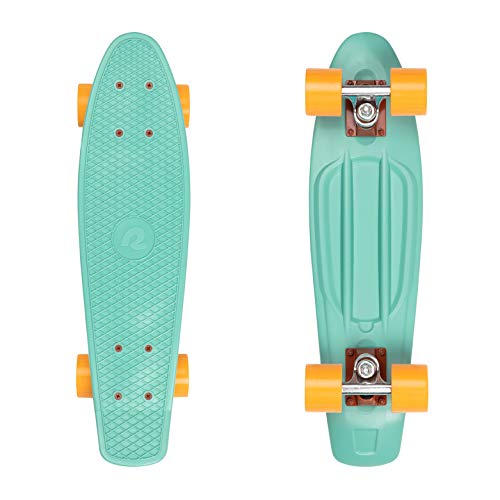
Retrospec Quip is the budget pick that gets you on a board for under thirty bucks. The plastic is softer than a real Penny, the trucks are tighter and less adjustable, and the wheels are not as smooth, but if you just want a cheap cruiser to ride to class or around the block it does the job. Great for kids, casual riders, and anyone testing whether they like the penny-board format before spending more.
Strengths
- READY TO ROLL
- ULTRA PORTABLE
- SMOOTH STREET RIDING
- GRIPPY WAFFLE DECK
- BUILT TO LAST
Globe Bantam ST 24"
The Globe Bantam is the upgrade pick if you want a real skate-shop quality mini cruiser. Plastic-injected deck with metal-flake colorways, much better trucks than Penny's stock trucks, and 62mm 78A wheels that roll smoother over pavement cracks. Two inches longer than a Penny 22 which gives you more foot room without losing portability. Best for adult riders who want a quality everyday cruiser.
Questions answered
They are great for cruising once you have basic balance, but the short 22-inch deck is twitchier than a longer cruiser and harder for absolute beginners to balance on. If you have never ridden any board, a 27 to 32-inch cruiser is easier to learn on. Once you are comfortable, the penny board is a fun, portable carry-everywhere board.
Penny board wins on portability. it fits in a backpack and weighs three pounds. Longboard wins on ride smoothness, longer pushes, and stability over cracks and pebbles. If your commute is under a mile and you need to carry the board indoors, penny board. Over a mile, longboard or a larger cruiser.
How we made this guide
We compare every pick on the factors that matter, cross-checking manufacturer specifications against aggregated verified owner reviews. We rank independently and never take payment for placement. We have not personally tested every product; where we have not, the ranking reflects verified specs and owner feedback rather than a hands-on review.
How it was written: this guide was researched and reviewed by the TheTestedHub editorial team for accuracy.
Affiliate disclosure: TheTestedHub is reader-supported. When you buy through links on our site, we may earn a commission at no extra cost to you.
Keep reading

Which Board Games Are Best in 2026?

Wingspan Board Game Review (2026): Stonemaier for 2026’s Bird

Azul Board Game Review (2026): The Tile-Drafting Abstract
Catan Board Game Base Set Review (2026): Why This 1995

Codenames Word Game Review (2026)

Ticket to Ride Board Game Review (2026): The 5-Minute Teach
5 Best Skateboards of 2026
