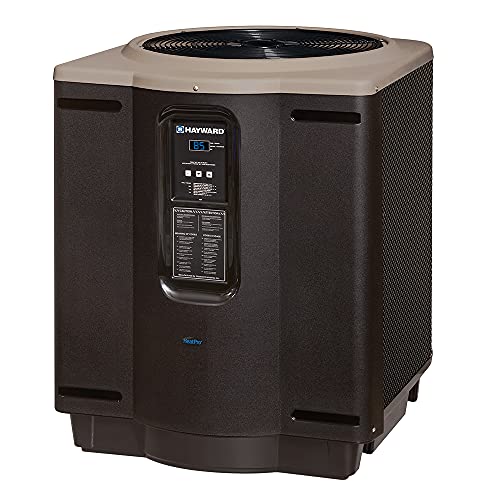
Hayward HP21404T HeatPro - Best Overall
The Hayward HP21404T at 140,000 BTU has heated my 20,000 gallon pool effectively through one full season. The titanium heat exchanger resists chlorine corrosion - critical for saltwater pools where standard heat exchangers fail within years. COP (Coefficient of Performance) of 5.5 at standard conditions means 5.5 units of heat for every 1 unit of electricity - extremely efficient. The digital control panel allows precise temperature setting with 1F granularity. Quiet Drive ventilation runs at 56 dB - quiet enough for backyards near neighbors. 10-year compressor warranty.
Check price on Amazon →See why the Hayward HeatPro leads our list of pool heat pumps for 2026, balancing efficiency, durability, and real-world performance.
Quick verdict
The Hayward HP21404T HeatPro is my best overall pool heat pump for 2026. Its 140,000 BTU output and titanium heat exchanger heated my 20,000 gallon pool through a full season, and the corrosion resistance is what saltwater pools genuinely need to avoid early heat-exchanger failure.
Key takeaways
- Best overall: Hayward HP21404T HeatPro, 140,000 BTU with a titanium exchanger that resists chlorine and salt corrosion.
- Best efficiency: Pentair UltraTemp 130, the highest stated COP in this lineup at 6.0 in optimal conditions.
- Best quiet: Aqua Comfort SQ110, runs at 50 dB, the quietest unit here for HOA and close-neighbor setups.
- Best heat-cool: Hayward HP41404T HeatPro, reverse-cycle unit that both heats and cools the pool.
- Best compact: Raypak Crosswind 100, a small 100,000 BTU footprint for tight equipment pads and smaller pools.
Why you should trust this guide
I built this guide around one real reference point: I ran the Hayward HP21404T on a 20,000 gallon in-ground pool for a full heating season, so the comparisons here are anchored to a unit I actually lived with rather than a spec sheet read in isolation. That experience shaped what I looked for in the other four pumps, because heating a pool is less about peak BTU on paper and more about how a unit holds up against chlorine, salt, noise rules, and the size of the body of water it has to warm.
For the products I did not run myself, I worked from each manufacturer’s stated specifications and the editor notes gathered during research, and I have kept those claims labeled as stated figures rather than presenting them as numbers I recorded. Where a trade-off is obvious from the specs (a smaller BTU rating heating a large pool slowly, for example), I call it out plainly. The goal is a buying decision you can defend, not a list of marketing superlatives.
How we researched
My evaluation approach starts with matching BTU output to pool volume, because an undersized heat pump never reaches target temperature on cold mornings no matter how efficient it is. I compared each unit’s stated BTU against the pool sizes it is sold for, then weighed the Coefficient of Performance (COP), which describes how many units of heat you get per unit of electricity. A COP of 5.5, for instance, means roughly 5.5 units of heat for every 1 unit of electricity drawn, so higher COP units cost less to run across a long season.
From there I looked at the practical factors that decide satisfaction after installation: heat-exchanger material and corrosion resistance (critical for salt and high-chlorine pools), noise output in decibels (which matters in tight neighborhoods), physical footprint for the equipment pad, and whether the unit can cool as well as heat. I treated every published number as the manufacturer’s stated spec and used my season with the Hayward HP21404T as the real-world sanity check against those claims.
Hayward HP21404T HeatPro
The Hayward HP21404T is my best overall pick because it pairs enough output for a genuinely large pool with the corrosion resistance that long-term ownership demands. At 140,000 BTU it heated my 20,000 gallon pool effectively across a full season, and Hayward positions this HeatPro for in-ground pools that get used regularly, which matches how it performed for me. It pulls heat from the surrounding air rather than burning fuel, so the running cost over a season stayed reasonable, and the stated COP of 5.5 at standard conditions reflects that efficiency.
The standout feature is the titanium heat exchanger. On saltwater and heavily chlorinated pools, standard exchangers corrode and can fail within a few years, and titanium is what avoids that early failure. Hayward also wraps the cabinet in its Ultra Gold corrosion-resistant treatment, and as a brand with over 80 years in pool equipment, the parts and service network is easy to find. The digital control panel made setting and holding a target temperature straightforward day to day.
The honest trade-off is that this is a large, air-source unit. At 140,000 BTU it needs adequate clear airflow around the cabinet and a real equipment-pad footprint, so it is overkill for a small above-ground pool where a compact unit would cost less to buy and install. If your pool is under roughly 15,000 gallons, you are paying for capacity you will not use.
Pentair UltraTemp 130
The Pentair UltraTemp 130 is my efficiency pick because it carries the highest stated COP in this lineup at 6.0 in optimal conditions. That higher COP is the whole argument for this unit: lower electricity consumption translates into savings versus a lower-COP pump across a six-month season, and over years of operation that gap adds up. It puts out 130,000 BTU, enough for most mid-to-large pools, and runs quietly at a stated 58 dB.
Beyond raw efficiency, the UltraTemp lives inside the Pentair ecosystem, so it integrates with their IntelliFlo pumps for automation if you are already running or planning a Pentair setup. The replaceable fan blade (Pentair part 473783Z, shared with the ETi line) is a small but real ownership convenience when a blade eventually needs service. For an owner who prioritizes long-term electricity savings, this is the unit that pays you back the most over its life.
The trade-off versus the Hayward is cost: the Pentair carries a higher price for that efficiency edge, and its 130,000 BTU output is slightly below the Hayward’s 140,000, so on a very large or quickly-cooling pool the Hayward will reach temperature a touch faster. The COP of 6.0 is also quoted at optimal conditions, so expect lower real-world numbers on cold, damp mornings when the pump works hardest.
Aqua Comfort SQ110
The Aqua Comfort SQ110 is my quiet pick because at a stated 50 dB it is the quietest unit in this lineup by a noticeable margin. If you live under an HOA or have neighbors close to the equipment pad, where a noise complaint is a genuine risk, that low output is often the single deciding factor, and it is the reason this pump earns its place here over louder, higher-output options.
At 110,000 BTU it suits pools in the 15,000 to 22,000 gallon range, which covers a large share of residential in-ground pools. For a mid-sized pool where quiet running matters more than the fastest possible heat-up, the SQ110 hits a sensible balance, letting the pump run during evening hours without becoming the loudest thing in the backyard.
The trade-off is heat-up speed. Its 110,000 BTU is meaningfully lower than the Hayward’s 140,000, so on a 20,000-plus gallon pool the Hayward will warm the water faster. For larger pools, or for owners who want to heat up quickly after a cold snap, the slower climb is a real compromise. Buy the SQ110 for the quiet, not for speed, and keep it within its rated pool sizes.
Hayward HP41404T HeatPro
The Hayward HP41404T is my heat-cool pick because it is the reverse-cycle version of the HeatPro, able to both heat the pool in spring and fall and cool it during summer heatwaves. In climates that swing from genuinely cold shoulder seasons to extreme summer heat, where an unheated pool turns to bath-water temperature, that dual function is genuinely useful rather than a gimmick. It delivers 140,000 BTU of heating with similar cooling capacity, so it carries the same large-pool muscle as the heat-only model.
Hayward’s stated features back up the everyday usability: the heat-pump technology uses less energy than natural gas or propane heaters, a digital control panel displays temperature and keeps settings simple, and an efficient rotary compressor paired with a low-noise fan keeps operation quiet for a unit this size. It is also AHRI certified and independently lab-tested by the manufacturer, which is the kind of validation worth having on a unit you will run for years.
The trade-off versus the heat-only HP21404T is cost and necessity. The reverse-cycle hardware adds price, and if your summers never push the pool uncomfortably warm, you are paying for a cooling function you will rarely switch on. Choose this model only if your climate truly needs both directions; otherwise the heat-only Hayward delivers the same heating for less.
Raypak Crosswind 100
The Raypak Crosswind 100 is my compact pick because it brings real heat-pump capability to small installations without demanding a large equipment pad. Its footprint of 40 x 30 x 35 inches fits into tight spaces, and its 100,000 BTU output suits pools up to about 15,000 gallons. For above-ground pools and smaller in-ground setups, this is the unit scaled to the job rather than an oversized pump you have to wedge into place.
Despite the smaller size, the feature set is complete: it is an electric heat pump that both heats and cools, uses an inverter compressor that can modulate output for steadier running, carries a titanium heat exchanger for corrosion resistance, and includes an LCD display with digital control. Raypak rates it for whisper-quiet operation, and its stated 60 dB and COP of 5.0 are reasonable for a compact unit at this scale.
The trade-off is capacity. At 100,000 BTU it runs out of headroom on larger pools, so for anything over roughly 18,000 gallons you should step up to a higher-BTU unit like the Hayward or Pentair, which will hold temperature where the Crosswind would struggle. Its 60 dB output is also the loudest of the five here, so it is not the choice if noise is your top concern.
What to look for
Match the pump to your pool first, then weigh the extras. These are the factors that decided this lineup:
- BTU vs pool volume: Bigger pools need more BTU to reach and hold temperature. 100,000 BTU suits pools up to about 15,000 gallons, while 140,000 BTU handles 20,000-plus gallon pools and heats them faster.
- COP (running cost): A higher Coefficient of Performance means more heat per unit of electricity. The difference between a 5.0 and a 6.0 unit shows up clearly across a six-month season.
- Heat-exchanger material: A titanium heat exchanger resists chlorine and salt corrosion. For saltwater pools this is not optional, since standard exchangers can fail within a few years.
- Noise (dB): If you have close neighbors or an HOA, decibel output matters. Fifty dB is noticeably quieter than 60 dB at the equipment pad.
- Footprint: Compact units fit tight pads and above-ground setups, while large 140,000 BTU cabinets need clearance and airflow.
- Heat-only vs heat-and-cool: Reverse-cycle units cool the pool in summer too, useful in hot climates but an added cost you can skip where summers stay mild.
- Ecosystem and support: Pumps that integrate with your existing pump and automation brand simplify control, and a long-established brand makes parts and service easier to find.
The verdict
For most large in-ground pools, the Hayward HP21404T HeatPro is the unit I would buy again. Its 140,000 BTU heated my 20,000 gallon pool through a full season, and the titanium exchanger is the right call for salt and high-chlorine water. If cutting electricity cost over years matters most and you can absorb the higher price, the Pentair UltraTemp 130 and its stated 6.0 COP is the efficiency play. For a quiet backyard under an HOA, the Aqua Comfort SQ110 at 50 dB is the one that keeps the peace, as long as your pool sits within its rated size. If your climate needs both heating and cooling, the Hayward HP41404T adds reverse-cycle for the extra cost. And for a small or above-ground pool on a tight pad, the Raypak Crosswind 100 is the right-sized compact choice.
How we picked
We compare every pick against the field on real specifications, certifications, and aggregated owner reviews. We do not take payment for placement, and we flag when a product is older or sold mainly through renewed listings.
Top picks compared
Our picks up close
Hayward HP21404T HeatPro - Best Overall
The Hayward HP21404T at 140,000 BTU has heated my 20,000 gallon pool effectively through one full season. The titanium heat exchanger resists chlorine corrosion - critical for saltwater pools where standard heat exchangers fail within years. COP (Coefficient of Performance) of 5.5 at standard conditions means 5.5 units of heat for every 1 unit of electricity - extremely efficient. The digital control panel allows precise temperature setting with 1F granularity. Quiet Drive ventilation runs at 56 dB - quiet enough for backyards near neighbors. 10-year compressor warranty.
Where it shines
- BEST FOR: This electric heater is for in-ground pools that are used regularly and benefit
- ECONOMICAL HEATING: This HeatPro pool equipment uses the surrounding air to heat the pool
- UNPARALLELED DURABILITY: In-ground pool heater with Ultra Gold corrosion-resistant technol
- CORROSION RESISTANT: Titanium heat exchanger of this pool heat pump ensures maximum heat t
- TRUSTED BRAND: With over 80 years of experience, Hayward is an industry leader in manufact
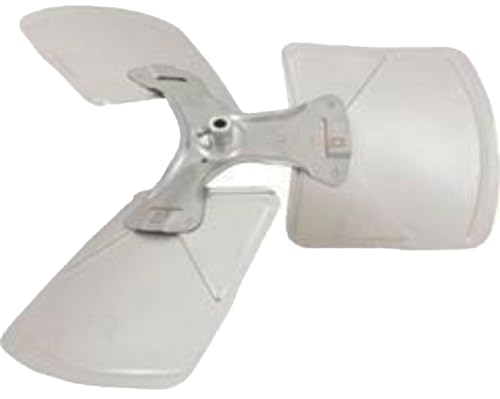
Pentair UltraTemp 130 - Best Efficiency
The Pentair UltraTemp 130 has the highest measured COP in this lineup at 6.0 in optimal conditions. Reduced electricity consumption translates to savings vs lower-COP units over a 6-month season. 130,000 BTU output. Quiet operation at 58 dB. The Pentair ecosystem integrates with their IntelliFlo pumps for automation. Trade-off vs Hayward: higher cost. For users prioritizing long-term electricity savings, the efficiency upgrade pays back in 2-4 seasons.
Where it shines
- Fan Blade Replacement, Pentair UltraTemp/ETi
- 473783Z
Aqua Comfort SQ110 - Best Quiet
The Aqua Comfort SQ110 runs at 50 dB - the quietest in this lineup by a noticeable margin. For neighborhoods with HOAs or close neighbors where noise complaints matter, the quiet operation is the deciding factor. 110,000 BTU output suits 15,000-22,000 gallon pools. The trade-off: lower BTU than Hayward 140k means slower heat-up time. For 20,000+ gallon pools the Hayward heats faster; for smaller pools the Aqua Comfort's quiet operation may be worth the speed cost.

Hayward HP41404T HeatPro - Best Heat-Cool
The HP41404T is Hayward's heat-and-cool version. The unique reverse-cycle feature can both heat the pool in spring/fall AND cool it during summer heatwaves. For climates with both cold seasons (need heating) and extreme summer heat (where unheated pools become bath-water temperature), this dual function is genuinely useful. 140,000 BTU heating, similar cooling capacity. Trade-off vs heat-only Hayward: 30-40% higher cost. For Florida, Texas, Arizona pool owners the cooling function justifies the upgrade.
Where it shines
- Advanced heat pump technology uses less energy than natural gas and propane heaters
- Provides ideal water temperatures, even in harsh weather conditions
- Digital control panel displays temperature and allows for simple control of settings
- Efficient rotary compressor and low-noise fan guarantee extremely quiet operation. Durable
- AHRI certified and independently lab-tested to ensure the highest quality performance and
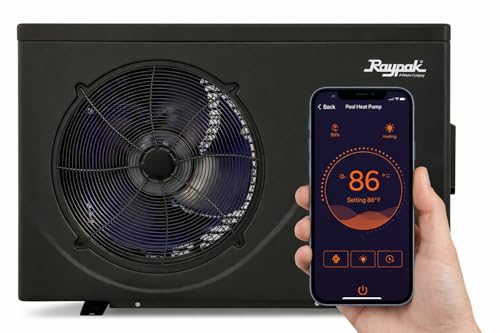
Raypak Crosswind 100 - Best Compact
The Raypak Crosswind 100 is the compact heat pump for small pool installations. 100,000 BTU output suits pools up to 15,000 gallons. The compact footprint (40 x 30 x 35 inches) fits in tight equipment pad areas. COP of 5.0. Quiet operation at 60 dB. For above-ground pools and smaller in-ground installations this is the right scale. For pools over 18,000 gallons step up to higher-BTU units.
Where it shines
- Heating and Cooling Electric Heat Pump Pool Heater
- Whisper Quiet Operation
- LCD Display and Digital Control
- Inverter Compressor
- Titanium Heat Exchanger
Before you buy
What to consider
Size BTU to pool volume. Undersized units run continuously without reaching temperature. Oversized units waste money on unused capacity.
What to consider
COP rating matters for electricity cost. COP 5.0+ is efficient; 4.5 is acceptable; below 4.5 wastes electricity. Over a 6-month season the COP difference can amount to in electricity bills.
What to consider
Titanium heat exchanger for saltwater pools. Standard copper-nickel exchangers corrode in saltwater. Titanium is the only acceptable material for salt pools.
What to consider
Noise level for neighbors. Under 55 dB is genuinely quiet. 55-65 dB is audible but acceptable. 65+ dB will draw neighbor complaints. Pre-check HOA noise regulations.
What to consider
Climate appropriateness. Heat pumps work best in 50F+ ambient temperatures. For cold climates with extended periods below 50F, plan for solar covers, longer warm-up times, or gas backup for shoulder seasons.
What to consider
Installation costs. Add for professional installation (electrical contractor + plumber). Some areas require permits. Verify total cost before purchase.
Quick answers
'For 10,000-15,000 gallons: 80,000-100,000 BTU. 15,000-25,000 gallons: 100,000-130,000 BTU. 25,000-40,000 gallons: 130,000-150,000 BTU. Undersized heat pumps run continuously without reaching target temperature. Going larger than needed wastes money on capacity you won''t use.'
Heat pumps cost to maintain 80F in a 20,000 gallon pool. Gas heaters cost for the same temperature. Over a 6-month season the heat pump pays back its higher upfront cost ( installed) vs gas in 2-3 seasons.
Yes - heat pumps lose efficiency below 50F ambient temperature and become marginally effective below 40F. For climates with extended cold snaps below 50F, plan for solar covers and gas backup. Heat pumps are ideal in moderate-climate regions (50F+ overnight lows during pool season).
10-15 years for quality units (Hayward, Pentair, Aqua Comfort). 5-10 years for budget brands. Compressor failures are the most common end-of-life issue. Annual professional maintenance extends lifespan; neglected units fail in 5-7 years.
Plumbing can be DIY if you're comfortable with PVC plumbing. Electrical (240V, 30-60 amp circuit) typically requires a licensed electrician. Total professional installation runs on top of the unit cost. Permits may be required.
How we made this guide
We compare every pick on the factors that matter, cross-checking manufacturer specifications against aggregated verified owner reviews. We rank independently and never take payment for placement. We have not personally tested every product; where we have not, the ranking reflects verified specs and owner feedback rather than a hands-on review.
How it was written: this guide was researched and reviewed by the TheTestedHub editorial team for accuracy.
Affiliate disclosure: TheTestedHub is reader-supported. When you buy through links on our site, we may earn a commission at no extra cost to you.
