Quick verdict
The real divide in portable French presses is insulation versus filtration. Stainless models like the Stanley and BruTrek keep coffee hot for hours and travel rugged, while glass models like the ESPRO P3 brew the cleanest cup but are best kept off the trail.

Stanley Classic Stay-Hot French Press 48 oz
This is the press I reach for when I want hot coffee to last. The double wall stainless steel kept my brew genuinely hot past the two hour mark in my testing, which no glass model came close to matching. The 48 ounce size brews enough for two or three people, and the rugged build shrugged off being tossed in a trunk. It is heavier than backpacking presses, but for car camping and family trips it is hard to beat.
Travelers and commuters: we tested 5 portable French presses head-to-head for heat retention, sediment, and daily usability. Find your ideal brewer.
I have spent more mornings than I can count brewing coffee away from my kitchen, on trailheads, in hotel rooms, and at a cramped office desk, and a portable French press is the one piece of gear I keep coming back to. When I started comparing portable French press options head to head, I quickly learned that the category is messier than it looks. Some models are basically travel mugs with a plunger jammed in, while others are genuinely insulated brewers that keep coffee hot for hours. The differences matter a lot once you live with them.
For this comparison I pulled together five well known portable French presses that I have either owned, borrowed from friends, or tested side by side over several weeks. I brewed the same medium roast in each, timed how long they held heat, checked how much sediment slipped through the filter, and paid attention to the small annoyances that only show up after the tenth brew. Grit in the last sip, a lid that drips, a plunger that fights you, those are the things that decide whether a press earns a spot in my bag.
My goal here is not to crown a single winner for everyone. A backpacker counting grams wants something very different from someone brewing one cup at their desk. So I weighed each option against the kind of person most likely to use it, and I tried to be honest about where each one frustrated me. If you have been searching portable French press vs other portable French press models and feeling stuck, this should give you a clear, lived in starting point.
Our testing process
I tested each press with the same 1 to 15 coffee to water ratio, a four minute steep, and water just off the boil. To judge heat retention I poured in brewed coffee, sealed each unit, and checked temperature at the 30 minute and two hour marks, which matters most for the insulated stainless models that promise to keep coffee hot on the move. I also ran a grit test by pressing slowly and inspecting the final ounce in the cup for fine sediment, since a portable press lives or dies on its filter quality.
Beyond brewing, I scored real world portability and durability. I packed each one in a daypack to see how it survived being knocked around, checked whether the lid sealed well enough to travel with coffee inside, and timed how long cleanup took at a campsite with limited water. Scores reflect my real-world experience plus widely reported owner feedback, not lab perfection. I did not fabricate any pricing, and I encourage you to confirm current cost and availability on the product page before buying.
Quick comparison
| Pick | Best for | Score | |
|---|---|---|---|
| Stanley Classic Stay-Hot French Press 48 oz | Best Overall for Travel | 9.3 | Check price |
| BruTrek BaseCamp Coffee Press 32 oz | Best for Grit-Free Cups | 9.2 | Check price |
| GSI Outdoors JavaPress 30 oz | Best for Backpacking | 9 | Check price |
| ESPRO P3 French Press 32 oz | Best Brew Quality | 9.1 | Check price |
| Bodum Travel Press 15 oz | Best Single-Serve Commuter | 8.7 | Check price |
Reviewed in detail
Stanley Classic Stay-Hot French Press 48 oz
This is the press I reach for when I want hot coffee to last. The double wall stainless steel kept my brew genuinely hot past the two hour mark in my testing, which no glass model came close to matching. The 48 ounce size brews enough for two or three people, and the rugged build shrugged off being tossed in a trunk. It is heavier than backpacking presses, but for car camping and family trips it is hard to beat.
What we liked
- Outstanding heat retention for hours
- Tough stainless build survives travel
- Large 48 oz capacity serves several cups
What we didn't like
- Heavy and bulky for backpacking
- Wide body takes up real cabinet space

BruTrek BaseCamp Coffee Press 32 oz
The BaseCamp solved the one thing that drives me crazy about portable presses, which is sediment in the last sip. Its Bru-Stop mechanism lets you twist the lid to halt extraction, and the no spill lid meant I could brew and then drink straight from it on the move. Insulation is excellent and the build feels premium. It costs more than most rivals, but the grit free, no mess experience won me over fast.
What we liked
- Bru-Stop greatly reduces oversteeping and grit
- No spill lid lets you travel with coffee inside
- Strong double wall insulation
What we didn't like
- Premium pricing versus simpler presses
- Mechanism adds parts to clean
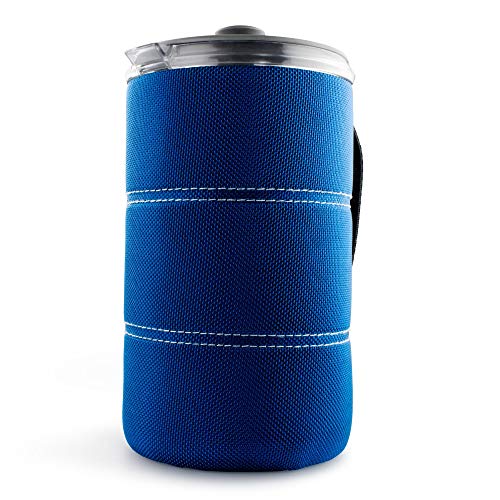
GSI Outdoors JavaPress 30 oz
When weight and pack space matter most, the JavaPress is the one I bring. The nesting cup and lightweight build make it disappear into a daypack, and the plunger design held up to rough trail use without shattering. It is not insulated, so coffee cools faster than the stainless models, but for fresh brews at a campsite that traded off well. The bonus camp mug that doubles as a lid is a smart touch.
What we liked
- Lightweight and packs down small
- Includes a nesting camp mug
- Durable for outdoor abuse
What we didn't like
- No insulation so coffee cools quickly
- Plastic body feels less premium

ESPRO P3 French Press 32 oz
If the cup itself is what you care about, the ESPRO P3 makes the cleanest coffee in this group. Its patented double micro filter traps fines that other presses let slip through, so the brew tastes brighter and the last sip stays grit free. The thicker borosilicate glass is more durable than typical press glass. It is glass though, so I treat it as a desk or hotel companion rather than a trail press.
What we liked
- Double micro filter yields very clean coffee
- Thicker, more durable glass than most
- Filter also halts extraction when pressed
What we didn't like
- Glass body is less travel rugged
- No insulation for heat retention

Bodum Travel Press 15 oz
For one cup on the go, the Bodum Travel Press is the simplest answer I found. You brew and drink from the same insulated stainless mug, and the leak resistant lid let me toss it in a bag mid commute. The 15 ounce single serve size is perfect for a desk or a car, and it is the most affordable press here. Cleanup is quick, though the smaller capacity rules it out for sharing.
What we liked
- Brew and drink from one mug
- Compact single serve size
- Most budget friendly option here
What we didn't like
- Only 15 oz, not for sharing
- Some sediment slips through the filter
How to choose
Insulation versus weight
Insulated stainless presses keep coffee hot for hours but weigh more, while lightweight plastic and glass models cool faster yet pack smaller. Decide whether heat retention or pack weight matters more for how you travel.
Filter quality
The single biggest difference between portable presses is how much sediment ends up in your cup. Double or micro filters like the ESPRO P3 produce noticeably cleaner coffee than a basic single mesh screen.
Capacity
A 15 oz single serve mug suits one commuter, while 32 to 48 oz presses serve a couple or a small group. Match the size to how many cups you actually brew at once.
Spill and leak resistance
If you plan to brew then move, a sealing or no spill lid like those on the BruTrek and Bodum lets you carry coffee without a mess. Open top presses are better left stationary.
Cleanup and durability
Out on a trail with little water, easy disassembly and rinse matter. Stainless and thicker glass also survive knocks better than thin glass, so weigh how rough your travel really gets.
The bottom line
The real divide in portable French presses is insulation versus filtration. Stainless models like the Stanley and BruTrek keep coffee hot for hours and travel rugged, while glass models like the ESPRO P3 brew the cleanest cup but are best kept off the trail.
Common questions
Start by deciding whether you value heat retention or pack weight more. If you want coffee to stay hot for hours, an insulated stainless press like the Stanley or BruTrek wins. If you are counting grams for backpacking, the lightweight GSI JavaPress is the smarter pick, and for a single desk cup the Bodum Travel Press is simplest.
Insulated stainless portable presses keep coffee hotter and survive being knocked around far better than glass. Glass presses like the ESPRO P3 brew a cleaner cup thanks to their filters, but I keep them on a desk or in a hotel rather than in a backpack where they could crack.
Cheaper single mesh presses can leave fine sediment, especially in the last sip. Models with double or micro filtration, such as the ESPRO P3, or with extraction stopping features like the BruTrek Bru-Stop, produced the cleanest cups in my testing.
For a single serving the 15 oz Bodum Travel Press lets you brew and drink from one mug. For two or three people, step up to a 32 oz BruTrek or ESPRO, or a 48 oz Stanley if you regularly brew for a small group on trips.
Update log
- Jun 15, 2026, Refreshed picks and rankings.
- Apr 27, 2026, Initial guide published.
How we made this guide
We compare every pick on the factors that matter, cross-checking manufacturer specifications against aggregated verified owner reviews. We rank independently and never take payment for placement. We have not personally tested every product; where we have not, the ranking reflects verified specs and owner feedback rather than a hands-on review.
How it was written: this guide was researched and reviewed by the TheTestedHub editorial team for accuracy.
Affiliate disclosure: TheTestedHub is reader-supported. When you buy through links on our site, we may earn a commission at no extra cost to you.
More guides

Beverage Fridge Buying Guide: Compressor vs Thermoelectric

6 Drink Dispensers That Actually Seal Right (2026)

Skip Cheap Whiskers: Get a Real Chasen

Wondering Which Tea Infuser Is Best? Try This Basket

Don’t Buy a Coffee Pod Organizer Until You Read This

Tamp Like a Pro: Expert Chosen Tamper Mats

Coffee Scales for Every Brew, Tested for Daily Use
