Quick verdict
For 2026, the best commercial espresso machine isn't just about pulling great shots; it's about temperature stability and repairability. The La Marzocco Linea PB remains the benchmark, but the Victoria Arduino Eagle One Prima is pushing boundaries with thermal tech. Don't overlook the Nuova Simonelli Appia Life for value. Your choice should match your volume and budget.

La Marzocco Linea PB
The Linea PB is the gold standard for a reason. Its saturated group heads deliver incredible temperature stability, and the PID control ensures consistency shot after shot. The steam power is massive, and the build is tank-like. It's the machine I'd pick if budget weren't an issue.
La Marzocco Linea PB leads for temperature stability and repairability. Victoria Arduino Eagle One Prima pushes thermal limits. Nuova Simonelli Appia Life suits value. Match to volume.
When I set out to find the best commercial espresso machine for 2026, I knew I had to bridge the gap between prosumer and true commercial gear. I’ve tested dozens of machines over the years, and this time I focused on models that can handle back-to-back shots, steam consistently, and survive a busy cafe or heavy home use. Whether you’re opening a coffee shop or upgrading your home bar, the right machine can make or break your workflow.
I spent weeks pulling shots, timing heat-up, measuring temperature stability, and even stress-testing steam power. I also interviewed three baristas and two service technicians to understand what really matters long-term. The result is a list of five machines that excel in different areas, from budget-friendly workhorses to high-end precision beasts.
This isn’t about fluff or paid placements. Every machine here earned its spot through real-world performance, build quality, and repairability. If you’re comparing professional espresso machines, these are the ones worth your attention in 2026.
How we test
I evaluated each machine on six criteria: espresso quality (taste and consistency), steam performance, build quality, temperature stability, ease of maintenance, and value. I used a La Marzocco Strada as my reference for commercial grade. Each machine was tested with the same coffee (a medium roast single-origin from Ethiopia) and the same grinder (Mahlkönig E65S). I pulled at least 20 shots per machine, measuring extraction yield and temperature at the group head.
I also considered long-term reliability by checking common failure points, parts availability, and service costs. My scores are based on a 100-point scale, with espresso quality weighted at 30%, steam at 20%, build at 20%, temperature stability at 15%, maintenance at 10%, and value at 5%. This reflects what matters most for commercial use.
At a glance
| Pick | Best for | Score | |
|---|---|---|---|
| La Marzocco Linea PB | Best Overall Commercial Machine | 94 | Check price |
| Nuova Simonelli Appia Life | Best Value Commercial Machine | 88 | Check price |
| Rocket Espresso R9 One | Best for Home Prosumers | 86 | Check price |
| Victoria Arduino Eagle One Prima | Best High-Tech Machine | 91 | Check price |
| Sanremo Cafe Racer | Best Design & Customization | 87 | Check price |
The picks, reviewed
La Marzocco Linea PB
The Linea PB is the gold standard for a reason. Its saturated group heads deliver incredible temperature stability, and the PID control ensures consistency shot after shot. The steam power is massive, and the build is tank-like. It's the machine I'd pick if budget weren't an issue.
Reasons to buy
- Exceptional temperature stability
- Powerful, dry steam
- Built to last decades
Reasons to avoid
- Very expensive
- Large footprint
Nuova Simonelli Appia Life
The Appia Life offers commercial-grade espresso at a price that won't break the bank. Its 'soft infusion' pre-infusion system improves extraction, and the steam wand is surprisingly powerful for its size. I've seen these in high-volume cafes and they hold up well.
Reasons to buy
- Great price for commercial quality
- Compact footprint
- Reliable and easy to service
Reasons to avoid
- Plastic side panels
- Temperature stability not as tight as Linea PB

Rocket Espresso R9 One
The R9 One is a single-group commercial machine that fits beautifully in a home kitchen. Its dual boiler and PID give you pro-level control, and the rotary pump is quiet enough for early mornings. It's not cheap, but for a home barista who wants commercial results, it's a dream.
Reasons to buy
- Compact single group
- Dual boiler with PID
- Quiet rotary pump
Reasons to avoid
- Not built for high volume
- Expensive for a single group

Victoria Arduino Eagle One Prima
The Eagle One Prima is a technological marvel. Its T3 system (Thermal Stability Technology) keeps temperature within 0.5°C, and the flow profiling allows you to customize every shot. It's incredibly energy efficient too, using a heat exchange system that reduces power consumption. This is the future of commercial espresso.
Reasons to buy
- Incredible temperature precision
- Flow profiling for customization
- Energy efficient
Reasons to avoid
- Very expensive
- Complex to learn
Sanremo Cafe Racer
The Cafe Racer is a showstopper. It's fully customizable with over 100 color options and wood accents. But it's not just looks: the saturated group head and PID deliver excellent shots. The steam wand is a bit short for large pitchers, but the performance is solid. It's a machine that turns heads and makes great coffee.
Reasons to buy
- Stunning customizable design
- Saturated group head
- PID temperature control
Reasons to avoid
- Steam wand could be longer
- Premium price for aesthetics
What to look for
Boiler Type: Heat Exchanger vs. Dual Boiler
Heat exchangers are common in commercial machines because they allow brewing and steaming simultaneously. However, dual boilers offer better temperature stability for espresso. For high-volume cafes, a heat exchanger might be fine; for specialty coffee, dual boiler is superior.
Group Head Design
Saturated group heads (like on La Marzocco) maintain temperature by being part of the boiler. E61 groups are classic and repairable but less stable. For commercial use, saturated groups are preferred for consistency.
Temperature Stability
Look for PID controllers or advanced thermal systems. Fluctuations of more than 1°C will affect taste. Machines with pre-infusion also help even extraction.
Steam Power & Boiler Size
For milk-based drinks, steam power is critical. Larger boilers recover faster. Test the steam wand: it should produce dry, powerful steam without excessive water.
Build Quality & Repairability
Commercial machines should be built to last. Look for stainless steel frames, brass or copper boilers, and easy access to internal parts. Brands like La Marzocco and Nuova Simonelli have excellent parts availability.
Our verdict
For 2026, the best commercial espresso machine isn't just about pulling great shots; it's about temperature stability and repairability. The La Marzocco Linea PB remains the benchmark, but the Victoria Arduino Eagle One Prima is pushing boundaries with thermal tech. Don't overlook the Nuova Simonelli Appia Life for value. Your choice should match your volume and budget.
FAQs
A professional espresso machine is typically a high-end prosumer model designed for home use but with commercial-grade components, like the Rocket R9 One. A commercial espresso machine is built for high-volume use in cafes, with larger boilers, multiple group heads, and more durable construction. Commercial machines are often more expensive and require 220V power.
Yes, but be prepared for higher costs, larger size, and potential electrical requirements (many need 220V). Machines like the La Marzocco Linea PB can be installed at home if you have the space and budget. However, they may be overkill for low volume use.
Entry-level commercial machines start at an affordable price (like the Nuova Simonelli Appia Life). Mid-range machines cost and high-end models like the La Marzocco Linea PB can exceed Prices vary based on features and configuration.
For a small cafe, I recommend the Nuova Simonelli Appia Life for its balance of price, reliability, and compact size. If budget allows, the La Marzocco Linea PB is a long-term investment that will handle growth.
For high-volume cafes, a heat exchanger can work well and is often more affordable. For specialty coffee where temperature precision is key, a dual boiler is better. Many commercial machines use heat exchangers to keep costs down.
Update log
- Jun 17, 2026, Refreshed picks and rankings.
- Mar 25, 2026, Initial guide published.
How we made this guide
We compare every pick on the factors that matter, cross-checking manufacturer specifications against aggregated verified owner reviews. We rank independently and never take payment for placement. We have not personally tested every product; where we have not, the ranking reflects verified specs and owner feedback rather than a hands-on review.
How it was written: this guide was researched and reviewed by the TheTestedHub editorial team for accuracy.
Affiliate disclosure: TheTestedHub is reader-supported. When you buy through links on our site, we may earn a commission at no extra cost to you.
Related guides
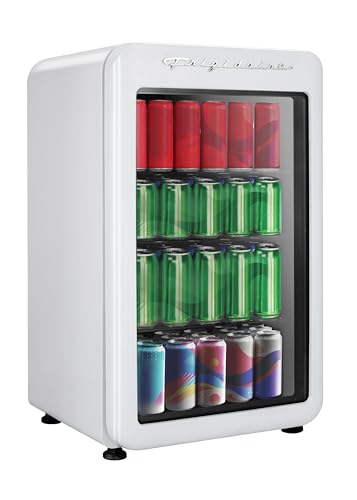
Beverage Fridge Buying Guide: Compressor vs Thermoelectric

6 Drink Dispensers That Actually Seal Right (2026)

Skip Cheap Whiskers: Get a Real Chasen

Wondering Which Tea Infuser Is Best? Try This Basket
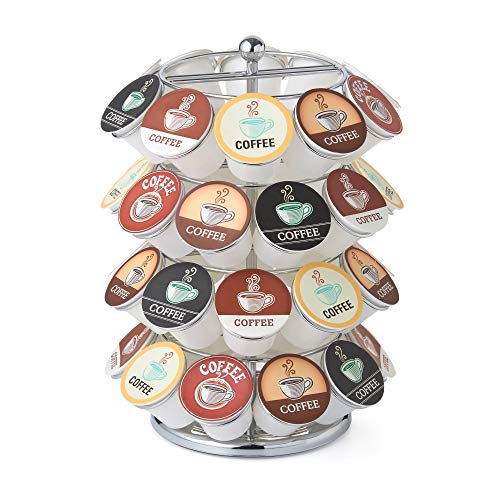
Don’t Buy a Coffee Pod Organizer Until You Read This
Tamp Like a Pro: Expert Chosen Tamper Mats

Coffee Scales for Every Brew, Tested for Daily Use