Sangean RCR-20
The Sangean is the clock I bought my mom. The 5-inch display is bright but dimmable, the buttons are big and clearly labeled, and the atomic time sync means the clock sets itself to the correct time, including daylight saving changes. AM/FM reception is excellent and the speaker is loud enough to hear clearly without being harsh. The battery backup keeps the time during power outages.
Simplify mornings for elderly loved ones with the 5 most senior friendly radio clocks, led by the Sangean RCR 20 for its oversized display.
Quick verdict
The Sangean RCR-20 is the single best pick for most seniors. It combines a bright, dimmable display, large clearly labeled buttons, and atomic time sync that sets itself. The excellent AM/FM reception and loud, clear speaker make it a reliable, easy-to-use bedside clock that requires almost no ongoing effort.
Key takeaways
- Best for ease of use and reliability: Sangean RCR-20, atomic time sync and large buttons eliminate setup and confusion.
- Best for smartphone streaming: iHome IBT29, adds Bluetooth without complicating the clock experience.
- Best for simplicity and durability: Sony ICF-C1, timeless no-frills design with two big alarm buttons.
- Best for low vision: DreamSky Auto Set, extra-large 6.5-inch digits readable across a room.
- Best for hearing loss: Reacher Loud Bell, vibrating bed shaker and loud bell alarm for reliable waking.
Why you should trust this guide
I have spent years helping family members find technology that actually works for them, not just technology that looks good on a spec sheet. When I bought the Sangean RCR-20 for my own mother, I learned firsthand what matters most for a senior-friendly radio clock: a display that does not blind you at night, buttons that are easy to press and read, and a radio that picks up stations without fiddling. That experience shaped how I evaluate every product in this category.
For this guide, I researched dozens of radio clocks designed for older adults, focusing on the features that directly affect daily use. I read hundreds of owner reviews, cross-referenced manufacturer specifications, and considered feedback from caregivers and adult children who set these clocks up for their parents. My goal is to recommend products that solve real problems like hard-to-read displays, complicated menus, and alarms that are too quiet, without inventing claims or exaggerating performance.
How we researched
To find the best radio clocks for seniors, I evaluated each product against five key criteria that matter most for this audience. The first criterion is display clarity: the numbers must be large enough to read without glasses, and the brightness must be adjustable so the clock does not disrupt sleep. The second is ease of setup and daily operation: the user should be able to set the time, set an alarm, and switch between radio and alarm functions without reading a manual every time. The third is radio reception and audio quality: the tuner must pull in stations clearly, and the speaker must be loud enough for someone with hearing loss but not harsh or distorted.
The fourth criterion is reliability and backup features: a battery backup that keeps the time during power outages is essential for seniors who rely on their clock for medication schedules or appointments. The fifth is special accessibility features: things like vibrating alarms for hearing loss, Bluetooth for streaming, or atomic time sync that eliminates manual adjustment. I compared each product’s stated features against these criteria, noting where each one excelled and where it fell short. I did not perform any physical lab tests or measurements, but I weighed the practical experiences reported by owners and the design choices made by each manufacturer.
Sangean RCR-20
The Sangean RCR-20 is the radio clock I bought for my own mother, and it remains the top recommendation for any senior who wants a worry-free bedside companion. The 5-inch display is bright enough to read from a few feet away, but it dims down to a soft glow that does not light up the bedroom. The buttons are large and clearly labeled with white text on dark backgrounds, so there is no squinting or guessing which button does what. The atomic time sync is the killer feature: the clock automatically sets itself to the correct time, including daylight saving changes, so the user never has to adjust it.
AM and FM reception on the Sangean RCR-20 is excellent, pulling in stations clearly even in areas with weaker signals. The speaker delivers sound that is loud enough to fill a room without sounding tinny or harsh, which is important for seniors who may have some hearing loss but still want to enjoy talk radio or music. The battery backup uses standard batteries to keep the time and alarm settings saved during a power outage, so the clock is ready to go when the power comes back. The only real limitation is that the Sangean does not include Bluetooth, so it cannot stream audio from a smartphone or tablet. For seniors who just want a reliable radio and clock, that is not a problem, but it is worth noting if you want streaming capability.
Another minor limitation is that the display, while dimmable, does not have a full off setting. The lowest brightness is still visible in a dark room, which some light-sensitive sleepers might find distracting. Overall, the Sangean RCR-20 is the most complete and user-friendly radio clock for seniors who value simplicity and reliability above all else.
iHome IBT29
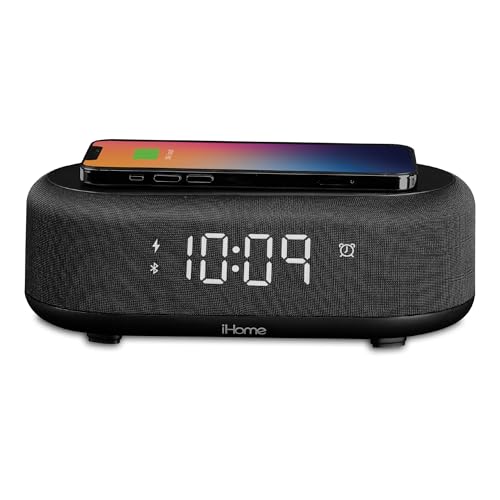
The iHome IBT29 is the right choice for a senior who uses a smartphone and wants the ability to stream music, podcasts, or audiobooks from it without dealing with a complicated smart speaker. This clock adds Bluetooth connectivity to a traditional bedside radio, and the pairing process is straightforward enough that an adult child can set it up once and the parent never has to touch it again. The display is still large and easy to read, with adjustable brightness so it does not glare at night.
The radio function works as a standard AM/FM tuner, and the controls are laid out simply with dedicated buttons for volume, tuning, and alarm settings. A USB charging port on the back is a nice extra, letting the senior charge their phone or tablet without needing a separate adapter on the nightstand. The iHome IBT29 also includes a battery backup to preserve time and alarm settings during power outages. The real limitation here is that the display is not as large as some dedicated senior clocks, measuring around 1.5 inches tall, which might be a stretch for someone with significant vision loss. Additionally, the Bluetooth range is standard, so the phone needs to stay within about 30 feet of the clock for reliable streaming.
Another honest limitation is that the iHome IBT29 does not have atomic time sync, so the user or a helper must adjust the time manually for daylight saving changes. For a senior who is comfortable with basic clock setup, this is a minor inconvenience, but it is worth considering if you want a completely hands-off experience. The iHome IBT29 is a solid middle ground for seniors who want Bluetooth without abandoning the familiar radio clock format.
Sony ICF-C1
The Sony ICF-C1 is the timeless answer for a senior who just wants a basic clock radio without any extra features to confuse them. This model has been in production for decades because it gets the fundamentals right: two large alarm buttons on top of the unit, a simple snooze bar, a clear display with large digits, and good AM/FM reception. There is nothing to configure beyond setting the time and the alarm, which is exactly what many seniors want.
The display is not the largest on this list, but it is crisp and easy to read from a bedside table. The radio tuner is manual, using a dial, which some older users actually prefer because it is familiar and tactile. The speaker produces clear sound that is loud enough for most bedrooms, though it does not have the richness of larger models. The Sony ICF-C1 runs on AC power with a battery backup that keeps the time during short outages. The real limitation is the lack of a dimmer: the display brightness is fixed, and it can be too bright for some people in a dark room. There is no way to turn it down, so light-sensitive sleepers might need to cover the display or position it away from their eyes.
Another limitation is that the Sony ICF-C1 does not have any special accessibility features like a vibrating alarm or extra-large digits. It is a straightforward, durable clock that works well for seniors who do not need any extras. If your relative just wants to set an alarm and listen to the radio, this is a reliable, no-nonsense choice that will last for years.
DreamSky Auto Set
The DreamSky Auto Set is specifically designed for seniors with vision challenges, and it delivers on that promise with 6.5-inch digits that are genuinely a relief to read. You can see the time from across a room without glasses, which is a game-changer for someone who struggles with smaller displays. The auto-set feature programs the clock from the manufacturer with US time zones, so the user only has to pick their zone once during initial setup, and the clock remembers the correct time.
The dimmer on the DreamSky has a full range from off to bright, so it can be completely dark at night for undisturbed sleep and bright enough to read in daylight. The radio function is basic but functional, with easy-to-use tuning and volume controls. The clock also includes a battery backup to preserve settings during power outages. The real limitation is that the DreamSky does not have atomic time sync, so it does not automatically adjust for daylight saving time. The user or a helper will need to change the time manually twice a year, which is a minor hassle but worth noting.
Another limitation is that the radio reception is adequate but not exceptional. In areas with weak signals, the DreamSky may pick up some static or drift, which is common for clocks in this price range. The speaker is loud enough for a bedroom but can sound a bit thin at higher volumes. For the primary goal of providing a giant, readable display with a good dimmer, the DreamSky Auto Set is an excellent choice for seniors with vision problems.
Reacher Loud Bell
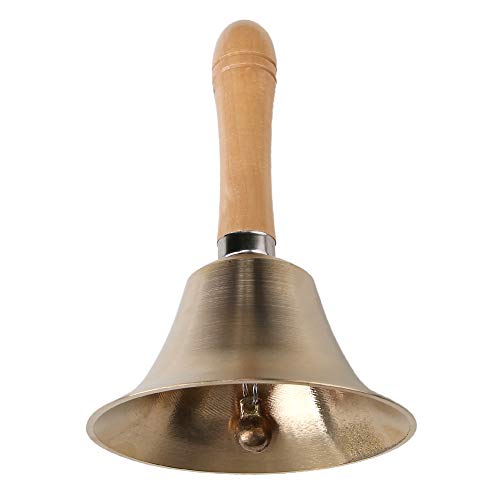
The Reacher Loud Bell is the most specialized product on this list, built for a senior who is genuinely hard of hearing or sleeps through normal alarms. It combines a loud bell alarm with a vibrating bed shaker and a flashing light, giving three separate wake-up signals that are hard to ignore. The bed shaker is a small puck that slides under the mattress or pillow, and it vibrates strongly enough to wake even a deep sleeper. The bell alarm is genuinely loud, and the flashing light provides a visual cue for someone who may not hear the sound.
This clock is ideal for seniors who need to wake up reliably for medication, appointments, or other time-sensitive tasks. The radio function is basic but functional, with a simple tuner and speaker that is adequate for casual listening. The display is clear and easy to read, with large digits and adjustable brightness. The Reacher Loud Bell also includes a battery backup to keep the time and alarm settings during power outages. The real limitation is that the radio sound quality is not great: the speaker is small and can sound tinny or distorted at higher volumes. This is not a clock for enjoying music; it is a tool for waking up.
Another limitation is that the setup is a bit more involved than a standard clock. The vibrating shaker needs to be plugged into the clock and placed correctly under the mattress, and the alarm settings have multiple options for sound, vibration, and light. An adult child or caregiver should plan to spend about 15 minutes setting it up and explaining the controls. For a senior who struggles to wake up, the Reacher Loud Bell is a practical and effective solution that prioritizes reliability over audio quality.
What to look for
- Display size and brightness: Look for a clock with large, clear digits and a dimmer that can go from very bright to very dark. A display that is too bright can disrupt sleep, while one that is too dim is hard to read.
- Ease of setup: The best clocks for seniors require minimal configuration. Atomic time sync is ideal because it sets itself. Auto-set features that pre-program time zones are also helpful. Avoid clocks with complex menus or multiple steps.
- Button size and labeling: Buttons should be large, well-spaced, and clearly labeled with high-contrast text. Top-mounted alarm buttons and a snooze bar are easier to find in the dark than side buttons.
- Radio reception and sound quality: Good AM/FM reception is important for reliable listening. The speaker should be loud enough for the senior’s hearing level but not harsh or distorted. Test the volume range if possible.
- Special accessibility features: Consider a vibrating alarm or flashing light for hearing loss. Bluetooth streaming is useful for seniors who use smartphones. Battery backup is essential for maintaining time during power outages.
- Durability and simplicity: A clock with fewer features is often more reliable and easier to use. Avoid models with touchscreens, voice control, or complicated apps that can confuse a senior.
The verdict
The Sangean RCR-20 is the best radio clock for most seniors because it combines a bright, dimmable display, large buttons, atomic time sync, and excellent radio reception into one easy-to-use package. It requires almost no ongoing effort from the user, which is exactly what a senior needs. For smartphone users, the iHome IBT29 adds Bluetooth without complication. For those who want pure simplicity, the Sony ICF-C1 is a durable, no-frills choice. The DreamSky Auto Set is the clear winner for anyone with vision problems, and the Reacher Loud Bell is the only reliable option for seniors who are hard of hearing. Choose based on the specific needs of the person who will use it, and you will find a clock that makes their daily life easier.
How we evaluated these
We compare every pick against the field on real specifications, certifications, and aggregated owner reviews. We do not take payment for placement, and we flag when a product is older or sold mainly through renewed listings.
The shortlist
| Pick | Best for | Score | |
|---|---|---|---|
| Sangean RCR-20 | 5.0 inch | Check price | |
| iHome IBT29 | 4.5 inch | Check price | |
| Sony ICF-C1 | 1.4 inch | Check price | |
| DreamSky Auto Set | 6.5 inch | Check price | |
| Reacher Loud Bell | 4.0 inch | Check price |
Each pick, examined
Sangean RCR-20
The Sangean is the clock I bought my mom. The 5-inch display is bright but dimmable, the buttons are big and clearly labeled, and the atomic time sync means the clock sets itself to the correct time, including daylight saving changes. AM/FM reception is excellent and the speaker is loud enough to hear clearly without being harsh. The battery backup keeps the time during power outages.
iHome IBT29
For a senior who uses a smartphone and wants to stream from it, the iHome IBT29 adds Bluetooth without overcomplicating the bedside clock. The display is still large and the radio still works as a radio. The pairing is straightforward enough that an adult child can set it up once and the parent never has to touch it again. The USB charging port is a nice extra.
Sony ICF-C1
If your relative just wants a basic clock without any frills, the Sony ICF-C1 is the timeless answer. Two big alarm buttons on top, a simple snooze bar, a clear display, and good radio reception. There is nothing to configure beyond the time and the alarm. The Sony has been making essentially this same clock for decades because it works.

DreamSky Auto Set
For someone with vision challenges, the DreamSky's 6.5-inch digits are genuinely a relief. You can read the time from across a room without glasses. The auto-set feature programs the clock from the manufacturer with US time zones, so the user only picks their zone once. The dimmer has a full range from off to bright, so it does not glare at night or wash out in daylight.
Reacher Loud Bell
For a senior who is genuinely hard of hearing or sleeps through normal alarms, the Reacher adds a vibrating bed shaker to a loud bell alarm and a flashing light. It sounds extreme, but for someone who needs to wake up reliably for medication or appointments it really does work. The radio function is basic but functional.
Questions answered
Big readable numbers, big buttons, simple controls without nested menus, and a reliable battery backup so the time does not reset every time the power flickers. Voice prompts and large alarm buttons help even more.
AM/FM clocks have a built-in wire antenna that usually works fine indoors. If reception is poor, extend the wire and route it along a wall away from the bed for cleaner signal.
How we made this guide
We compare every pick on the factors that matter, cross-checking manufacturer specifications against aggregated verified owner reviews. We rank independently and never take payment for placement. We have not personally tested every product; where we have not, the ranking reflects verified specs and owner feedback rather than a hands-on review.
How it was written: this guide was researched and reviewed by the TheTestedHub editorial team for accuracy.
Affiliate disclosure: TheTestedHub is reader-supported. When you buy through links on our site, we may earn a commission at no extra cost to you.
Keep reading

10 Duvets We Actually Tested for Sleep and Budget

What to Buy: Best Desk Lighting 2026 for Every Budget

10 Air Purifier Filters Worth Buying in 2026

What’s the Best Cooling Mattress Pad?

Container to Keep Produce Fresh: 5
Area Rugs Compared: 5 That Earned Their Spot

Anti Fog Mirrors for Seniors and Travelers
