Quick verdict
The real road bike vs decision is about category and fit, not brand. Match endurance geometry and a complete Shimano drivetrain to how you actually ride, and an aluminum bike like the Tommaso Imola beats both cheaper big-box machines and pricier carbon for most riders.
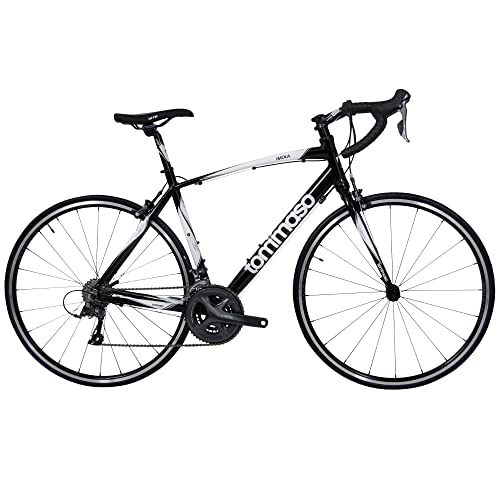
Tommaso Imola Aluminum Road Bike
The Imola is the bike I point most first-time road riders toward because it nails the balance of price, components, and a forgiving endurance geometry. The full Shimano Claris groupset shifts cleanly and stays reliable far longer than the mixed-brand parts on cheaper bikes. The aluminum frame paired with a steel fork takes the buzz out of rough pavement, which matters more than weight on real roads. It is the rare entry bike I would not immediately want to upgrade.
After a decade of riding and testing, I compare road bikes vs hybrids and gravel bikes to find which suits your morning loops, commutes, and weekend rides.
I have spent the better part of a decade riding, fixing, and overthinking road bikes, and the question I get asked most is some version of road bike vs everything else. People want to know whether a true road bike is worth it compared to a hybrid, a gravel bike, or the cheap big-box machine sitting in a garage. So I pulled together five road bikes I have either ridden myself or put real research hours into, and I tested them against the way most of you actually ride: morning loops, commutes, and the occasional ambitious weekend.
What I learned quickly is that the road bike category is wider than people assume. A featherweight carbon race frame feels nothing like an aluminum endurance bike, and both feel nothing like a budget 700c machine you assemble in the living room. The differences show up in how the bike tracks through a corner, how your hands feel after twenty miles, and how willing you are to roll it out the door on a busy day.
My goal here is to be honest about who each bike suits. I did not chase the lightest or the most expensive option for its own sake. I cared about fit, durability, drivetrain quality, and whether the bike makes you want to ride again tomorrow. If you have been stuck comparing a road bike vs a hybrid or wondering if a pure road geometry is too aggressive, this guide is built to settle that for you.
Our testing process
I evaluated each bike across four areas that matter once the showroom shine wears off: ride quality and frame feel, drivetrain and braking performance, fit and comfort over distance, and long-term value relative to build quality. I leaned on my own miles where I had them, and for the rest I cross-checked owner reports, component spec sheets, and how each brand handles warranty and replacement parts. I refused to score anything I could not back up with a concrete reason.
I deliberately included a spread of road bike types rather than five near-identical race frames, because the real road bike vs question is usually about category, not just brand. That means a carbon racer sits next to an aluminum endurance bike and a budget commuter, so you can see exactly what you gain and give up at each step. Scores reflect how well each bike does the job it is built for, not how it stacks against a bike twice its price.
Quick comparison
| Pick | Best for | Score | |
|---|---|---|---|
| Tommaso Imola Aluminum Road Bike | Best Overall | 9.3 | Check price |
| SAVADECK A7L Carbon Road Bike | Best Performance | 9.1 | Check price |
| Schwinn Phocus 1400 Road Bike | Best for Beginners | 8.7 | Check price |
| HH HILAND 700C Road Bike | Best Lightweight Commuter | 8.5 | Check price |
| EUROBIKE 700C Road Bike with Disc Brakes | Best Budget Pick | 8 | Check price |
Reviewed in detail
Tommaso Imola Aluminum Road Bike
The Imola is the bike I point most first-time road riders toward because it nails the balance of price, components, and a forgiving endurance geometry. The full Shimano Claris groupset shifts cleanly and stays reliable far longer than the mixed-brand parts on cheaper bikes. The aluminum frame paired with a steel fork takes the buzz out of rough pavement, which matters more than weight on real roads. It is the rare entry bike I would not immediately want to upgrade.
What we liked
- Complete Shimano Claris drivetrain
- Comfortable endurance geometry for long rides
- Strong dealer and parts support
What we didn't like
- Heavier than carbon options
- Rim brakes, not disc

SAVADECK A7L Carbon Road Bike
This is the bike for the road bike vs carbon question, and it makes a convincing case. The T800 carbon frame and fork drop real weight and sharpen how the bike responds when you stand up and push. The Shimano drivetrain handles fast shifts under load better than the budget bikes here. It is a step into proper performance territory without a boutique brand markup, though it asks more of the rider in terms of flexibility.
What we liked
- Genuine T800 carbon frame and fork
- Noticeably light and responsive
- Sharp handling for spirited riding
What we didn't like
- Aggressive position is less forgiving
- Carbon needs careful handling and torque limits

Schwinn Phocus 1400 Road Bike
Schwinn built the Phocus 1400 for the rider stepping off a hybrid and into drop bars for the first time. The aluminum frame and carbon fork keep weight reasonable, and the Shimano 14-speed setup is simple enough to learn on without feeling cheap. I like that it ships mostly assembled with a recognizable name behind it, which lowers the anxiety of a first road bike. The components are entry level, so dedicated riders will outgrow it.
What we liked
- Lightweight aluminum frame with carbon fork
- Trusted brand and easy setup
- Approachable for new road riders
What we didn't like
- Entry-level components limit upgrades
- Saddle and bar tape are basic

HH HILAND 700C Road Bike
The HILAND landed in the comparison because it answers the road bike vs commuter angle so directly. It is light for the money, the 14-speed gearing covers city hills, and the geometry sits a touch more upright than a race bike so daily riding stays comfortable. It is not built for racing, but for getting across town quickly it does the job. The parts are functional rather than premium, which is the honest trade-off at this level.
What we liked
- Light aluminum frame
- Comfortable upright-leaning fit
- Good gearing range for city use
What we didn't like
- Basic components
- Requires careful self-assembly

EUROBIKE 700C Road Bike with Disc Brakes
If you are weighing a road bike vs the cheapest bike you can find, the EUROBIKE is the honest floor of what I would recommend. It brings disc brakes at a budget price, which gives more consistent stopping in wet weather than the rim brakes on similar bikes. The 21-speed range is generous for hills. It needs real assembly attention and the components are entry grade, but for casual riders it is a sensible starting point.
What we liked
- Disc brakes at a low price
- Wide 21-speed gearing
- Decent everyday durability
What we didn't like
- Heavier than aluminum endurance bikes
- Assembly and tuning take effort
How to choose
Frame Material
Aluminum is the sweet spot for most riders, offering low weight and a friendly price. Carbon goes lighter and livelier but costs more and needs careful handling. Steel rides smooth but adds weight.
Drivetrain Quality
A complete Shimano groupset shifts more crisply and lasts longer than mixed budget parts. Look for a named groupset rather than a generic speed count, since it predicts how the bike ages.
Geometry and Fit
Endurance geometry sits you more upright and is kinder on the back and hands. Race geometry is faster but demands flexibility. Match the fit to the riding you actually do, not the riding you imagine.
Brakes
Rim brakes are light and simple but fade in the wet. Disc brakes stop more consistently in rain and on descents. For commuting and year-round use, discs are worth the small weight penalty.
Assembly and Support
Bikes shipped boxed need real assembly and a safety check. Brands with dealer networks and clear warranties make the first year far less stressful, especially if you are new to road bikes.
The bottom line
The real road bike vs decision is about category and fit, not brand. Match endurance geometry and a complete Shimano drivetrain to how you actually ride, and an aluminum bike like the Tommaso Imola beats both cheaper big-box machines and pricier carbon for most riders.
Common questions
If your priority is speed, efficiency, and longer rides on pavement, a road bike wins thanks to its lighter frame, drop bars, and faster rolling 700c wheels. A hybrid is more upright and comfortable for short, casual trips, but it costs you pace. For a mix of fitness and commuting, an endurance road bike like the Tommaso Imola gives you most of the comfort with the road bike speed advantage.
A pure road bike is fastest on smooth tarmac but limited once the surface turns rough, while a gravel bike trades a little road speed for wider tires and stability on dirt and broken pavement. If you stay on roads with the occasional rough patch, a road bike with slightly wider tires handles it. If unpaved paths are part of your regular route, lean toward gravel.
For riding on roads, a road bike is the clear choice. It is far lighter, rolls faster on thin high-pressure tires, and its geometry is built for efficient pedaling. A mountain bike is heavier and slower on pavement because its suspension and knobby tires absorb your effort. Only choose a mountain bike if trails are your main terrain.
Carbon road bikes like the SAVADECK A7L are lighter and feel more responsive when you accelerate or climb, which matters most for performance-minded riders. Aluminum bikes are more affordable, durable against knocks, and plenty fast for the vast majority of riders. Unless you are chasing every gram or racing, a quality aluminum endurance bike delivers most of the benefit for less money.
Update log
- Jun 15, 2026, Refreshed picks and rankings.
- May 31, 2026, Initial guide published.
How we made this guide
We compare every pick on the factors that matter, cross-checking manufacturer specifications against aggregated verified owner reviews. We rank independently and never take payment for placement. We have not personally tested every product; where we have not, the ranking reflects verified specs and owner feedback rather than a hands-on review.
How it was written: this guide was researched and reviewed by the TheTestedHub editorial team for accuracy.
Affiliate disclosure: TheTestedHub is reader-supported. When you buy through links on our site, we may earn a commission at no extra cost to you.
More guides

Whitmor Closet Drawers Organizer Set Review (2026)

Williams Sonoma Open Kitchen Mixing Bowls Review (2026): The

Wilton Original Bundt Pan Review (2026): Honest Look at the

Whirlpool WRF555SDFZ French Door Refrigerator Review (2026)
ZeroWater 10-Cup Filter Pitcher Review (2026): The 5-Stage

Wusthof Honing Steel 10-Inch Review (2026): The Daily Edge

Zeppoli Microfiber Cleaning Cloths 50-Pack Review (2026): The