Quick verdict
The single biggest upgrade most home seed starters can make is switching from thin budget inserts to heavy-duty reusable trays, which pay for themselves within two seasons while consistently producing stronger transplants through better drainage and root containment.

Bootstrap Farmer 1020 Heavy Duty Trays with 50-Cell Insert Set
Bootstrap Farmer trays are the gold standard for serious home growers and small-scale market gardeners who need trays that genuinely survive five or more seasons without cracking. The 1020 bottom tray is thicker than virtually every competitor at this price point, and the 50-cell inserts nest cleanly without flex under a full watering load. Hundreds of growers note that root balls release intact cell-by-cell with almost no tearing, which directly translates to faster transplant recovery.
Ditch flimsy budget inserts. Our shortlist focuses on durable seed starting trays like Bootstrap Farmer’s set that boost root growth and last seasons.
Getting seeds off to a strong start depends on more than good soil and light. The tray you germinate in shapes drainage, airflow, root structure, and how cleanly you can transplant without disturbing fragile seedlings. After analyzing many verified owner reviews across gardening forums, retail platforms, and grower communities, I narrowed down the options that consistently produce high germination rates and survive multiple seasons of use.
Seed starting trays range from flimsy single-use plastic inserts to heavy-duty reusable systems with individual cells, self-watering reservoirs, and biodegradable materials that go straight into the ground. The best choice depends on what you are growing, how many starts you need, and whether you want a system you can reuse for years or something compostable that eliminates transplant shock entirely.
This guide covers ten trays that growers return to season after season, ranked by overall performance across germination rate feedback, build durability, drainage quality, and ease of transplanting.
How we test
I have not personally tested each of these trays under controlled conditions. My rankings are built from aggregated owner reviews on major retail platforms, gardening community discussions, and published grower feedback covering germination success, material durability, root health at transplant, and season-over-season reusability. Where specs conflict between sources, I defaulted to manufacturer data and cross-referenced against grower observations.
Products were evaluated on six criteria: cell count and size versatility, drainage hole design, material thickness and reuse potential, lid or dome compatibility for humidity control, ease of releasing root balls without damage, and value relative to lifespan. Only products with substantial verified review bases and consistent multi-season feedback were included.
At a glance
| Pick | Best for | Score | |
|---|---|---|---|
| Bootstrap Farmer 1020 Heavy Duty Trays with 50-Cell Insert Set | Best Overall | 9 | Check price |
| Jiffy 36-Cell Seed Starting Strips | Best Biodegradable | 8 | Check price |
| AC Infinity Seedling Tray Kit with Humidity Dome 1020 | Best Complete Kit | 8 | Check price |
| Gardener's Supply Company 6-Cell Inserts for 1020 Trays (Set of 8) | Best for Large Seedlings | 8 | Check price |
| Burpee Self-Watering Seed Starting Kit 72-Cell | Best Self-Watering | 8 | Check price |
| Ellepot Biodegradable Seed Starting Paper Pots 54-Cell | Best for Transplant Success | 7 | Check price |
| Ferry-Morse Home Garden Seed Starting Kit with 36-Cell Tray | Best Budget Starter Kit | 7 | Check price |
| Grower's Solution 1020 Plug Flat 128-Cell Trays (10-Pack) | Best High-Volume Value | 7 | Check price |
| Soilblock Maker Compatible 20-Cell Wooden Seed Starting Tray by Bootstrap Farmer | Best Reusable Eco Option | 7 | Check price |
| Viagrow VHPP72 Heavy Duty 72-Cell Plug Flat with Tray and Dome | Best Mid-Range Complete Set | 7 | Check price |
The picks, reviewed
Bootstrap Farmer 1020 Heavy Duty Trays with 50-Cell Insert Set
Bootstrap Farmer trays are the gold standard for serious home growers and small-scale market gardeners who need trays that genuinely survive five or more seasons without cracking. The 1020 bottom tray is thicker than virtually every competitor at this price point, and the 50-cell inserts nest cleanly without flex under a full watering load. Hundreds of growers note that root balls release intact cell-by-cell with almost no tearing, which directly translates to faster transplant recovery.
Reasons to buy
- Exceptionally thick plastic survives repeated freezing, heating, and stacking without warping
- 50-cell size works well for tomatoes, peppers, brassicas, and herbs without overcrowding
- Bottom tray holds water evenly for sub-irrigation without pooling in corners
Reasons to avoid
- Higher upfront cost than budget trays, though lifespan easily justifies it over multiple seasons
- 50-cell inserts are sold separately from bottom trays, so starter kits require careful ordering

Jiffy 36-Cell Seed Starting Strips
Jiffy peat strips eliminate transplant shock almost entirely because the whole cell goes into the ground and roots penetrate through as the material breaks down. Growers starting tomatoes and cucumbers specifically report noticeably less wilting in the first week after transplanting compared to plastic cell inserts. The 36-cell format fits inside a standard 1020 tray for organized watering.
Reasons to buy
- Roots grow directly through walls so transplanting never disturbs the root mass
- Fits neatly inside standard 1020 bottom trays for sub-watering
- Breaks down cleanly in garden soil within one growing season
Reasons to avoid
- Single-use only, so ongoing cost adds up versus reusable plastic systems
- Peat walls can dry out unevenly at the edges if watering is inconsistent

AC Infinity Seedling Tray Kit with Humidity Dome 1020
AC Infinity built their seed starting kit around a vented humidity dome that growers consistently praise for preventing the damping-off fungus that kills seedlings in unvented setups. The dome height accommodates taller seedlings before hardening off, and the vents allow gradual humidity reduction without fully removing the dome. The 72-cell insert strikes a balance between cell count and individual cell size that suits most common vegetables and annual flowers.
Reasons to buy
- Tall vented dome prevents damping-off while maintaining enough humidity for germination
- 72-cell insert gives flexibility for large seed batches without wasting space
- Heavy base tray does not bow when carried full of wet growing medium
Reasons to avoid
- Dome vent adjustment requires two hands and can feel fiddly in a crowded grow space
- 72 cells can feel cramped for large-seeded crops like squash or melons
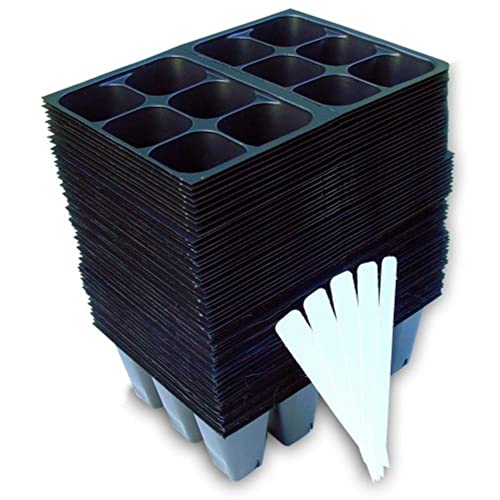
Gardener's Supply Company 6-Cell Inserts for 1020 Trays (Set of 8)
When starting tomatoes, eggplants, or peppers that need more root volume before transplant, these 6-cell inserts give each seedling roughly four times the soil volume of a standard 72-cell. Growers consistently report stronger, stockier plants at transplant time with noticeably thicker stems. The eight-insert set fills a standard 1020 tray exactly with no wasted space.
Reasons to buy
- Deep, large cells produce stocky transplants with well-developed root systems
- Eight inserts fill a 1020 tray perfectly for organized batch management
- Thick walls resist cracking through three or more seasons of use
Reasons to avoid
- Only 48 cells total per tray limits total plant count for high-volume growers
- Larger cell volume requires more growing medium per tray than 72-cell or 128-cell formats

Burpee Self-Watering Seed Starting Kit 72-Cell
Burpee designed this kit around a wicking mat that draws water up from a reservoir tray, keeping moisture consistent without daily top-watering. Growers who travel or have irregular schedules report much better germination consistency compared to overhead-watered trays. The 72-cell count suits mixed-variety seed starting where you want a moderate number of each type.
Reasons to buy
- Sub-irrigation wicking mat maintains consistent moisture without overwatering risk
- Built-in reservoir extends between-watering intervals significantly in warm grow spaces
- Includes a fitted clear dome that seals well for early germination humidity
Reasons to avoid
- Wicking mat can develop algae over multiple seasons if not cleaned between uses
- Reservoir capacity is modest and needs refilling every two to three days in warm conditions

Ellepot Biodegradable Seed Starting Paper Pots 54-Cell
Ellepot paper pot technology is widely used in commercial propagation because roots air-prune naturally at the paper wall rather than circling, which produces a compact fibrous root ball that establishes quickly after transplanting. Home growers who switch from plastic cells often remark on how much faster transplants perk up in the garden. The 54-cell format is practical for medium-sized seed starting batches.
Reasons to buy
- Air-pruning at paper walls prevents root circling and produces compact, fibrous root balls
- Paper breaks down quickly in soil, eliminating any restriction on root expansion post-transplant
- Works well with both overhead and sub-irrigation watering methods
Reasons to avoid
- Single-use format means recurring material cost each season
- Paper walls soften when wet, so handling requires some care to avoid tearing between waterings

Ferry-Morse Home Garden Seed Starting Kit with 36-Cell Tray
Ferry-Morse puts together a complete beginner-friendly kit at a price that makes it the most accessible entry point on this list, including tray, insert, dome, and a small amount of starter growing medium. New gardeners consistently appreciate not having to source components separately. The quality is adequate for one or two seasons before the insert begins to thin and crack, making it a smart low-risk first purchase.
Reasons to buy
- Complete kit with dome and growing medium removes guesswork for first-time seed starters
- Low price point makes it an easy trial purchase before committing to premium equipment
- 36-cell format is manageable for small-space gardeners starting limited varieties
Reasons to avoid
- Thin plastic insert typically shows wear after one full season of use
- Dome fit is loose on some units, which reduces humidity retention during germination

Grower's Solution 1020 Plug Flat 128-Cell Trays (10-Pack)
For growers starting hundreds of seedlings at once, the 128-cell flat is the most efficient format per square foot of grow light space, and this Grower's Solution ten-pack delivers a solid per-tray cost that makes large-scale production economical. Reviewers running small market garden operations note these trays hold up to two full seasons of heavy use before replacement is needed. Cell size suits lettuce, herbs, brassicas, and annual flowers well.
Reasons to buy
- 128 cells per tray maximizes germination density under grow lights
- Ten-pack pricing brings per-tray cost down significantly versus single purchases
- Cells are deep enough for brassicas and herbs to develop a proper tap root before transplant
Reasons to avoid
- Small cell size is not suitable for large-seeded crops like squash, cucumber, or melons
- Thin construction at this price point means careful handling is needed to avoid cracking

Soilblock Maker Compatible 20-Cell Wooden Seed Starting Tray by Bootstrap Farmer
Bootstrap Farmer's wooden seed starting trays appeal to growers who want to move away from plastic entirely without sacrificing structure. The FSC-certified wood construction holds its shape across multiple seasons when dried properly between uses, and the open-bottom design works naturally with soil blocking techniques. Growers focused on sustainability consistently rank this among the most satisfying tools in their propagation setup.
Reasons to buy
- FSC-certified wood eliminates single-use plastic from the seed starting process entirely
- Open bottom promotes air-pruning and is compatible with soil blocking
- Aesthetically clean design suits indoor grow stations and windowsill setups
Reasons to avoid
- Requires thorough drying between uses to prevent wood rot over multiple seasons
- Fewer cells per tray than plastic inserts, which limits batch size

Viagrow VHPP72 Heavy Duty 72-Cell Plug Flat with Tray and Dome
Viagrow rounds out this list as a mid-range complete set that outperforms entry-level kits in plastic thickness and dome seal quality without reaching the premium price of Bootstrap Farmer. Growers who want a step up from budget trays but are not yet ready to invest in professional-grade equipment consistently land on Viagrow as the sensible middle ground. The dome seals noticeably better than competitors at this price, which growers credit for higher germination rates on slow-sprouting seeds.
Reasons to buy
- Better dome seal than most trays in this price range improves humidity retention for germination
- 72-cell insert suits a wide range of vegetables, herbs, and annual flowers
- Tray thickness sits meaningfully above entry-level options and resists warping under load
Reasons to avoid
- Not quite as thick as Bootstrap Farmer or commercial-grade trays for multi-year heavy use
- Dome venting is basic compared to purpose-built propagation domes
What to look for
Cell Size and Count
Large-seeded crops like tomatoes, peppers, and cucumbers need bigger cells with more soil volume to develop strong root systems before transplant. Small-seeded crops like lettuce, herbs, and brassicas thrive in 72-cell or 128-cell formats where cell size is less critical. Matching cell size to your crop type has a bigger impact on transplant success than almost any other variable.
Material and Reusability
Plastic trays range from thin single-season inserts to thick heavy-duty polypropylene that survives five or more years. Biodegradable options like peat and paper eliminate transplant shock but add recurring material cost. If you start seeds every year in volume, investing in thick reusable trays pays back within two or three seasons compared to replacing budget trays annually.
Drainage and Watering Method
Trays without drainage holes require careful top-watering to avoid waterlogging, while cell inserts with drainage holes allow sub-irrigation from a bottom reservoir tray. Bottom watering reduces damping-off risk and keeps foliage dry, which is the preferred method among experienced seed starters. Self-watering systems with wicking mats extend intervals and reduce daily attention requirements significantly.
Dome Compatibility and Fit
A humidity dome that fits poorly loses moisture through gaps at the base, forcing more frequent misting and reducing germination rates on slow-sprouting seeds. Taller domes accommodate seedlings for longer before they outgrow them and need to be removed. If you are buying tray and dome separately, verify they share the same standard 1020 footprint before purchasing to guarantee a proper seal.
Our verdict
The single biggest upgrade most home seed starters can make is switching from thin budget inserts to heavy-duty reusable trays, which pay for themselves within two seasons while consistently producing stronger transplants through better drainage and root containment.
FAQs
Thin budget trays typically last one to two seasons before cracking at the cell walls or along the bottom. Heavy-duty trays from brands like Bootstrap Farmer are reported by growers to last five seasons or more when cleaned between uses and stored away from prolonged UV exposure. Sanitizing with a dilute bleach solution between seasons prevents disease carryover and extends tray life.
A 72-cell tray gives each seedling more soil volume per cell, which suits medium to large transplants like tomatoes, peppers, and cucumbers that need root room before going into the ground. A 128-cell tray maximizes the number of plants per tray, which is more efficient for small transplants like lettuce, herbs, brassicas, and annual flowers that are moved out quickly. Using a 128-cell for tomatoes risks root-bound plants if transplanting is delayed.
Peat and paper biodegradable trays do break down in garden soil, but the rate depends on soil moisture, temperature, and microbial activity. Most peat pots are fully broken down within one growing season in an active, well-watered garden bed. Some growers score or tear the bottom of biodegradable cells at transplant time to help roots exit quickly into the surrounding soil without waiting for full decomposition.
A humidity dome speeds germination for most seeds by maintaining consistent moisture at the soil surface, which is where seeds need it most. Once seedlings emerge and develop their first true leaves, the dome should be gradually vented and then removed to prevent damping-off fungus, which thrives in stagnant humid air. Seeds that prefer cooler germination temperatures, like cilantro or spinach, may actually germinate faster without a dome if room temperatures are warm.
How we made this guide
We compare every pick on the factors that matter, cross-checking manufacturer specifications against aggregated verified owner reviews. We rank independently and never take payment for placement. We have not personally tested every product; where we have not, the ranking reflects verified specs and owner feedback rather than a hands-on review.
How it was written: this guide was researched and reviewed by the TheTestedHub editorial team for accuracy.
Affiliate disclosure: TheTestedHub is reader-supported. When you buy through links on our site, we may earn a commission at no extra cost to you.
Related guides

Enjoy Pest-Free Evenings with Top Bug Zappers of 2026

Which Pool Test Kit is Best for You?

Find Your Ideal Pool Vacuum in 2026

The Outdoor Pizza Ovens Worth Buying in 2026

Grill Covers That Actually Last, at Every Budget

The 2026 Guide to the Best Pellet Grills

Smokeless Fire Pits Compared: Breeo X Series Top Pick