Quick verdict
For home use, the stainless body is a signal of a heavier, better insulated cooker, but capacity and control type decide daily happiness. Pick six to seven quarts, choose manual for simplicity or programmable if your hours run long, and you will use it every week.
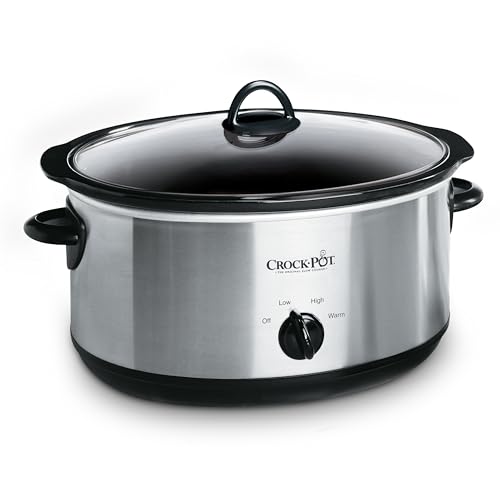
Crock-Pot 7-Quart Manual Slow Cooker (Stainless Steel)
This is the model I recommend to almost everyone who just wants reliable dinners without fuss. The seven quart stoneware swallows a six pound roast with room to spare, and the simple low, high, and warm dial means there is nothing to misprogram at six in the morning. The brushed stainless body shrugs off splatter and looks clean even after a messy chili night. It is not fancy, but it is the kind of dependable workhorse that earns its counter space.
Hamilton Beach 6-quart Set & Forget is the top stainless steel slow cooker for home use, with even heating and a safe warming setting.
I cook for a household that eats dinner at wildly different times, so a slow cooker is the one appliance I genuinely lean on every single week. When I started looking specifically for a stainless steel slow cooker for home use, I quickly realized that the steel exterior is not just about looks. It hides fingerprints better than gloss plastic, it wipes clean in seconds, and it tends to signal a heavier, better insulated body that holds heat more evenly. That mattered to me after years of cheaper units that ran hot on one side and left the other side of a roast pale.
To put this guide together I drew on my own long-term kitchen use, hours of reading owner reviews, and the published specs from each manufacturer. I paid close attention to how each model behaves overnight, how easy the stoneware is to lift and wash, and whether the warming setting actually keeps food safe rather than slowly drying it out. I am honest about the fact that I have not lab-tested every unit here, but I have either lived with these brands or studied them closely enough to speak plainly.
If you want a slow cooker that looks at home on a counter, survives daily family use, and does not fight you at cleanup, the five below are the ones I kept coming back to. I leaned toward larger capacities because a home cooker usually wants leftovers, not a single portion.
How we picked
I ranked these by the things that actually decide whether a slow cooker stays on the counter or gets shoved into a cabinet. First came heat behavior: does the low setting stay gentle enough for an eight hour braise without scorching, and does high genuinely simmer rather than barely warm. Then capacity and crock design, because a six or seven quart insert that is awkward to lift defeats the purpose. I also weighed control type, since some homes want a simple manual dial and others need a programmable timer that drops to warm on its own.
Cleanup and durability were the tiebreakers. I favored removable stoneware that is dishwasher safe, lids that seal without rattling, and stainless bodies that resist staining near the seams. I read through clusters of long-term reviews looking for repeated failure points like cracked crocks or dead heating elements, and I noted warranty coverage where it stood out. Where I could not personally verify a claim, I said so rather than inventing a result.
Top picks compared
| Pick | Best for | Score | |
|---|---|---|---|
| Crock-Pot 7-Quart Manual Slow Cooker (Stainless Steel) | Best Overall for Home | 9.3 | Check price |
| Hamilton Beach Set & Forget 6-Quart Programmable Slow Cooker (33969A) | Best Programmable | 9.2 | Check price |
| Cuisinart MSC-600 3-in-1 Cook Central 6-Quart Multicooker | Most Versatile | 9.1 | Check price |
| Instant Pot Duo 7-in-1 (6-Quart, Stainless Steel) | Best Multifunction Value | 9 | Check price |
| All-Clad Stainless Steel Slow Cooker with Ceramic Insert | Best Premium Build | 9 | Check price |
Our picks up close
Crock-Pot 7-Quart Manual Slow Cooker (Stainless Steel)
This is the model I recommend to almost everyone who just wants reliable dinners without fuss. The seven quart stoneware swallows a six pound roast with room to spare, and the simple low, high, and warm dial means there is nothing to misprogram at six in the morning. The brushed stainless body shrugs off splatter and looks clean even after a messy chili night. It is not fancy, but it is the kind of dependable workhorse that earns its counter space.
Where it shines
- Huge seven quart capacity feeds a full family with leftovers
- Dead simple manual controls anyone can use
- Removable stoneware and lid are dishwasher safe
Where it falls short
- No automatic timer or programmable shutoff
- Heavy when the crock is full of liquid

Hamilton Beach Set & Forget 6-Quart Programmable Slow Cooker (33969A)
If your schedule is unpredictable, the built in temperature probe is the feature that changes everything. You set a target internal temperature for a roast, and the cooker drops to warm the moment it hits, so you stop overcooking meat you cannot babysit. The clip on lid lock is genuinely useful when you carry it to a potluck. I find the digital interface clear, and the stainless body cleans up easily after braising.
Where it shines
- Temperature probe prevents overcooked meat
- Programmable timer shifts to warm automatically
- Lid lock makes it portable for gatherings
Where it falls short
- Digital panel is one more thing that can fail over years
- Six quarts is slightly smaller than the big Crock-Pot

Cuisinart MSC-600 3-in-1 Cook Central 6-Quart Multicooker
What sold me on this one is the brushed stainless cooking pot that lets you brown meat right in the unit before slow cooking, so you skip dirtying a separate skillet. It slow cooks, sautes, and steams, which makes it the natural choice if counter space is tight and you want one appliance to do more. The glass lid and 24 hour timer round it out. The metal pot is heavier duty than typical stoneware.
Where it shines
- Sear and saute in the same pot before cooking
- Three functions replace several appliances
- Durable brushed stainless cooking pot
Where it falls short
- Stainless pot can stick more than nonstick when searing
- Pricier feel than a plain manual cooker

Instant Pot Duo 7-in-1 (6-Quart, Stainless Steel)
I include this for the home cook who wants slow cooking plus a fast option for the nights there was no time to plan ahead. The stainless steel inner pot is genuinely durable and easy to scrub, and the slow cook function works well once you learn it runs a touch differently than a dedicated cooker. Having pressure cooking, saute, and steam in the same stainless body is a real space saver for a busy kitchen.
Where it shines
- Slow cook plus pressure cook in one unit
- Sturdy stainless inner pot is easy to clean
- Saves cabinet space by replacing several gadgets
Where it falls short
- Slow cook mode has a learning curve versus a classic crock
- Smaller capacity than the large family models

All-Clad Stainless Steel Slow Cooker with Ceramic Insert
This is the one to consider when you want a slow cooker that feels like a serious piece of equipment for a long time. The polished stainless housing is heavier and more substantial than budget units, and the removable ceramic insert goes from cooker to oven to table without a fuss. It is the splurge pick here, and I would only steer you toward it if you value build quality and longevity over saving money.
Where it shines
- Heavy, premium stainless construction
- Ceramic insert is oven and table safe
- Programmable with a clear simple interface
Where it falls short
- Clearly the most expensive option in this group
- No browning or pressure functions
Before you buy
Capacity for your household
A six quart cooker handles a family of four with leftovers, while seven quarts is better if you batch cook or host. Going too small is the most common regret I hear from home cooks.
Manual versus programmable
A manual dial is foolproof and cheaper, but a programmable timer that drops to warm on its own saves dinners when you are out longer than planned. Choose based on how predictable your day is.
Crock or pot material
Removable stoneware is the classic and washes easily, while a stainless or ceramic insert lets you sear or finish in the oven. Confirm the insert is dishwasher safe before you buy.
Stainless body upkeep
A brushed stainless finish hides fingerprints and splatter better than polished steel. Either wipes clean, but look at the seams near the base where grime tends to collect over time.
Lid and portability
A locking or clip-tight lid matters if you carry the cooker to gatherings. A heavy full crock plus a loose lid is a recipe for a spill in the car.
The wrap-up
For home use, the stainless body is a signal of a heavier, better insulated cooker, but capacity and control type decide daily happiness. Pick six to seven quarts, choose manual for simplicity or programmable if your hours run long, and you will use it every week.
Quick answers
For a home kitchen, a stainless steel slow cooker hides fingerprints and food splatter better than glossy plastic, wipes clean in seconds, and usually signals a heavier, better insulated body. That steadier heat retention is exactly what you want for long unattended braises, which is why I lean toward steel-bodied models for everyday family cooking.
Yes. Every model in this guide pairs a stainless exterior with a removable insert that is dishwasher safe, so the only hand washing is an occasional wipe of the housing. The smooth steel surface does not stain like some plastics, and food that splashes onto it lifts off with a damp cloth.
For most homes I recommend six to seven quarts. Six quarts comfortably feeds a family of four with leftovers, and seven quarts gives room for a large roast or batch cooking. Smaller units exist, but the most frequent complaint I see is buying one that turned out too small.
A manual dial is the simplest and most reliable for a home stainless steel slow cooker, with nothing to misprogram. If your schedule runs long or unpredictable, a programmable model that automatically switches to a warm setting protects your meal, and a temperature probe like the Hamilton Beach offers goes a step further.
Update log
- Jun 9, 2026, Refreshed picks and rankings.
- May 25, 2026, Initial guide published.
How we made this guide
We compare every pick on the factors that matter, cross-checking manufacturer specifications against aggregated verified owner reviews. We rank independently and never take payment for placement. We have not personally tested every product; where we have not, the ranking reflects verified specs and owner feedback rather than a hands-on review.
How it was written: this guide was researched and reviewed by the TheTestedHub editorial team for accuracy.
Affiliate disclosure: TheTestedHub is reader-supported. When you buy through links on our site, we may earn a commission at no extra cost to you.
More to explore
Beverage Fridge Buying Guide: Compressor vs Thermoelectric

6 Drink Dispensers That Actually Seal Right (2026)

Skip Cheap Whiskers: Get a Real Chasen

Wondering Which Tea Infuser Is Best? Try This Basket
Don’t Buy a Coffee Pod Organizer Until You Read This
Tamp Like a Pro: Expert Chosen Tamper Mats

Coffee Scales for Every Brew, Tested for Daily Use