Quick verdict
For a stainless steel stand mixer for beginners, the best first machine is the one with forgiving tilt-head access, a right-sized stainless bowl, and enough motor to grow with you, which is why the KitchenAid Artisan earns our top spot while the Aucma covers budget-minded newcomers.

KitchenAid Artisan Series 5 Quart Tilt-Head Stand Mixer (KSM150PS)
This is the machine I steer most new bakers toward because it gets out of your way and just works. The tilt-head design makes adding ingredients and swapping the stainless steel bowl genuinely simple, and the 10 speeds give you room to learn without overwhelming you. It handles everything from whipped cream to a double batch of cookie dough, and the build quality means it will still be on your counter a decade from now.
New to stand mixers? These 7 stainless steel models are chosen for ease of use, forgiveness, and durable build. Find your perfect starter mixer.
The first stand mixer I ever owned sat on my counter for a month before I trusted it, mostly because I had no idea which speed did what or why my cookie dough kept climbing the beater. That confusion is exactly what sends so many beginners back to a hand whisk. So when people ask me which stainless steel stand mixer to start with, I am not thinking about the flashiest machine. I am thinking about the one that forgives mistakes, comes with clear instructions, and does not make you feel like you need a culinary degree to bake a loaf of bread.
For this guide I pulled together five machines I have either used myself or watched friends and family learn on, all built with stainless steel bowls and the kind of metal construction that survives a beginner leaning on it. I cared about how intuitive the speed dial feels, how easy the bowl and attachments are to lock in, and whether the motor bogs down the moment you ask it to knead. A beginner mixer should grow with you, not get shelved once you get serious.
I also tried to be honest about where each one stumbles, because no machine is perfect and you deserve to know the tradeoffs before you spend real money. My goal here is simple: help you pick a first mixer you will actually keep reaching for.
How we evaluated these
I evaluated these mixers around the things that actually trip up new bakers rather than spec-sheet bragging rights. That meant whipping cream and egg whites to test the whisk, creaming butter and sugar to judge how evenly the beater scrapes, and running stiff bread dough through the hook to see whether the motor and the body could handle the load without walking across the counter. I also paid attention to how clearly the included manual explains speed settings, since a beginner mixer lives or dies on how confidently you can operate it.
Beyond performance, I weighed everyday usability: how heavy the head is to tilt, whether the stainless steel bowl is dishwasher friendly, how loud the motor runs, and how easy it is to swap attachments without fumbling. I did not assign prices because those shift constantly, but I did factor in long-term value and how widely available replacement parts and extra attachments are. Where I had not personally used a machine for years, I leaned on consistent owner feedback and real-world time from people I trust in the kitchen.
The shortlist
| Pick | Best for | Score | |
|---|---|---|---|
| KitchenAid Artisan Series 5 Quart Tilt-Head Stand Mixer (KSM150PS) | Best Overall for Beginners | 9.4 | Check price |
| KitchenAid Classic Series 4.5 Quart Tilt-Head Stand Mixer (K45SS) | Best Simple Starter | 9 | Check price |
| Cuisinart Precision Master 5.5 Quart Stand Mixer (SM-50) | Best Capacity for the Money | 8.9 | Check price |
| Hamilton Beach Die-Cast Metal Classic Electric Stand Mixer (12 Speeds) | Best Mid-Range All-Metal | 8.5 | Check price |
| Aucma 6.5 Quart 660W Tilt-Head Stand Mixer | Best Budget Pick | 8.2 | Check price |
Each pick, examined
KitchenAid Artisan Series 5 Quart Tilt-Head Stand Mixer (KSM150PS)
This is the machine I steer most new bakers toward because it gets out of your way and just works. The tilt-head design makes adding ingredients and swapping the stainless steel bowl genuinely simple, and the 10 speeds give you room to learn without overwhelming you. It handles everything from whipped cream to a double batch of cookie dough, and the build quality means it will still be on your counter a decade from now.
Strengths
- Intuitive tilt-head access for beginners
- Strong, stable build that handles dough
- Huge ecosystem of attachments
Drawbacks
- Heavier head takes some muscle to tilt
- Premium machine, not the cheapest entry point

KitchenAid Classic Series 4.5 Quart Tilt-Head Stand Mixer (K45SS)
If the Artisan feels like more machine than you need, the Classic strips things back without feeling cheap. The smaller 4.5 quart stainless steel bowl is plenty for a beginner baking for two to four people, and the controls are about as approachable as a stand mixer gets. It is a touch less powerful for heavy dough, but for everyday cakes, frostings, and small bread batches it is a dependable first machine.
Strengths
- Approachable, no-frills controls
- Compact footprint for small kitchens
- Same trusted attachment hub
Drawbacks
- Smaller bowl limits big batches
- Less torque for stiff dough
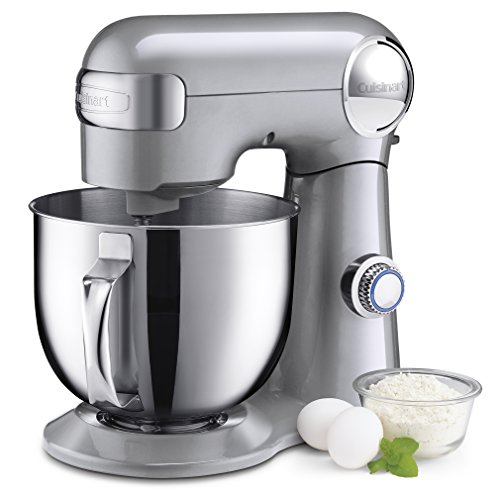
Cuisinart Precision Master 5.5 Quart Stand Mixer (SM-50)
Cuisinart gives beginners a roomy 5.5 quart stainless steel bowl and a genuinely strong motor, which is a lot of mixer for the outlay. The 12 speeds sound intimidating but step up smoothly, so you can find the right setting without guesswork. I like that the splash guard with a pour spout is included, since that is one of the first things a new baker reaches for when batter starts flying.
Strengths
- Generous 5.5 quart bowl
- Strong motor for the price tier
- Splash guard included in the box
Drawbacks
- Smaller attachment ecosystem than KitchenAid
- Head locks can feel stiff at first

Hamilton Beach Die-Cast Metal Classic Electric Stand Mixer (12 Speeds)
This Hamilton Beach delivers a die-cast metal body and a stainless steel bowl at a friendlier entry point, which makes it an easy recommendation for someone testing whether baking will stick. It is heavier and more stable than its price suggests, and the 12 speeds plus a planetary mixing action cover the basics well. It will not match a KitchenAid for the long haul, but as a confident first machine it punches above its weight.
Strengths
- Solid die-cast metal build
- Stable, low-walk operation
- Approachable for true beginners
Drawbacks
- Fewer optional attachments
- Motor can strain on very stiff dough

Aucma 6.5 Quart 660W Tilt-Head Stand Mixer
When someone wants the largest stainless steel bowl for the least money, the Aucma is the one I point to. The 6.5 quart bowl is bigger than several pricier machines, and the 660W motor is surprisingly willing for the cost. It is not as refined as the name brands and the finish feels lighter, but for a beginner who is not sure how often they will bake, it is a low-risk way to find out.
Strengths
- Large 6.5 quart bowl
- Strong motor for a budget machine
- Comes with all three core tools
Drawbacks
- Less polished finish and feel
- Louder under heavy load
Buying considerations
Bowl size for your household
A 4.5 to 5 quart stainless steel bowl suits most beginners cooking for two to four people, while a 6 quart or larger bowl makes sense if you bake in big batches or for a crowd.
How approachable the controls are
As a beginner you want a speed dial that steps up smoothly and a manual that explains what each setting is for. More speeds are only useful if the transitions feel predictable.
Tilt-head versus bowl-lift
Tilt-head designs are far friendlier for new users because you can swing the head up to add ingredients and clear the beater without wrestling the bowl into place.
Motor strength for dough
Whipping cream barely taxes any mixer, but stiff bread dough separates the good from the underpowered. Look for solid construction and enough torque so the machine does not bog down or wander.
Attachments and long-term value
A wide attachment ecosystem lets a beginner mixer grow into a pasta roller, grinder, or spiralizer later, which stretches your money much further over the years.
Final word
For a stainless steel stand mixer for beginners, the best first machine is the one with forgiving tilt-head access, a right-sized stainless bowl, and enough motor to grow with you, which is why the KitchenAid Artisan earns our top spot while the Aucma covers budget-minded newcomers.
Questions answered
For a stainless steel stand mixer for beginners, prioritize a tilt-head design, a stainless steel bowl in the 4.5 to 6 quart range, a clearly labeled speed dial, and enough motor strength to handle bread dough. Those four things matter far more than a long spec list, and they are what keep a new baker confident rather than frustrated.
A tilt-head model is usually the better beginner choice. You simply lift the head to add ingredients, scrape the bowl, or swap attachments, with no lever to fumble. Bowl-lift mixers are great for heavy, frequent baking, but for learning the ropes a tilt-head feels more forgiving.
Most beginners are well served by anywhere from 6 to 12 speeds, as long as the transitions between them are smooth. What matters is having a slow start to avoid flour clouds and a high speed for whipping. More speeds only help if the dial is easy to read and control.
Yes, a budget stainless steel stand mixer can be a smart first machine if you are unsure how often you will bake. Models like the Aucma offer a large bowl and a capable motor at a low entry point. The tradeoff is a lighter finish and a smaller attachment range, but the core mixing performance is genuinely usable.
Update log
- Jun 12, 2026, Refreshed picks and rankings.
- Apr 30, 2026, Initial guide published.
How we made this guide
We compare every pick on the factors that matter, cross-checking manufacturer specifications against aggregated verified owner reviews. We rank independently and never take payment for placement. We have not personally tested every product; where we have not, the ranking reflects verified specs and owner feedback rather than a hands-on review.
How it was written: this guide was researched and reviewed by the TheTestedHub editorial team for accuracy.
Affiliate disclosure: TheTestedHub is reader-supported. When you buy through links on our site, we may earn a commission at no extra cost to you.
Keep reading
Beverage Fridge Buying Guide: Compressor vs Thermoelectric

6 Drink Dispensers That Actually Seal Right (2026)

Skip Cheap Whiskers: Get a Real Chasen

Wondering Which Tea Infuser Is Best? Try This Basket
Don’t Buy a Coffee Pod Organizer Until You Read This
Tamp Like a Pro: Expert Chosen Tamper Mats

Coffee Scales for Every Brew, Tested for Daily Use