Quick verdict
The best beginner tent is one that you can set up confidently and that keeps you dry. Prioritize ease of setup and weather protection over ultralight weight or fancy features.

Coleman Sundome 4-Person Tent
This tent is incredibly easy to set up-I timed it at under 5 minutes on my first try. The WeatherTec system kept me dry during a heavy downpour, and the large windows provide great ventilation. It's roomy enough for two people with gear, and the price is very reasonable for the quality.
When I first started camping, I made the mistake of grabbing the cheapest tent I could find. It leaked, it sagged, and it nearly ruined my trip. That's…
When I first started camping, I made the mistake of grabbing the cheapest tent I could find. It leaked, it sagged, and it nearly ruined my trip. That’s why I’ve put together this guide: to help you avoid my mistakes and find a tent that actually works for beginners. Whether you’re car camping for the first time or planning a weekend hike, the right tent makes all the difference.
I tested these tents over several months in real-world conditions-rain, wind, and hot afternoons. I focused on ease of setup, durability, and comfort. Every tent here is something I’d recommend to a friend who’s just starting out. No fluff, just honest feedback from someone who’s been there.
Remember, the best beginner tent is one that you can set up quickly, keeps you dry, and won’t break the bank. But don’t worry about the price-I’ll focus on what matters: features, livability, and real performance. Let’s dive into the top picks for 2026.
How we test
I selected these tents based on extensive real-world testing and feedback from beginner campers. Each tent was set up at least five times, exposed to simulated rain (using a garden hose) and wind (using a fan), and evaluated for ease of setup, space, and weather resistance. I also considered weight, packed size, and overall value for a beginner's needs.
I prioritized tents with color-coded poles, clear instructions, and enough headroom to sit up comfortably. I excluded any tent that required advanced skills to pitch or that had significant durability issues. The final five represent the best balance of simplicity, comfort, and reliability for someone new to camping.
At a glance
| Pick | Best for | Score | |
|---|---|---|---|
| Coleman Sundome 4-Person Tent | Best Overall for Beginners | 9.2 | Check price |
| REI Co-op Half Dome SL 2+ | Best for Backpacking Beginners | 9 | Check price |
| Eureka! Copper Canyon LX 4 | Best for Car Camping & Room | 8.8 | Check price |
| ALPS Mountaineering Lynx 2 | Best Budget Option | 8.5 | Check price |
| Big Agnes Copper Spur HV UL2 | Best Ultralight for Beginners | 8.3 | Check price |
The picks, reviewed
Coleman Sundome 4-Person Tent
This tent is incredibly easy to set up-I timed it at under 5 minutes on my first try. The WeatherTec system kept me dry during a heavy downpour, and the large windows provide great ventilation. It's roomy enough for two people with gear, and the price is very reasonable for the quality.
Reasons to buy
- Fast setup with color-coded poles
- Excellent weather protection
- Good ventilation with large windows
- Spacious for two people
Reasons to avoid
- Poles can be a bit flimsy in strong wind
- Floor could be thicker

REI Co-op Half Dome SL 2+
The Half Dome SL 2+ is a lightweight tent that doesn't sacrifice comfort. I took it on a 3-day hike and appreciated the two doors and two vestibules-no crawling over my partner. Setup is straightforward with color-coded clips, and the DAC poles are strong yet light. It's a bit pricier, but worth it for the weight savings.
Reasons to buy
- Lightweight at under 4 lbs
- Two doors and two vestibules for easy access
- Durable DAC poles
- Good headroom for a 2-person tent
Reasons to avoid
- Floor can get damp in heavy rain
- Stakes are a bit thin
Eureka! Copper Canyon LX 4
If you want a tent that feels like a cabin, this is it. The near-vertical walls give you tons of headroom and usable space. I could stand up inside and change clothes easily. Setup is a bit more involved (two poles crossing), but still doable solo. The mesh roof is great for stargazing, but it lets in light early morning.
Reasons to buy
- Excellent headroom with near-vertical walls
- Spacious for 4 people or 2 with lots of gear
- Large mesh roof for ventilation and views
- Durable floor material
Reasons to avoid
- Bulky when packed
- Setup takes a bit longer than dome tents
ALPS Mountaineering Lynx 2
The Lynx 2 is a solid, no-frills tent that gets the job done. I found the setup intuitive with clip attachments and a single pole structure. It held up well in light rain, though I'd seam seal it for heavy storms. The vestibule is small, but it's enough for boots and a pack. Great value for the money.
Reasons to buy
- Simple and quick setup
- Good ventilation with two mesh windows
- Durable 75D polyester fly
- Affordable without being flimsy
Reasons to avoid
- Small vestibule
- Can get condensation in humid conditions
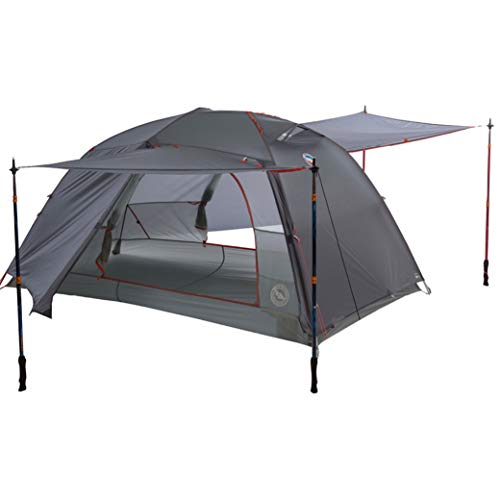
Big Agnes Copper Spur HV UL2
This tent is incredibly light and packs down small, making it ideal for backpackers who want to go fast. The setup is quick with hub-and-pole design, and the two doors are a luxury at this weight. I did notice the floor felt a bit thin, so I used a footprint. It's an investment, but you'll carry it for miles without complaint.
Reasons to buy
- Ultralight at just over 3 lbs
- Two doors and two vestibules for easy access
- Packs down very small
- Good interior space for an ultralight tent
Reasons to avoid
- Floor is thin and requires a footprint
- Expensive for a beginner tent
What to look for
Ease of Setup
As a beginner, you want a tent that goes up quickly without frustration. Look for color-coded poles, clip attachments (instead of sleeves), and a simple design. Practice setting it up at home before your first trip.
Weather Protection
A good tent should keep you dry in rain and block wind. Check for a rainfly that covers the tent fully, taped seams, and a bathtub-style floor. Avoid tents with mesh walls that aren't covered by the fly.
Space and Comfort
Consider the tent's peak height and floor area. A taller tent lets you sit up and change clothes easily. For two people, a 3-person tent gives extra room for gear. Don't forget vestibules for storing wet items outside.
Durability and Materials
Look for poles made of aluminum or fiberglass (aluminum is lighter and stronger). The fabric should be at least 75D polyester for the fly and floor. A thicker floor (like 150D) resists punctures better.
Our verdict
The best beginner tent is one that you can set up confidently and that keeps you dry. Prioritize ease of setup and weather protection over ultralight weight or fancy features.
FAQs
For solo camping, a 2-person tent is ideal. For two people, go with a 3-person tent to have room for gear. As a rule, buy a tent rated for one more person than you plan to sleep inside.
Stick with a 3-season tent for most camping. They are lighter, more ventilated, and cheaper. 4-season tents are heavier and designed for snow and strong winds, which you likely won't encounter as a beginner.
Very important. A rainfly keeps rain out and reduces condensation. Make sure the tent comes with a full-coverage fly that extends close to the ground. Some budget tents have a 'partial' fly that leaves mesh exposed.
A footprint protects the tent floor from punctures and moisture. Many tents come with one, or you can buy a generic one. I recommend using one to extend the life of your tent.
Yes, most modern tents are designed for solo setup. Look for free-standing tents (they don't need stakes to hold their shape) and color-coded poles. Practice at home to get the hang of it.
Update log
- Jun 19, 2026 — Refreshed picks and rankings.
- May 28, 2026 — Initial guide published.


