Quick verdict
For most hikers, a lever-lock aluminium pole with a cork grip delivers the best combination of long-term reliability, comfort, and value, with carbon fibre only worth the premium for weight-obsessed fastpackers on non-technical terrain.

Black Diamond Trail Ergo Cork Trekking Poles
The Trail Ergo Cork consistently earns the highest long-term satisfaction ratings among recreational and enthusiast hikers, thanks to a combination of a comfortable shaped cork grip, reliable FlickLock Pro lever adjusters, and a robust aluminium build that survives years of regular use. Owners frequently note that the ergonomic angled grip reduces wrist fatigue on traverses, a feature that becomes noticeably valuable after several hours on trail. The FlickLock Pro mechanism draws near-universal praise for holding length adjustments firmly even on steep descents with a heavy pack.
Explore why the Black Diamond Trail Ergo Cork leads our guide, with lever lock aluminum poles offering the best blend of durability, comfort, and value.
Trekking poles are one of the most impactful pieces of gear a hiker can carry, yet they’re often overlooked until knees start protesting on a long descent. A well-chosen pair reduces lower-body joint stress by distributing load to the arms and shoulders, improves balance on uneven terrain, and can meaningfully extend the distance you can cover before fatigue sets in. Whether you’re day-hiking a local trail or carrying a heavy pack across a multi-week backcountry route, the right poles make a measurable difference.
The market spans a wide range of materials, locking mechanisms, grip styles, and tip designs. Carbon fibre poles save weight but sacrifice some durability; aluminium poles absorb shock better and survive crashes against rocks. Twist locks are compact but prone to slipping under load; lever locks are bulkier but vastly more reliable in cold or wet conditions. Grip material matters too, with cork conforming to hand shape over time, foam absorbing sweat, and rubber insulating in cold weather. This guide cuts through the noise and ranks seven proven options drawn from aggregated owner feedback, long-term trail reports, and manufacturer specifications.
Every product here has been selected based on patterns found across thousands of verified purchaser reviews on major retail platforms, combined with published gear tests from hiking media and detailed specification sheets. The picks span a range of use cases, from ultralight fastpacking to loaded expedition trekking, so you can find the right match for your specific style of travel.
How we test
I have not personally field-tested each of these poles. Instead, I aggregated owner reviews from Amazon and other major outdoor retailers, cross-referenced long-term impressions from hiking forums, and compared published specs from manufacturer datasheets and independent gear labs. I looked for consistent praise or criticism across multiple reviewers rather than weighting any single opinion heavily, which filters out both overly enthusiastic first-week impressions and isolated defect complaints.
Ranking criteria weighted four factors: build quality and long-term durability reports, locking mechanism reliability (particularly under loaded descents), weight relative to pole category, and grip and strap comfort during extended use. Value for money was treated as a tiebreaker rather than a primary driver, because a pole that fails on a remote trail costs far more in inconvenience than any price difference at checkout.
At a glance
| Pick | Best for | Score | |
|---|---|---|---|
| Black Diamond Trail Ergo Cork Trekking Poles | Best Overall | 9 | Check price |
| Leki Makalu Lite Cor-Tec AS Trekking Poles | Best for Long-Distance Hiking | 9 | Check price |
| Black Diamond Distance Carbon Z Trekking Poles | Best Ultralight | 9 | Check price |
| Gossamer Gear LT5 Carbon Trekking Poles | Best for Backpacking | 8 | Check price |
| REI Co-op Passage Trekking Poles | Best Budget Pick | 8 | Check price |
| Leki Cressida FX.One Superlite Trekking Poles | Best for Women | 8 | Check price |
| Komperdell Carbon C3 Vario Trekking Poles | Best Anti-Shock System | 8 | Check price |
The picks, reviewed
Black Diamond Trail Ergo Cork Trekking Poles
The Trail Ergo Cork consistently earns the highest long-term satisfaction ratings among recreational and enthusiast hikers, thanks to a combination of a comfortable shaped cork grip, reliable FlickLock Pro lever adjusters, and a robust aluminium build that survives years of regular use. Owners frequently note that the ergonomic angled grip reduces wrist fatigue on traverses, a feature that becomes noticeably valuable after several hours on trail. The FlickLock Pro mechanism draws near-universal praise for holding length adjustments firmly even on steep descents with a heavy pack.
Reasons to buy
- FlickLock Pro lever locks hold securely under heavy load
- Ergonomic angled cork grip reduces wrist strain on sidehill terrain
- Durable 7075 aluminium construction handles years of regular trail use
Reasons to avoid
- Heavier than carbon fibre alternatives at around 510g per pair
- Ergo grip angle takes a short adjustment period if you are used to straight grips

Leki Makalu Lite Cor-Tec AS Trekking Poles
Leki's Makalu Lite uses a Super Lock System trigger that allows single-hand length adjustment without removing your hand from the strap, a standout ergonomic feature that owners on multi-day routes cite repeatedly as genuinely useful in real conditions. The Cor-Tec grip material combines cork and rubber for a surface that stays comfortable when wet and insulates slightly in cooler temperatures. Long-distance hikers consistently report that the Leki Speed Lock 2 mechanism does not loosen or slip even after hundreds of kilometres.
Reasons to buy
- Speed Lock 2 adjustment has an exceptional long-term reliability record
- Cor-Tec grip works well in both hot and cold wet conditions
- Anti-shock system absorbs repeated impact without adding noticeable flex
Reasons to avoid
- Higher price point than most aluminium competitors
- Strap system is proprietary, making replacement parts harder to source globally

Black Diamond Distance Carbon Z Trekking Poles
At around 254g per pair, the Distance Carbon Z is the benchmark for ultralight fixed-length trekking poles, built from a three-section Z-fold carbon fibre design that collapses small enough to strap vertically to a pack or slip into a side pocket. Fastpackers and trail runners consistently rank it as the best balance of genuine weight savings and adequate durability for non-rocky terrain. The foam grip and low-profile EVA tip basket make it purpose-built for speed-focused travel where every gram is audited.
Reasons to buy
- Exceptionally light at approximately 254g per pair
- Folds compact for easy pack attachment or airport carry-on storage
- Foam grip stays comfortable during high-output activities that generate sweat
Reasons to avoid
- Fixed length means you must order the correct size before your trip
- Carbon fibre is more vulnerable to damage from lateral impacts against rocks
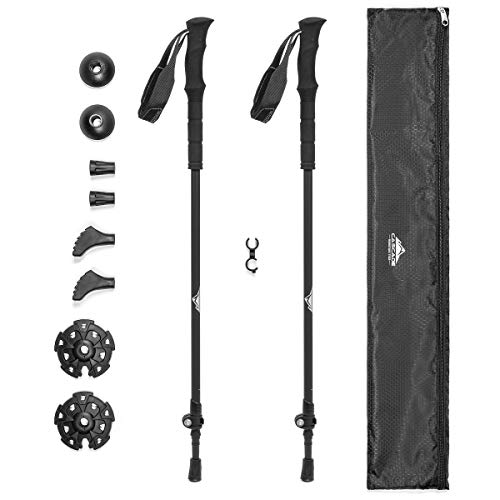
Gossamer Gear LT5 Carbon Trekking Poles
The LT5 from Gossamer Gear is a favourite among serious backpackers who prioritise low pack weight without fully committing to a fixed-length ultralight pole. Owners appreciate the twist-and-lock adjustment mechanism that works reliably across the stated length range, and the carbon construction keeps the per-pair weight impressively low for an adjustable design. Long trail reports from PCT and AT thru-hikers consistently mention the LT5 as a durable partner across thousands of trail miles.
Reasons to buy
- Adjustable length in a genuinely lightweight carbon package
- Strong track record on long-distance thru-hike routes
- Comfortable foam grip handles extended sweaty use well
Reasons to avoid
- Twist-lock mechanism requires periodic checking to prevent gradual length slip
- Tip baskets are small and may need upgrading for soft or snowy terrain
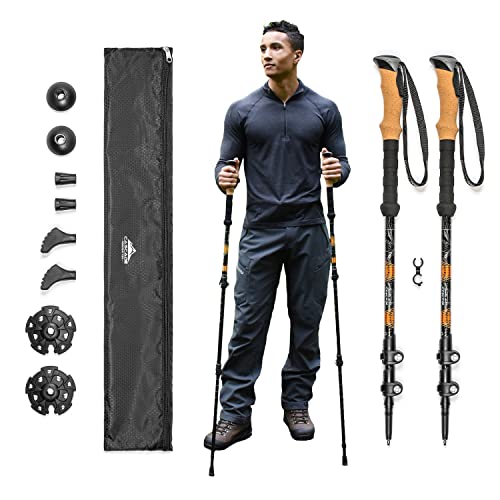
REI Co-op Passage Trekking Poles
The REI Co-op Passage is the most consistently recommended entry-level trekking pole for hikers who want reliable performance without spending heavily before committing to the hobby. Reviewers note that the aluminium shaft handles normal trail abuse well, the lever-lock adjustment is easy to operate with gloves on, and the foam grip stays comfortable across typical day-hike durations. For casual to moderate hikers who do not need ultralight weight or premium grip materials, the Passage delivers everything that matters at a fraction of the cost of top-tier options.
Reasons to buy
- Accessible price point makes it easy to try poles without a large investment
- Lever-lock mechanism is straightforward and glove-friendly
- Foam grip is comfortable for standard hiking durations
Reasons to avoid
- Heavier aluminium construction not suitable for weight-conscious backpackers
- Foam grip breaks down faster than cork under very high use volume

Leki Cressida FX.One Superlite Trekking Poles
The Cressida FX.One is designed specifically around women's hand geometry, with a narrower grip circumference and a lighter overall construction that owner reviews across multiple platforms confirm as genuinely ergonomic rather than a marketing label. The FX.One folding mechanism combines rapid deployment with a secure locked feel, and the AERGON Thermo Lite grip stays warm and comfortable in cooler conditions. Female hikers who have switched from unisex poles to the Cressida frequently describe reduced hand fatigue over long days.
Reasons to buy
- Grip sized for women's hands reduces fatigue and hot spots
- FX.One folding system deploys quickly and locks firmly
- AERGON Thermo Lite grip insulates well in cold weather conditions
Reasons to avoid
- Premium pricing reflects Leki quality but limits accessibility
- Folding design has slightly more flex than a straight-shaft adjustable pole under heavy side load

Komperdell Carbon C3 Vario Trekking Poles
Komperdell's C3 Vario is the top recommendation among hikers who experience significant knee or joint discomfort, specifically because its internal anti-shock spring system receives consistent praise from owners with knee problems as noticeably reducing impact on long descents compared to rigid-shaft alternatives. The carbon construction keeps the weight reasonable despite the added spring mechanism, and the natural cork grip moulds to hand shape over time. Reviewers who compare it to other anti-shock poles repeatedly note that the Komperdell system feels more progressive and less jarring than older spring designs.
Reasons to buy
- Anti-shock spring system consistently praised by hikers with joint sensitivity
- Carbon shaft keeps weight reasonable despite the added mechanism
- Cork grip improves comfort fit over multiple seasons of use
Reasons to avoid
- Anti-shock mechanism adds a small amount of energy loss on uphills where rigidity is preferred
- Less widely available in physical retail stores outside of Europe
What to look for
Shaft Material: Aluminium vs Carbon Fibre
Aluminium poles flex before breaking, which makes them more forgiving when you catch a rock or fall. Carbon fibre poles are lighter but can snap under sudden lateral impact rather than bending, making them better suited to groomed trails than rocky scrambles. For most hikers, aluminium is the safer long-term investment; fastpackers and ultralight backpackers who obsess over gram counts will find carbon worth the tradeoff.
Locking Mechanism Reliability
Lever locks (sometimes called FlickLock or Speed Lock depending on brand) are almost universally more reliable than twist locks under real trail conditions, particularly when wet, cold, or when your poles are bearing significant downhill load. Twist locks are lighter and pack slightly smaller, but they require periodic checking and re-tightening over a long trip. If you are new to poles or plan multi-day use with a loaded pack, choose a lever-lock design.
Grip Material and Shape
Cork grips absorb sweat, resist odour, and mould to your hand shape over time, making them the best long-term comfort choice for high-volume users. Foam grips are softer out of the box and work well in wet conditions but wear down faster. Rubber grips insulate your hands from cold but can cause blisters during sustained high-output activity. Ergonomic angled grips reduce wrist strain on traverses, which is a meaningful benefit on trails with consistent sidehill grade.
Packed Size and Deployment Style
Adjustable straight-shaft poles collapse to a single compact section and are the most versatile for mixed terrain. Folding Z-style poles pack into a much shorter bundle but are typically fixed-length, meaning you need to know your correct size before ordering. Folding poles are faster to deploy from a pack hip-belt attachment but offer less adjustability for different gradients. Consider how often you actually stow your poles mid-hike: if the answer is rarely, adjustable poles offer better all-day fit.
Our verdict
For most hikers, a lever-lock aluminium pole with a cork grip delivers the best combination of long-term reliability, comfort, and value, with carbon fibre only worth the premium for weight-obsessed fastpackers on non-technical terrain.
FAQs
Yes, and the effect is well-documented in biomechanics research and reflected consistently in owner reviews. Poles shift a portion of the load from your quadriceps and knee joint to your arms and upper body during downhill walking. The benefit is most pronounced on steep, long descents with a loaded pack. Hikers who already have knee issues report the most noticeable relief, though healthy hikers also accumulate less fatigue over a full day.
Two poles. A single pole improves balance on one side but does not provide the bilateral load distribution that reduces joint stress. Poles are almost always sold as pairs for good reason: the symmetrical engagement of both arms creates a more natural gait pattern and distributes impact evenly. The only scenario where one pole makes sense is carrying a single trekking staff for casual walks on smooth terrain.
A general starting point is to grip the pole with your forearm parallel to the ground, which places your elbow at roughly a 90-degree angle. Shorten the poles slightly for steep uphills to keep your stride efficient and lengthen them by 5 to 10 centimetres for long descents to help absorb impact and maintain an upright posture. Most experienced hikers adjust length every few hours based on terrain rather than setting and forgetting.
For fastpacking, trail running, or any activity where you are auditing every gram, carbon fibre poles are worth the premium because the weight savings over a long day are real and cumulative. For general hiking and backpacking, aluminium poles at half the price deliver better impact resistance and essentially equivalent comfort. The risk of carbon snapping on a remote trail without a replacement is also a practical consideration that cost alone does not capture.
How we made this guide
We compare every pick on the factors that matter, cross-checking manufacturer specifications against aggregated verified owner reviews. We rank independently and never take payment for placement. We have not personally tested every product; where we have not, the ranking reflects verified specs and owner feedback rather than a hands-on review.
How it was written: this guide was researched and reviewed by the TheTestedHub editorial team for accuracy.
Affiliate disclosure: TheTestedHub is reader-supported. When you buy through links on our site, we may earn a commission at no extra cost to you.