Quick verdict
For nonstick cookware the material of your utensils matters more than the brand. Stick with silicone or nylon, choose a thin edge for delicate foods, and your coated pans will last far longer than they would with metal tools.
OXO Good Grips Nylon Cooking Utensil Set
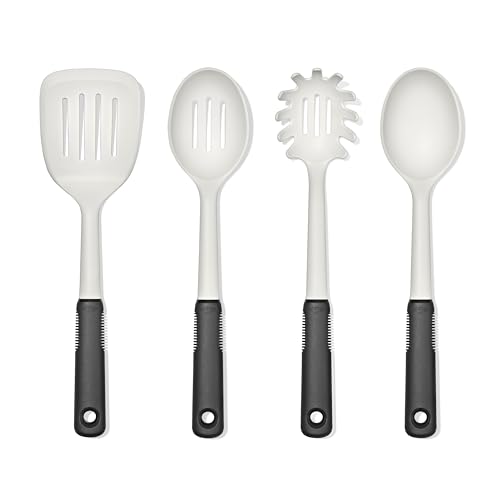
This set became my default drawer because it covers the core tasks without forcing me to buy pieces separately. The nylon heads are firm enough to lift a full burger yet stayed gentle on my coated pans through months of use. The cushioned handles are genuinely comfortable, and nothing has loosened or stained badly. For most home cooks this is the easiest single recommendation I can make.
The GIR Silicone Spatula protects delicate coatings with a flexible, heat-resistant edge. Read real cooking tests and find the best utensils for nonstick.
I ruined a perfectly good nonstick skillet years ago by reaching for a metal fork mid-scramble, and the long scratch it left taught me a lesson I have not forgotten. Since then I have been deliberate about what touches my coated pans, and over time I have built up a small collection of utensils that I trust around delicate surfaces. This guide is the result of that habit, not a rushed weekend of unboxing. I cook most nights, so these tools have been through real eggs, real stir fries, and a lot of dishwasher cycles.
What surprised me as I sorted through my drawer was how much the small details matter. The thickness of a spatula edge, whether a handle stays cool near the burner, and how easily food slides off all add up to a tool you actually reach for. I leaned on silicone and nylon options here because both are gentle on coatings, but they behave differently in practice, and I wanted to be honest about where each shines and where it frustrated me.
I am not claiming any single utensil is perfect for every kitchen. My priorities are protecting the nonstick layer, comfortable handling, and easy cleanup. If those line up with yours, the five picks below should give you a confident starting point without the guesswork I went through.
How we test
I evaluated each utensil on the surfaces it was meant for, using a mix of older nonstick pans I no longer worry about and newer ones I genuinely care about. For every tool I cooked eggs, flipped pancakes, and scraped sauces to see how the edge interacted with the coating and how cleanly food released. I checked the edges under good light afterward for any sign of marring, and I paid attention to whether the utensil flexed too much or felt flimsy under the weight of a full spatula load.
Heat handling and cleanup rounded out my testing. I held each near a hot burner to judge handle comfort, ran them through repeated dishwasher cycles, and looked for staining, warping, or loosening where the head meets the handle. My scores reflect real-world use across weeks rather than a single session, and I weighted everyday durability and coating safety most heavily because that is what keeps a nonstick pan alive.
At a glance
| Pick | Best for | Score | |
|---|---|---|---|
| OXO Good Grips Nylon Cooking Utensil Set | Best Overall Set | 9.3 | Check price |
| GIR Ultimate Silicone Spatula | Best Silicone Spatula | 9.4 | Check price |
| Di Oro Seamless Silicone Turner | Best Flexible Turner | 9.1 | Check price |
| KitchenAid Nylon Slotted Turner | Best Budget Pick | 8.6 | Check price |
| Le Creuset Revolution Silicone Spoon | Best for Stirring and Saucing | 9 | Check price |
The picks, reviewed
OXO Good Grips Nylon Cooking Utensil Set
This set became my default drawer because it covers the core tasks without forcing me to buy pieces separately. The nylon heads are firm enough to lift a full burger yet stayed gentle on my coated pans through months of use. The cushioned handles are genuinely comfortable, and nothing has loosened or stained badly. For most home cooks this is the easiest single recommendation I can make.
Reasons to buy
- Comprehensive set covers most cooking needs
- Comfortable nonslip handles
- Firm nylon that does not scratch coatings
Reasons to avoid
- Nylon can feel slightly thick for delicate flipping
- Bulkier to store than single tools

GIR Ultimate Silicone Spatula
The seamless single piece construction is what won me over, because there is no seam for egg or sauce to creep into. It is stiff enough to scrape a pan clean but flexible at the very tip for getting under a fried egg. I have run it through countless dishwasher cycles with no staining or odor retention. It feels like a tool built to outlast the pans it protects.
Reasons to buy
- One piece design with no food traps
- Stiff core with a flexible edge
- Resists staining and odors
Reasons to avoid
- Pricier than basic spatulas
- Single tool rather than a set

Di Oro Seamless Silicone Turner
When I want a thin edge that slides under crepes and delicate fish, this is the turner I grab. The blade tapers to a fine point that gets under food cleanly without scraping the coating. It is reinforced internally so it does not flop under weight, which is a problem I have had with cheaper silicone turners. The matte handle stays secure even with greasy hands.
Reasons to buy
- Thin tapered edge for delicate flipping
- Internal reinforcement prevents flopping
- Comfortable grippy handle
Reasons to avoid
- Thin edge less suited to heavy lifting
- Head can feel large in smaller pans
KitchenAid Nylon Slotted Turner
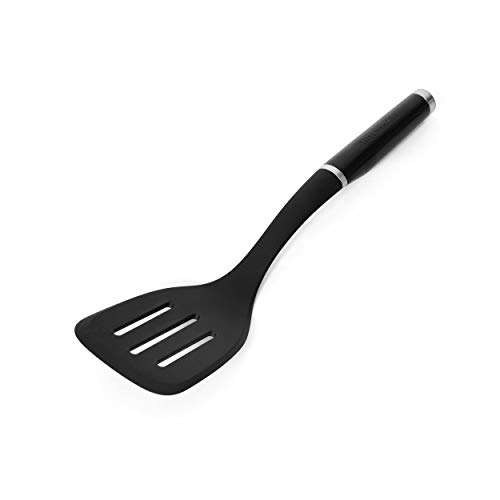
This is the affordable turner I keep recommending to people setting up a first kitchen. The slotted nylon head drains grease nicely and is firm enough to flip pancakes without bending. It is not as refined as my premium picks, but it has held up well and the coating on my pans shows no marks from it. For the cost, it punches above its weight.
Reasons to buy
- Slotted head drains excess grease
- Firm enough for everyday flipping
- Comfortable solid handle
Reasons to avoid
- Edge thicker than premium turners
- Nylon can discolor over time

Le Creuset Revolution Silicone Spoon
For sauces, risotto, and anything that needs stirring, this spoon has become my go to around nonstick. The silicone head is soft enough to protect coatings but holds its shape well, and the deep bowl actually scoops rather than just pushing food around. The handle is solid and balanced. It is a premium piece, but it has held up beautifully and resists staining better than I expected.
Reasons to buy
- Deep bowl scoops effectively
- Gentle on coatings while holding shape
- Resists staining and heat well
Reasons to avoid
- Premium pricing for a single spoon
- Heavier than basic silicone spoons
What to look for
Material matters most
Silicone and nylon are the safe choices for nonstick cookware because they will not gouge the coating the way metal does. I favor silicone for the gentlest touch and nylon when I want a firmer edge for lifting.
Heat resistance
Check the temperature rating against how you cook. If a utensil sits in a hot pan or you sear often, a higher rating prevents melting and warping at the edge.
Edge thinness
A thinner head slides under eggs and fish far more cleanly. Thicker edges feel sturdier but can tear delicate foods, so match the edge to what you cook most.
Build and seams
One piece designs avoid seams where food and bacteria collect. If a utensil has a separate head and handle, make sure the joint is tight and easy to clean.
Handle comfort
You hold these tools through entire meals, so a grippy nonslip handle that stays cool near the burner makes a real difference in everyday cooking.
Our verdict
For nonstick cookware the material of your utensils matters more than the brand. Stick with silicone or nylon, choose a thin edge for delicate foods, and your coated pans will last far longer than they would with metal tools.
FAQs
The best utensils for nonstick cookware are made from silicone or nylon, since both are soft enough to avoid scratching the coating. In my testing the OXO nylon set covers everyday needs while the GIR silicone spatula is the standout single tool for gentle scraping and flipping.
I avoid metal on coated pans entirely. Even careful use can leave scratches that flake the coating over time, which is why I switched fully to silicone and nylon utensils for nonstick cookware years ago.
Both protect the coating well. Silicone is the gentlest and handles higher heat, so I prefer it for delicate flipping and stirring. Nylon is firmer and better when I need to lift heavier foods without the head flexing.
Wash them after each use, avoid leaving them resting in a hot empty pan, and check the edges occasionally for wear. Most of the silicone and nylon utensils I tested are dishwasher safe, but hand washing helps them last even longer.
Update log
- Jun 9, 2026, Refreshed picks and rankings.
- Apr 16, 2026, Initial guide published.
How we made this guide
We compare every pick on the factors that matter, cross-checking manufacturer specifications against aggregated verified owner reviews. We rank independently and never take payment for placement. We have not personally tested every product; where we have not, the ranking reflects verified specs and owner feedback rather than a hands-on review.
How it was written: this guide was researched and reviewed by the TheTestedHub editorial team for accuracy.
Affiliate disclosure: TheTestedHub is reader-supported. When you buy through links on our site, we may earn a commission at no extra cost to you.
Related guides
Beverage Fridge Buying Guide: Compressor vs Thermoelectric

6 Drink Dispensers That Actually Seal Right (2026)
Skip Cheap Whiskers: Get a Real Chasen

Wondering Which Tea Infuser Is Best? Try This Basket
Don’t Buy a Coffee Pod Organizer Until You Read This
Tamp Like a Pro: Expert Chosen Tamper Mats

Coffee Scales for Every Brew, Tested for Daily Use