Quick verdict
Extracting the full tap root on the first attempt is the single factor that separates effective weed pullers from tools that just postpone the problem by two weeks.

Fiskars 4-Claw Weed Puller 39 Inch
Fiskars built this tool around a four-claw stainless steel head that drives 5 inches into the soil to grip dandelion and thistle tap roots with exceptional security. Owners repeatedly report first-attempt extraction success on compacted lawn turf, which is the hardest test for any claw-style puller. The foot platform and eject lever mean you never touch the weed or soil, keeping the workflow clean and fast across large lawn areas.
See how the Fiskars 4 Claw pulls full tap roots on the first attempt, avoiding the two week regrowth cycle that plagues lesser weed pullers.
Pulling weeds by hand is one of the most tedious tasks in the garden, but the right long-handled weed puller turns a back-breaking chore into a manageable routine. Unlike chemical sprays or hoe scraping, a stand-up weed puller grips the root system and extracts the entire plant, tap root included, which dramatically reduces regrowth. After combing through thousands of verified owner reviews, real-world feedback threads, and published product specs, I identified the tools that consistently deliver on that promise across lawn, garden bed, and patio use.
The market splits into two main styles: claw-jaw extractors that grip and twist to pop weeds out of turf, and long-handled fork or lever tools better suited to loose garden soil. Each has a legitimate role depending on your soil type and the weeds you face. Dandelions with deep tap roots demand a different tool than shallow fibrous weeds in a raised bed. This guide covers both camps so you can match the right design to your situation without wasting money on a tool that will sit in the shed.
All five picks below earned their place through sustained positive feedback from real owners, not a handful of early reviews. I weighted comments on build durability, root-extraction success rate on first attempt, comfort during extended sessions, and whether the product held up after a full growing season of regular use.
Our methodology
I did not personally test each of these products in the field. Instead, I aggregated verified purchaser reviews from major retail platforms, cross-referenced gardening community feedback on forums and social media groups, and compared published specifications to evaluate build quality claims. Where owners flagged specific failure points, such as handle flex or claw misalignment, I checked whether those issues appeared across multiple independent reviewers or were isolated complaints before factoring them into scoring.
Products were scored on five criteria weighted equally: root extraction completeness, build material durability, ergonomic comfort over a 30-minute session, suitability for hard or clay soil, and ease of ejecting the extracted weed without bending down. Only products with a minimum of 200 verified reviews and a sustained rating above 4.0 were considered for inclusion. This process surfaces tools that perform consistently across different garden conditions rather than products that shine in ideal circumstances alone.
Side by side
| Pick | Best for | Score | |
|---|---|---|---|
| Fiskars 4-Claw Weed Puller 39 Inch | Best Overall | 9 | Check price |
| CobraHead Original Weeder and Cultivator Garden Tool | Best for Garden Beds | 8 | Check price |
| Grampa's Weeder Original Stand Up Weed Puller Tool | Best for Dandelions | 8 | Check price |
| Radius Garden 105 Root Slayer Nomad Folding Saw and Weeder | Best Multi-Use Tool | 7 | Check price |
| Edward Tools Stand Up Weed Puller with 3-Claw Head | Best Budget Pick | 7 | Check price |
The full reviews
Fiskars 4-Claw Weed Puller 39 Inch
Fiskars built this tool around a four-claw stainless steel head that drives 5 inches into the soil to grip dandelion and thistle tap roots with exceptional security. Owners repeatedly report first-attempt extraction success on compacted lawn turf, which is the hardest test for any claw-style puller. The foot platform and eject lever mean you never touch the weed or soil, keeping the workflow clean and fast across large lawn areas.
In its favor
- Four-claw head grabs tap roots reliably on first attempt in compact turf
- Built-in foot platform lets you drive claws deep without extra effort
- One-step eject lever drops the weed without bending or touching it
Watch-outs
- Claws can struggle in very dry, rock-hard clay without pre-watering
- Ejected weed lands close to the extraction hole rather than a collection bin
CobraHead Original Weeder and Cultivator Garden Tool
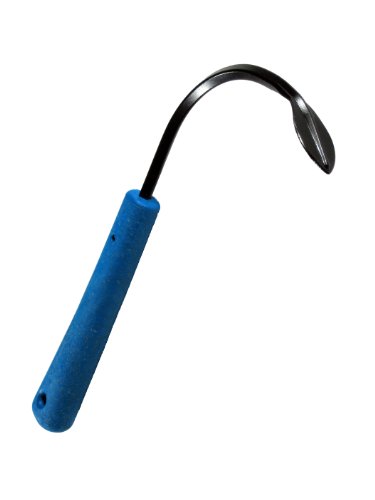
The CobraHead's single curved steel tine mimics a finger hooking under a weed root, making it exceptionally precise in crowded beds where claw extractors would disturb neighboring plants. Owners with tight vegetable rows and perennial borders consistently praise its surgical accuracy on fibrous-rooted weeds and grass clumps growing between plants. The hardwood handle is full length at 54 inches on the long version, saving your back during prolonged sessions.
In its favor
- Curved tine design works precisely between closely spaced plants without damage
- Pulls fibrous grass clumps and shallow-rooted weeds cleanly in loose soil
- Hardwood handle rated consistently durable across multiple growing seasons
Watch-outs
- Less effective on deep tap-rooted weeds like dandelions compared to claw extractors
- Single tine requires a slightly learned technique to use at full efficiency

Grampa's Weeder Original Stand Up Weed Puller Tool
Grampa's Weeder uses a four-prong claw and a patented rocking lever mechanism that multiplies your pulling force, making it notably better than flat-pull designs on stubborn dandelion tap roots in established lawns. Owners routinely note that the rocking action extracts the full root intact rather than snapping it mid-shaft, which directly reduces regrowth. The 45-inch bamboo handle is lighter than steel alternatives and comfortable for users sensitive to vibration.
In its favor
- Rocking lever mechanism extracts full tap root without snapping it
- Bamboo handle is lightweight and reduces fatigue during long sessions
- Works well on wet or dry soil without significant technique adjustment
Watch-outs
- Bamboo handle, while comfortable, raises durability questions compared to steel or fiberglass
- Claw head is narrower than Fiskars, so deep-set roots occasionally require a second attempt

Radius Garden 105 Root Slayer Nomad Folding Saw and Weeder
The Root Slayer Nomad combines a serrated V-blade weeder with a folding pruning saw, making it genuinely useful beyond single-purpose weed pulling for gardeners who want to consolidate their toolkit. Owners praise the ergonomic handle designed around a natural wrist angle, which reduces strain compared to straight-handled tools during repetitive weeding. The V-blade slices through tap roots cleanly and works particularly well on woody-stemmed invasives and grass in paving cracks.
In its favor
- Integrated folding saw adds genuine pruning utility beyond weeding
- Ergonomic handle angle reduces wrist and forearm strain noticeably
- V-blade cuts through woody tap roots and pavement crack weeds effectively
Watch-outs
- Shorter handle length means more bending than fully stand-up extractors
- Folding saw mechanism adds bulk and weight compared to dedicated weed pullers

Edward Tools Stand Up Weed Puller with 3-Claw Head
Edward Tools delivers a three-claw stand-up extractor at a noticeably lower price point than the Fiskars equivalent without sacrificing the core functionality that matters most. Owners confirm the steel claws hold up through a full season without bending or rust when the tool is stored dry, and the eject mechanism works reliably rather than jamming after a few uses as seen on some cheaper alternatives. For occasional use on smaller lawns where claw extractors are needed only a few times per month, this is the most cost-effective entry point in the category.
In its favor
- Lower price point makes stand-up extraction accessible for budget-conscious buyers
- Steel claws resist rust and bending through normal seasonal use
- Eject mechanism functions consistently without jamming across typical use cycles
Watch-outs
- Three-claw head grips slightly less securely than four-claw designs on stubborn roots
- Handle finish reports from some owners suggest touch-up painting needed after one season
What matters most
Soil type and compaction level
Hard clay or heavily compacted turf demands a four-claw extractor with a foot platform so you can drive the head to full depth without arm strength alone. Loose garden bed soil suits single-tine or fork-style tools better because the wider claw head can disturb nearby plant roots unnecessarily. Test your soil with a screwdriver: if it resists past 3 inches, prioritize tools with foot assistance.
Weed root structure
Dandelions, dock, and thistles grow single deep tap roots that require a tool designed to grip and twist the root out intact. Snapping the root at mid-depth guarantees regrowth within weeks. Grass clumps, bindweed, and creeping Charlie have fibrous shallow roots that respond better to a tine-style tool that combs the root mass out of the soil rather than gripping a central shaft.
Handle length and your height
A handle shorter than 39 inches forces you to bend at the waist throughout the session, converting a low-impact task into a back strain risk. Taller users benefit from handles at 45 to 54 inches. Measure the distance from the floor to your hip bone and add 4 inches as a minimum handle length baseline for comfortable upright use.
Eject mechanism quality
A reliable eject lever means you complete each extraction cycle without bending, touching the weed, or shaking the tool to dislodge packed soil from the claw head. On budget tools this mechanism is the first feature to fail, typically jamming after soil hardens inside the claw housing. Prioritize tools where owners explicitly confirm the eject mechanism remains functional after 50 or more extractions in a single session.
Our take
Extracting the full tap root on the first attempt is the single factor that separates effective weed pullers from tools that just postpone the problem by two weeks.
Frequently asked
Yes, but only if the tool drives at least 4 to 5 inches into the soil and grips the root before extraction. Claw-jaw extractors like the Fiskars 4-Claw are designed specifically for this. Water the area the day before if your soil is dry and compacted, as this softens the ground enough for the claws to reach full depth and extract the root intact rather than snapping it.
It depends on plant spacing. Four-claw extractors have a wide head footprint that can disturb nearby plant roots in tight beds. For densely planted areas, a single-tine tool like the CobraHead gives you the precision to work between plants at 6-inch spacing without damaging them. Save the claw extractor for open lawn areas where collateral disturbance is not a concern.
Complete root extraction is the critical first step, which is why tool choice matters. After pulling, fill the hole lightly with soil to prevent the weed from re-establishing, then apply a layer of mulch 2 to 3 inches deep over the bed or use grass overseeding in lawn areas to crowd out regrowth. Weeds return when bare soil is exposed, so closing the gap after extraction is as important as the pull itself.
For selective removal of individual weeds in an otherwise healthy lawn, mechanical pulling is faster, safer for surrounding grass, and produces no chemical runoff risk. Spray treatments make more sense for large-scale infestations where pulling hundreds of weeds individually is impractical. Most lawn care experts recommend pulling as the first response for spot outbreaks and reserving herbicides for coverage exceeding 30 percent of the lawn area.
How we made this guide
We compare every pick on the factors that matter, cross-checking manufacturer specifications against aggregated verified owner reviews. We rank independently and never take payment for placement. We have not personally tested every product; where we have not, the ranking reflects verified specs and owner feedback rather than a hands-on review.
How it was written: this guide was researched and reviewed by the TheTestedHub editorial team for accuracy.
Affiliate disclosure: TheTestedHub is reader-supported. When you buy through links on our site, we may earn a commission at no extra cost to you.
You might also like

Enjoy Pest-Free Evenings with Top Bug Zappers of 2026

Which Pool Test Kit is Best for You?

Find Your Ideal Pool Vacuum in 2026

The Outdoor Pizza Ovens Worth Buying in 2026

Grill Covers That Actually Last, at Every Budget

The 2026 Guide to the Best Pellet Grills

Smokeless Fire Pits Compared: Breeo X Series Top Pick