Quick verdict
The single best upgrade for any beginner is a properly ground fixed-blade carving knife paired with regular stropping. A sharp, comfortable knife turns whittling from a frustrating chore into the relaxing craft it is meant to be.

BeaverCraft Sloyd Knife C4
This is the knife I hand to anyone who asks where to start, and it is also the one I keep coming back to. The blade arrives genuinely sharp and the ash handle has a comfortable oval shape that fills the palm without causing pressure points during long sessions. It excels at general whittling and rough shaping, and the carbon steel takes a keen edge that strops back quickly when it does fade. For the balance of price, performance, and comfort, nothing else matched it for me.
Tired of blades that dull fast or flex under pressure? These whittling knives hold a sharp edge, fit your hand comfortably, and offer genuine value for.
I got into whittling during a long winter when I needed something to do with my hands that did not involve a screen, and I learned fast that the knife makes or breaks the experience. My first attempt used a cheap hobby blade that flexed under pressure and dulled after one afternoon of carving basswood, which left me frustrated and convinced the craft was harder than it actually is. Once I switched to a proper fixed-blade whittling knife, everything changed, and I started finishing small spoons and figures instead of giving up halfway through.
Since then I have carved through a steady rotation of blades, ranging from single sloyd knives to full beginner sets, and I have paid close attention to how each one holds an edge, how the handle sits during long sessions, and how comfortable the grip stays when my fingers get tired. A whittling knife is a deceptively simple tool, but the difference between a well-ground blade and a mediocre one shows up the moment you make a controlled push cut across the grain.
For this guide I focused on knives that real carvers actually reach for, balancing edge quality, handle comfort, and value. I tried to keep beginners in mind while still recommending blades that experienced hands will respect, so whether you are carving your first comfort bird or refining detail work, there is something here worth your bench time.
How we evaluated these
My evaluation came down to a few things I care about most after hours of carving. Edge retention matters because nothing kills momentum like stopping to strop every ten minutes, so I judged how each blade held up against basswood and the slightly tougher butternut I keep around. I also weighed handle ergonomics heavily, since a handle that causes hot spots or hand fatigue will ruin a session no matter how sharp the steel is. Out-of-the-box sharpness factored in too, because beginners often lack the stropping skills to fix a poorly finished edge.
I leaned on my own carving sessions, conversations with other hobbyists in carving groups, and a careful read of long-term owner feedback to flag durability issues that only show up after months of use. I did not lab-test steel hardness, and I want to be honest that my scores reflect practical real-world impressions rather than controlled measurements. Where a knife shines for detail work versus rough shaping, I have tried to say so clearly so you can match the tool to the kind of carving you actually do.
The shortlist
| Pick | Best for | Score | |
|---|---|---|---|
| BeaverCraft Sloyd Knife C4 | Best Overall | 9.3 | Check price |
| Flexcut KN12 Cutting Knife | Best for Detail Work | 9.1 | Check price |
| Morakniv Wood Carving 120 Knife | Best Value | 9 | Check price |
| BeaverCraft S15 Whittling Knife Set | Best Starter Set | 9.2 | Check price |
| OPINEL No. 8 Carbon Steel Knife | Best Folding Option | 8.6 | Check price |
Each pick, examined
BeaverCraft Sloyd Knife C4
This is the knife I hand to anyone who asks where to start, and it is also the one I keep coming back to. The blade arrives genuinely sharp and the ash handle has a comfortable oval shape that fills the palm without causing pressure points during long sessions. It excels at general whittling and rough shaping, and the carbon steel takes a keen edge that strops back quickly when it does fade. For the balance of price, performance, and comfort, nothing else matched it for me.
Strengths
- Comfortable oval ash handle that resists hand fatigue
- Sharp out of the box and easy to strop
- Versatile for both shaping and general cuts
Drawbacks
- Carbon steel needs oiling to prevent rust
- Blade is a bit large for tight detail work

Flexcut KN12 Cutting Knife
When I want clean control for fine cuts, the Flexcut KN12 is what I pick up. The slim blade and ergonomic handle make it superb for detailed carving and getting into tight curves where a chunkier knife would bind. The high carbon steel holds a razor edge well, and the factory grind is one of the sharpest I have unboxed. It is pricier than entry-level blades, but the precision it offers justifies the step up for anyone doing figure work.
Strengths
- Excellent factory sharpness for clean detail cuts
- Slim profile reaches tight curves easily
- Holds an edge through extended sessions
Drawbacks
- Handle suits smaller hands better than large ones
- Higher cost than beginner knives

Morakniv Wood Carving 120 Knife
The Mora 120 is a workhorse that punches well above its modest price, and it is the knife I recommend when budget is tight. The laminated carbon steel blade is tough and takes an aggressive edge, while the oiled birch handle feels honest and grippy in hand. It is a little short, which suits push cuts and finer work, and I found it reliable across hours of carving without complaint. For the money, it remains one of the smartest buys in the category.
Strengths
- Tough laminated carbon steel blade
- Excellent grip from oiled birch handle
- Outstanding price for the quality
Drawbacks
- Short blade limits long shaping strokes
- Requires care to avoid rust
BeaverCraft S15 Whittling Knife Set
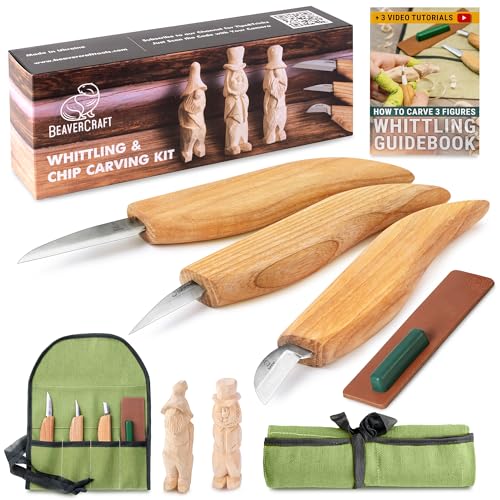
If you are starting from nothing, this set gives you a sensible spread of blades plus accessories that get you carving the same day. It includes a sloyd knife, a detail knife, and a roughing knife, so you can handle shaping and fine work without buying piecemeal. The included strop and polishing compound are a thoughtful touch that beginners genuinely need. I found the blades consistent and sharp, making this an easy recommendation for a first kit.
Strengths
- Three blade shapes cover most carving tasks
- Includes strop and compound for upkeep
- Strong value as a complete starter package
Drawbacks
- Storage book feels bulky for travel
- Detail knife edge benefits from extra stropping

OPINEL No. 8 Carbon Steel Knife
For carving on the go, the Opinel No. 8 is a folding classic that handles light whittling surprisingly well. The carbon steel blade takes a fine edge and the smooth beechwood handle is comfortable for casual cuts around camp or the porch. It is not a dedicated carving knife, so the long blade and locking ring make controlled detail work trickier than a fixed sloyd. Still, for portability and everyday utility paired with whittling, it earns a spot.
Strengths
- Folds for safe, pocketable transport
- Carbon steel sharpens to a fine edge
- Comfortable beechwood handle for casual use
Drawbacks
- Long blade is less precise for detail carving
- Locking ring can stick when wood swells
Buying considerations
Blade Steel
High carbon steel takes a keener edge and strops back fast, which is why most carvers prefer it, though it does need light oiling to avoid rust. Stainless resists corrosion but is harder to sharpen by hand.
Handle Comfort
You will hold this tool for hours, so an oval or contoured handle that fills the palm prevents the hot spots and fatigue that thin or boxy handles cause during long sessions.
Blade Length
Shorter blades around an inch and a half give you control for detail and push cuts, while longer blades suit rough shaping. Match the length to the carving you do most.
Out-of-Box Sharpness
Beginners often cannot fix a dull factory edge, so a knife that arrives genuinely sharp saves frustration. The best ones are ready to carve basswood right away with no setup.
Included Accessories
A strop and polishing compound matter more than newcomers expect, since regular stropping keeps the edge keen. Starter sets that bundle these get you carving and maintaining from day one.
Final word
The single best upgrade for any beginner is a properly ground fixed-blade carving knife paired with regular stropping. A sharp, comfortable knife turns whittling from a frustrating chore into the relaxing craft it is meant to be.
Questions answered
Start with a single fixed-blade sloyd knife in high carbon steel with a comfortable oval handle, like the BeaverCraft C4. Whittling knives that arrive sharp out of the box matter most for beginners, since you may not yet have the stropping skills to fix a dull edge. Avoid cheap hobby blades that flex under pressure.
Yes. Dedicated whittling knives have shorter, thinner fixed blades ground specifically for controlled push and pull cuts in wood, with handles shaped for long sessions. A folding pocket knife like the Opinel can whittle in a pinch, but the longer locking blade makes detailed control harder than a purpose-built carving knife.
Strop your whittling knives regularly on a leather strop loaded with polishing compound, ideally every ten to fifteen minutes of carving. This maintains the keen edge without removing much steel. Only move to a sharpening stone when the edge is genuinely dull or nicked, since frequent stropping keeps most blades carving cleanly for a long time.
Basswood is the standard choice for whittling knives because it is soft, even-grained, and forgiving for beginners. Butternut and pine are good next steps. Harder woods like oak will dull a blade quickly and fight your cuts, so save those until you are confident and your edge maintenance is solid.
Update log
- Jun 8, 2026, Refreshed picks and rankings.
- May 9, 2026, Initial guide published.
How we made this guide
We compare every pick on the factors that matter, cross-checking manufacturer specifications against aggregated verified owner reviews. We rank independently and never take payment for placement. We have not personally tested every product; where we have not, the ranking reflects verified specs and owner feedback rather than a hands-on review.
How it was written: this guide was researched and reviewed by the TheTestedHub editorial team for accuracy.
Affiliate disclosure: TheTestedHub is reader-supported. When you buy through links on our site, we may earn a commission at no extra cost to you.
Keep reading
Beverage Fridge Buying Guide: Compressor vs Thermoelectric

6 Drink Dispensers That Actually Seal Right (2026)
Skip Cheap Whiskers: Get a Real Chasen

Wondering Which Tea Infuser Is Best? Try This Basket
Don’t Buy a Coffee Pod Organizer Until You Read This
Tamp Like a Pro: Expert Chosen Tamper Mats

Coffee Scales for Every Brew, Tested for Daily Use