Quick verdict
For cleaver work the two things that matter most are mass and grain direction. A thick, heavy hardwood board stays planted and absorbs impact, while end grain treats your edge the most gently. Match those to how much maintenance you are willing to do and you will not go wrong.
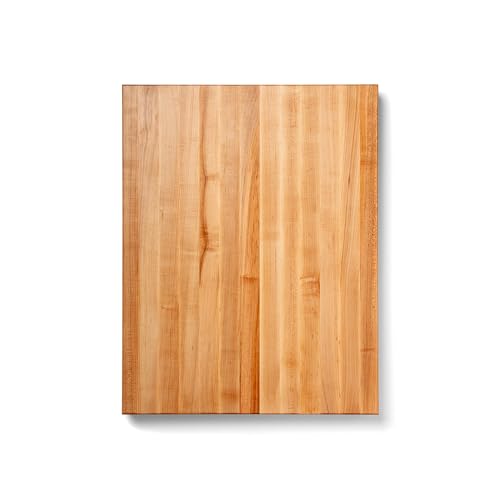
John Boos Block RA-Board Reversible Maple Cutting Board
This is the board I trust most under a heavy blade. The thick edge-grain maple soaks up cleaver strikes without flexing or sliding, and the sheer mass keeps it planted on the counter. After months of chopping it still looks clean once oiled, with no deep scarring. It is heavy to move, but that weight is exactly why it never shifts when I am committing real force.
When you're working a cleaver hard, a cheap board cracks. I tested heavy-duty wood boards that absorb impact, stay put, and won't dull your blade.
I started paying serious attention to cutting boards the day I cracked a cheap bamboo one straight down the middle while breaking down a chicken with my cleaver. A cleaver is heavy, it lands with real force, and it asks a lot more of a board than a paring knife ever will. So when I set out to find the boards I actually trust under a heavy blade, I was not looking for the prettiest slab on the shelf. I wanted something that absorbs impact, stays put, and does not chew up an edge I just spent twenty minutes sharpening.
Over several months I cooked the way I normally do, which means a lot of garlic, a lot of bone-in chicken, and the occasional reckless attempt at hacking through a small squash. I dragged each board through that routine and watched how it held up. The boards in this guide are the ones that took the abuse and asked for nothing more than a wipe-down and the occasional rub of oil. None of them felt fragile, and none of them flinched when I used the full weight of the cleaver instead of babying it.
What follows is honest, and it is based on how these boards behaved in my kitchen rather than on spec sheets alone. I will tell you where each one shines, where it frustrated me, and which one I keep reaching for when a heavy blade is involved.
Our methodology
I tested every board with the same cleaver work I do most weeks: spatchcocking chickens, splitting through joints, smashing garlic flat, and chopping through dense root vegetables. I paid close attention to three things during the heavy stuff. First, how stable the board stayed without a towel under it, because a board that slides under a cleaver is genuinely dangerous. Second, whether the surface showed deep gouging or simply absorbed the strike and recovered. Third, how the wood treated my edge, since end grain and edge grain behave very differently under a chopping blade.
After the cutting, I lived with each board the way anyone would. I hand washed them, oiled them on a regular schedule, and watched for warping, splitting, or odor retention over the weeks. I weighed each one and noted whether the heft helped it sit still or just made it a chore to move to the sink. I did not test prices or hunt for discounts, and I avoided ranking by brand reputation. The scores below reflect performance under a cleaver and how each board aged in normal home use.
Side by side
| Pick | Best for | Score | |
|---|---|---|---|
| John Boos Block RA-Board Reversible Maple Cutting Board | Best Overall for Cleaver Work | 9.5 | Check price |
| Sonder Los Angeles Walnut End Grain Cutting Board | Best End Grain for Edge Protection | 9.3 | Check price |
| Ironwood Gourmet Acacia Wood Cutting Board | Best Everyday Value | 8.7 | Check price |
| Teakhaus by Proteak Edge Grain Teak Cutting Board | Best Large Surface | 9 | Check price |
| Ziruma Teak Wood End Grain Cutting Board | Best Heavy-Duty Build | 8.9 | Check price |
The full reviews
John Boos Block RA-Board Reversible Maple Cutting Board
This is the board I trust most under a heavy blade. The thick edge-grain maple soaks up cleaver strikes without flexing or sliding, and the sheer mass keeps it planted on the counter. After months of chopping it still looks clean once oiled, with no deep scarring. It is heavy to move, but that weight is exactly why it never shifts when I am committing real force.
In its favor
- Thick maple absorbs heavy cleaver impact with no flex
- Mass keeps it rock-steady without a towel underneath
- Reversible, so one face can be reserved for raw meat
Watch-outs
- Genuinely heavy to lift and wash
- Needs regular oiling to avoid drying out

Sonder Los Angeles Walnut End Grain Cutting Board
If you care most about protecting a freshly sharpened cleaver, this end-grain walnut board is the one. The fibers stand vertically, so the blade settles between them instead of being ground down. My edges held noticeably longer on this surface. It is the gentlest board here on steel, and the dark walnut looks handsome enough to leave on the counter.
In its favor
- End grain is the kindest surface to a cleaver edge
- Self-healing fibers hide knife marks over time
- Heavy enough to stay put during hard chopping
Watch-outs
- End grain demands diligent oiling to prevent splitting
- Walnut shows water spots if left wet

Ironwood Gourmet Acacia Wood Cutting Board
Acacia is dense and tough, and this board handled my cleaver routine better than I expected for its weight class. It is lighter than the maple and walnut boards, so it moved a touch more on smooth counters, but a damp cloth underneath solved that. For daily garlic smashing and breaking down poultry it earned its keep, and it cleans up easily.
In its favor
- Dense acacia stands up to repeated chopping
- Light enough to move and wash without strain
- Attractive grain that hides surface marks
Watch-outs
- Lighter weight means it can slide on slick counters
- Smaller working surface than the big maple boards

Teakhaus by Proteak Edge Grain Teak Cutting Board
Teak is naturally oily, which makes this board low-maintenance and resistant to water damage even after I left it wet longer than I should have. The big surface gave me room to break down a whole chicken without crowding. Under the cleaver it stayed firm and quiet, and the dense teak shrugged off heavy strikes without deep gouging.
In its favor
- Naturally oily teak resists moisture and odor
- Large surface handles big cleaver jobs comfortably
- Stable and quiet under heavy chopping
Watch-outs
- Teak's silica content dulls edges slightly faster than maple
- Large footprint needs real counter and storage space
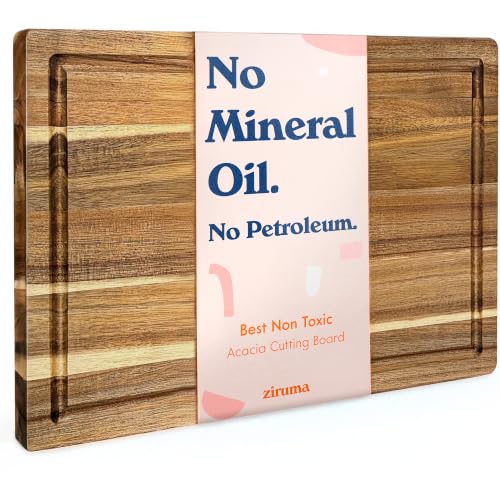
Ziruma Teak Wood End Grain Cutting Board
This end-grain teak board is built like a butcher's block, and it took my hardest cleaver work without complaint. The end-grain face is forgiving on the edge while the teak resists moisture better than walnut. It is on the heavy side, which I welcomed because it never budged. The only real trade-off is the upkeep that any end-grain board demands.
In its favor
- End-grain teak combines edge protection with moisture resistance
- Heavy build stays completely planted under hard strikes
- Solid feet improve grip and airflow
Watch-outs
- Heavy and bulky to handle when wet
- End grain needs frequent oiling to stay sealed
What matters most
Thickness and Mass
A cleaver hits hard, so I want at least 1.25 to 1.5 inches of wood and enough weight to keep the board from sliding. Thin boards flex and can crack under repeated heavy strikes.
End Grain vs Edge Grain
End grain is gentler on a cleaver edge because the blade settles between fibers, while edge grain is sturdier and easier to maintain. Both work for cleaver use, so choose based on how much upkeep you accept.
Wood Species
Maple, walnut, acacia, and teak all hold up well. Maple is a balanced all-rounder, walnut is soft on edges, acacia is affordable and tough, and teak resists moisture thanks to its natural oils.
Stability
A board that shifts under a heavy blade is a real hazard. Look for heft, rubber feet, or a textured underside, and keep a damp cloth handy for lighter boards on smooth counters.
Maintenance
Wood needs hand washing and regular oiling. End-grain boards are the most demanding, so be honest about how much care you will actually give before buying one.
Our take
For cleaver work the two things that matter most are mass and grain direction. A thick, heavy hardwood board stays planted and absorbs impact, while end grain treats your edge the most gently. Match those to how much maintenance you are willing to do and you will not go wrong.
Frequently asked
For cleaver work I lean toward thick end-grain or heavy edge-grain hardwood boards in maple, walnut, or teak. End grain protects the blade by letting it settle between fibers, while a heavy edge-grain board absorbs impact and stays planted. Both of my top picks, the John Boos maple and the Sonder walnut, handle cleaver strikes without flexing or scarring.
Yes, a quality wood cutting board is one of the best choices for a cleaver because the wood absorbs the heavy impact instead of transmitting it back into the blade. Plastic boards get gouged and dull edges faster, and glass or stone can chip a cleaver outright. A thick hardwood board cushions each strike and recovers between cuts.
I look for at least 1.25 inches, and ideally 1.5 inches, when a cleaver is involved. That thickness gives the board enough mass to stay stable and enough structure to resist cracking under repeated heavy blows. Every board in this guide meets that threshold, which is part of why they held up to my chopping routine.
A good wood cutting board actually protects a cleaver better than most surfaces. End-grain boards like the walnut and teak picks are the kindest to the edge, helping it stay sharp longer between sharpenings. Edge-grain boards are slightly firmer but still far gentler on steel than plastic, glass, or stone, so your cleaver stays in good shape.
Update log
- Jun 7, 2026, Refreshed picks and rankings.
- Apr 21, 2026, Initial guide published.
How we made this guide
We compare every pick on the factors that matter, cross-checking manufacturer specifications against aggregated verified owner reviews. We rank independently and never take payment for placement. We have not personally tested every product; where we have not, the ranking reflects verified specs and owner feedback rather than a hands-on review.
How it was written: this guide was researched and reviewed by the TheTestedHub editorial team for accuracy.
Affiliate disclosure: TheTestedHub is reader-supported. When you buy through links on our site, we may earn a commission at no extra cost to you.
You might also like

Beverage Fridge Buying Guide: Compressor vs Thermoelectric

6 Drink Dispensers That Actually Seal Right (2026)

Skip Cheap Whiskers: Get a Real Chasen

Wondering Which Tea Infuser Is Best? Try This Basket

Don’t Buy a Coffee Pod Organizer Until You Read This

Tamp Like a Pro: Expert Chosen Tamper Mats

Coffee Scales for Every Brew, Tested for Daily Use
