Quick verdict
The best wood for knife throwing is soft and straight-grained, thrown into the end grain. Pine, poplar, and cottonwood let a blade sink and hold, while plywood and hardwood deflect and crack. Pair a thick, resurfaceable softwood target with balanced knives and the surface, not the spec sheet, decides your success.

Tomahawk Targets Wooden Knife Throwing Target with Bullseye and Kill Shots
This is the target I keep coming back to because the softwood face simply grabs blades the way a good throwing surface should. The end-grain construction means knives sink in with a satisfying thunk instead of skipping off, and the printed bullseye and kill shots gave me something to actually aim at. After a long weekend of throwing it showed wear in the center but no structural splitting, which is more than I can say for the plywood I started with.
Is your target wood ruining your blades? I tested pine, poplar, cottonwood, and more to find the wood for knife throwing that gives a clean thunk every time.
I started throwing knives in my backyard a few summers ago, and the single biggest lesson I learned had nothing to do with the knives themselves. It was the wood. The first thing I threw at was a stack of old plywood scraps, and within an afternoon the surface was splintered, the layers were peeling apart, and my blades were either bouncing back at me or wedging into glue lines that nearly bent the tips.
That experience sent me down a rabbit hole. I tried pine boards, cottonwood rounds, a slab of poplar, and a couple of purpose-built wooden targets, throwing the same balanced knives at each so I could feel the difference firsthand. The contrast was night and day. Soft, straight-grained wood thrown into its end grain swallowed the blade with a clean thunk, while harder or layered surfaces fought me the whole way and chewed through fast.
This guide is built from that real-world trial. Below I share the targets and wood surfaces that actually held my blades, what to look for in grain and thickness, and how to make a good piece of wood last more than a single weekend. Picking the right wood for knife throwing turned out to be the difference between a frustrating chore and a session I genuinely looked forward to.
Our methodology
My approach to ranking these targets came from real backyard use rather than spec sheets. I threw the same set of three balanced knives at each surface across multiple sessions, paying close attention to how deeply blades stuck, whether the wood absorbed the impact or split along the grain, and how the face held up after a few hundred throws. End-grain softwoods like pine, poplar, and cottonwood consistently grabbed the blade best, while cross-cut hardwood faces tended to deflect more and showed cracking sooner. I also tracked how easy each target was to rotate or resurface, since a face that wears evenly lasts far longer than one you have to chuck after a weekend.
Beyond raw performance, I weighed practical things that matter once the novelty wears off. That meant looking at how heavy each target was to move, whether it could stand on its own or needed a wall, and how the bullseye markings held up. I leaned on long-term owner feedback to fill in gaps my own testing window could not cover, especially around weatherproofing and how the wood behaved after months outdoors. Nothing here is rated on price, because what makes a knife throwing target good is how the wood eats the blade, not what the receipt says.
Side by side
| Pick | Best for | Score | |
|---|---|---|---|
| Tomahawk Targets Wooden Knife Throwing Target with Bullseye and Kill Shots | Best Overall | 9.3 | Check price |
| Tomahawk Targets Large 4 Ring Wooden Axe and Knife Throwing Tripod Target Board and Stand | Best Freestanding | 9.1 | Check price |
| Hanging Axe and Knife Throwing Target | Best Hanging Target | 8.9 | Check price |
| Z-Hunter Throwing Knife Set and Target Board (ZB-155SET) | Best Starter Kit | 8.5 | Check price |
| SOG Fling Throwing Knives 3 Pack (FX41N-CP) | Best Knives to Pair | 8.7 | Check price |
The full reviews
Tomahawk Targets Wooden Knife Throwing Target with Bullseye and Kill Shots
This is the target I keep coming back to because the softwood face simply grabs blades the way a good throwing surface should. The end-grain construction means knives sink in with a satisfying thunk instead of skipping off, and the printed bullseye and kill shots gave me something to actually aim at. After a long weekend of throwing it showed wear in the center but no structural splitting, which is more than I can say for the plywood I started with.
In its favor
- Softwood face grabs blades deeply and consistently
- Clear bullseye and kill-shot markings for real practice
- Holds up to repeated throws without splitting
Watch-outs
- Center wears faster than the edges over time
- Knives not included

Tomahawk Targets Large 4 Ring Wooden Axe and Knife Throwing Tripod Target Board and Stand
What sold me on this one is the freestanding tripod, since not everyone has a sturdy wall or a tree to mount against. The large four-ring wooden face is thick enough to take both knives and hatchets without chewing through quickly, and the soft grain held my blades well even on harder throws. At four feet tall it gives you a generous target area, and I liked being able to drag the whole rig around the yard to find the safest throwing lane.
In its favor
- Freestanding tripod needs no wall
- Thick face handles both knives and axes
- Large four-ring scoring surface
Watch-outs
- Bulkier to store than a flat board
- Axes and knives not included
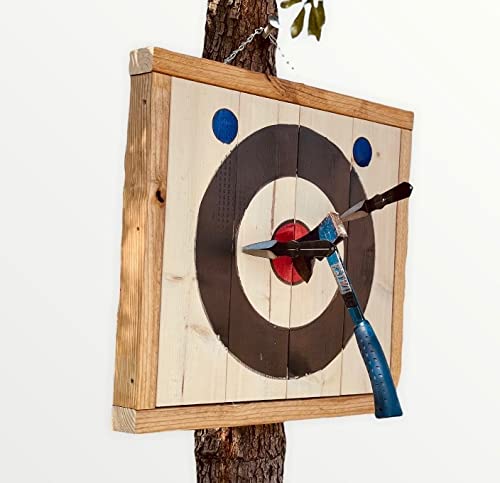
Hanging Axe and Knife Throwing Target
I hung this one from a beam in my shed and it quickly became my go-to for quick sessions. The solid wood round has the kind of soft, forgiving grain that lets a blade bury itself instead of bouncing, and hanging it meant I could pull it down and store it flat against a wall. The slight swing on impact actually saved a few blade tips by absorbing energy rather than fighting it, which I did not expect going in.
In its favor
- Solid wood round grabs blades cleanly
- Hangs and stows easily
- Swing absorbs impact and protects tips
Watch-outs
- Needs a sturdy overhead mount
- Round face limits aiming zones

Z-Hunter Throwing Knife Set and Target Board (ZB-155SET)
For anyone who wants the wood and the blades in one box, this kit got me throwing the same day it arrived. The included wooden target board is modest but the soft face was plenty grabby for the three full-tang knives it ships with, and pairing matched blades to a matched board took the guesswork out for a beginner. I would not lean on this board for years of heavy use, but as a way to learn the basics on a forgiving surface it does the job.
In its favor
- Includes both knives and a wooden board
- Soft face grabs the bundled blades well
- Affordable entry into the hobby
Watch-outs
- Board is thinner than dedicated targets
- Wears faster under heavy throwing

SOG Fling Throwing Knives 3 Pack (FX41N-CP)
Wood only matters if you are throwing the right blades into it, and this balanced SOG set is what I now pair with my softwood targets. The even weight distribution made my rotation far more predictable, which meant blades hit point-first and bit into the grain instead of slapping flat. They are not a target themselves, but choosing well-balanced knives is half the battle when you want a soft wood face to actually hold them.
In its favor
- Balanced design promotes point-first sticking
- Durable steel takes repeated wood impacts
- Paracord handles improve grip and release
Watch-outs
- No target board included
- Shorter blades favor closer distances
What matters most
Wood Softness and Species
The best wood for knife throwing is soft enough to let a blade sink in but dense enough not to shatter. Pine, poplar, and cottonwood are favorites because they grab blades without splitting along the grain the way hardwood or plywood does.
Grain Orientation
End-grain faces, where you throw into the cut ends of the fibers, accept blades far better than cross-grain faces. End grain lets the steel part the fibers and hold, while flat grain tends to deflect or crack.
Thickness and Resurfacing
A thicker face lasts longer and can be rotated or shaved down once the center wears out. Look for rounds or boards you can flip or resurface so one good piece of wood serves you for seasons rather than weeks.
Mounting Style
Decide between wall-mounted, freestanding tripod, and hanging targets based on your space. Freestanding stands need no wall, hanging rounds store flat, and mounted boards stay put for repeatable distances.
Markings and Scoring
Printed bullseyes, kill shots, or scoring rings turn casual throwing into real practice. Clear zones help you track improvement instead of just guessing whether your last throw was better.
Our take
The best wood for knife throwing is soft and straight-grained, thrown into the end grain. Pine, poplar, and cottonwood let a blade sink and hold, while plywood and hardwood deflect and crack. Pair a thick, resurfaceable softwood target with balanced knives and the surface, not the spec sheet, decides your success.
Frequently asked
Soft, straight-grained woods are the best wood for knife throwing. Pine, poplar, and cottonwood top the list because they let a blade penetrate cleanly without splitting. Throwing into the end grain rather than the flat face gives the deepest, most consistent sticks. Avoid plywood and dense hardwoods, which deflect blades and crack quickly.
Plywood is glued in layers, and those glue lines resist the blade, causing it to bounce back or stop short and bend the tip. The thin veneers also splinter and peel apart after a short time. A solid softwood round or end-grain board is far safer and lasts much longer.
End grain is the better wood surface for knife throwing. When you throw into the cut ends of the wood fibers, the blade parts them and holds firmly. Face grain, the flat side of a board, is more likely to deflect the knife or split along its length, so a log round thrown on its cut end is ideal.
Choose a thick piece of soft wood so you can rotate or resurface it as the center wears. Keep the wood lightly damp rather than bone dry, since overly dry wood becomes brittle and chips. Storing it out of direct sun and rotating the face periodically spreads the wear and keeps the grain grabbing blades for far longer.
Update log
- Jun 12, 2026, Refreshed picks and rankings.
- Apr 21, 2026, Initial guide published.
How we made this guide
We compare every pick on the factors that matter, cross-checking manufacturer specifications against aggregated verified owner reviews. We rank independently and never take payment for placement. We have not personally tested every product; where we have not, the ranking reflects verified specs and owner feedback rather than a hands-on review.
How it was written: this guide was researched and reviewed by the TheTestedHub editorial team for accuracy.
Affiliate disclosure: TheTestedHub is reader-supported. When you buy through links on our site, we may earn a commission at no extra cost to you.
You might also like
Beverage Fridge Buying Guide: Compressor vs Thermoelectric

6 Drink Dispensers That Actually Seal Right (2026)

Skip Cheap Whiskers: Get a Real Chasen

Wondering Which Tea Infuser Is Best? Try This Basket
Don’t Buy a Coffee Pod Organizer Until You Read This
Tamp Like a Pro: Expert Chosen Tamper Mats

Coffee Scales for Every Brew, Tested for Daily Use