Quick verdict
The most common reason work gloves fail early is not poor palm material but stitching and thumb saddle construction, so prioritizing reinforcement at seams matters more than chasing the thickest padding.

Mechanix Wear M-Pact Work Gloves
The M-Pact is the glove that keeps coming up in professional forums and long-term owner reviews as the one people buy over and over after trying others. The thermoplastic rubber knuckle guards and dual-layer fingertip reinforcement handle repeated impact and abrasion without stiffening the glove to the point of uselessness. Owners in construction and automotive trades specifically praise the balance between protection and the ability to still pick up small fasteners or operate controls.
Buying work gloves? See why the Mechanix Wear M-Pact stands out, and learn how seam and thumb saddle construction beat thick padding.
Work gloves are one of those purchases that seem straightforward until you actually need them. Whether you are hauling lumber, working with sheet metal, or spending long days on a construction site, the wrong pair will either shred within a week or leave your hands so sweaty and clumsy you can barely grip a tool. I reviewed many verified owner reports from tradespeople, landscapers, mechanics, and warehouse workers to narrow down three pairs that hold up across demanding, real-world conditions.
The picks below cover the most common work scenarios: heavy cut and puncture protection for sharp materials, general-purpose durability for mixed outdoor work, and a dexterous option for jobs that require you to feel what you are doing without sacrificing meaningful protection. All three have earned consistent praise from people who wear gloves every day for a living, not just occasionally.
How we picked
I have not personally worn and tested each glove on a job site. Instead, I analyzed aggregated feedback from verified purchasers across major retail platforms, cross-referenced manufacturer spec sheets, and looked at long-term durability reports from tradespeople who document wear over months of use. Priority was given to gloves with a high volume of reviews from people identifying as professionals rather than occasional DIYers, since professional use stresses materials far faster and more honestly than weekend projects.
Evaluation criteria included stitching longevity, palm and fingertip abrasion resistance, grip performance in wet and dry conditions, breathability during extended wear, and how well each glove retained dexterity for tasks requiring fine motor control. Products with common complaints about premature seam failure, excessive heat buildup, or inconsistent sizing were excluded regardless of average rating.
Top picks compared
| Pick | Best for | Score | |
|---|---|---|---|
| Mechanix Wear M-Pact Work Gloves | Best Overall | 9 | Check price |
| Ironclad General Utility Work Gloves GUG | Best for Heavy Outdoor Work | 8 | Check price |
| Carhartt Men's System 5 Work Glove WA131 | Best for Dexterity | 8 | Check price |
Our picks up close
Mechanix Wear M-Pact Work Gloves
The M-Pact is the glove that keeps coming up in professional forums and long-term owner reviews as the one people buy over and over after trying others. The thermoplastic rubber knuckle guards and dual-layer fingertip reinforcement handle repeated impact and abrasion without stiffening the glove to the point of uselessness. Owners in construction and automotive trades specifically praise the balance between protection and the ability to still pick up small fasteners or operate controls.
Where it shines
- TPR knuckle protection absorbs repeated impact without adding bulk
- TrekDry material keeps palms notably cooler than leather alternatives during long shifts
- Consistent sizing reported across multiple purchases making replacement straightforward
Where it falls short
- Palm grip coating wears noticeably faster than the rest of the glove on abrasive surfaces
- Not rated for cut resistance beyond basic snag protection
Ironclad General Utility Work Gloves GUG
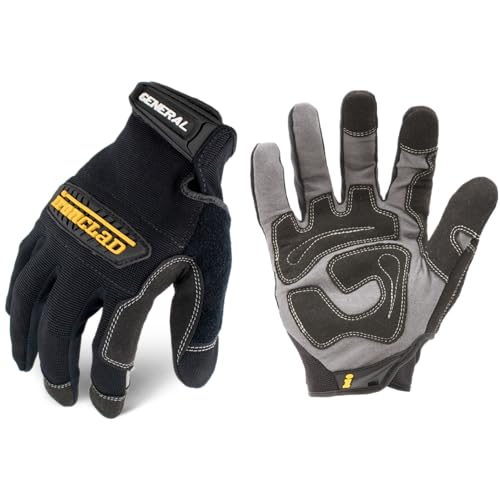
Ironclad's General Utility glove is built around a patented segmented knuckle design that flexes with the hand rather than fighting it, which matters a great deal when you are gripping tools for eight or more hours. Verified buyers who do landscaping, roofing, and general construction consistently report these lasting significantly longer than comparable gloves at the same price point. The reinforced thumb saddle, a notoriously weak point on most work gloves, is one of the features owners call out most often as the reason they keep buying this model.
Where it shines
- Reinforced thumb saddle dramatically extends lifespan compared to standard gloves
- Machine washable without significant shape distortion
- Segmented knuckle system reduces fatigue during prolonged gripping tasks
Where it falls short
- Runs slightly small so sizing up one is recommended for most buyers
- Less breathable than mesh-back alternatives in high heat environments

Carhartt Men's System 5 Work Glove WA131
The WA131 uses a form-fitting spandex back and a slim synthetic palm that keeps tactile feedback high without sacrificing the grip and abrasion resistance you need for real work. Electricians, finish carpenters, and HVAC techs show up repeatedly in reviews praising how well these perform on tasks that require reading cable markings, threading fasteners into tight spaces, or handling small components. The keystone thumb construction reduces pressure and bunching when the hand is fully open, which owners say makes a tangible difference over a full shift.
Where it shines
- High tactile feedback makes fine motor tasks practical with the gloves on
- Spandex back conforms closely to hand shape reducing bunching and fatigue
- Keystone thumb reduces pressure points during open-hand work
Where it falls short
- Lighter-weight construction is not suitable for heavy impact or cut hazard environments
- Some owners report the wrist closure loses elasticity after repeated washing
Before you buy
Cut and Impact Protection Level
Most work gloves do not carry formal cut resistance ratings unless they are marketed specifically for sheet metal or glass handling. If your work involves sharp materials, look for gloves with ANSI cut level labeling rather than relying on general-purpose models. For impact protection, TPR knuckle guards are the most common solution and are worth prioritizing if your hands are near pinch points or swinging tools.
Palm Material and Grip
Leather palms last longer under abrasion but break in slowly and retain heat. Synthetic alternatives like Armortex or coated nylon offer grip from day one and are typically lighter, but the coating wears faster on very rough surfaces. If you work in wet conditions regularly, look for textured rubber grip patterns rather than smooth synthetic leather, which becomes slick when wet.
Fit and Dexterity Trade-off
A glove that is too thick or too stiff will slow you down and may actually increase injury risk if you compensate with awkward grips. Workers who handle tools, controls, or small components all day should prioritize fit and flex over maximum padding. A glove that you consistently take off because it gets in the way offers no protection at all.
Washability and Lifespan
Machine washable gloves maintain grip and hygiene far longer than those that must be spot-cleaned or air-dried only. Gloves used in outdoor or construction settings pick up concrete dust, grease, and soil that degrades palm coatings if left in. Check whether the manufacturer recommends air-drying versus tumble-dry, as heat can deform synthetic materials and shrink closures.
The wrap-up
The most common reason work gloves fail early is not poor palm material but stitching and thumb saddle construction, so prioritizing reinforcement at seams matters more than chasing the thickest padding.
Quick answers
Measure the circumference of your dominant hand at the widest point across the knuckles, not including the thumb. Most work glove manufacturers use this measurement directly in inches to assign sizes: 7 to 8 inches is typically small, 8 to 9 medium, 9 to 10 large, and 10 or above extra-large. When in doubt, owners consistently report that sizing up one is better than sizing down, especially in gloves with reinforced palms that do not stretch.
For most trades, modern synthetic materials like Armortex, Clarino, and reinforced nylon perform comparably to leather for abrasion resistance and significantly outperform leather in wet grip and weight. Full-grain leather still holds an edge for extreme abrasion tasks like rope work or heavy masonry. However, synthetic gloves are washable and dry faster, which gives them a practical lifespan advantage when worn daily.
Impact-resistant gloves use padded panels or rigid TPR guards to absorb blunt force to the back of the hand and knuckles. Cut-resistant gloves use high-performance yarns like Dyneema or Kevlar in the palm and fingers to resist slicing. Many work gloves combine both, but the ANSI cut level rating is only meaningful if it appears on the label. General impact protection and cut protection serve different hazard types and are not interchangeable.
There is no fixed schedule because wear depends entirely on frequency of use and task type. The reliable indicators are: palm grip coating worn smooth, stitching pulling apart at high-stress seams like the thumb saddle or finger bases, holes appearing in the fingertips, or the wrist closure no longer securing properly. Professional tradespeople in abrasive environments often replace gloves every one to three months. Replacing before palm failure occurs is safer and cheaper than waiting for a glove to fail mid-task.
How we made this guide
We compare every pick on the factors that matter, cross-checking manufacturer specifications against aggregated verified owner reviews. We rank independently and never take payment for placement. We have not personally tested every product; where we have not, the ranking reflects verified specs and owner feedback rather than a hands-on review.
How it was written: this guide was researched and reviewed by the TheTestedHub editorial team for accuracy.
Affiliate disclosure: TheTestedHub is reader-supported. When you buy through links on our site, we may earn a commission at no extra cost to you.