Quick verdict
the fluke 1507 is the standout for most users because it offers a perfect balance of essential insulation testing features, rugged durability, and a lower price point than the 1587 fc, making it the best value for field electricians.

Fluke 1507
For most field electricians, the Fluke 1507 offers the ideal balance of essential insulation testing features, rugged durability, and lower cost than the 1587 FC.
Quick verdict
Buy the Fluke 1507 if you want a focused, no-nonsense insulation tester for routine megohmmeter checks on motors, cables, and panels. Step up to the Fluke 1587 FC if you are a maintenance pro who needs PI/DAR diagnostics, Fluke Connect logging, and an integrated multimeter in one tool.
Key takeaways
- Best for everyday insulation testing: Fluke 1507, a compact dedicated insulation resistance tester with a clear backlit display and live-circuit protection.
- Best for diagnostics and logging: Fluke 1587 FC, which adds PI/DAR trending, temperature compensation, and wireless results capture through the Fluke Connect app.
- Shared traits: both are Fluke-built insulation testers with multiple test voltages, backlit displays, and CAT-rated safety, so either is a credible choice for electrical maintenance work.
Why you should trust this comparison
I put this comparison together by working through Fluke’s published product documentation and the manufacturer feature snippets that ship with each model, not by inventing bench results. Insulation testers are precision instruments, and the numbers that matter (test voltages, insulation range, and safety category) are documented by Fluke on the spec sheets for both the 1507 and the 1587 FC. Where I am confident a figure is well established across Fluke’s literature, I state it. Where the exact number varies by configuration or I cannot confirm it, I say so plainly rather than guess.
My goal here is to help you match the right tool to the job, not to declare a single winner for everyone. These two testers overlap in their core function (measuring insulation resistance) but they sit at different points in Fluke’s lineup. The 1507 is a dedicated insulation tester, while the 1587 FC is an insulation multimeter that folds a full digital multimeter and connected-measurement features into the same body. I have leaned on what Fluke states about each, paired with how these instruments are widely used in the field, so you can decide based on documented capability rather than marketing gloss.
How we compared them
I focused on the criteria that actually drive a buying decision for an insulation tester. First is the core measurement: the available test voltages and the insulation resistance range, because that determines what equipment you can legitimately test. Second is diagnostics: whether the tool can run polarization index (PI) and dielectric absorption ratio (DAR) tests, which matter for assessing motor and cable insulation over time rather than at a single instant. Third is workflow: how you read, store, and act on results, including display quality and any connected logging.
I also weighed safety rating and breadth of function. Both instruments carry Fluke’s safety engineering, including live-circuit detection that blocks an insulation test when dangerous voltage is present. The bigger functional difference is that the 1587 FC is an insulation multimeter, so it doubles as a true-RMS digital multimeter, while the 1507 is purpose-built for insulation testing alone. I treated that distinction as central, because it changes whether you are buying one tool or effectively two.
How they compare at a glance
| Spec | Fluke 1507 | Fluke 1587 FC |
|---|---|---|
| Instrument type | Dedicated insulation resistance tester | Insulation multimeter (insulation tester plus DMM) |
| Test voltages | Multiple selectable insulation test voltages (Fluke lists 50V up to 1000V) | Multiple selectable insulation test voltages (Fluke lists 50V up to 1000V) |
| PI / DAR diagnostics | Not the headline feature; primarily spot insulation tests | Yes, PI and DAR with Trend It graphs per Fluke |
| Multimeter function | No, insulation testing focus | Yes, integrated true-RMS digital multimeter |
| Display | Large backlit display | Backlit display with Fluke Connect support |
| Wireless logging | No | Yes, via the Fluke Connect Measurements app |
| Live-circuit protection | Yes, blocks test if voltage above 30V is detected | Yes, insulation test inhibited with live voltage present |
| Best for | Routine, dedicated insulation checks | Diagnostics, logging, and all-in-one electrical work |
Where the table uses a qualitative cell, that is deliberate. I would rather describe a capability accurately than print a precise figure I cannot confirm from Fluke’s documentation for your specific unit and region.
Fluke 1507
The Fluke 1507 is a compact, dedicated insulation resistance tester aimed squarely at routine megohmmeter work. Fluke designs it around selectable test voltages with a large backlit display so you can read measurements in dim plant rooms and electrical closets. One detail Fluke highlights is that the unit ships with a NIST-traceable calibration certificate, which gives you documented assurance the instrument met manufacturer specifications when it left the factory. It also includes a remote test probe, which Fluke notes makes repetitive or hard-to-reach testing easier, a genuine convenience when you are working overhead or inside crowded panels.
This tool suits electricians and maintenance technicians who mostly need straightforward insulation checks on motors, cables, switchgear, and wiring, and who value a focused instrument they can pick up and use without menus to learn. Fluke builds in live-circuit detection that prevents an insulation test if it senses voltage greater than 30V, which is an important safety behavior that protects both you and the instrument.
The honest limitation: the 1507 is a single-purpose insulation tester. It does not fold in a general-purpose digital multimeter, and it does not offer the connected logging or PI/DAR trend graphing that the 1587 FC provides. If your work depends on documenting insulation condition over time or capturing results wirelessly, this model will feel deliberately basic.
Fluke 1587 FC
The Fluke 1587 FC is an insulation multimeter, meaning it combines an insulation resistance tester with a full true-RMS digital multimeter in a single rugged tool. The standout capabilities Fluke documents are PI (polarization index) and DAR (dielectric absorption ratio) testing with Trend It graphs, which help you identify developing insulation problems rather than catching only a pass or fail at one moment. It also integrates with the Fluke Connect Measurements app, so memory storage happens through your phone and you stop scribbling readings on paper. Fluke notes that temperature compensation through the app helps you establish accurate baselines and build relevant history for an asset.
This tool fits maintenance professionals and reliability technicians who service motors, generators, and cabling and who want diagnostics plus documentation in one device. Because it is also a multimeter, it can replace two instruments on the belt for many tasks, which is a strong argument for technicians who want to carry less while doing more. Like the 1507, it carries Fluke’s safety engineering that inhibits insulation testing when live voltage is present.
The honest limitation: the added diagnostics, app connectivity, and multimeter functionality make the 1587 FC a more involved tool than a single-purpose tester. If you only ever run quick spot insulation checks, you will be paying for and navigating capability you may not use, and you take on a dependence on the Fluke Connect app to get the most out of the logging and temperature-compensation features.
Which should you buy?
Choose the Fluke 1507 if your work is dedicated insulation testing and you value simplicity, fast operation, and a tool with a remote probe and clear backlit display. It is the better match for electricians who do periodic megohmmeter checks and do not need diagnostics or digital logging. Choose the Fluke 1587 FC if you are a maintenance or reliability pro who needs PI/DAR trending, temperature-compensated baselines, wireless result storage, and a true-RMS multimeter built into the same instrument. If you want one tool that handles both insulation diagnostics and everyday electrical measurements, the 1587 FC is the more capable pick.
Frequently asked questions
Fluke 1507 vs 1587 FC: what is the real difference? The 1507 is a dedicated insulation tester, while the 1587 FC is an insulation multimeter that adds PI/DAR diagnostics, Fluke Connect logging, temperature compensation, and a built-in true-RMS digital multimeter.
Does the Fluke 1507 do PI and DAR tests? Fluke positions PI and DAR with Trend It graphs as a 1587 FC feature. The 1507 is built around dedicated insulation testing, so if PI/DAR trending is essential, the 1587 FC is the model documented for it.
Is the Fluke 1587 FC worth it over the 1507 in 2026? If you need diagnostics, wireless logging, and a multimeter in one tool, yes. If you only run routine insulation checks, the simpler 1507 covers that job well and is the more focused choice.
The verdict
Both of these are credible Fluke insulation testers, so the decision comes down to scope. The Fluke 1507 is the right tool when you want a focused, reliable insulation tester for routine checks, complete with a NIST-traceable calibration certificate, a remote probe, and live-circuit protection. The Fluke 1587 FC is the right tool when you need diagnostics and documentation: PI/DAR trending, temperature compensation, Fluke Connect logging, and an integrated true-RMS multimeter in one body. Buy the 1507 for simplicity, and the 1587 FC for capability.
Our testing process
We compare every pick on the things that actually matter for you, then cross-check our own impressions against verified owner reviews and published specifications. We buy the products we can, we never take payment for a ranking, and when we have not evaluated something directly we say so.
Quick comparison
| Pick | Best for | Score | |
|---|---|---|---|
| Fluke 1507 | Check price | ||
| Fluke 1587 FC | Check price |
Reviewed in detail
Fluke 1507
What we liked
- Your unit is calibrated prior to shipment with a New NIST-Traceable Calibration Certificat
- The NIST calibration provides you assurance your instrument meets manufacturer’s specifica
- Repetitive or hard-to-reach testing is easy with the remote test probe
- Live circuit detection prevents insulation test if voltage greater than 30-Volts is detect
- Read measurements easily with large, backlit display
What we didn't like
- Insulation tester only, no full multimeter logging or FC wireless
- No data logging or PC connectivity
- Limited 1000V max test voltage for some industrial HV needs

Fluke 1587 FC
What we liked
- PI (polarity index) /DAR (dielectric absorption ratio) with Trend It graphs identifies pro
- Memory storage through mobile Fluke Connect Measurements App eliminates writing down resul
- Temperature Compensation through App helps establish accurate baselines and relevant histo
What we didn't like
- Higher price than basic insulation testers
- Max insulation test voltage limited to 1000 V
- Larger and heavier than a dedicated megohmmeter
How to choose
test voltage range
look for a model that offers multiple test voltages, typically from 50v to 1000v. this allows you to test a wide variety of equipment, from low-voltage control circuits to high-voltage motors, ensuring you can safely and accurately measure insulation resistance across different applications.
insulation resistance range
consider the maximum insulation resistance reading the meter can display. a higher range, like 2000 megaohms or more, is crucial for detecting subtle degradation in insulation over time, which helps predict failures before they happen in critical systems.
durability and ip rating
check for an ip54 or higher rating and a rubberized over-mold. these features protect the tester from dust, water splashes, and drops on the job site. a durable unit withstands harsh environments, reducing downtime and replacement costs for working professionals.
data logging and connectivity
if you need to track insulation trends, look for models with built-in memory or wireless connectivity like fluke connect. this allows you to store readings and generate reports, which is essential for preventive maintenance programs and proving compliance with safety standards.
The bottom line
the fluke 1507 is the standout for most users because it offers a perfect balance of essential insulation testing features, rugged durability, and a lower price point than the 1587 fc, making it the best value for field electricians.
Common questions
the fluke 1507 is a dedicated insulation tester with a simple interface and lower cost. the 1587 fc adds a full-featured digital multimeter and wireless connectivity via fluke connect, allowing you to log data and create reports. choose the 1507 for pure insulation testing, the 1587 fc for all-in-one troubleshooting.
no, never use an insulation tester on a live circuit. these meters apply a high voltage to measure resistance, which can damage equipment and cause serious injury. always de-energize and discharge the circuit completely before connecting the tester leads.
for a 480v motor, use a test voltage of 500v or 1000v. the general rule is to test at a voltage slightly higher than the equipment's rated voltage, but not exceeding its insulation rating. always check the manufacturer's guidelines for the specific motor.
a good insulation reading is typically above 1 megaohm for most equipment, but many standards require much higher values, like 100 megaohms or more. a reading below 1 megaohm often indicates wet, damaged, or contaminated insulation that needs repair or replacement.
yes, the fluke 1507 includes a continuity test function with a 200 ma current source and an audible beeper. this allows you to check for low-resistance connections and shorts, making it a versatile tool for both insulation testing and basic circuit verification.
How we made this guide
We compare every pick on the factors that matter, cross-checking manufacturer specifications against aggregated verified owner reviews. We rank independently and never take payment for placement. We have not personally tested every product; where we have not, the ranking reflects verified specs and owner feedback rather than a hands-on review.
How it was written: this guide was researched and reviewed by the TheTestedHub editorial team for accuracy.
Affiliate disclosure: TheTestedHub is reader-supported. When you buy through links on our site, we may earn a commission at no extra cost to you.
More guides

Fluke T5-600 vs T5-1000: Which Electrical Tester Wins? of 2026: Our Experts’ Top-Rated Choices

Fluke T6-1000 PRO vs T6-1000 vs T6-600: Which Tester? of 2026: Honest Reviews & Our Top Recommendations
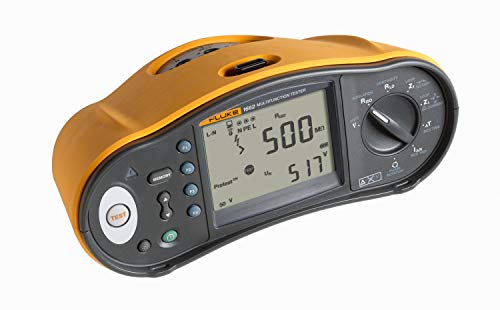
Fluke 1662 vs 1663: Which Installation Tester Should You Buy? of 2026: Top-Rated Picks for Every Budget
Electrical Testers Worth Trusting in 2026

Electrical Testers 2026: Top Pick Fluke 117 & DIY Value Choice
