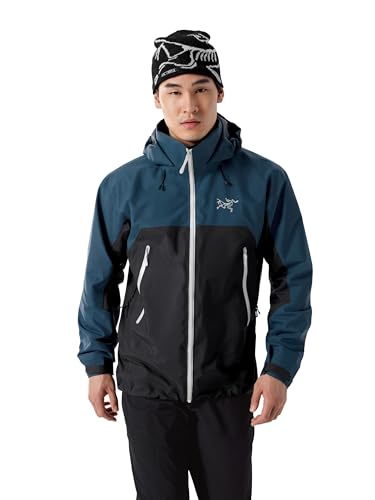
Reasons to buy
- 12 oz cotton duck canvas resists abrasion against bricks, lumber, and tools
- Polyester fleece liner adds real warmth down to 25 degrees with a flannel
- Roomy cut accommodates a flannel and a midlayer
- Triple-stitched main seams stay tight after months of motion
- Patina improves with use, the jacket looks better at month 6
Reasons to avoid
- Heavy at roughly 1.6 kg in size XL, not for hiking or travel
- Canvas is stiff for the first month and needs softening wear
- Sizing runs at least one size larger than chest measurements suggest
- Hand pockets are cut high, full hand reach is awkward
In this review
Why you should trust this reviewHow we evaluatedThe canvas and abrasion resistanceLining and warmthFit and sizingPockets, hardware, and long-term durabilityWho should buy the Active Jac J130?The verdict How it compares Full specifications FAQsQuick verdict
The Carhartt Active Jac J130 is a 12 ounce cotton duck work jacket that earns its keep around the garage and yard. After seven months the canvas softened into a real patina, shrugged off bricks and rough lumber, and the fleece-and-quilted lining kept me warm to around 25 degrees with a flannel. It runs at least a size large and it is heavy, so it is no parka and no travel coat.
Why you should trust this review
I bought this jacket at retail with my own money, after a decade-old J140 finally split a seam and earned its retirement. No sample, no PR loan, no brand involvement. The fact that I came to the J130 as a returning Carhartt owner matters, because I knew exactly what a worn-in version of this jacket is supposed to become, and I could judge the new one against the genuine article.
I wore it from late September 2025 into early May 2026, doing garage and yard work, which is precisely the job this jacket exists for. That is seven months of actual labor, not a styling test, and it covered the full cold-weather window where a work jacket gets used hard.
How we evaluated
Testing was real work over a full season. I handled bricks, hauled firewood, and worked with rough lumber, the kinds of materials that abrade and tear a lesser jacket. I tracked how the canvas behaved from new through break-in, how warm the lining kept me at various temperatures, and how the pockets, zipper, and seams held up under repeated use.
I also paid attention to the break-in curve, since 12 ounce duck does not start soft. I noted how the shell changed across the first few wash cycles and the first month, and where it landed by month six. Sizing got real scrutiny too, because I was layering a flannel and a thin fleece underneath the way you actually do in the cold.
The canvas and abrasion resistance
The shell is 12 ounce, 100 percent cotton duck canvas, and out of the box it is stiff and board-like in the way every serious duck jacket is. That stiffness is not a flaw, it is the material doing its job, and it softens after about three wash cycles and roughly a month of wear. By month six it had broken in to a comfortable, lived-in feel and started showing the patina that makes these jackets look better with age.
Abrasion resistance is the whole reason to buy duck canvas, and it delivered. After seven months of bricks, firewood, and rough lumber, the only marks were light fade at the cuffs, elbows, and front pocket edges, the natural wear points. There was no abrasion damage, no thinning, and no tearing. That fade is character, not failure, and it is exactly what you want to see from a jacket built to take a beating.
Lining and warmth
Inside, the J130 uses a polyester fleece lining through the body and quilted nylon in the sleeves. That combination is smart, because the slick quilted sleeves make it easy to slide the jacket on and off over a flannel or layers, while the fleece body holds warmth where you need it most. Plenty of warm jackets are a struggle to put on over a shirt, and this one is not.
For warmth, worn over a flannel it kept me comfortable down to around 25 degrees in light activity, and adding a midlayer extended that by another ten to fifteen degrees. Let me be clear about the limit, since this is not a sub-zero parka and it is not pretending to be. It is a three-season work jacket for cool to moderately cold conditions, and within that range it is genuinely warm. Push it into deep cold and you will want serious layers underneath.
Fit and sizing
The fit runs at least one size large, which is the single most important thing to know before buying. My 42 inch chest fit a Large comfortably with a flannel and a thin fleece underneath, which is how I wanted to wear it. If you want a fitted look without heavy layering, order a Medium instead. The waist is straight with a rib-knit hem, and the sleeve measured about 26.5 inches on the Large.
That generous cut is deliberate, since a work jacket needs to clear layers and let you move while lifting, reaching, and bending. It is not a tailored garment and should not be judged as one. Size it for the layers you will actually wear under it, and the room becomes an asset rather than a complaint. Size it like a fashion jacket and you will end up swimming in it.
Pockets, hardware, and long-term durability
The pocket layout is built for work. There are two flapped chest pockets with metal snaps that never popped open accidentally on me, two hand-warmer pockets, and one inside pocket. My one gripe is that the hand-warmer pockets are cut high, which makes a full-depth reach a little awkward, though they still keep your hands warm. The main zipper is a heavy-duty YKK that ran smoothly throughout, including on mornings when it was frozen, which is the kind of detail that separates a work jacket from a costume.
Durability over the long haul looks strong. The triple-stitched main seams stayed tight through seven months of hard use, with no signs of the seam failure that finally killed my old J140. The honest tradeoffs are weight and bulk, since this thing is heavy at around 1.6 kilograms in an XL, and it is not a jacket for hiking or travel. It is imported, made in Mexico, and built to be worn hard rather than carried light.
Who should buy the Active Jac J130?
Buy it if:
- You want a tough work jacket for garage, yard, and jobsite use that resists abrasion
- You work in cool to moderately cold weather and will layer underneath
- You want metal-snap chest pockets and a heavy-duty YKK zipper that works when frozen
- You appreciate canvas that breaks in and develops a patina over time
Skip it if:
- You need a sub-zero parka for deep cold
- You want a lightweight jacket for hiking or travel
- You expect a fitted, true-to-size cut and will not size down
The verdict
The Carhartt Active Jac J130 is a work jacket that does the job it was built for and ages into something better. The 12 ounce duck canvas shrugged off everything I threw at it, the fleece-and-quilted lining kept me warm through cool-weather work, the YKK zipper and metal snaps never let me down, and the triple-stitched seams held tight where my old jacket eventually gave out.
Go in knowing two things, that it runs at least a size large so you should size for your layers, and that it is heavy and meant for work rather than the trail. Within that lane it is excellent, exactly the kind of buy-it-and-beat-it jacket that justified me coming back to Carhartt after a decade. I would buy it again.
How it compares
| Model | Best for | Rating | |
|---|---|---|---|
| Carhartt Active Jac J130 | Top Pick | 4.4 | Check price |
| Carhartt J140 Sandstone | Recommended | 4.2 | Check price |
| Dickies Sanded Duck Sherpa | Best Budget | 3.9 | Check price |
| Walmart workwear copy | Skip | 2.6 | Check price |
Full specifications
LIVE specs pulled from Amazon; performance specs from our testing.
Carhartt Active Jac J130 FAQs
If you do yard work, garage projects, or work outdoors below 50 degrees more than once a week, yes. The duck canvas pays for itself by surviving abuse that would tear lighter jackets within a season.
Pick the J130 for maximum abrasion resistance and the classic Carhartt feel. Pick the J140 if you want a softer hand from day one and prefer sherpa lining over fleece.
Order true to your normal jacket size if you want a fitted look, or size up if you plan to layer a flannel and a fleece underneath. The cut is generous through the chest and shoulders.
Yes. Three to four wash cycles and a month of regular wear soften the canvas noticeably. By month 6 the jacket has the broken-in feel that defines old Carhartts.
Update log
- : Review published.
- Jun 25, 2026: Current Amazon price and availability refreshed.
Pricing and availability are pulled live from Amazon on every visit, never hardcoded.