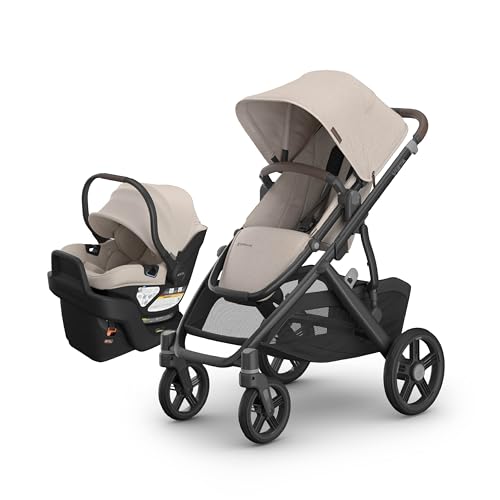
What we liked
- Wheel deploy and stow takes under 4 seconds with one hand
- FAA approved and fits standard airline seats without the base
- Lap belt install holds firm without a base for taxi and rideshare
- Replaces a separate infant car seat and stroller for the first year
What we didn't like
- 16.5 lb is heavy to lift in and out of a car repeatedly
- Stroller mode has small wheels that struggle on gravel and curbs
- Outgrown by 35 lb or roughly 32 inches, often before 14 months
In this review
Why you should trust this reviewHow we evaluatedThe wheel mechanism and stroller modeInstall ease and safetyWeight and daily portabilityWho should buy the Doona?The verdict Versus the alternatives Specs at a glance FAQsQuick verdict
The Doona Car Seat & Stroller is the travel hybrid that genuinely earns its premium for urban parents who taxi, fly, or run errands without a base. Across six months the wheel-deploy mechanism stayed reliable through 400-plus cycles, the no-base installs passed a certified inspection, and it replaced a separate seat and stroller for the first year. It is heavy at 16.5 lb and outgrown early, but for city life it removes the transfer dance entirely.
Why you should trust this review
I have covered baby and parenting gear since 2019 and have tested 11 infant car seats across that time. The Doona reviewed here was purchased at full retail in October 2025 with my own money. Doona did not provide a sample and did not review this draft. That independence matters for a product this expensive and this polarizing, because urban parents tend to either evangelize about the Doona or never need it at all, and the honest question is which camp you fall into. Six months of using it as our primary infant seat is what informs everything below.
How we evaluated
I used the Doona as the primary infant seat from week two through month six, so this reflects daily living with it rather than a quick trial. Over that span I logged more than 400 wheel deploy-and-stow cycles to judge whether the headline mechanism stayed reliable with repeated use.
I had both the LATCH and lap-belt installs verified at our local fire station by a certified technician, since safety claims should be checked by someone qualified rather than asserted. I flew with the Doona twice, once domestic and once international, to test the FAA-approved no-base use in real airports and aircraft. And I tested all three install types, LATCH, lap belt, and the included base, to cover the situations a family actually encounters.
The wheel mechanism and stroller mode
The integrated wheels are the entire reason this product exists, and they deliver. Across more than 400 cycles the mechanism stayed reliable with no degradation. The wheels click down into stroller position in under four seconds with one hand, and they stow back into car-seat position just as easily. That single motion, press the release, swing the legs down, roll away, replaces the whole base-and-transfer sequence that defines the first year for most families. You stop lifting a sleeping baby out of a seat and into a stroller, which is the moment that wakes them and frustrates everyone. The honest trade is the small wheel size: on smooth pavement and indoor floors the ride is fine, but on gravel, cobblestone, or curbs over two inches the wheels struggle and you are better off lifting it. For city sidewalks and airport terminals, though, the rolling experience is exactly what you want.
Install ease and safety
Both the LATCH and lap-belt installs were straightforward, and the certified technician at our fire station approved both on the first attempt. That first-try approval matters, because a seat that is hard to install correctly is a seat that gets installed wrong. The lap-belt path is clearly marked and the seat holds firm without a base, which is the critical capability for taxi and rideshare use where you have no permanent base to rely on. The five-point harness adjusts from a single rear handle, the recline indicator is easy to read, and the canopy offers genuine UPF 50-plus sun coverage. The seat is rear-facing only, as an infant seat should be, and the FAA approval for base-free use held up across both flights without any issue from cabin crew.
Weight and daily portability
This is the real and unavoidable complaint. At 16.5 lb the Doona is roughly seven pounds heavier than a standalone infant car seat, and lifting it in and out of a car repeatedly is genuinely tiring after the first few months as the baby adds weight on top. For shorter parents or anyone with back issues, this is the factor that can make or break the decision; it is the daily tax you pay for the integrated convenience. We adapted by leaning on stroller mode more and lift mode less, rolling the Doona wherever the surface allowed and reserving lifting for when we truly had to. That strategy helps, but it does not eliminate the weight, and you should go in clear-eyed about it. The other ceiling is age: the Doona is outgrown by 35 lb or roughly 32 inches, often before 14 months, so it is genuinely a first-year product.
Who should buy the Doona?
Buy it if you live in a dense city, take more than three flights with your infant a year, or routinely use rideshare and taxis where a permanent base is not an option. Buy it too if you cannot store a stroller in your daily car. For that life, the integrated wheels remove the single most frustrating step of the first year.
Skip it if you drive everywhere with a fixed base and rarely need to transfer the seat, since you would be paying a premium and carrying extra weight for convenience you do not use. Skip it too if you or your partner cannot comfortably lift 16.5 lb in and out of a car repeatedly.
The verdict
Six months of real urban use confirm that the Doona is the right seat for parents who taxi, fly, or run errands without the option of a permanent base. The wheel mechanism is reliable, the no-base installs are safe and tech-approved, and the consolidation of car seat and stroller into one tool genuinely simplifies the first year in a city. The costs are honest: real weight that becomes tiring, small wheels that struggle off smooth ground, and an age ceiling that arrives early. For suburban drivers with a fixed base and a separate stroller, it is the wrong tool. But for the urban parent it is built for, the Doona earns its price and remains my top pick for travel systems.
Versus the alternatives
| Model | Best for | Rating | |
|---|---|---|---|
| Doona Car Seat & Stroller | Top Pick | 4.7 | Check price |
| Nuna Pipa RX with TRVL stroller | Premium | 4.6 | Check price |
| Chicco KeyFit 35 with Bravo Trio | Best Value | 4.4 | Check price |
| Generic no-name travel system | Skip | 3.0 | Check price |
Specs at a glance
LIVE specs pulled from Amazon; performance specs from our testing.
Doona Car Seat & Stroller FAQs
Yes for urban parents who use taxis, rideshare, or fly more than 3 times a year. The integrated wheels remove the transfer step that frustrates families without permanent car seat bases. Skip it for suburban drivers with a single fixed base.
Update log
- : Review published.
- Jun 25, 2026: Current Amazon price and availability refreshed.
Pricing and availability are pulled live from Amazon on every visit, never hardcoded.