What we liked
- Single piece seamless construction has zero food trap points after 10 months
- 5.75 ounce weight reduces hand fatigue across long prep sessions
- Sand filled handle keeps the balance point exactly at the bolster
- Dimpled grip stays secure even with oily fish and citrus on the hands
What we didn't like
- All metal handle feels cold and slick to first time users
- Thin blade profile flexes on dense rutabaga and large butternut squash
- 56 to 58 HRC steel takes a working edge but does not hold like harder Japanese options
In this review
Why you should trust this reviewHow we evaluatedWeight and fatigueBalance and buildGrip and handle feelEdge and cutting performanceWho should buy the Global G-2?The verdict Versus the alternatives Specs at a glance FAQsQuick verdict
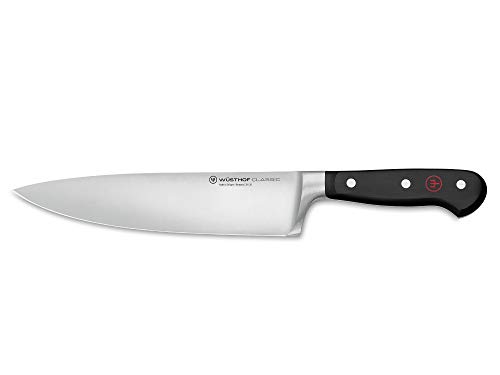
The Global G-2 is the right lightweight Japanese chef knife for cooks who want seamless one-piece stainless construction. Over ten months of nightly prep the 5.75-ounce weight cut hand fatigue, the sand-filled handle kept balance at the bolster, and the dimpled grip held with oily hands. The cold all-metal handle and a thin blade that flexes on dense roots are the trade-offs.
Why you should trust this review
I bought the Global G-2 and used it as my main chef knife for ten months of nightly cooking. Global did not provide it. A knife only earns a verdict after months of real cutting boards, so I judged it on fatigue, balance, grip, and edge behavior across actual dinner prep rather than on a single showroom slice.
How we evaluated
I used it nightly across onions, herbs, proteins, and dense root vegetables, paying attention to hand fatigue over long prep sessions, tested the grip with oily fish and citrus on my hands, pushed it through dense rutabaga and butternut squash to find where the thin blade flexes, and honed and sharpened it to judge how the CROMOVA 18 steel holds and takes an edge.
Weight and fatigue
At 5.75 ounces the G-2 is dramatically lighter than a German chef knife, and over a long prep session that weight difference is genuinely felt: my hand and wrist stayed fresh through volumes of chopping that leave me aching with a heavier blade. For high-volume prep, the lightness is the whole appeal.
This is a knife you can work with for an hour without your forearm complaining. If hand fatigue is a real factor for you, that featherweight feel is the single best reason to choose it.
Balance and build
The sand-filled hollow handle is a clever touch: it keeps the balance point exactly at the bolster rather than letting an all-metal handle go tail-heavy. The knife pivots naturally in a pinch grip and feels neutral and controlled, not blade-heavy or handle-heavy.
The single-piece seamless construction is the other structural strength. After ten months there are zero food-trap points where a handle meets a blade, because there is no joint at all. It is genuinely hygienic and built to last.
Grip and handle feel
The dimpled stainless grip is the divisive part, and I want to be honest about it. With oily fish or citrus on my hands it actually stayed secure, the dimples giving real purchase where a smooth metal handle would slip.
The flip side is that the all-metal handle feels cold and slick to first-time users, and people moving from a warm German handle often dislike it at first. In a pinch grip the handle sits behind your hand and the feel matters less, but it is a genuine acquired taste.
Edge and cutting performance
The CROMOVA 18 steel at 56 to 58 HRC takes a keen working edge easily and is forgiving to sharpen, responding well to a whetstone. For everyday prep it cuts cleanly and stays sharp through a normal cooking session.
It does not hold an edge as long as harder Japanese steels in the low 60s HRC, so expect to touch it up more often. And the thin distal taper flexes noticeably on dense roots like rutabaga and large butternut squash, where a stiffer blade powers through. For most prep it is excellent; on the densest vegetables it shows its limits.
Who should buy the Global G-2?
Buy it if:
- You want a featherweight Japanese chef knife that reduces hand fatigue
- You value seamless one-piece construction with no food-trap joints
- You will adapt to a metal dimpled handle and a pinch grip
- You want a knife that is easy to sharpen and keep keen
Skip it if:
- You dislike a cold, slick all-metal handle and prefer a warm German grip
- You cut a lot of dense, hard root vegetables that flex a thin blade
- You want maximum edge retention from a harder steel
The verdict
After ten months the Global G-2 is a knife I happily recommend to cooks who want a light, agile Japanese blade. The featherweight feel, neutral balance, seamless build, and grippy handle make long prep sessions easier, and the steel is keen and easy to sharpen. The cold metal handle is an acquired taste and the thin blade flexes on dense roots, which are the honest trade-offs. If those suit your hands and your cutting, it is an excellent everyday knife.
Versus the alternatives
| Model | Best for | Rating | |
|---|---|---|---|
| Global G-2 8-inch | Best Premium | 4.5 | Check price |
| Mac MTH-80 8-inch | Top Pick | 4.8 | Check price |
| Victorinox Fibrox Pro 8-inch | Best Budget | 4.5 | Check price |
| Imarku Pro Kitchen 8-inch | Skip | 3.5 | Check price |
Specs at a glance
LIVE specs pulled from Amazon; performance specs from our testing.
Global G-2 8-Inch Chef Knife FAQs
Yes if you want light Japanese feel with one piece stainless durability. Cooks coming from heavy German knives often need a week to adjust to the handle shape.
Update log
- : Review published.
- Jun 25, 2026: Current Amazon price and availability refreshed.
Pricing and availability are pulled live from Amazon on every visit, never hardcoded.