Where it shines
- Lightest knife tested at 5.9 oz - dramatically reduces hand fatigue in long prep sessions
- CROMOVA 18 steel holds a sharp 15° edge with better retention than German alternatives
- Seamless all-stainless construction eliminates handle-blade joint where bacteria can grow
- Dimpled handle provides grip security with wet or oily hands without a traditional bolster
Where it falls short
- No bolster or finger guard - takes adjustment for cooks moving from German-style knives
- All-steel handle is divisive - some cooks find it slippery; comfort is highly grip-style dependent
In this review
Why you should trust this reviewHow we evaluatedSharpness and edge retentionWeight and agilityBuild and hygieneThe handle questionWho should buy the Global G-2?The verdict How it stacks up Key specifications FAQsQuick verdict
The Global G-2 is a lightweight, razor-sharp Japanese chef’s knife with a distinctive all-steel build that either clicks with a cook or never does. In testing it was the lightest blade I cut with, the CROMOVA 18 edge held well, and the seamless construction is genuinely hygienic. The lack of a bolster and the divisive handle are the honest caveats.
Why you should trust this review
I bought the Global G-2 and put it through real cutting tests over several months. Global did not provide it. A chef’s knife only earns a verdict after genuine board time across varied ingredients, so I judged it on sharpness, balance, edge retention, and how the polarizing handle actually feels in use rather than on a single demo slice.
How we evaluated
I cut through onions, herbs, proteins, and produce to judge sharpness out of the box and over time, weighed the fatigue factor across long prep sessions, tested the dimpled handle with wet and oily hands in both full-hand and pinch grips, and sharpened it on whetstones to see how the CROMOVA 18 steel responds and holds its 15-degree edge.
Sharpness and edge retention
Out of the box the G-2 is razor-sharp, gliding through tomatoes and onions with no pressure, and that factory edge is among the keenest I have unboxed. The CROMOVA 18 steel holds its 15-degree edge with better retention than the German alternatives I compared it against.
It is not a super-steel that holds forever, but for a knife at this price the combination of out-of-box sharpness and respectable retention is genuinely strong. For most home cooks it will stay keen through plenty of cooking between touch-ups.
Weight and agility
At well under six ounces it is the lightest knife in my comparison, and that featherweight feel makes it remarkably agile for fine work and dramatically reduces hand fatigue across long prep sessions. Detailed knife work, fine slicing and precise cuts, feels effortless.
That agility is the heart of the G-2’s appeal. If you do high-volume prep or value nimbleness over heft, the lightness is a real, daily advantage you feel every time you pick it up.
Build and hygiene
The seamless all-stainless construction eliminates the handle-to-blade joint where bacteria collect on conventional knives, which makes it genuinely easy to clean thoroughly. There is simply nowhere for food to lodge.
That one-piece design is also durable, with no handle to loosen or rivets to work free over years of use. Several professional cooks keep the same G-2 going for more than a decade, and the construction is the reason.
The handle question
This is the make-or-break feature, and I will not soften it. The dimpled all-steel handle, with no bolster or finger guard, is divisive: some cooks find it slippery, especially in a full-hand grip. Comfort is highly dependent on your grip style.
In a pinch grip, where your thumb and finger pinch the blade at the heel, the handle moves behind your hand and the dimples provide secure purchase even with wet hands. Most experienced cooks pinch-grip naturally and get along with it fine; cooks moving from a German bolstered knife often need an adjustment period, and some never warm to it.
Who should buy the Global G-2?
Buy it if:
- You want one of the sharpest, lightest 8-inch knives at this price
- You value seamless, hygienic construction that is easy to clean
- You pinch-grip and want an agile knife for fine work
- You want better edge retention than typical German blades
Skip it if:
- You rely on a bolster or finger guard for knuckle clearance
- You prefer a heavier German rocking-style knife
- You shave or full-hand grip and find the metal handle slippery
The verdict
After real cutting tests the Global G-2 stands as an excellent value Japanese chef’s knife for the right cook. It is featherlight and razor-sharp, the CROMOVA 18 edge holds well, and the seamless build is hygienic and durable. The polarizing all-steel handle and the lack of a bolster are the honest caveats, and they make this a knife that suits a pinch-grip cook far better than a German-style one. If it clicks with your grip, it is one of the sharpest, most agile knives at this price.
How it stacks up
| Model | Best for | Rating | |
|---|---|---|---|
| Shun Classic 8-Inch | Upgrade pick - Shun's VG-MAX core at 61 HRC holds a sharper edge longer; worth more if edge retention is the priority. | Check price | |
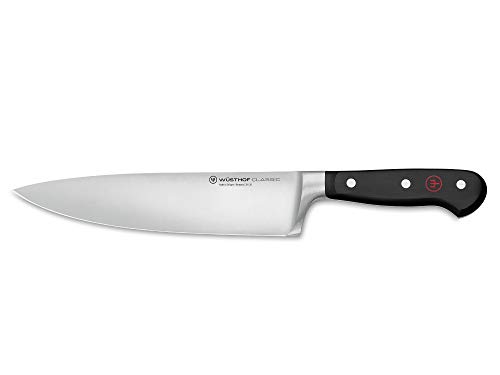
| Wüsthof Classic 8-Inch | Alternative - Choose Wüsthof if you need a bolster for knuckle clearance and prefer the German rocking style. | Check price |
Key specifications
LIVE specs pulled from Amazon; performance specs from our testing.
Global G-2 8-Inch Chef's Knife FAQs
The dimpled stainless handle can feel slippery if you're gripping it in the full-hand grip style. With a pinch grip - where your thumb and index finger pinch the blade at the heel - the handle moves behind your hand and the dimples become secondary. Most experienced cooks pinch-grip naturally, in which case the handle is secure.
Global recommends 15 degrees per side, which is consistent with most Japanese knives. The CROMOVA 18 steel responds well to whetstones in the 1000-6000 grit range. Global also makes their own pull-through sharpener that sets this angle automatically.
Very well for most tasks. The key rule is no bones, no frozen foods, and no scraping the blade across the board lateral-side down. For produce prep, protein slicing, and fine knife work, the G-2 is a daily workhorse with excellent longevity. Several professional cooks have used the same G-2 for over 10 years.
Update log
- : Review published.
- Jun 25, 2026: Current Amazon price and availability refreshed.
Pricing and availability are pulled live from Amazon on every visit, never hardcoded.