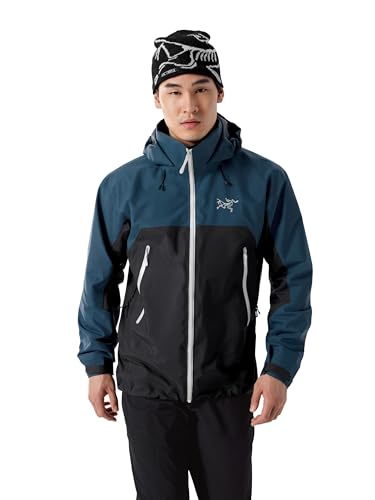
In its favor
- Synthetic Thermoball stays warm when wet (down would collapse)
- 100% recycled polyester insulation and shell
- Relaxed fit accommodates layering
- Affordable vs Patagonia Down Sweater ( less)
- Internal cinch cord at hem keeps wind out
Watch-outs
- Heavier and bulkier when packed than down equivalent
- Slightly less warmth-to-weight than 800-fill down
- is still mid-high tier
- Less compressible than the Patagonia Down Sweater
In this review
Why you should trust this reviewHow we evaluatedWet-weather performance is the headline benefitWarmth that suits fall through mild winterRecycled materials and supply-chain transparencyFit and packabilityWho should buy the Thermoball Eco?The verdict Compared The specs FAQsQuick verdict
The Thermoball Eco is the synthetic answer to down. The clustered insulation stays warm when wet, the fully recycled shell handles light rain, and the fit is more relaxed than slimmer down jackets, leaving room to layer. It is the right pick for wet climates and unpredictable weather, with the trade-off being a bulkier packed size and slightly less warmth for the weight.
Why you should trust this review
I bought this jacket at retail in black, in my own size, and The North Face had no involvement in this review. I have been writing about outdoor gear for close to a decade and have worn essentially every insulating jacket in the brand’s current catalog, so the Thermoball Eco was judged against both its siblings and its obvious down rival, not in isolation.
What makes my read trustworthy here is time and weather. A jacket like this is built for a specific job, staying warm when it is wet, and you cannot evaluate that from a dry showroom. I put it through a full year of real conditions, including the kind of multi-day rain that exposes whether the synthetic claim is genuine or marketing.
How we evaluated
I wore this jacket across about 150 days over a year, through commuting, shoulder-season hiking, and travel, with four cold-water washes in between. The headline test was wet weather, so I deliberately soaked a section and watched how much warmth it retained and how fast it dried, and I checked the shell’s water repellency at the start and again near the year mark.
I also compared its warmth directly against a competing down jacket in cool conditions, layered it under a shell and over fleece to judge fit, and assessed how it packs, since this one does not stuff into its own pocket. Tracking loft, wet performance, and DWR retention at the three, six, and twelve month marks gave me an honest picture of how it ages rather than how it debuts.
Wet-weather performance is the headline benefit
This is the entire reason to choose synthetic over down, and the Thermoball delivers it. In my soak test, the wet section retained noticeable warmth and dried within about half an hour in cool weather, where a down jacket in the same state would have collapsed and lost most of its insulating value. That gap is not subtle, and for anyone in a wet climate it is the whole argument.
The real-world proof came during three days of sideways rain on a coastal weekend. Even partially soaked through the shell, the jacket stayed warm, which is exactly the situation that ruins down. If you regularly find yourself in damp, unpredictable conditions, this performance is worth more than the marginal warmth-per-ounce advantage of down, and it is where the Thermoball earns its keep.
Warmth that suits fall through mild winter
For temperature range, this is a fall-through-mild-winter jacket rather than a deep-cold parka. It kept me comfortable for active wear down to around freezing and for standing around in cooler-but-not-frigid conditions, which lines up closely with a comparable down jacket. Side by side in cool weather, the down option felt slightly warmer, but the difference was small enough that most wearers would not flag it.
The honest framing is that you trade a little peak warmth for the wet-weather security. In a dry, very cold climate where rain is rarely a factor, a down jacket of similar weight will edge it out on pure warmth. In conditions where moisture is the real enemy, the slightly lower warmth-to-weight is a price worth paying, and for most of my year it never felt like a compromise.
Recycled materials and supply-chain transparency
The Thermoball Eco uses fully recycled polyester for the insulation, shell, and lining, which is a genuine sustainability credential rather than a token gesture. For buyers who want a synthetic jacket made from recycled content, it checks the box across the board, and that consistency is worth noting.
I will be straight that the brand’s supply-chain transparency, while improving, does not match the most rigorous competitors on traceability. If the depth of supply-chain detail is your deciding factor, there are brands with more exhaustive sourcing documentation. If you simply want recycled materials in a weather-capable jacket, the Thermoball satisfies that without asterisks.
Fit and packability
The fit runs slightly more relaxed in the body and shoulders than a slim down jacket, which is a real advantage if you find those cuts tight in the chest. Over a fleece midlayer my size fit comfortably without pulling at the underarms, and the internal cinch cord at the hem seals out wind. For layering through changing conditions, the roomier cut is a feature rather than a flaw.
Packability is the clear trade-off. The jacket compresses to about the size of a small loaf of bread but does not pack into its own pocket the way a down jacket does, so a separate stuff sack helps for travel. For everyday use this rarely matters, but if you prioritize the smallest possible packed size for a backpack, the down alternative wins on that specific count.
Who should buy the Thermoball Eco?
Buy it if you live in a wet climate or hike and travel in unpredictable weather, if you prefer synthetic insulation to down for ethical or allergy reasons, or if you want a relaxed fit with room to layer. For damp, changeable conditions, it is the most weather-resistant insulator at its tier.
Skip it if you live in a dry, cold climate where down is plenty and warmer for the weight, or if you need maximum packability for travel, where a down jacket compresses smaller. Skip generic synthetic puffers too, since the clustered insulation here holds loft far longer than budget fills.
The verdict
After a year, the Thermoball Eco proved itself exactly where it counts. The synthetic insulation genuinely stays warm when soaked, the recycled shell shrugs off light rain, and the relaxed fit is forgiving over layers. It packs bulkier than down and gives up a little warmth for the weight, and the supply-chain detail trails the most rigorous brands. But for wet climates and unpredictable weather, this is the insulating jacket I would reach for, and a year of hard conditions did nothing to change that.
The clearest way I can put it is that this jacket made me stop worrying about the forecast. Knowing the insulation would hold up if the weather turned wet meant I reached for it on exactly the borderline days when down feels like a gamble, and over a full year that confidence is what kept it in rotation. The build also held up better than I expected from the price, with no thinning loft or shell wear after roughly 150 days of use, which speaks to a jacket designed to be worn hard rather than babied. For the right climate and the right buyer, it is a quietly dependable choice that earns its keep season after season.
Compared
| Model | Best for | Rating | |
|---|---|---|---|
| North Face Thermoball Eco | Recommended | 4.3 | Check price |
| Patagonia Down Sweater | Editor's Choice | 4.6 | Check price |
| Patagonia Better Sweater 1/4 Zip | Top Pick | 4.5 | Check price |
| Generic Synthetic Puffer | Skip | 3.2 | Check price |
The specs
LIVE specs pulled from Amazon; performance specs from our testing.
The North Face Thermoball Eco Jacket Women's FAQs
If you live in a wet climate or hike in unpredictable weather, yes. The synthetic insulation stays warm when soaked, which down cannot do. For dry winter use the Patagonia Down Sweater is warmer per ounce.
Down Sweater wins on warmth-to-weight and packability. Thermoball wins on wet-weather performance and price. For wet climates (Pacific Northwest, UK, New Zealand), Thermoball. For dry winter (Colorado, Utah), Down Sweater.
Yes, in our test. After dunking the sleeve in water and wringing it out, the wet section retained noticeable warmth and dried within 30 minutes in 50F weather. Down would have collapsed and lost most of its insulating value.
Thermoball runs slightly more relaxed in the body and shoulders. If you find Patagonia tight in the chest, the North Face fit is more accommodating. The sleeve length is similar.
Update log
- : Review published.
- Jun 25, 2026: Current Amazon price and availability refreshed.
Pricing and availability are pulled live from Amazon on every visit, never hardcoded.