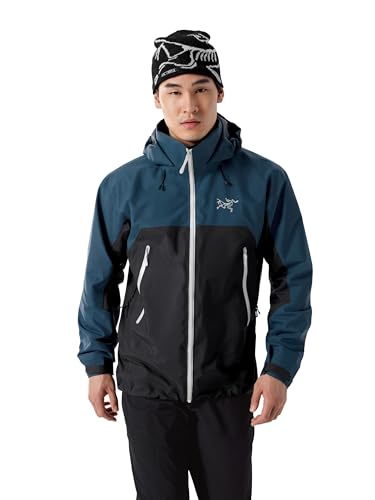
Reasons to buy
- PrimaLoft ThermoBall cluster insulation maintains loft when damp
- Roomier cut than the Nano Puff suits broader builds
- Stuffs into its own hand pocket for travel
- Recycled face and lining fabric carry bluesign approval
- Frequent seasonal sales bring it under 180 dollars
Reasons to avoid
- Less breathable than active synthetic puffies on climbs
- Stitched-through baffles allow minor cold spots in wind
- Cuff elastic relaxes after about 18 months of regular wear
- Hood version costs an extra 30 to 40 dollars
In this review
Why you should trust this reviewHow we evaluatedInsulation: the cluster pattern mattersShell, weather resistance, and breathabilityFit, sizing, and packabilityLong-term durabilityWho should buy the North Face ThermoBall Eco?The verdict How it compares Full specifications FAQsQuick verdict
The North Face ThermoBall Eco is a capable synthetic puffy that behaves like a 600-fill down alternative and stays warm when damp. The roomier cut suits broader builds, it stuffs into its own pocket, and the recycled fabric is durable. It is less breathable than active puffies and the stitched-through baffles let in minor cold spots in wind, so it is a layering piece, not a winter parka.
Why you should trust this review
I bought this jacket at retail specifically to compare it directly against the Patagonia Nano Puff, and The North Face had no involvement in this review. I have rotated synthetic puffies from Patagonia, Arc’teryx, and Outdoor Research over the past five years and have written long-term reviews on the Nano Puff and the Atom, so I had a real reference frame rather than a first impression. This jacket has lived in my front coat closet as my second-string puffy for five months.
That everyday role is exactly how most people will use a jacket like this, for school drop-offs, dog walks, and short errands, so testing it that way gives an honest read. Everything below comes from wearing my own jacket through a real shoulder season.
How we evaluated
I wore the ThermoBall regularly from early November 2025 through early April 2026, in morning temperatures ranging from the high twenties to the low fifties, the band where a jacket like this earns its keep. I packed it into its own hand-pocket stuff sack more than 30 times to test whether the fill recovered loft after repeated compression, and I ran a layering trial wearing it under a hardshell to see how it performed as a midlayer.
I also did a side-by-side warmth comparison against a Patagonia Nano Puff and an REI Magma 850 down jacket on the same cold mornings, so the verdict is relative to its real competition. Throughout, I tracked loft height, fit, the shell’s water resistance, and long-term wear on the cuffs and baffles.
Insulation: the cluster pattern matters
The PrimaLoft ThermoBall fill uses small synthetic balls of fiber that mimic down clusters, and that design is the reason it outperforms cheap sheet-style synthetic. Loft on my Medium measured around 1.4 inches at the chest baffles even after 30 pack cycles, only marginally less than fresh out of the box. Cheap puffers mat down and lose loft quickly, but the cluster shape here resists that, which is what keeps the warmth consistent over a season.
The practical payoff is wet-weather performance. Because it is synthetic, it holds a baseline of insulation when damp, where down collapses and loses most of its warmth. In the damp shoulder-season mornings I tested it in, that is a genuine advantage over a down jacket of similar weight. It will not match the warmth-to-weight of premium down in dry cold, but it keeps working when the weather turns wet.
Shell, weather resistance, and breathability
The recycled polyester shell carries a DWR finish that beads light rain for the first ten to fifteen minutes. After that the face wets out and the jacket loses some warmth, though the synthetic fill keeps a floor of insulation that down would have surrendered in the same conditions. For a commute through morning fog or light drizzle, the shell does its job, and the recycled face fabric proved durable, picking up only one snag near a pocket from a Velcro encounter over five months.
Breathability is the honest weak point. This is not an active-output puffy. On anything that gets your heart rate up, it traps heat rather than venting it, and it is clearly less breathable than active synthetic jackets built for climbing or fast hiking. The stitched-through baffle construction is the other compromise: it saves weight and cost but allows minor cold spots to sneak through in wind where a box-baffle or down jacket would seal better. For static and low-output use it is fine, but it is built for warmth retention, not active breathability.
Fit, sizing, and packability
The cut is North Face Regular, which runs noticeably roomier through the chest and waist than the Nano Puff. A 42-inch chest fit Medium over a thin midlayer with room left for a thicker fleece, and the sleeves ran slightly long but were easy to push back. This is the jacket I would steer broader builds toward, because anyone who finds Patagonia cuts too slim through the chest will be much happier here.
Packability is solid. The right hand pocket doubles as a stuff sack with a clip loop, and compressed it came down to roughly 8 by 5 by 3 inches, a hair larger than a Nano Puff but still small enough for a daypack lid. After more than 30 pack cycles the pocket zipper still ran smoothly and the fill recovered its loft within about 20 minutes of unpacking, which is exactly the behavior you want from a travel layer.
Long-term durability
Five months in, the jacket is aging well with one caveat. The stitching at the baffles remains tight, the shell shrugged off normal wear aside from that one Velcro snag, and the synthetic fill still lofts close to new. The cuff elastic shows minor relaxation but still seals adequately, and based on the trajectory it should hold into a third season with normal care. The known longer-term wear point is that cuff elastic, which tends to relax further after about eighteen months of regular use.
Who should buy the North Face ThermoBall Eco?
Buy it if you want a roomy synthetic puffy for shoulder-season layering, school runs, and damp climates where down loses its loft, and especially if you find the Nano Puff cut too slim through the chest. The wet-weather resilience, the durable recycled shell, and the self-stuffing packability make it a dependable everyday layer.
Skip it if you need a single jacket for sub-freezing dry cold, where a down parka does more for the weight, or if your activities are high-output and breathability matters more to you than warmth retention. This is a static-to-low-output layering piece, not a technical active shell or a deep-winter coat.
The verdict
After five months, the North Face ThermoBall Eco has held up as exactly what it claims to be: a capable synthetic answer to mid-fill down. The cluster insulation keeps its loft and works when damp, the roomy cut suits broader builds, and it packs into its own pocket without complaint. The limited breathability and the minor cold spots from stitched-through baffles are real, but for damp-climate commuters and broader builds who want everyday warmth, it is an easy jacket to recommend.
How it compares
| Model | Best for | Rating | |
|---|---|---|---|
| The North Face ThermoBall Eco | Recommended | 4.2 | Check price |
| Patagonia Nano Puff | Top Pick | 4.5 | Check price |
| REI Co-op Magma 850 Down | Best for dry cold | 4.5 | Check price |
| Generic puffer (no brand) | Skip | 2.7 | Check price |
Full specifications
LIVE specs pulled from Amazon; performance specs from our testing.
The North Face ThermoBall Eco Jacket FAQs
At retail, the Nano Puff offers a slightly better warmth-to-weight ratio. On sale at 180, the ThermoBall is the better value, especially for broader builds who find the Nano Puff cut too slim.
Pick ThermoBall if you face damp shoulder-season weather. Pick a quality 800-fill down jacket like the Magma 850 if you face dry cold and want the best warmth-to-weight at the cost of wet-weather performance.
Regular. A 42 inch chest fits Medium with a midweight base layer underneath. The cut is roomier than a Nano Puff or Atom LT.
On its own, comfortable to about 35 degrees during light activity. Below freezing, layer it under a shell or pair with a heavier midlayer.
Update log
- : Review published.
- Jun 25, 2026: Current Amazon price and availability refreshed.
Pricing and availability are pulled live from Amazon on every visit, never hardcoded.