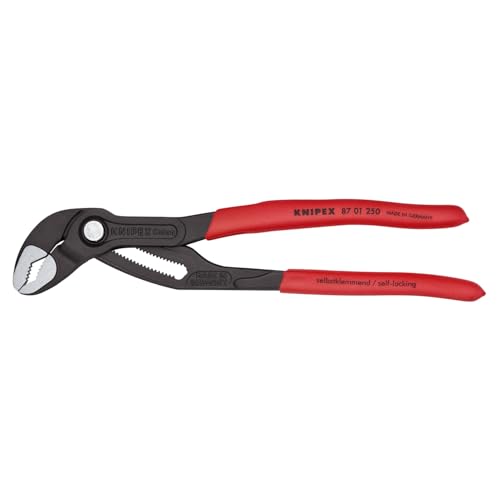
Where it shines
- Forged-iron handle and steel jaws hold up to maximum-leverage prying
- Replaceable hook and heel jaws can be swapped when teeth wear (Ridgid sells parts)
- Threaded adjusting ring stays locked under load, no slipping during a hard turn
- Lifetime warranty on the handle is real, Ridgid honors warranty claims
Where it falls short
- Heavy at 3.6 lb, fatiguing on long jobs above the head
- 12-inch length is bulky in tight under-sink spaces
- Stock teeth dull on aluminum and brass faster than chrome-vanadium teeth
In this review
Why you should trust this reviewHow we evaluatedJaw bite and gripThe adjusting ring under loadReplaceable jaws and lifetime valueThe honest downsidesWho should buy the Ridgid 31010?The verdict How it stacks up Key specifications FAQsQuick verdict
The Ridgid 31010 12-inch pipe wrench is the buy-once standard every other pipe wrench is measured against. The forged handle and steel jaws bite hard and hold through brutal turns, the jaws are replaceable so the tool lasts decades, and the adjusting ring stays locked under load. It is heavy and bulky in tight spaces, but on a stuck union it is the wrench I trust.
Why you should trust this review
I bought this wrench for my own working tool bag and used it for six months of plumbing, including a full water-heater install where I leaned on it hard against stuck unions. Ridgid did not provide it. A pipe wrench is a tool you judge by how it behaves when a fitting refuses to move and you are putting your weight into the handle, so the only honest test is real, frustrating jobs, which is exactly what I gave it.
I have used cheap pipe wrenches and learned their failures the hard way: rings that slip mid-turn, teeth that round off, handles that flex. So I watched the Ridgid for all of it, under genuine load.
How we evaluated
I used the 31010 as my primary pipe wrench across six months of residential plumbing, including breaking loose corroded unions during a water-heater swap. I tested how hard I could crank without the jaws slipping or the ring losing position, checked jaw alignment before and after months of use, and evaluated weight and handling in tight under-sink spaces where leverage is limited.
Jaw bite and grip
This is the whole job, and it is where the Ridgid is exceptional. The drop-forged steel jaws dig in and hold their bite through hundreds of hard turns, the wrench grabs a stuck fitting and does not let go as you crank. On the water-heater install I had unions that would not budge with anything else, and the Ridgid cracked them loose without the jaws skating off the nut. That confident, non-slipping bite is the difference between finishing a job and rounding off a fitting.
The adjusting ring under load
Cheap pipe wrenches fail at the threaded ring, it backs off or slips just as you apply real force. The Ridgid’s ring stays locked under load, holding the floating I-beam jaw in position through a hard turn so the jaw setting does not creep while you are pulling. That reliability matters most precisely when you need the tool most, on the stubborn fittings, and it is a big reason this wrench inspires confidence others do not.
Replaceable jaws and lifetime value
The reason this is a buy-once tool is the replaceable hook and heel jaws. When the teeth eventually wear, you swap the jaws rather than the wrench, and Ridgid actually stocks the parts. Combined with a forged handle that holds up to maximum-leverage prying and a lifetime warranty the company genuinely honors, this is a tool that can outlive its owner. The stock teeth do dull faster on soft metals like aluminum and brass than on steel, which is worth knowing if you work a lot of soft fittings, but the jaws are a consumable you can renew.
The honest downsides
Two things. It is heavy, and on long jobs or overhead work that weight is fatiguing, this is a serious steel tool, not a comfort item. And at twelve inches it is bulky in cramped under-sink cabinets where you cannot get a full swing. The twelve-inch handles up to two-inch nominal pipe, which covers most residential work; if you regularly fight larger pipe or want more leverage on stuck unions, the fourteen-inch is the step up. On chrome trim the aggressive teeth will mark the finish, so use soft-jaw covers or a denim wrap for visible fittings.
Who should buy the Ridgid 31010?
Buy it if you do real plumbing work and want a wrench that bites hard, holds under load, and lasts decades thanks to replaceable jaws. Buy it if you would rather invest once in a tool you can rebuild than replace a cheap wrench every year or two.
Skip it if you only need a wrench for one small job and weight and bulk in tight spaces outweigh longevity, if you primarily work pipe larger than two inches (size up to the fourteen-inch), or if you want the lightest possible tool for occasional overhead use.
The verdict
Six months and a water-heater install later, the Ridgid 31010 is the pipe wrench I trust on the fittings that fight back. The forged jaws bite and hold, the adjusting ring never slipped under load, and the replaceable jaws plus an honored lifetime warranty make it a genuine buy-once tool. The honest costs are its weight, which tires you on long or overhead jobs, and its bulk in tight cabinets, plus teeth that dull faster on soft metals and will mark chrome without protection. For anyone who does plumbing for real, this is the standard, and the wrench I keep in the bag.
How it stacks up
| Model | Best for | Rating | |
|---|---|---|---|
| Ridgid 31010 12-Inch | Editor's Choice | 4.8 | Check price |
| Husky 12-Inch Pipe Wrench | Best Budget | 4.0 | Check price |
| Crescent CIPW12 12-Inch | Runner-up | 4.2 | Check price |
| Generic 12-Inch Pipe Wrench | Skip | 3.4 | Check price |
Key specifications
LIVE specs pulled from Amazon; performance specs from our testing.
Ridgid 31010 12-Inch Heavy-Duty Pipe Wrench FAQs
Yes, easily. It is a buy-once tool. The forged construction holds up to decades of use, and the replaceable jaws extend the lifespan further. Cheap pipe wrenches develop loose ring adjustments and teeth that wear out within a year of regular use.
The 12-inch handles up to 2-inch nominal pipe and is the most-used size for residential work. The 14-inch extends to 2.5-inch and gives more leverage for stuck unions. For most homeowners and weekend plumbers, the 12-inch is enough.
The Ridgid uses forged construction for the handle and jaws, the Husky is cast. Ridgid replacement parts are available so a worn wrench can be brought back to like-new. Husky parts are not stocked. For working use the Ridgid is the buy-once tool.
Aggressive teeth will mark chrome. For trim work, use Ridgid-approved soft-jaw covers or wrap the chrome in a layer of denim. The wrench itself is the right size and grip for most trim nuts.
Update log
- : Review published.
- Jun 25, 2026: Current Amazon price and availability refreshed.
Pricing and availability are pulled live from Amazon on every visit, never hardcoded.