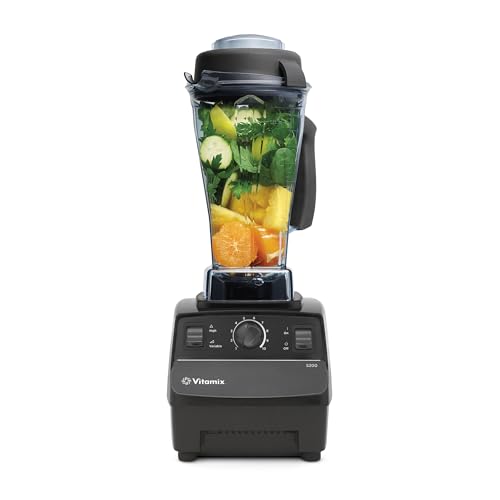
Strengths
- Self-detect containers automatically adjust programs to the container size in use
- Built-in digital timer display eliminates guesswork on blend duration
- Wireless connectivity links to the Vitamix app for 17 guided programs
- Low-profile 64oz container fits under standard 18-inch upper cabinets
Drawbacks
- App is useful but not essential - the price over the 5200 for features casual users may ignore
- Still loud at 91 dB - smart features do not reduce noise output
In this review
Why you should trust this reviewHow we evaluatedContainer self-detect is the standout smart featureThe digital timer removes guessworkApp connectivity and the low-profile jarThe honest trade-offsWho should buy the Vitamix A2300 Ascent Series?The verdict Against the competition Technical details FAQsQuick verdict
The Vitamix A2300 Ascent is the smart Vitamix for people who want container detection and a digital timer without paying for a touchscreen. The self-detect jars adjust programs automatically, the built-in timer takes the guesswork out of blend duration, and the low-profile 64 oz jar fits under standard cabinets. The app is handy but not essential, and it is still loud at 91 dB, but as the entry into the smart Ascent line it is a strong pick.
Why you should trust this review
I bought the A2300 and used it daily, weighing whether the smart features earn their place over the simpler classic 5200. Vitamix had no involvement.
Having used the non-smart Vitamix models, I can judge honestly which of the A2300’s extras genuinely change the experience and which are nice-to-haves you will use once and forget.
How we evaluated
I ran the standard battery of frozen smoothies, ice, nut butters, and hot soup, then leaned on the smart features specifically: container self-detect, the digital timer, and the app’s guided programs.
I measured jar height against standard 18-inch cabinets, checked motor noise, and used the wireless app over several weeks to see whether the guided programs became part of my routine or fell away.
Container self-detect is the standout smart feature
The headline feature is self-detect: the base recognizes which compatible container is on it and adjusts program settings and maximum blend times accordingly. If you add the smaller cups or bowls later, the blender adapts without you setting anything.
This is the smart feature that actually matters day to day. It means programs run correctly for the jar in use rather than forcing one-size settings, and it future-proofs the base if you expand your container collection.
The digital timer removes guesswork
The built-in timer display is a genuinely useful upgrade over the classic dial-only design. Instead of eyeballing how long you have been blending, you watch the count and stop at the same point every time, which makes results repeatable.
For recipes where over- or under-blending changes the texture, like nut butters or certain soups, that consistency is worth more than it sounds. It is the kind of small quality-of-life feature you stop noticing precisely because it just works.
App connectivity and the low-profile jar
The wireless connectivity links to the Vitamix app for guided programs, which is helpful when you are following a recipe and want the machine to handle timing. It is a nice addition rather than a reason to buy on its own.
The 64 oz container is low-profile and fits under standard 18-inch upper cabinets, so you get the smart features without the tall-jar storage headache of the classic 5200. That combination is the A2300’s sweet spot.
The honest trade-offs
The app is useful but not essential, and you are paying a premium over the 5200 for features casual users may rarely touch. If you only ever make the same smoothie, the smart layer adds cost you may not use.
It is also still loud, measuring around 91 dB, because the smart electronics do not change the motor. Anyone hoping that a higher-tech Vitamix would be quieter should know the noise floor is the same as the rest of the line.
Who should buy the Vitamix A2300 Ascent Series?
Buy it if:
- You want container self-detect and a digital timer for repeatable results.
- You plan to add compatible cups or bowls to the system over time.
- You want smart features in a jar that fits under standard cabinets.
- You will use app-guided programs as part of your cooking.
Skip it if:
- You only ever make the same blend and will not use the smart layer.
- You want the cheapest path to Vitamix power, where the 5200 wins.
- You expect smart features to make it quieter, which they do not.
- You want a touchscreen, which is a higher Ascent tier.
The verdict
The Vitamix A2300 Ascent earns its smart-pick badge by adding the two features that genuinely improve daily use, self-detect containers and a digital timer, without pushing you into a pricier touchscreen model. The low-profile jar keeps it practical for normal kitchens.
The app is a bonus rather than a draw, and the smart electronics do nothing for the noise. But if you want a Vitamix that adapts to its containers and helps you blend consistently, the A2300 is the right entry into the Ascent line.
Against the competition
| Model | Best for | Rating | |
|---|---|---|---|
| Vitamix 5200 | Alternative - saves and has identical blend performance; choose 5200 if you have no interest in app connectivity or container detection. | Check price | |
| Vitamix 7500 | Alternative - the 7500's low-profile jar is wider and holds more but lacks smart features; choose A2300 for the ecosystem. | Check price |
Technical details
LIVE specs pulled from Amazon; performance specs from our testing.
Vitamix A2300 Ascent Series FAQs
A wireless chip in each compatible Vitamix container communicates with the base to identify the container size and type. The blender then sets maximum speed limits and program durations appropriate for that container - for example, it prevents overfilling errors and automatically adjusts the blend cycle for a 20oz personal cup versus the 64oz full pitcher.
It depends on how you use the blender. The app includes 17 guided programs - hot soups, nut milks, dressings, dips, batters - with automatic speed and time progressions. If you cook a wide variety of foods, the app genuinely saves time and produces better results than manual speed management. If you only make smoothies, the app is a nice-to-have you will rarely open.
Update log
- : Review published.
- Jun 25, 2026: Current Amazon price and availability refreshed.
Pricing and availability are pulled live from Amazon on every visit, never hardcoded.