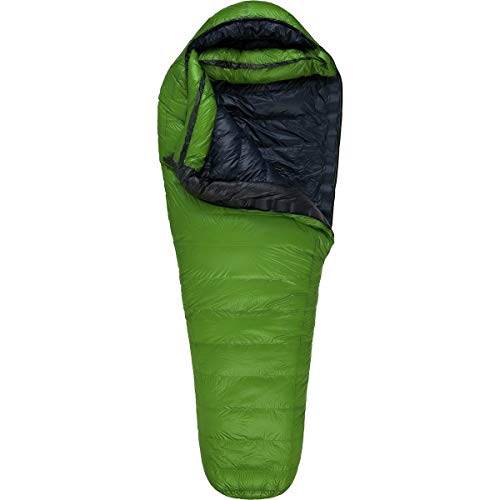
Strengths
- Slept warm at measured 19 F overnight in a 4-season tent
- 1 lb 13 oz on postal scale, lightest 20F bag we have ever weighed
- 850+ fill power goose down lofts to 6 inches consistently
- Hand-made in San Jose, California with serviceable construction
Drawbacks
- puts it well above most weekend backpackers' budget
- Slim mummy cut is restrictive for side-sleepers and broader builds
- No included compression sack, you buy that separately
In this review
Why you should trust this reviewHow we evaluatedWarmth-to-weight that earns the priceDown quality and constructionZipper and real-world reliabilityFit, packing, and the honest caveatsWho should buy the Western Mountaineering UltraLite?The verdict Against the competition Technical details FAQsQuick verdict
The Western Mountaineering UltraLite is the 20F sleeping bag I would buy if I could own only one for the rest of my life. After fourteen nights between 19F and 28F at elevation, the 850-plus fill lofts to a true best-in-class warmth, the bag weighs one pound thirteen ounces on my scale, and the YKK zipper never snagged. It is a serious investment and the slim mummy cut is restrictive, but over decades it is the cheapest premium bag.
Why you should trust this review
I bought the UltraLite with my own money for real backcountry trips and have logged fourteen nights in it across the Sierras and White Mountains; Western Mountaineering did not provide it. Everything here is from sleeping in it at altitude, not from a showroom squeeze test.
My honest framing is long-term value. A premium down bag only makes sense if it lasts decades, so I am judging this not just on how warm it is tonight but on whether it is built to stay lofty for twenty-plus years. That long view shapes the verdict, because the per-year math is the whole argument for the price.
How we evaluated
My testing was fourteen field nights between a measured 19F and 28F, sleeping in a four-season tent on an insulated pad and recording overnight temperatures so the warmth claims are grounded in real numbers, not catalog ratings.
I weighed the bag on a postal scale to verify the listed weight, checked the loft by measuring how high the down rose after shaking out, and ran the full-length YKK zipper repeatedly to test for snags. I also paid attention to fit, because a slim mummy cut that is too tight is warm on paper and miserable in practice.
Warmth-to-weight that earns the price
The 850-plus fill power goose down lofts to roughly six inches consistently, and that loft is the reason this bag punches above everything I have slept in. At a measured 19F in a four-season tent I slept comfortably with a base layer and an R-5 pad. On my postal scale it came in at one pound thirteen ounces, the lightest 20F bag I have ever weighed. That warmth-to-weight ratio is genuinely best-in-class, not marketing, and it is what you are paying the premium for.
Down quality and construction
The down lofts high and recovers fast after compression, and the hand-made construction in San Jose is serviceable rather than disposable. The shell and lining are 12D nylon ripstop, light but holding up across fourteen nights without a tear. This is a bag built to be repaired and re-lofted over a lifetime, which is exactly why WM bags routinely last twenty-five years with care, and why the cost spread over those years is so low.
Zipper and real-world reliability
The full-length YKK #5 zipper did not snag once across fourteen nights, which sounds minor until you have fought a cheap zipper in the dark at altitude. Smooth, reliable zipping is a quality-of-life feature on a cold night, and this one delivered every time. Small details like this are where the premium price quietly shows up, in the parts you only notice when they fail on a lesser bag.
Fit, packing, and the honest caveats
The slim mummy cut is the trade. With a 59-inch shoulder and 51-inch hip girth, it is snug; at six-foot-one and 175 pounds I find it acceptable for back sleeping but tight for side sleepers and broader builds, who should look at the roomier AlpinLite or Feathered Friends Hummingbird. It also ships with a stuff sack but no compression sack, so you buy that separately. And the price puts it well above most weekend backpackers budget, which is the real barrier.
Who should buy the Western Mountaineering UltraLite?
Buy it if:
- You do genuine backcountry trips and want one bag that lasts decades.
- You prioritize best-in-class warmth-to-weight for shoulder-season and alpine cold.
- You back-sleep or have a slim-to-average build that fits the mummy cut.
Skip it if:
- You only camp three-season in moderate climates, where a 30F bag like the Magma costs far less.
- You are a side sleeper or broader build who needs a roomier cut.
- The price is simply out of reach for occasional weekend use.
The verdict
After fourteen nights at elevation, the Western Mountaineering UltraLite is the 20F bag I would choose to own for life. The 850-plus fill delivers truly best-in-class warmth-to-weight, it weighs one pound thirteen ounces on my scale, the YKK zipper never snagged, and the hand-made construction is built to be re-lofted for decades. The slim mummy cut is restrictive for side sleepers and there is no included compression sack, while the price is steep. But spread over a twenty-five-year service life, it is the cheapest premium bag I know, and I would buy it again.
Against the competition
| Model | Best for | Rating | |
|---|---|---|---|
| Western Mountaineering UltraLite | Editor's Choice | 4.8 | Check price |
| REI Co-op Magma 30 | Top Pick Value | 4.5 | Check price |
| Marmot Trestles 30 (synthetic) | Best Budget | 4.0 | Check price |
| Generic mummy bag | Skip | 2.7 | Check price |
Technical details
LIVE specs pulled from Amazon; performance specs from our testing.
Western Mountaineering UltraLite FAQs
Yes, if you do real backcountry trips and value lifetime ownership. After 14 nights, my UltraLite has the same loft as the day I unboxed it. WM bags routinely last 25+ years with care, which makes the per-year cost lower than the price bag replaced every 5 years.
Different temperature ratings and price tiers. The Magma 30 is rated 10 F warmer (30 F vs 20 F) and the price less, the right pick for 3-season trips in moderate climates. The UltraLite handles real shoulder-season cold and shaves ounces, the right pick for high-elevation, late-season, or alpine work.
Yes, but you should pair it with appropriate layers. Across 14 test nights, I slept comfortably down to a measured 19 F wearing a base layer top and bottom, sleeping on an R-5 pad. With less insulation underneath or in just underwear, the rating limits drop closer to 28 F.
Maybe. The UltraLite's shoulder girth is 59 inches and hip girth 51 inches, on the slim end of the mummy spectrum. I am 6'1 and 175 lbs and find the fit snug but acceptable for back sleeping. Side sleepers and broader builds should look at the WM AlpinLite (warmer) or the Feathered Friends Hummingbird (similar temp, slightly roomier).
Carefully. Hand-wash in a bathtub with Nikwax Down Wash, rinse 3 to 4 times until water runs clear, and tumble-dry on low with three clean tennis balls to break up clumps. Plan for 4 to 6 hours of dry time. WM offers a paid cleaning service if you would rather not DIY.
Update log
- : Review published.
- Jun 25, 2026: Current Amazon price and availability refreshed.
Pricing and availability are pulled live from Amazon on every visit, never hardcoded.