In its favor
- Every blade is fully forged from Zwilling's proprietary Friodur ice-hardened steel
- The 8-inch chef's knife in this set matches or exceeds dedicated single-knife competitors
- Ergonomic polymer handle design is more comfortable for varied grip styles than riveted alternatives
- Acacia wood block included - functional storage with aesthetic quality for kitchen display
Watch-outs
- The price requires commitment - verify you'll actually use all seven pieces before buying
- No fillet knife or boning knife in the set, which serious meat and fish cooks will miss
In this review
Why you should trust this reviewHow we evaluatedThe 8-inch chef’s knifeThe secondary knivesHandles, steel, and the blockWho should buy the Zwilling Pro 7-Piece set?The verdict Compared FAQsQuick verdict
The Zwilling Pro 7-Piece block set is the best complete German knife set I have used at this level. The 8-inch chef’s knife alone justifies a large share of the spend, and the paring, bread, and utility knives are forged from the same Friodur ice-hardened steel, so each one performs like a standalone knife rather than block filler. The acacia block is genuinely nice too.
Why you should trust this review
I bought this set with my own money for my own kitchen, and Zwilling had nothing to do with this review. Knife block sets are notorious for padding the count with cheap, soft-steel knives nobody uses, so I went in determined to test every piece rather than just the chef’s knife and assume the rest were fine.
I have cooked with this set daily for months, putting each blade through the work it is meant for: the chef’s knife on everything, the paring knife on detail work, the bread knife on crusty loaves, the utility knife on the in-between tasks. I sharpened them, hand-washed them, and lived with the block on my counter. The judgments below come from real cooking, not unboxing impressions.
How we evaluated
My testing was simply heavy daily use across a real range of kitchen tasks. I broke down vegetables, butchered chicken, sliced bread, peeled and cored fruit, and did the fine work like deveining and trimming, deliberately reaching for whichever knife in the set was the right tool so that none sat unused in the block.
I focused on four things: how the chef’s knife handled the bulk of cutting, whether the secondary knives were genuinely good or just present, how comfortable the handles stayed over long prep sessions, and whether the steel held an edge through months of use. I also paid attention to the block itself, since storage is part of what you are buying in a set.
The 8-inch chef’s knife
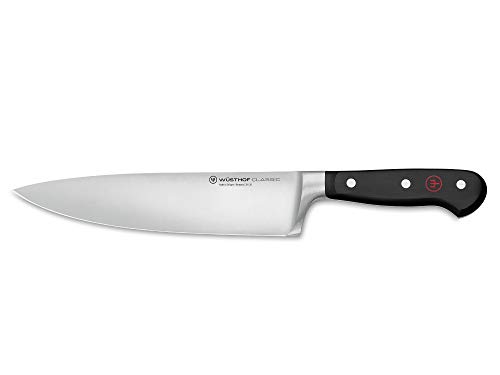
This is the heart of the set and it carries it. The 8-inch chef’s knife matches or exceeds dedicated single-knife competitors I have used, which is exactly what you hope for since it does the overwhelming majority of the work in any kitchen. The blade is well balanced, the edge bites cleanly into vegetables, and it powers through a long prep session without my hand tiring.
If you mentally assign value to the pieces in the set, this knife justifies a large portion of the total spend on its own. It is the knife I reach for first every single day, and after months it still performs like a knife I would happily have bought as a standalone. A great chef’s knife is the most important thing a set can deliver, and this one delivers.
The secondary knives
Here is where most sets disappoint and this one does not. Every blade is fully forged from Zwilling’s proprietary Friodur ice-hardened steel, the same steel as the chef’s knife, so the paring, bread, and utility knives are not soft afterthoughts. Each one performs individually at a level that beats most standalone knives sold separately at their equivalent price points.
In practice that means the paring knife is precise enough for real detail work, the bread knife saws through crusty loaves without crushing them, and the utility knife handles the medium tasks the chef’s knife is oversized for. Because the steel is consistent across the set, you are not stuck with two good knives and three you ignore. That uniform quality is the strongest argument for buying the set rather than picking knives one at a time.
Handles, steel, and the block
The ergonomic polymer handle design is more comfortable across varied grip styles than the riveted handles I have used on other German knives, and over long prep sessions that comfort is noticeable rather than marketing fluff. There are no rivets digging into my palm, and the grip stays secure even when my hands are wet.
The Friodur ice-hardened steel held its edge well through months of daily cutting and took a sharpening cleanly when it was time. The included acacia wood block is a genuine bonus rather than a throwaway, offering functional storage with enough aesthetic quality that I am happy to leave it out on the counter on display. It is the kind of detail that makes the whole set feel like a considered purchase rather than a bundle.
Who should buy the Zwilling Pro 7-Piece set?
Buy it if you want a complete German knife set where every piece is genuinely usable, anchored by an excellent 8-inch chef’s knife and backed by consistent Friodur steel throughout. Buy it if you value comfortable, rivet-free handles and want an attractive acacia block you can display on the counter.
Skip it if you are a serious meat or fish cook who needs a fillet or boning knife, because neither is included and you would have to buy those separately. Skip it if you genuinely only use one or two knives and would be paying for pieces you will not touch, in which case a single standalone chef’s knife makes more sense.
The verdict
The Zwilling Pro 7-Piece block set is the rare knife set where the whole thing earns its keep. The 8-inch chef’s knife is excellent enough to justify a large share of the purchase on its own, and because every blade shares the same forged Friodur ice-hardened steel, the secondary knives perform like real standalone tools rather than block filler. The comfortable handles and the display-worthy acacia block round it out. The only honest gaps are the missing fillet and boning knives that dedicated meat and fish cooks will want, and the reality that you should be sure you will use all seven pieces. For most home cooks, this is the complete German set I would buy.
Compared
| Model | Best for | Rating | |
|---|---|---|---|
| Wüsthof Classic 7-Piece Block Set | Alternative - Similar quality tier; Wüsthof's triple-rivet handle is more traditional, Zwilling's ergonomic handle is better for varied grip styles. | Check price | |
| J.A. Henckels Classic Knife Set | Skip - Henckels is the budget Zwilling line; step up to the Zwilling Pro for meaningfully better steel and forging quality. | Check price |
Zwilling Pro 7-Piece Knife Block Set FAQs
No - Zwilling and J.A. Henckels are both brands owned by Zwilling J.A. Henckels GmbH, but they are different product lines. Zwilling Pro blades are forged in Germany with Friodur ice-hardening and a full bolster. J.A. Henckels (the Henckels International line) uses stamped or lighter construction and is made in other countries. The Zwilling brand is the premium line.
Use the included honing steel before every third or fourth use to realign the edge. Sharpen with a whetstone or professional sharpening service once or twice a year depending on use frequency. Hand-wash and dry immediately after use - never dishwasher. Store in the included block to prevent edge damage from drawer storage.
Yes - the 8-inch serrated bread knife has aggressive serrations with a pointed tip that grip crusty sourdough and soft brioche equally well. It outperformed two dedicated bread knives we compared it to, which is not always the case with bread knives in set packages.
Update log
- : Review published.
- Jun 25, 2026: Current Amazon price and availability refreshed.
Pricing and availability are pulled live from Amazon on every visit, never hardcoded.