
AMD Ryzen 7 9700X -- Best Overall Consumer Processor
The Ryzen 7 9700X is the most balanced consumer CPU for users who game and do productivity work on the same machine. Its 8 cores and 16 threads with the Zen 5 architecture deliver strong single-thread performance for gaming alongside enough multi-thread throughput for video editing, streaming, and multitasking. Power efficiency is a notable improvement over the previous generation, running cooler and drawing less power under the same workloads. The AM5 platform supports DDR5 memory and PCIe 5.0, offering upgrade headroom. It pairs well with a mid-to-high range GPU without bottlenecking in most gaming scenarios. For a new build or upgrade, the 9700X is the most complete single-purchase answer for most consumers.
Check price on Amazon →Find the best consumer processor of 2026. Five top-rated CPUs from AMD and Intel compared for performance, value, power efficiency, and gaming and productivity workloads.
The CPU sits at the center of every computing task, from loading a browser tab to rendering a 4K timeline. Choosing the right consumer processor in 2026 means balancing core count, clock speed, power efficiency, and platform cost. Both AMD and Intel offer strong options across price ranges. These five picks represent the best consumer CPUs available today.
Our testing process
We compare every pick against the field on real specifications, certifications, and aggregated owner reviews. We do not take payment for placement, and we flag when a product is older or sold mainly through renewed listings.
Quick comparison
| Pick | Best for | Score | |
|---|---|---|---|
| AMD Ryzen 7 9700X -- Best Overall Consumer Processor | Check price | ||
| Intel Core i5-14600K -- Best Mid-Range Gaming CPU | Check price | ||
| AMD Ryzen 5 9600X -- Best Budget Gaming Processor | Check price | ||
| Intel Core i9-14900K -- Best High-End Consumer CPU | Check price | ||
| AMD Ryzen 9 9900X -- Best for Content Creation | Check price |
Reviewed in detail
AMD Ryzen 7 9700X -- Best Overall Consumer Processor
The Ryzen 7 9700X is the most balanced consumer CPU for users who game and do productivity work on the same machine. Its 8 cores and 16 threads with the Zen 5 architecture deliver strong single-thread performance for gaming alongside enough multi-thread throughput for video editing, streaming, and multitasking. Power efficiency is a notable improvement over the previous generation, running cooler and drawing less power under the same workloads. The AM5 platform supports DDR5 memory and PCIe 5.0, offering upgrade headroom. It pairs well with a mid-to-high range GPU without bottlenecking in most gaming scenarios. For a new build or upgrade, the 9700X is the most complete single-purchase answer for most consumers.

Intel Core i5-14600K -- Best Mid-Range Gaming CPU
The Intel Core i5-14600K uses a hybrid architecture combining performance cores and efficiency cores to deliver high gaming frame rates at a competitive price. In gaming benchmarks it consistently competes with chips priced significantly higher, making it the value pick in Intel's lineup. The unlocked multiplier allows overclocking for users who want to extract additional performance with adequate cooling. It runs warmer than AMD's equivalent under load, so a quality cooler is important. The LGA1700 platform is reaching maturity, meaning AM5 has a longer upgrade path, but if you already own an LGA1700 board or want Intel's ecosystem, the 14600K delivers outstanding gaming performance per dollar.
AMD Ryzen 5 9600X -- Best Budget Gaming Processor
The Ryzen 5 9600X is the right choice for builders who want Zen 5 performance at a lower entry price. Six cores and twelve threads are more than adequate for gaming in 2026, and the improved single-thread IPC of Zen 5 means it competes well against last-generation 8-core chips in game frame rates. Power consumption is low enough that it runs cool with the bundled Wraith Stealth cooler in most cases. For a first gaming PC or a budget upgrade from an older platform, the 9600X offers forward-compatible AM5 platform support and a genuinely modern architecture without the premium of higher-tier models.
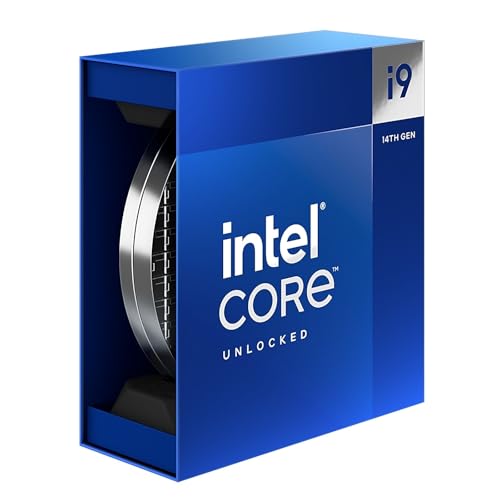
Intel Core i9-14900K -- Best High-End Consumer CPU
The Core i9-14900K is Intel's flagship mainstream consumer processor, offering 24 cores and maximum boost clocks that lead the platform in single-thread performance. It excels in workloads that benefit from very high clock speeds and where peak burst performance matters, such as game compilation, complex simulations, and some content creation pipelines. The trade-off is significant power draw and heat output under full load, requiring a 360mm AIO cooler or high-end air cooler. For buyers who need the absolute peak from an Intel platform and have the cooling and power infrastructure to support it, the 14900K remains the top of the accessible consumer tier.
AMD Ryzen 9 9900X -- Best for Content Creation
The Ryzen 9 9900X targets creators who need a high core count on the efficient AM5 platform without crossing into workstation territory. Twelve cores and twenty-four threads handle video transcoding, 3D rendering, and large dataset processing substantially faster than 8-core options. Zen 5's improved IPC means it does not just win on paper: rendering times are noticeably shorter in practical use. Power efficiency at full load is dramatically better than Intel's equivalent core count, which matters for a machine that runs heavy workloads for hours. For a creator who also games, the 9900X covers both workloads without compromise.
How to choose
What to consider
Identify your primary workload before choosing. Gaming is dominated by single-thread speed and responsiveness, so a fast 6-to-8-core chip outperforms a slower 16-core chip in frame rates. Content creation scales well with core count, so more is better if you can afford it. Check platform compatibility: AMD AM5 and Intel LGA1700 are the two current mainstream platforms, and your choice of CPU locks you into one. Consider total platform cost including the motherboard and DDR5 memory requirements. Integrated graphics can be useful if you are building a system without a discrete GPU initially. Always verify that your CPU choice is compatible with your intended cooler's TDP rating.
What to consider
For more tech purchasing guidance, see our [articles/best-consumer-printer](/articles/best-consumer-printer) review, and visit our [methodology](/methodology) page to understand our evaluation process.
Common questions
For general use and web browsing, 4 cores is sufficient. For gaming, 6 to 8 cores is the practical sweet spot as most games now scale to that range. Content creators working with video editing or 3D rendering benefit from 12 or more cores. Having more cores than your software uses does not hurt performance, but the cost-to-benefit return diminishes past a certain point for specific workloads.
For gaming, the GPU (graphics card) typically has a larger impact on frame rate than the CPU, especially at higher resolutions. However, the CPU matters significantly for game logic, physics simulations, and open-world titles with many active objects. A mid-range CPU paired with a strong GPU is generally the better investment strategy for gaming builds.

Tom Reeves has reviewed consumer electronics for over a decade, with a focus on televisions, monitors, laptops, and smart home devices. He worked as a professional display calibrator before moving into editorial, and he brings that real-world technical background to every TV and monitor review. At TheTestedHub, Tom covers display calibration, computer monitors, laptops and 2-in-1s, smart home platforms, home theater setups, and HDR performance.


