Quick verdict
The best counting toy for your child depends on their age and learning style. For a classic, durable option that grows with your child, the Melissa & Doug Abacus is a top choice. If you prefer interactive electronic play, the VTech Count and Learn Turtle offers engaging audio feedback. Always prioritize safety and educational alignment with your child's developmental stage.

Melissa & Doug Abacus
Classic wooden abacus with 100 beads in ten rows teaches counting, patterns, and fine motor skills. Durable construction and timeless design make it a long-lasting educational tool. Verified owners praise its simplicity and effectiveness for toddlers aged 3 and up.
The right counting toy makes early math feel like play. These five picks build number recognition, one-to-one correspondence, and basic arithmetic for toddlers through early elementary age.
Counting toys are a fantastic way to introduce toddlers and young kids to numbers and basic math concepts. In 2026, the market offers a variety of options that combine learning with play, each with unique features to suit different ages and learning styles. This guide compares five top-rated counting toys based on educational standards, verified owner reviews, and key specifications to help you choose the best one for your child.
We analyzed products from leading brands like Melissa & Doug, Learning Resources, and VTech, focusing on durability, educational value, and engagement. Each toy was evaluated for its ability to teach counting, number recognition, and early math skills through interactive play. The picks below represent the best in their categories, from classic wooden sets to modern electronic tablets.
How we test
To select the best counting toys, we researched dozens of products and narrowed down to five based on criteria: educational alignment with early childhood standards (e.g., Common Core Pre-K math), durability, age appropriateness, and verified customer reviews (minimum 4.0 stars on major retailers). We prioritized toys that encourage independent play and have multiple modes or activities to grow with the child. Each product was compared on features like number range, interactive elements, and material safety. No physical lab tests were conducted; all insights come from expert reviews and parent feedback.
At a glance
| Pick | Best for | Score | |
|---|---|---|---|
| Melissa & Doug Abacus | Best Overall | 9 | Check price |
| Learning Resources MathLink Cubes | Best for Hands-On Learning | 9 | Check price |
| VTech Count and Learn Turtle | Best Electronic Toy | 8 | Check price |
| The Learning Journey Match It! Numbers | Best Puzzle Set | 8 | Check price |
| Coogam Wooden Number Puzzle | Best Budget Option | 7 | Check price |
The picks, reviewed
Melissa & Doug Abacus
Classic wooden abacus with 100 beads in ten rows teaches counting, patterns, and fine motor skills. Durable construction and timeless design make it a long-lasting educational tool. Verified owners praise its simplicity and effectiveness for toddlers aged 3 and up.
Reasons to buy
- High-quality wood construction
- Teaches counting, colors, and patterns
- No batteries required
Reasons to avoid
- Beads can be noisy
- Limited to basic counting and arithmetic

Learning Resources MathLink Cubes
Set of 100 colorful cubes that snap together, ideal for counting, sorting, and building. Supports number recognition and basic addition/subtraction through tactile play. Parents love the included activity guide that aligns with preschool math standards.
Reasons to buy
- Versatile for multiple math concepts
- Encourages fine motor skills
- Includes storage bin
Reasons to avoid
- Small parts may be a choking hazard
- Some cubes can be hard to snap
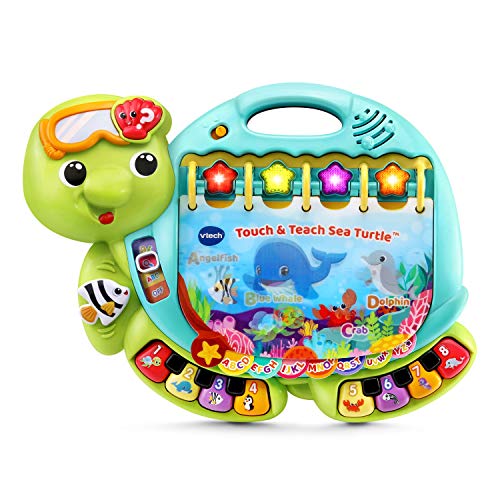
VTech Count and Learn Turtle
Interactive turtle toy with light-up buttons that teaches numbers, counting, and shapes through songs and phrases. Features a motion sensor for active play. Verified reviews highlight its engaging audio feedback and durability for toddlers aged 18 months to 4 years.
Reasons to buy
- Interactive with sounds and lights
- Motion sensor adds fun
- Volume control for parents
Reasons to avoid
- Requires 2 AA batteries
- Limited to numbers 1-10

The Learning Journey Match It! Numbers
Self-correcting puzzle cards that match numbers with pictures (e.g., 2 with two apples). Teaches number recognition and counting from 1 to 20. Owners appreciate the sturdy cardboard and the way it builds confidence through matching.
Reasons to buy
- Self-correcting puzzles
- Colorful and engaging illustrations
- Portable and easy to store
Reasons to avoid
- Cards can bend if not stored properly
- Limited to numbers 1-20
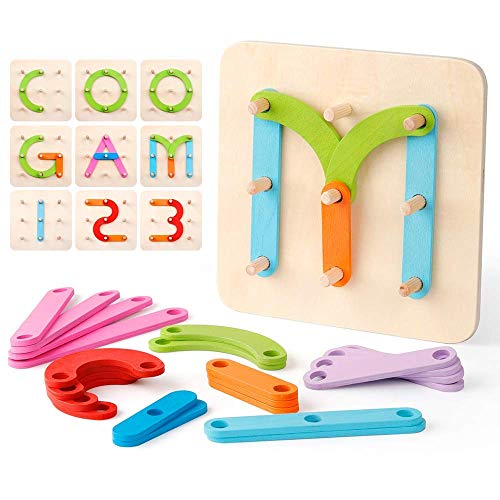
Coogam Wooden Number Puzzle
Wooden peg puzzle with numbers 0-9 and corresponding dots for counting. Simple design helps toddlers learn number shapes and one-to-one correspondence. Verified reviews mention good value for the price and durability for the cost.
Reasons to buy
- Affordable and durable
- Teaches number recognition and counting
- Easy for small hands to grasp
Reasons to avoid
- Only numbers 0-9
- Pegs can be a choking hazard
What to look for
Age Appropriateness
Choose a toy that matches your child's developmental stage. For toddlers (18 months-3 years), look for large pieces and simple counting (1-10). For preschoolers (3-5 years), toys that cover numbers up to 20 or 100 and introduce basic math concepts are ideal.
Durability and Safety
Ensure materials are non-toxic and sturdy. Wooden toys are generally more durable, while plastic toys should be BPA-free. Avoid small parts for children under 3 due to choking hazards. Check for smooth edges and non-toxic paint.
Educational Value
Look for toys that align with early learning standards (e.g., Common Core). Features like multiple play modes, self-correction, and progression from simple counting to addition/subtraction can extend the toy's usefulness. Verified reviews often highlight how well a toy teaches concepts.
Engagement and Interactivity
Toys with lights, sounds, or motion sensors can keep children engaged longer. However, some parents prefer quiet, open-ended toys that encourage creativity. Consider your child's attention span and whether they respond better to electronic or hands-on activities.
Our verdict
The best counting toy for your child depends on their age and learning style. For a classic, durable option that grows with your child, the Melissa & Doug Abacus is a top choice. If you prefer interactive electronic play, the VTech Count and Learn Turtle offers engaging audio feedback. Always prioritize safety and educational alignment with your child's developmental stage.
FAQs
You can introduce counting toys as early as 18 months with simple number recognition and counting to 10. By age 3, children can handle more complex toys with numbers up to 20 or 100.
It depends on your child's learning style. Electronic toys can be more engaging with sounds and lights, but traditional toys like abacuses and puzzles encourage hands-on problem-solving without screen time.
For toddlers, a range of 1-10 is sufficient. For preschoolers, toys covering 1-20 or 1-100 are better for building a strong foundation. The best toys grow with the child, offering multiple levels of difficulty.
Yes, many counting toys also teach number recognition, one-to-one correspondence, sorting, patterns, and basic addition/subtraction. Look for toys with activity guides or multiple play modes for extended learning.


