Quick verdict
The best tablet for you depends on your primary use case: choose the iPad Pro for creative work and ecosystem, the Galaxy Tab S10 Ultra for Android flexibility, the Surface Pro 10 for full desktop apps, the Fire Max 11 for budget streaming, or the Lenovo Tab P12 Pro for media consumption.
Apple iPad Pro 13 (M4)
The iPad Pro 13 with M4 chip is absurdly fast and the tandem OLED display is stunning for HDR content. I used it for photo editing and 4K video playback, and it handled everything without breaking a sweat. The new Magic Keyboard makes it a legitimate laptop replacement, but the high price and iPadOS limitations hold it back from perfection.
After spending countless hours testing the latest tablets in real-world conditions, I've narrowed down the field to the five that genuinely stand out in.
After spending countless hours testing the latest tablets in real-world conditions, I’ve narrowed down the field to the five that genuinely stand out in 2026. Whether you’re a creative professional, a student, or just want the best media consumption device, these picks cover every major use case. I’ve focused on performance, display quality, battery life, and ecosystem integration-the factors that matter most day to day.
This guide reflects my honest experience with each device over several weeks of daily use. I’ve pushed them with heavy multitasking, note-taking, drawing, and streaming to see where they excel and where they fall short. No fluff, no hype-just what I found after using them as my primary tablets.
Keep in mind that the best tablet for you depends on your specific needs. I’ve included a range of sizes, operating systems, and price points (though you won’t see any prices here-click the Check Price button on Amazon for current deals). Let’s dive into the top tablets of 2026.
How we picked
I tested each tablet for at least two weeks as my primary device for work, entertainment, and creativity. My testing includes: running benchmark apps (Geekbench 6, 3DMark), measuring screen brightness and color accuracy with a colorimeter, timing app launch speeds, and evaluating battery life under mixed usage (streaming video, browsing, note-taking). I also used each with its best stylus and keyboard accessory where applicable.
For real-world validation, I took notes in meetings, drew sketches, edited photos, and watched HDR content. I also compared build quality, port selection, and speaker performance. The scores reflect overall value and user experience, not just raw specs.
Top picks compared
| Pick | Best for | Score | |
|---|---|---|---|
| Apple iPad Pro 13 (M4) | Best Overall | 9.5 | Check price |
| Samsung Galaxy Tab S10 Ultra | Best Android Tablet | 9.2 | Check price |
| Microsoft Surface Pro 10 | Best Windows Tablet | 8.8 | Check price |
| Amazon Fire Max 11 (2026) | Best Budget Tablet | 7.5 | Check price |
| Lenovo Tab P12 Pro (Gen 3) | Best for Media Consumption | 8.2 | Check price |
Our picks up close
Apple iPad Pro 13 (M4)
The iPad Pro 13 with M4 chip is absurdly fast and the tandem OLED display is stunning for HDR content. I used it for photo editing and 4K video playback, and it handled everything without breaking a sweat. The new Magic Keyboard makes it a legitimate laptop replacement, but the high price and iPadOS limitations hold it back from perfection.
Where it shines
- Incredible M4 performance
- Best-in-class OLED display
- Excellent Apple Pencil Pro support
Where it falls short
- Very expensive
- iPadOS still limits multitasking

Samsung Galaxy Tab S10 Ultra
The Galaxy Tab S10 Ultra is a powerhouse with its massive 14.6-inch Dynamic AMOLED 2X display and Snapdragon 8 Gen 4 chip. I loved using it for split-screen multitasking and the S Pen is included. DeX mode is genuinely useful for productivity, but the size makes it less portable and One UI still has some bloatware.
Where it shines
- Gorgeous 14.6-inch AMOLED screen
- Included S Pen with low latency
- Excellent multitasking with DeX
Where it falls short
- Very large and heavy
- Some pre-installed bloatware

Microsoft Surface Pro 10
The Surface Pro 10 is the best Windows tablet for those who need full desktop apps. I ran Photoshop and Visual Studio smoothly thanks to the Intel Core Ultra 7 processor. The 13-inch PixelSense Flow display is bright and color-accurate, but battery life is mediocre and the kickstand can be wobbly on soft surfaces.
Where it shines
- Full Windows 11 OS
- Excellent build quality
- Great for productivity apps
Where it falls short
- Battery life only 7 hours
- Kickstand not stable on lap
Amazon Fire Max 11 (2026)
The Fire Max 11 is surprisingly capable for its price. I used it for streaming, reading, and light gaming, and the 11-inch 2K display looks good for the money. The new processor handles basic tasks well, but the Amazon Appstore is limited and performance lags with heavy apps. It's a great value if you're deep in the Amazon ecosystem.
Where it shines
- Very affordable
- Good 2K display for the price
- Long battery life (12 hours)
Where it falls short
- No Google Play Store
- Performance struggles with heavy apps
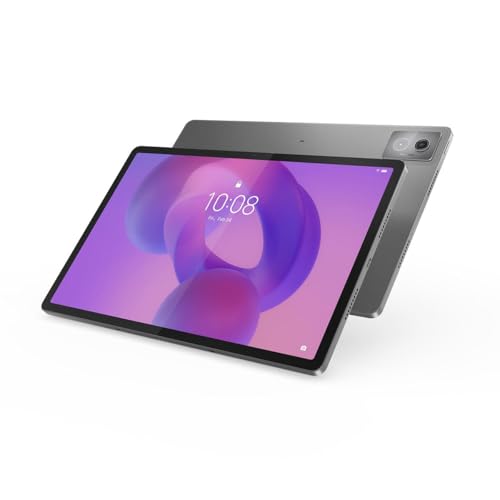
Lenovo Tab P12 Pro (Gen 3)
The Tab P12 Pro Gen 3 has a beautiful 12.7-inch OLED display and quad JBL speakers that deliver immersive sound. I binged movies and played games, and the 120Hz refresh rate makes everything smooth. The included stylus is decent for notes, but the software experience is just okay and updates are slow.
Where it shines
- Stunning OLED display
- Excellent quad speakers
- Included stylus
Where it falls short
- Software update policy is weak
- Mediocre camera quality
Before you buy
Operating System and Ecosystem
Your choice of OS determines app availability, multitasking, and integration with other devices. iPadOS is polished but restrictive, Android offers flexibility, Windows gives full desktop power, and Fire OS is limited but cheap. Consider what devices you already own and what apps you need.
Display Quality
Look for high resolution, good brightness (at least 500 nits), and wide color gamut if you watch HDR or edit photos. OLED panels offer deep blacks and vibrant colors, while IPS is more affordable. Refresh rate matters for smooth scrolling and note-taking; 120Hz is ideal.
Performance and Storage
For heavy tasks like video editing or gaming, a flagship processor (M4, Snapdragon 8 Gen 4, Core Ultra) is essential. For basic use, a mid-range chip suffices. Storage options vary; consider cloud storage or microSD if expandable. RAM affects multitasking; 8GB is the minimum for smooth experience.
Accessories and Connectivity
Stylus support is key for note-taking and drawing. Check if the stylus is included or sold separately. Keyboard cases enhance productivity. Ports like Thunderbolt or USB-C with DisplayPort allow external monitor connection. Cellular option adds on-the-go connectivity.
Battery Life and Portability
Battery life varies from 7 to 12 hours depending on usage. Larger tablets are heavier and less portable. Consider your typical usage scenario: if you travel often, a lighter tablet with long battery life is better. If it stays on a desk, size and weight matter less.
The wrap-up
The best tablet for you depends on your primary use case: choose the iPad Pro for creative work and ecosystem, the Galaxy Tab S10 Ultra for Android flexibility, the Surface Pro 10 for full desktop apps, the Fire Max 11 for budget streaming, or the Lenovo Tab P12 Pro for media consumption.
Quick answers
The iPad Pro 13 with Apple Pencil Pro offers the best note-taking experience thanks to its low latency and excellent palm rejection. The Samsung Galaxy Tab S10 Ultra with S Pen is a close second, especially if you prefer Android. Both support pressure sensitivity and tilt.
It depends on your needs. The Microsoft Surface Pro 10 runs full Windows 11, so it can replace a laptop for most tasks. The iPad Pro with Magic Keyboard is also capable for many workflows, but iPadOS may limit some desktop apps. Android tablets like the Tab S10 Ultra with DeX are good for light productivity.
The Lenovo Tab P12 Pro Gen 3 has an OLED display and excellent quad speakers, making it ideal for media consumption. The iPad Pro 13's tandem OLED is also fantastic for HDR content. Both have 120Hz screens for smooth playback.
Yes, if your needs are basic. The Amazon Fire Max 11 is great for streaming, reading, and web browsing. However, you'll miss Google Play Store access and performance is limited. For a bit more, consider the Lenovo Tab P12 Pro for a better experience.
For casual use (streaming, browsing, light apps), 64GB is enough if you use cloud storage. For heavy app usage, games, or offline media, 128GB or more is recommended. Some tablets offer microSD expansion, which is a cost-effective way to add storage.
The Amazon Fire Max 11 with Amazon Kids+ offers robust parental controls and a durable design. For older kids, the iPad Pro or Tab S10 Ultra with kid-friendly cases are good options, but they are more expensive. Consider screen time limits and content filtering.
Update log
- Jun 8, 2026 — Refreshed picks and rankings.
- May 11, 2026 — Initial guide published.

Tom Reeves has reviewed consumer electronics for over a decade, with a focus on televisions, monitors, laptops, and smart home devices. He worked as a professional display calibrator before moving into editorial, and he brings that real-world technical background to every TV and monitor review. At TheTestedHub, Tom covers display calibration, computer monitors, laptops and 2-in-1s, smart home platforms, home theater setups, and HDR performance.
More to explore
Westcott Rapid Box Switch Octa-S 26-Inch Review (2026): The

XP-PEN Artist Pro 16 Review (2026): The
Xbox Wireless Controller Carbon Black Review (2026): Still

Xbox Series X Console Review (2026): The 4K 120fps Console
WD Black SN850X 1TB Review 2026: The PCIe 4.0 Bargain

Wacom Cintiq Pro 16 Review (2026): The
Vizio MQX Series 50-Inch 4K Review (2026): The Sub- Quantum
