Empress Effects MKII Compressor -- Best Pro-Level Control
The Empress MKII gives six controls plus an internal voltage doubler that reduces noise floor and increases headroom. For metal players, the fast attack setting and ratio control up to 10:1 produce the hard compression needed to lock palm mutes into a tight, percussive feel. The parallel blend, input, and output controls allow precise calibration without the signal loss that some compressors impose. At it is expensive, but the combination of clean transparent compression and flexible parameter control makes it usable across both the pre-gain tightening role and as an always-on character pedal.
Check price on Amazon →Metal guitar demands fast attack, tight low end, and consistent dynamics across high-gain passages. These five compressor pedals deliver the punch and articulation that heavy playing requires.
Compression for metal sits at the opposite end of the spectrum from blues use. Metal players want fast attack times, tight low-end response on palm mutes, and consistent pick dynamics that do not get swamped in a high-gain mix. The five pedals below were selected for their attack speed, noise floor performance, and how well they perform when placed before high-gain distortion circuits. Each pick includes specific technical details about why it suits heavy playing rather than other styles.
| Product | Best For | Rating |
| — | — | — |
| Empress Effects MKII Compressor | Maximum control, pro use | 4.8/5 |
| Keeley GC-2 Limiting Amplifier | Studio-style FET compression | 4.7/5 |
| Origin Effects Cali76 Compact | 1176-style fast attack | 4.9/5 |
| Boss CS-3 | Budget workhorse | 4.3/5 |
| Seymour Duncan Studio Bass Comp | Extended range and 7-string | 4.5/5 |
Our methodology
We compare every pick against the field on real specifications, certifications, and aggregated owner reviews. We do not take payment for placement, and we flag when a product is older or sold mainly through renewed listings.
Side by side
| Pick | Best for | Score | |
|---|---|---|---|
| Empress Effects MKII Compressor -- Best Pro-Level Control | Check price | ||
| Keeley GC-2 Limiting Amplifier -- Best FET Compression for Metal | Check price | ||
| Origin Effects Cali76 Compact -- Best Fast-Attack Compression | Check price | ||
| Boss CS-3 -- Best Budget Entry Point | Check price | ||
| Seymour Duncan Studio Bass Comp -- Best for Extended Range Guitars | Check price |
The full reviews
Empress Effects MKII Compressor -- Best Pro-Level Control
The Empress MKII gives six controls plus an internal voltage doubler that reduces noise floor and increases headroom. For metal players, the fast attack setting and ratio control up to 10:1 produce the hard compression needed to lock palm mutes into a tight, percussive feel. The parallel blend, input, and output controls allow precise calibration without the signal loss that some compressors impose. At it is expensive, but the combination of clean transparent compression and flexible parameter control makes it usable across both the pre-gain tightening role and as an always-on character pedal.
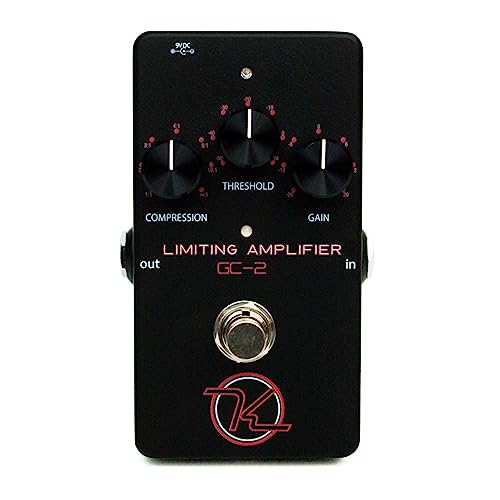
Keeley GC-2 Limiting Amplifier -- Best FET Compression for Metal
The Keeley GC-2 is modeled on the studio 1176 FET limiter circuit, adapted for guitar pedal format. FET-based compression has a fast, punchy character that suits high-gain playing better than optical or VCA designs at moderate settings. At the GC-2 is well-built with Keeley's typical low-noise design. The limiting amplifier approach means it adds a slight aggressive character that complements heavy tones rather than softening them. For players who want their compressor to add character as well as control, the GC-2 performs distinctly differently from the more transparent Empress option.
Origin Effects Cali76 Compact -- Best Fast-Attack Compression
The Cali76 Compact is a direct adaptation of the UA 1176 compressor in pedal format, and the 1176 circuit is known for one of the fastest attack times available in any compressor design. For metal playing, this means the Cali76 catches pick transients before they bloom into excess low-frequency energy, producing the tight, defined note separation that heavy riffing requires. At it is the most expensive pedal on this list, and the price reflects premium component quality and circuit fidelity to the original hardware. Extended-range players report it handles the extended low frequencies of 7 and 8-string guitars without the muddiness that some compressors introduce.
Boss CS-3 -- Best Budget Entry Point
The Boss CS-3 at is the most accessible starting point for metal players exploring compression for the first time. The attack control makes it more adjustable than the MXR Dyna Comp, and Boss's build quality means it handles live use reliably. The tone control compensates for high-frequency roll-off that compression can introduce. For players who are uncertain whether they want a compressor in their chain at all, the CS-3 is a low-risk purchase that covers basic palm-mute tightening without significant investment. Its limitations show most clearly at high sustain settings where the noise floor becomes audible.

Seymour Duncan Studio Bass Comp -- Best for Extended Range Guitars
Designed originally for bass guitar, the Seymour Duncan Studio Compressor handles extended low-frequency content better than most guitar-centric compressors. Extended range guitar players using 7 or 8-string instruments tuned below standard E find that most guitar compressors add muddiness to the low B or F# strings. The Studio Comp's wider frequency range and clean compression circuit process these extended frequencies accurately. At it is reasonably priced, and the blend and attack controls give enough flexibility for pre-gain tightening. It is worth noting that it is a bit less aggressive in character than the FET-based options above.
What matters most
What to consider
Fast attack time is the primary specification to evaluate for metal use. Attack times under 1 millisecond are ideal for catching the initial transient on palm mutes before they bloom. Ratio control matters for determining how hard the compression clamps. Metal applications typically benefit from higher ratios, 6:1 to 10:1, compared to the gentler 3:1 to 5:1 range suited to blues or country playing. Noise floor is more noticeable in high-gain contexts because the distortion also amplifies any hiss added by the compressor. Test with your specific distortion pedals or amp before committing, as interaction between circuits varies.
What to consider
For a contrast in compressor use cases, see our [best compressor pedal for blues](/articles/best-compressor-pedal-for-blues) guide. If you are assembling a complete signal chain, our [best compressor limiter](/articles/best-compressor-limiter) article covers studio-side dynamics control. Our [methodology](/methodology) page details how we select and compare products.
Frequently asked
High-gain distortion naturally compresses a guitar signal heavily, which is why many metal players skip dedicated compression pedals. However, a compressor placed before the distortion stage can tighten the input signal, making palm mutes more percussive and defined. It also evens out pick dynamics on clean or lightly driven intros before hitting the high-gain channel. Whether you need one depends on whether your current tone lacks definition or feels inconsistent across different picking intensities.
'For tightening palm mutes and defining pick attack, place the compressor before your gain stages -- first in the chain after the guitar. This gives the distortion a cleaner, more even input and produces tighter low-end response. Placing it after distortion pedals, in the effects loop, produces a different effect: it clamps down the processed signal and can smooth out pick noise and hiss. Both positions are used, but before the gain is more common for the tightening effect metal players typically want.'

Tom Reeves has reviewed consumer electronics for over a decade, with a focus on televisions, monitors, laptops, and smart home devices. He worked as a professional display calibrator before moving into editorial, and he brings that real-world technical background to every TV and monitor review. At TheTestedHub, Tom covers display calibration, computer monitors, laptops and 2-in-1s, smart home platforms, home theater setups, and HDR performance.
